On the night of March 24, 1989, the Exxon Valdez ran aground on Bligh Reef in Prince William Sound, Alaska, spilling roughly 11 million gallons of North Slope crude into one of the most productive fishing grounds in North America. The ship, 987 feet long and three years old, had cleared the Valdez Marine Terminal the previous evening with more than 53 million gallons aboard. Her master, Joseph Hazelwood, had handed the bridge to third mate Gregory Cousins shortly before midnight with orders to turn back into the shipping lane once the ship came abeam of a light on Busby Island. Cousins, fatigued and alone on the bridge with only a helmsman, ordered the turn.
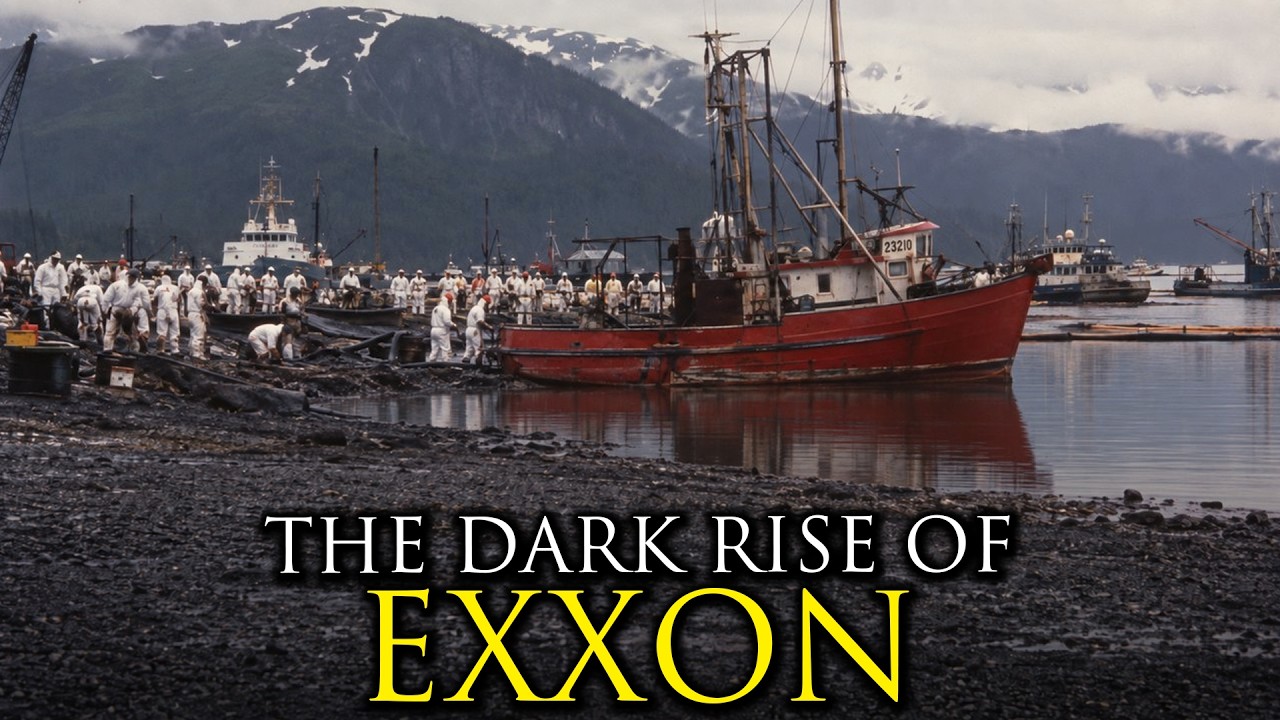
The tanker did not respond in time. The ship’s collision avoidance radar had been broken for over a year, and Exxon had not repaired it. At 12:04 a. m.
, the hull ground across the reef, tearing open eight of eleven cargo tanks. The weather that followed was the decisive fact. For three days, Prince William Sound lay flat calm, the kind of conditions in which oil can be boomed, skimmed, and burned before it spreads. The state-approved contingency plan, written by the Alyeska Pipeline Service Company, promised boom around a spill within three hours and seven skimmers on scene within five.
The reality was that Alyeska’s entire inventory in Valdez that night amounted to thirteen skimming systems, five miles of boom, and one storage barge rated at 500,000 gallons, which happened to be in dry dock. Hours passed while officials in Valdez, Anchorage, and Houston argued. Three skimmers arrived after twelve hours. Less than ten percent of the spilled oil was ever recovered off the water.
By the time the wind arrived on the night of March 26, the slick had become a thing on a coastline rather than a thing on a chart. Gusts near seventy miles per hour whipped the crude into a brown emulsion that response crews call moose, heavy, sticky, and nearly impossible to skim. The oil ran southwest out of the sound entirely, down past the Kenai Peninsula, and eventually reached Kodiak, 450 miles from the reef. It touched something on the order of 1,300 miles of shoreline, including every bay where Pacific herring arrived each April to spawn.
Cordova, a town of about 2,500 people fifty miles from the reef, had no road. It still does not. You reach it by ferry or by air, and that isolation had always shaped its economy. The town had been built in 1906 as a copper port, the terminus of a railroad that hauled some of the richest ore ever found down from the Kennicott mines.
When the copper ran thin in 1938, the town rebuilt itself on fish. By the 1980s, the April herring season was the first big paycheck of the year, the money that paid the insurance, the boatyard bill, and the diesel that let crews fish salmon in June. Almost every household in Cordova had a stake in it. The herring were fished for their roe, the sac of eggs that the Japanese market bought at extraordinary prices as kazunoko.
A crew could work an opening measured in minutes and come out of it with a season’s income. The fishermen of Cordova had seen the tankers coming. During the 1970s, they fought the Trans Alaska pipeline project in court and lost. What they got instead were promises folded into the 1973 authorization act: double hulls, full radar coverage of the sound, and a response force at Valdez able to boom a spill within hours.
Over the next twelve years, those promises quietly dissolved. Double hulls were never built. Radar coverage was never completed. Crew sizes shrank.
Harbor pilots stepped off the tankers just outside the narrows. Between 1977 and 1989, roughly 8,700 loaded tankers moved through the sound without serious incident. Nothing had ever happened. The night before the grounding, a Cordova fisherman named Ricky Ott, who held a doctorate in marine pollution from the University of Washington, told the mayor’s oil action committee what the fleet believed.
They were playing Russian roulette. Nobody listened. The next night, the Exxon Valdez stopped being an abstraction. The wildlife losses were the story the evening news ran for a month: between 100,000 and 250,000 seabirds, about 2,800 sea otters, some 300 harbor seals, 247 bald eagles, and 22 killer whales from two groups researchers had been photographing individually for years.
But in Cordova, the deepest damage was economic and psychological. Exxon’s senior man in Alaska, Don Cornett, flew into town within days and stood before a room of fishermen and their families. He said the company would do whatever it took to keep them whole. He put his own name on it.
The town believed him. Why wouldn’t they? Exxon was the largest oil company on Earth. Alaska closed the sound for 1989, not just herring but salmon, crab, shrimp, and sablefish.
The April herring openings never happened. Then Exxon hired the fleet. The company chartered fishing boats to lay boom and ferry crews, paying wages a good year of fishing could not match. More than 11,000 people worked the cleanup at its peak.
The lead contractor, Veco International, belonged to Bill Allen, an Anchorage oil field man who would later plead guilty to bribing Alaska legislators. The people who got Exxon contracts made more money in 1989 than they had ever made. The people who did not watched them do it. Cordova invented a word for them: spillionaires.
It was not affectionate. The company had introduced a line down the middle of the harbor, and it never entirely went away. Then came the strange part. In April 1990, the herring came back.
The aerial surveys counted the pale water, the numbers were good, and the fishery opened. It opened again in 1991 and 1992, producing some of the biggest herring harvests the sound had ever recorded. The 1988 year class, spawned the spring before the tanker hit, was coming of age right on schedule. Everything looked as if the sound had bounced back.
In 1990, a Prince William Sound salmon permit peaked at $557,000 in today’s money. People borrowed against the future. In April 1993, the fish did not show up. The planes flew the same shorelines and found almost nothing.
The adult population had collapsed. The 1989 year class, the eggs that had been sitting in the intertidal zone in the weeks after the spill, turned out to be one of the smallest cohorts ever recorded. Alaska closed the herring fishery. It stayed shut through 1996, opened briefly in 1997 and 1998, closed again in 1999, and did not open for a commercial season again for twenty-six years.
By 2003, the same permit that had been worth $557,000 was worth $19,700, a fall of something like 96 percent in real terms. The disaster had not been the worst part. The recovery was. Three good springs bought Exxon a settlement, bought the state a clean conscience, bought the fleet a round of optimistic debt, and then the bill arrived for a class of fish nobody had been watching.
It has never been proven that the oil killed the herring. Not disproven either. That is the point. The collapse arrived exactly when a cohort spawned in oiled water would have reached breeding age, and the 1989 year class was indeed one of the feeblest ever counted.
Laboratory research published in 2015 found that herring and salmon embryos exposed to crude at concentrations in the low parts per billion, levels that leave no visible sheen, grow up with permanent heart defects that make them weaker swimmers for life. But the statistical record will not convict. The fish were skinny when they crashed, a sign of too many fish chasing too little food. Two diseases, viral hemorrhagic septicemia and a fungal parasite called Ichthyophonus, were in the population.
A 2017 analysis of nearly three decades of monitoring found little support for a long-term spill effect on herring productivity. The honest summary is the unsatisfying one: the oil is a plausible cause, the timing fits, the mechanism is demonstrated in the laboratory, and the record will not convict. In 1990, Cordova’s mayor through the spill, Bob Van Brocklin, had stood at the front of the room while Don Cornett made his promise. In May 1993, three months before the fishery closure became permanent, he killed himself.
He left a note saying the stress from Exxon, which had brought on his financial stress, was too much to deal with alone. His ashes were scattered over Bligh Reef. He was not the only one. Researchers found that around a third of the fishermen surveyed showed signs of clinical depression and roughly 37 percent carried symptoms consistent with post-traumatic stress.
Alcohol use rose, divorce rose, domestic violence rose, bankruptcies rose. The sociologist Steven Picou put the distinction sharply: a natural disaster ends, but this one never ended, because the cause was a company, and the company was in court, and the court took nineteen years. The court case became a second full-time occupation for the whole coast. About 32,000 people, fishermen, cannery workers, Alaska Natives, business owners, were certified as a class seeking punitive damages from Exxon.
In September 1994, an Anchorage jury awarded $287 million in compensatory damages and $5 billion in punitive damages, at the time the largest punitive award in American history. People in Cordova cried in the street. Not one dollar of it was paid for fifteen years. Exxon appealed, again and again.
The Ninth Circuit cut the award, restored it, cut it again. In December 2006, it stood at $2. 5 billion. In June 2008, the Supreme Court of the United States settled it, holding that for maritime cases of this kind, punitive damages should not exceed compensatory damages by more than a one-to-one ratio.
The award became $57. 5 million, about a tenth of what the jury had ordered nineteen years and three months after the grounding. ExxonMobil’s profit for 2008, announced seven months later, was $45. 22 billion, the largest annual profit any American company had ever reported.
The punitive damages for the worst tanker spill in the country’s history came to roughly four days of that year’s earnings. The average share, after interest was added in 2009, went from something near $15,000 to something near $30,000. Thousands of the people it was meant for were not there to collect. The plaintiffs’ side put the number who died waiting at close to a fifth of the class.
The reopener clause, designed to let governments go back to Exxon for up to another $100 million if they found unanticipated damage, came to nothing. In August 2006, the Justice Department and the state of Alaska invoked it, presenting Exxon with a plan to clean up oil still sitting in the beaches at an estimated cost of $92 million. Exxon did not pay. In October 2015, with both governments having concluded they could no longer make the case that the injuries were unanticipated, the file was closed.
The oil had never left. A 2001 survey found around ninety tons still buried in the beaches at concentrations orders of magnitude above the company’s figures. Much of it lay in the intertidal band, the same strip of gravel and rockweed where the water goes white every April and the herring leave their eggs. Surveys in the 2010s still put between 16,000 and 21,000 gallons in the beaches, material nearly as toxic as the day it came out of the ship.
Some things did not come back at all. The AT1 pod of killer whales, a genetically and culturally distinct group that lived in the sound year round, had been counted at 22 every year from 1984 through 1989. Nine were gone within a year of the spill. The group has not produced a calf since.
A handful are still alive. When the last one dies, a lineage with its own dialect and its own hunting method ends. Not a species. A culture inside a species.
Hazelwood was acquitted of everything except a misdemeanor, negligent discharge of oil. He was fined $50,000 and given a thousand hours of community service, which he spent picking up trash along Anchorage roads and working at a soup kitchen. He died on July 21, 2022, at seventy-five. He was the only person ever prosecuted over any of it.
The Oil Pollution Act of 1990, passed largely because of the Exxon Valdez, forced the phase-in of double hulls across the tanker fleet and created citizen oversight bodies with permanent seats at the table. In the sound itself, the response numbers turned around completely: 13 skimming systems became 90, five miles of boom became roughly 40, half a million gallons of storage became 37 million. Every loaded tanker now leaves Valdez with two escort tugs alongside it the whole way out. Everyone, every time.
Cordova found another fish. The kings and sockeye that run up the Copper River in May are exceptionally fatty, and the fleet turned that biological accident into one of the most successful premium seafood brands in the country. By the 2000s, the first catch of the season was flying south the day it landed, and restaurants in Seattle were advertising the date. But the town was narrower than the one that went into 1989.
The processing industry consolidated and thinned out. Plants that used to run multiple species across multiple seasons scaled back to the ones that paid. A canery is not just a building. It is the buyer.
Without one, a fisherman with a full hold has a boat full of something that is about to spoil. And then the herring began to come back. Not to the old numbers, nothing like the old numbers, but the direction changed. A strong 2016 year class recruited into the spawning population.
After a record low count in 2018, the white water started spreading again in 2019 and kept spreading. By 2024, the estimate for the spawning biomass was 35,485 short tons, the fourth consecutive year above the management threshold. On October 25, 2024, the Alaska Department of Fish and Game announced the Prince William Sound herring fishery would open in November for the first time since 1998, with a guideline harvest of 500 tons and an exploitation rate set at a cautious ten percent. Then the town discovered the problem.
There were still something on the order of 130 permits attached to this fishery on paper, but there was nobody left to sell the fish to. The canneries were shut for the season, and several were shut for good. The fishery opened on November 12, 2024. Seven vessels registered for it.
According to John Renner, a veteran of the old fleet, exactly two had a market. The others could not find anyone who would take the fish. In the end, a buyer did step up: Copper River Seafoods, an Alaskan processor named for the river that had rescued the town. The answer to why it never came back has two halves.
The fish are coming back slowly, but the fishery is not, because a fishery is not a population of fish. It is a fleet, and the men who ran it, and the permits they held, and the crews they trained, and the plant on the waterfront that opens its doors in April and takes the delivery and cuts you a check. All of that was disassembled over thirty-five years by a closure, then a court docket, then a generation of young people who went to Anchorage instead. Every spring, a plane still goes out over Montagu Island and Naked Island and the Green Island shoreline, counting the miles of coast where the water has turned pale and opaque with milt and writing the number down.
In 2024, there were more miles than there had been in years. The planes fly in early April. The season the town used to run on opened in early April.
The pilots make their count, and the harbor stays quiet, and the number goes into the file.