In 1850, a young African girl from the region of present-day southwestern Nigeria was introduced to Captain Frederick E. Forbes, the British commander of HMS Bonetta and a representative of Queen Victoria in Africa. She was then taken back to England, where, over the next three decades, she developed a close relationship with the queen, being raised as a royal ward. She was born as Omoba Aina around 1843 in Oke-Odan, a region in the southwest of what is now Nigeria.
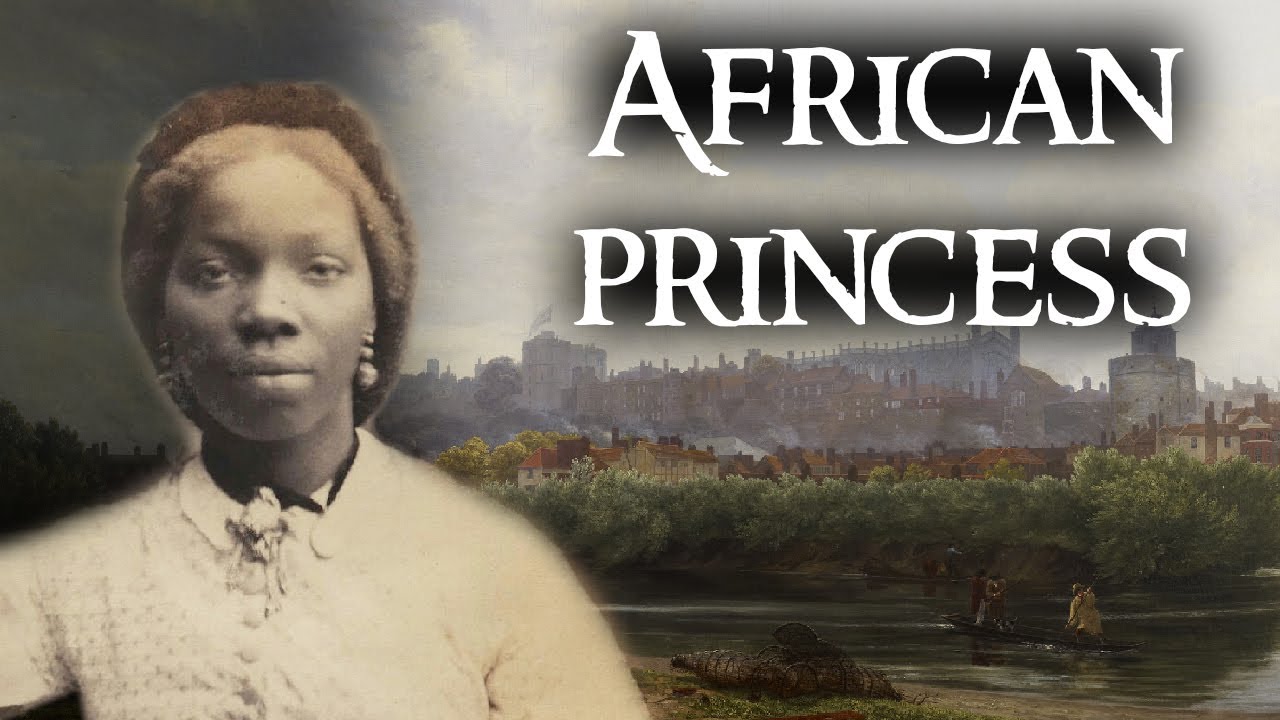
Aina was a high-ranking member of the Egba people, a subgroup of the Yoruba who in the mid-19th century made up much of the population of western Africa around Nigeria, Benin, and Togo. Her position within the Egba was akin to that of a princess. However, her homeland had been a highly volatile region for two centuries, as it was a major source from which European powers traded for slaves, who were then transported to the New World, particularly to the sugar plantations of the Caribbean and the former British colonies of North America. This trade generally involved Africans selling other Africans.
The powerful Songhai Empire, which ruled much of the interior of western Africa around modern-day Mali during these centuries, would enslave fellow Africans and sell them to British, French, Portuguese, and Dutch traders in the area around Senegal. Closer to the Nigeria region, the Kingdom of Dahomey had ruled what is now southern Benin since the early 17th century. The rulers of Dahomey had long acted as a go-between for British and French slave traders in western Africa. The armies of Dahomey would invade neighbouring regions, capture hundreds of slaves, and sell them to European powers in the ports of southern Benin, who in turn transported them across the Atlantic.
Yet this was all changing by the mid-19th century, as the Slavery Abolition Act had been passed through the British Parliament in 1833, effectively banning the slave trade throughout the British Empire. But the response was slow in western Africa, and such raids for slaves were still underway in the 1840s. Aina’s village of Oke-Odan fell prey to such a raid by the Kingdom of Dahomey in 1848. Tragically, her parents were killed during the attack, along with many other senior members of the community.
Aina, however, was spared and, as a consequence, ended up at the court of King Gezo of Dahomey when she was just five years old. The circumstances by which Aina acquired her new name and ended up in England were entirely tied to the mission of Captain Frederick E. Forbes to western Africa in 1850. Forbes was dispatched to the region as captain of the British Royal Navy ship HMS Bonetta.
His mission was to act as an agent of the British Crown and the representative of Queen Victoria in negotiating a new relationship between the British Empire and King Gezo of Dahomey now that the slave trade had been prohibited. Yet Gezo seems to have either been unwilling to accept that the slave trade had ended or else found it difficult to understand exactly what Forbes outlined to him. Accordingly, Gezo followed a long-established practice when dealing with European slave traders: giving the ship’s captain some free slaves as a gift. Aina was one of those whom Gezo gifted to Forbes in 1850.
Although the slave trade was at an end, Forbes accepted the slaves in the name of Queen Victoria. Aina was promptly baptized, and Forbes gave her a new European name. As a Christian name, he called her Sarah. For her surname, he gave her both his own name and the name of the ship.
Thus, Omoba Aina became Sarah Forbes Bonetta, and she was soon on her way to England. One of the first records concerning Sarah is to be found in Captain Forbes’s diary. While they were on their way back to England in 1850, he remarked on her commendable disposition and intelligence. Having arrived in England, she was subsequently introduced to Queen Victoria at Windsor Castle.
The queen was at this time 31 years of age. She, too, favorably wrote about Sarah’s intelligence in her diary. Perhaps most striking is that Sarah appears to have already gained an advanced command of the English language, a precociousness which must have impressed the queen. This first meeting with Victoria was a moment of some significance for Sarah’s life.
Impressed by her young African charge, the monarch agreed to pay for and support Sarah’s education. Money was provided for this, and she was attached to the royal household. This is not to say that Sarah was raised as a member of the royal household, just that she was associated with it and was financed by the queen. Her guardianship lay elsewhere.
Captain Forbes quickly had to hand over responsibility for her, as his duties saw him returning to western Africa just months later, where he sadly died in 1852. Accordingly, Sarah was sent to Gillingham in Kent to be educated in the household of Reverend James Schön, a famed missionary, and his wife Elizabeth. However, she did continue to meet regularly with the queen when she was presented to her in January 1851. This was the fourth meeting between Queen Victoria and her young African protégée.
Sarah’s subsequent life in the 1850s must be understood in the context of the missionary work undertaken by the British during the 19th century in the aftermath of the abolition of slavery. The view was increasingly gaining ground within reforming circles in England that, rather than being bought and sold as slaves, the people of Africa should be civilized and taught the benefits of leading a civilized Christian life like Europeans. Individuals such as Reverend Schön were at the forefront of this Christianizing and missionary movement. As an African girl who had responded so favorably to living in England, Sarah was viewed as someone who could be educated and trained as a missionary herself.
Were she to be sent back to Africa to work in schools and the other institutions which British missionaries were establishing in her homeland, she might prove a major asset to the Christianizing and missionary movement. Queen Victoria was certainly aware of this, as she had extensive knowledge of the work the African missionaries were doing. This desire to send Sarah back to the missionaries in western Africa was compounded by concerns about the impact of the English climate on her. In 1851, aged around eight years old, she developed a severe cough, and it was consequently decided to send her back to Africa.
Thus, Sarah spent the next four years until 1855 studying at the Annie Walsh Memorial School, run by Julia Emily Sass, in Freetown in what is now Sierra Leone. In late 1855, when she was 12 years old, Sarah returned to England from Sierra Leone. This was the occasion of yet another audience with the queen. A sign of the affection the queen held for her is to be found in her reference to her young charge affectionately as “Sally.
” Indeed, some years later, Sarah would even attend Victoria’s daughter Alice’s wedding to Louis IV, Grand Duke of Hesse. In the mid-1850s, a decision needed to be made concerning the future course of Sarah’s life, as it was determined that her elementary education had been completed and she would not return to Sierra Leone. As a result, in the years that followed in the second half of the 1850s, Sarah was placed under the charge of Mrs. Sophia Welsh, with whom she lived in Brighton and East Sussex on the south coast of England.
She gained a minor celebrity status throughout England during these years as the curious African princess who had been taken under the charge of Queen Victoria and who was said to possess great intelligence. In the early 1860s, at a social event in England, Sarah met James Pinson Labulo Davies, an African-born merchant who had anglicized his name and amassed a considerable fortune trading between England and western Africa. He had, in the course of his mercantile endeavors, also become a prominent individual within British missionary circles there and in England. Davies now contacted Queen Victoria to express his interest in marrying Sarah, an arrangement which the queen was favorably disposed to.
Despite the age difference between the pair — at the time of Davies’s request, Sarah was around 18 years old while he himself was a 33-year-old widower — there are some indications that Sarah was not entirely happy with the match. Nevertheless, the pair was married on the 14th of August 1862 at Saint Nicholas’s Church in Brighton. Fittingly, the wedding was officiated by the Bishop of Sierra Leone. Following their nuptials, the newlyweds moved to Africa.
They settled at Freetown in Sierra Leone, where Sarah had spent four years between 1851 and 1855, and they were soon new parents. In 1863, a baby girl was born who was named Victoria after the queen. A further sign of the intimate connection between the monarch and Sarah is demonstrated by the fact that the queen agreed to act as the child’s godmother. Furthermore, on a visit back to England in 1867, Sarah presented the four-year-old to Queen Victoria.
Two more children followed in the years ahead. In 1871, Arthur was born, and then two years later in 1873, another girl, Stella, was welcomed by the Davies family. However, Sarah’s health was deteriorating during this period. At some point, she had contracted tuberculosis.
This infectious disease was particularly rampant globally during the 19th century, and there was no effective cure. The best treatment was to moderate one’s lifestyle and attempt to live in a favorable climate, as the disease primarily affects the lungs. Accordingly, at some point in the 1870s, Sarah moved to Madeira, an island off the northwest coast of Africa under the control then as now of Portugal. Here, the climate was more hospitable than in Sierra Leone.
She appears to have only been joined here sporadically by her husband, whose business interests were in trouble, while her eldest child, Victoria, was by this time living back in England, being educated at Cheltenham College in Gloucestershire. Unfortunately, Sarah died from complications associated with tuberculosis in the city of Funchal in Madeira on the 15th of August 1880, aged around 37. An indication of the enduring bond between Sarah and the queen is shown by the fact that Sarah’s daughter had been preparing to visit the queen when news reached her in England late in August that her mother had died in Madeira. Thus, 30 years after Queen Victoria had recorded her first impressions of Sarah in her diary, the ties between the monarch and the girl from Nigeria were still highly evident.
In her honor, her husband had a near three-metre-high granite obelisk, or pillar, erected as part of a monument to her near her hometown in what is now western Lagos. It reads: “In memory of Princess Sarah Forbes Bonetta” — a testament to the remarkable story of the woman it commemorates.