In January 1992, children walking near the Burlington Skyway Bridge made a gruesome discovery. A human leg had washed ashore in the ship canal below. The bridge, a major landmark connecting Toronto to the Niagara region, stood nearly two hundred feet above the cold waters of Lake Ontario. By the time Detective Mark Mendelson arrived, he knew immediately that this was no accident.
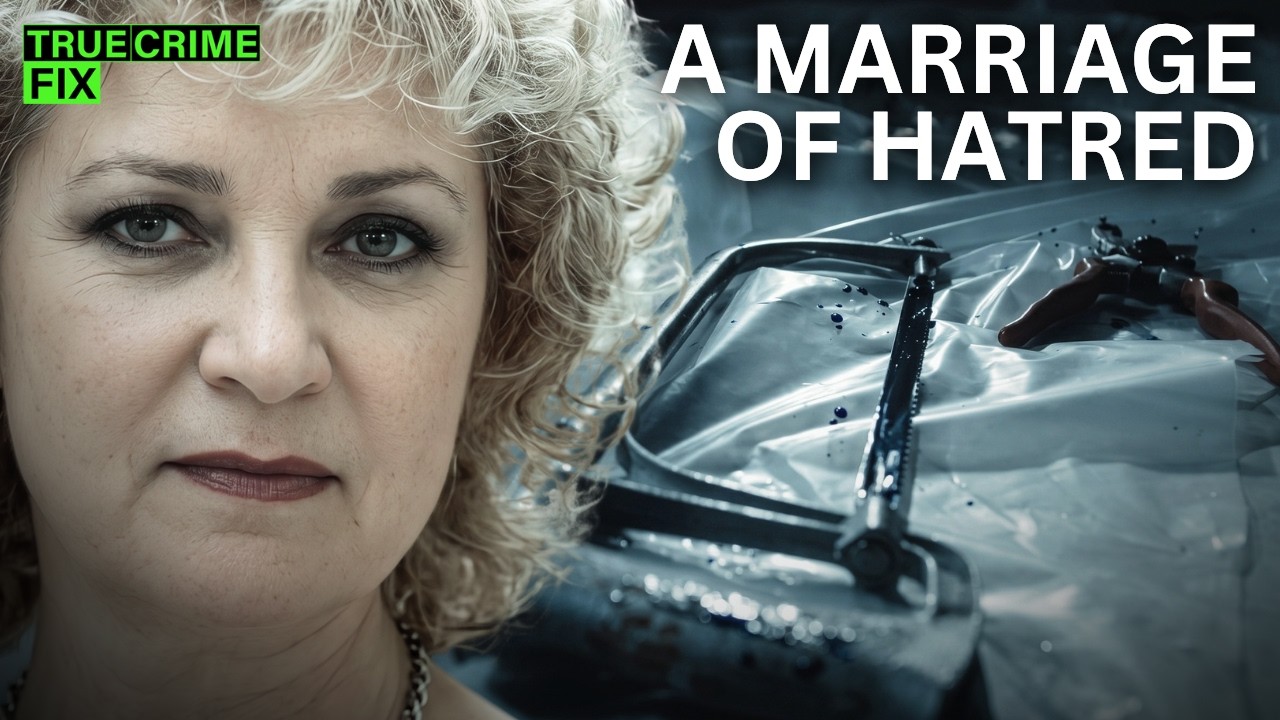
The leg had been severed mid-thigh, but not by blunt force or the propeller of a passing freighter. It had been cut. Someone had used a saw. Dr.
David King, a forensic pathologist who had performed thousands of autopsies, opened the body bag and studied the end of the femur. The saw marks were visible, clean and deliberate. Had the leg been torn off by a ship’s propeller, the bone would have shown shearing and ripping, jagged as a shark bite. Instead, the cut was precise.
King called the coroner. This was not a suicide. This was a homicide. There was one immediate theory.
A man had been seen jumping from the Skyway Bridge a month earlier, and his body had never been found. Some wondered whether the leg belonged to that jumper, severed by a passing freighter. But the saw marks ruled that out. Then another possibility emerged: a woman had disappeared from Toronto on December 2nd, 1991, and police had been searching for her for over a month.
Her name was Nicole Madison. She was fifty-two years old, a corrections officer, a mother, and a grandmother. She stood five-foot-ten and was heavily built, a strong woman. She had vanished in broad daylight from one of the busiest intersections in downtown Toronto.
Her husband, David, had told police they were arguing that afternoon when she jumped out of the car, smashed the passenger window with her hand, and walked away. He said he never saw her again. David Madison was also a police sergeant with the Toronto Police Service. That made the investigation delicate.
Police investigating their own was never easy, and Madison complicated matters further. He admitted the marriage was a disaster. He had a girlfriend and made no secret of it. Friends described the relationship as a marriage of pure hatred, two people doing everything they could to hurt each other.
When asked if Nicole might be in danger, Madison suggested she had likely gone to Niagara Falls and thrown herself into the water. He claimed she had told him that if she ever killed herself, that was how she would do it. Detectives were suspicious, but suspicion was not evidence. There was no body, no witnesses, and Madison had waited nineteen days before reporting his wife missing.
He claimed he believed she had simply gone to stay with a friend. Dr. King continued examining the severed leg, looking for clues to its owner. The leg was long, pale, and white.
The thigh held more fatty tissue than muscle, which in his experience pointed to a woman. The epiphyses at the ends of the bones were fully fused, indicating an adult past their early twenties. More importantly, there were only minimal signs of decomposition. The leg had been in the icy water for roughly a month, matching the timing of Nicole Madison’s disappearance almost exactly.
But DNA testing was still a young science in 1992. The leg contained almost no blood, making blood grouping difficult. King managed to find a microscopic sample and determined the blood type matched Nicole’s. Still, that was not proof.
To confirm the leg was hers, police needed DNA from her relatives in France. Those samples would take months to arrive. While waiting, divers searched the ship canal for more remains. Days into the search, they pulled up a body.
It was a complete male with two intact legs. He was the man witnesses had seen jump from the bridge a month earlier. Though disappointing, the find gave investigators something valuable: a known timeline of decomposition for a body in that water. King compared the condition of the jumper’s thigh tissue to the severed leg.
The stage of decomposition was nearly identical. The leg had been in the water about a month, exactly the time since Nicole vanished. Police returned to the street corner where Madison claimed his wife had stormed off. They set up a command post and interviewed everyone who passed, hoping someone had seen a woman smash a car window and disappear.
Nobody saw anything. The explanation was not adding up. Detectives dug deeper into the Madisons’ marriage. They interviewed the couple’s marriage counselor, who reported that on one occasion the counselor had said one of them was going to kill the other.
Police began surveillance on Madison and obtained judicial authorization to intercept his phone calls. They also located Nicole’s car, abandoned in a cornfield north of the city. Madison claimed his grandson had accidentally set it on fire while playing with matches. The damage was incomplete.
Inside the burned car, detectives found a rolled-up newspaper flyer stuffed between the back seat and seatback, positioned like a wick. The fire was an attempted cover-up. Despite the limited damage, forensic examination of the trunk revealed something crucial: microscopic blood spatter, invisible to the naked eye, along with strands of blonde hair. Madison’s story was unraveling.
Police believed he had killed Nicole, transported her body in the trunk, and later tried to burn the evidence. Dr. King turned his attention back to the severed leg. He removed the cut end of the femur for detailed examination of the saw marks.
Evidence of blue paint on the severed bone suggested the saw blade itself was painted. King concluded it was likely a hacksaw. Detectives searched Madison’s house and garage, but found no saw. They did find blood spatter on the inside of the garage door, partially wiped away.
A search of Nicole’s house in Fonthill took over a week. In the back wall of the garage, they found more blood spatter. Detectives believed the car had been backed into the garage, the body placed in the trunk, and the killer had taken precautions. Plastic sheeting had been laid down to catch most of the blood, which explained why so little was found.
The blood from the car, the garage, and the leg all matched the same person through DNA testing. But without samples from Nicole’s family, they could not say for certain it was hers. Then a left arm washed ashore. It was from a white person, likely female, with more advanced decomposition than the leg.
The tips of all the fingers had been cut off, clearly an attempt to prevent identification. Saw marks on the humerus carried traces of the same blue paint. Dr. King was certain: the arm and the leg came from the same victim.
Finally, the DNA samples arrived from France. The results were conclusive. The chances the leg belonged to anyone other than Nicole Madison were two billion to one. On March 26th, 1992, police arrested Sergeant David Madison for the murder of his wife.
He was at his girlfriend’s house and seemed to expect them. In custody, he confessed. He told police that on the morning of December 2nd, he and Nicole were arguing at their home in Fonthill. She came at him with a knife.
His service revolver was nearby, and he shot her in the chest. She died instantly. He put the body in the trunk of the car, drove to his Toronto home, and dismembered her in the garage, covering the area with plastic to contain the blood. He placed the body parts in separate bags and dumped them into the Burlington Ship Canal.
He also admitted to setting the fire in the car himself, not his grandson, in an attempt to destroy evidence. And he told police he had re-drywalled the wall where the shooting occurred, which was why no trace of a bullet was ever found. By confessing, Madison avoided a trial. He was charged with first-degree murder, but the prosecution had no way to disprove his claim of self-defense.
There were reports that Nicole had been violent as well, that she had come at him with knives before. Madison pleaded guilty to manslaughter and was sentenced to ten years in prison. The case was built not on a smoking gun or an eyewitness, but on the meticulous work of forensic scientists. The severed leg, the trace of blood in a burned car, the blue-painted saw marks on bone, a left arm with fingertips removed, and bone marrow extracted for DNA: each piece brought the investigation closer to the truth.
The medical examiner spoke for the dead, and the detectives listened. Without that work, the case would never have been made.