In 1988, Eric Kummerow was preparing for the biggest moment of his football life. He had played at Ohio State, stood 6 foot 7, and was athletic enough to be considered a first-round NFL prospect. Teams wanted to know about his strength and his speed. Then some of them started asking about his grandfather.
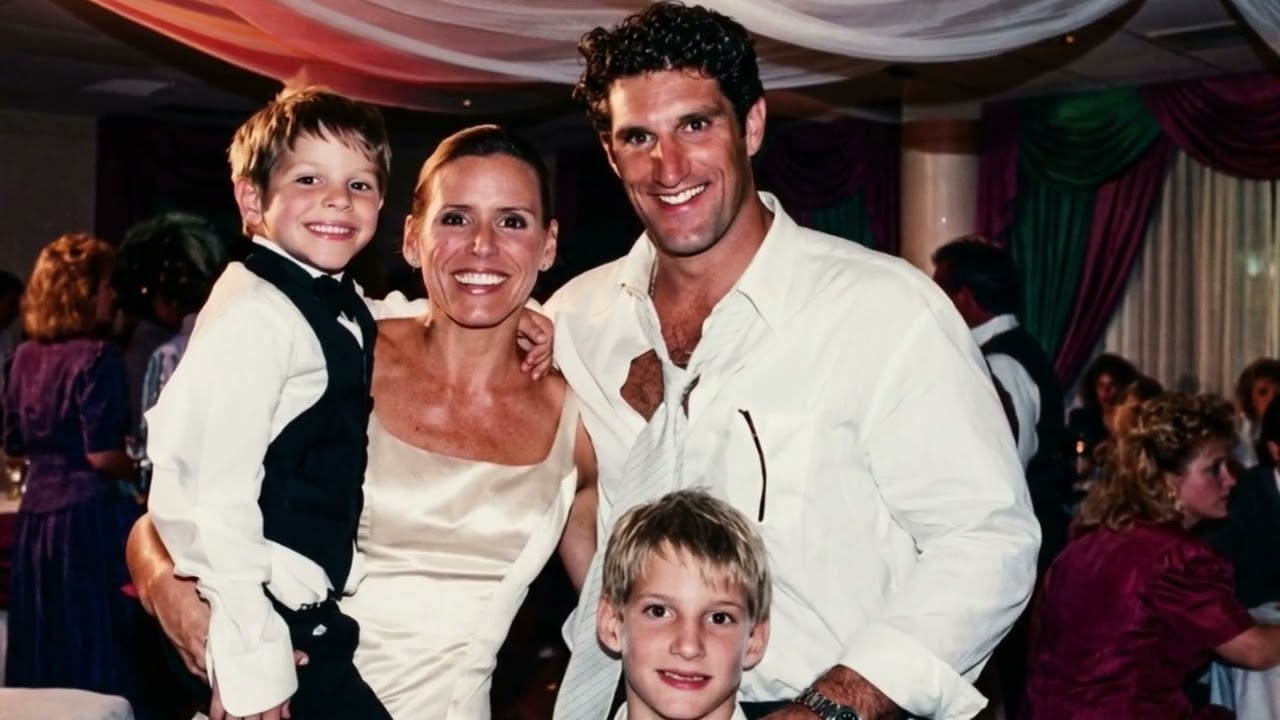
Not because the old man had played the game. His grandfather was Tony Accardo, a man who had spent decades associated with the Chicago Outfit and had become one of the most enduring figures in American organized crime. NFL teams reportedly wanted to know whether those connections could become a problem. There were even questions about whether Accardo could influence professional games through his grandson.
Eric had spent years building an identity that had nothing to do with organized crime. He carried a different surname. He played football. He belonged to another generation.
Yet at the very moment his future was being decided, Tony Accardo entered the room without being there. His name was enough. Former FBI organized crime investigator William Roemer reportedly reassured teams that Accardo would never put his grandson in such a position. The Miami Dolphins eventually selected Eric with the 16th overall pick in the 1988 NFL draft.
But Eric’s own response to the questions was more telling than anything the scouts uncovered. The NFL saw Tony Accardo. Eric saw Grandpa. He remembered a man who came to his football games, who sat in the stands and watched him play.
Eric later described him as a caring man whom he loved. That contradiction is where the strange story of Tony Accardo’s family truly begins. If you knew Accardo only through organized crime history, you might expect the next generation to remain tied to that world. That is not what happened.
Instead, one branch of his family began producing football players. Then another. Eventually, that same family produced Joey Bosa and Nick Bosa, two of the most recognizable defensive players of their generation. Decades after Accardo’s world had begun disappearing, reporters were still tracing family trees backward and arriving at the same man.
To understand how, it helps to move back one generation. Tony Accardo and his wife Clarice raised four children: two daughters and two adopted sons. One daughter was Marie. She grew up with a surname that already carried enormous weight around Chicago, yet her life moved in a direction that had almost nothing to do with the world that made her father famous.
She married a football player named Palmer Pyle, who had played at Michigan State before reaching the professional game with the Baltimore Colts, Minnesota Vikings, and Oakland Raiders. Marie and Palmer had two children: a son named Eric and a daughter named Cheryl. Those two names become the bridge between Tony Accardo and several future NFL players. Marie and Palmer eventually divorced, and Marie later married Ernest Kummerow.
Eric and Cheryl were raised with the Kummerow surname. That change created the first important break in the family story. Accardo became Kummerow. Looking only at surnames, it would have been easy to believe that Tony Accardo’s story had stopped there.
It had not. The name changed. The family kept moving. And Eric was going to make that connection visible again.
Eric grew into a large and gifted athlete. At Oak Park and River Forest High School, he developed into the kind of player major college programs noticed, and he eventually went to Ohio State. But years before professional scouts began asking about his family, Tony Accardo was already watching Eric play. Later reports described Accardo attending his grandson’s high school games and sitting quietly in the stands.
Not in a meeting. Not surrounded by reporters. Simply watching his grandson play football. Eric remembered that version of Tony.
The outside world remembered something very different. Eventually, those two versions collided. Eric became successful enough at Ohio State to attract serious NFL attention, and professional teams began investigating his background. The grandfather who had quietly watched from the stands became part of the scouting conversation.
That is one of the strange things about being born into a famous family. You can change your surname. You can choose a completely different profession. But if the old reputation is powerful enough, people still find you.
Eric could have avoided the subject. Instead, he answered it. When reporters asked about Tony Accardo, he spoke about the man he personally knew, the grandfather who came to games and spent time around the family. He said he loved him.
He described him as caring. That does not erase Accardo’s public history, but it reveals something useful: families do not experience people the same way newspapers do. A newspaper can reduce someone to a headline. A government file can reduce someone to an investigation.
A grandson may remember where that person sat during a football game. Both realities can exist at the same time. Eric’s entry into the NFL also produced another coincidence. One year before Miami selected him with the 16th overall pick, the Dolphins had used the same draft position on another defensive player.
His name was John Bosa. At the time, there was no reason for most people to connect John Bosa with Tony Accardo. Soon, there would be. John Bosa married Eric’s sister, Cheryl, Tony Accardo’s granddaughter.
With that marriage, two football families became one. Keep the connection simple. Marie was Tony’s daughter. Marie had two children, Eric and Cheryl.
Eric became a first-round NFL draft pick. Cheryl married John Bosa, also a first-round NFL draft pick. John and Cheryl then had two sons, Joey and Nick. That is where the story changes scale.
Until this point, Eric could still have been treated as an unusual family coincidence. One grandson happened to become an NFL player. But now professional football was appearing repeatedly inside the same extended family. Marie had married a professional player.
Her son reached the NFL. Her daughter married another NFL player. And the next generation was about to become far more successful than any of them. Joey Bosa grew into an elite defensive prospect and played at Ohio State, the same university where his uncle Eric had played years earlier.
In 2016, he entered the NFL draft, and the San Diego Chargers selected him with the third overall pick. He then won the NFL Defensive Rookie of the Year award. At that point, Tony Accardo’s connection to professional football could no longer be dismissed as a strange footnote. Tony’s grandson had reached the NFL.
The man who married Tony’s granddaughter had reached the NFL. Now Tony’s great-grandson had become one of the most highly drafted defensive players of his generation. Then the younger brother arrived. Nick Bosa followed Joey to Ohio State and developed into another elite defensive prospect.
In the 2019 NFL draft, the San Francisco 49ers selected him with the second overall pick. Now walk backward through that family tree. Nick was the second player selected in his draft. His older brother Joey had been selected third overall.
Their father John had been a first-round pick. Their uncle Eric had also been a first-round pick. Their maternal grandfather Palmer Pyle had played professional football. And their great-grandfather was Tony Accardo.
That final connection was so unexpected that sports writers kept returning to it. Tony had been dead for decades. He had nothing to do with Nick’s football career. Yet Nick became important enough that journalists started tracing his family backward.
Bosa led to Kummerow. Kummerow led to Pyle. Then the trail arrived at Accardo. The family had moved forward.
The old story kept following behind. There was one major difference between Eric’s generation and the generation of Joey and Nick. Eric had actually known Tony Accardo. He remembered him.
Joey and Nick did not have the same relationship. By their generation, Tony had become family history. Their mother Cheryl, Tony’s granddaughter, later indicated that Accardo was not a subject the family spent much time discussing, and she made clear that his history had nothing to do with her sons’ football careers. For Eric, Tony was a memory.
For the next generation, he was a story. By the time reporters began asking the Bosa brothers about their great-grandfather, three different Tony Accardos almost existed at once: the figure from organized crime history, the grandfather remembered by his grandson, and the distant ancestor in a family now famous for football. The criminal organization had not passed down to these descendants. The questions about it had.
The Bosa brothers were not the end of the football connection. Eric Kummerow had a son named Jake, who also reached the NFL, though his path was completely different. Jake was not drafted at all. He had to fight through practice squads, roster competition, cuts, and repeated uncertainty before establishing himself as a professional wide receiver.
Football was not appearing in only one form. Palmer Pyle played professionally. Eric Kummerow became a first-round pick. John Bosa became a first-round pick.
Jake reached the league as an undrafted player. Joey became the third overall selection. Nick became the second. Different careers, different positions, different generations, the same extended family.
What happened to Tony Accardo’s family after the mafia? The answer is not that his past vanished. It changed position. During Tony’s lifetime, organized crime was the dominant public story attached to his name.
In later generations, that history became background, and football moved into the foreground. The transition happened one person at a time. First, Tony’s daughter married a professional football player. Then his grandson became a first-round NFL pick.
Then his granddaughter married another. Then her sons became elite professional players. Then Eric’s son reached the league. At every step, the family moved further away from the world that had defined Tony.
Yet the more successful the descendants became in football, the more often journalists traced their history backward. That brought Tony Accardo back. The family moved on. Success kept reopening the old file.
Tony lived long enough to see the first stage of the family’s transformation. He saw Eric play. He saw his grandson reach the NFL. But he never saw what came next.
Tony Accardo died in 1992 at the age of 86. Eric Kummerow served as one of the pallbearers at his funeral. That moment closes one generation of the story. The grandson Tony had watched from the stands was now helping carry his grandfather’s coffin.
Everything that followed happened without Tony. Joey was still years away from entering the NFL. Nick had not yet been born. Jake Kummerow’s professional career belonged to the future.
Tony never saw Joey become the third overall draft pick. He never saw Nick become the second. He never saw another descendant reach the league as an undrafted player. And he never saw sports writers begin describing his descendants as one of football’s more unusual family trees.
That may be the part of his legacy Tony could never have planned. A man can control what his name means only for so long. Eventually other generations inherit it, and then they add something of their own. Tony Accardo spent decades becoming a name Chicago would remember.
What he could never have predicted was why people would still be finding that name generations later. Not because another Accardo had taken control of the Chicago Outfit. Not because one of his descendants had entered organized crime. Not because another investigation had begun.
Because somebody opened an NFL family tree and kept following the branches backward. Until eventually there was Tony Accardo. Sitting quietly in the bleachers.
Watching his grandson play football.