Elton John stood at the altar of St. Mark’s Anglican Church in Sydney on Valentine’s Day 1984, not far from the woman he had proposed to just four days earlier. Flashbulbs lit the pavement outside. The world knew him as the piano showman who had told Rolling Stone he was bisexual eight years before.
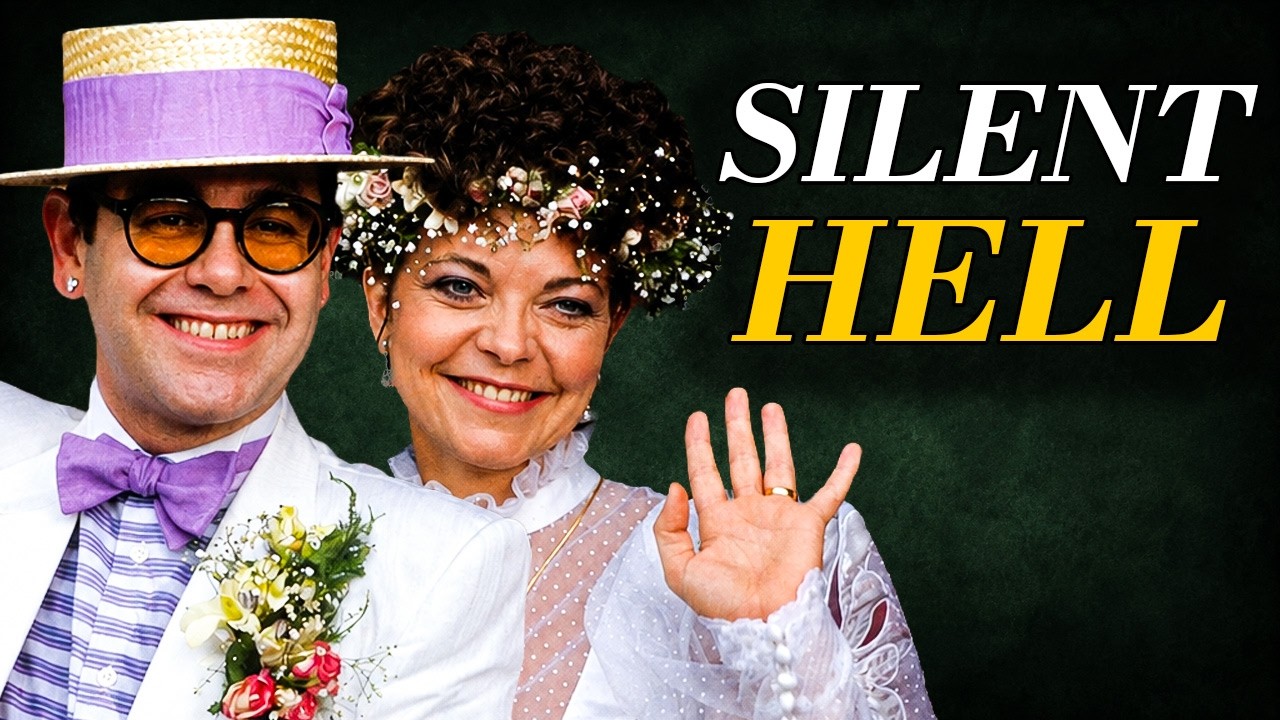
Yet here he was, marrying Renate Blauel, a German recording engineer most of the watching press had never heard of, in front of every camera in the country. Blauel was not part of the celebrity machinery that surrounded him. Before stepping into recording studios, she had worked as a flight attendant for Lufthansa. She had built a genuine career transition into engineering, eventually earning credits on major label sessions, including his own albums.
She had worked on the previous album, Two Low for Zero, and was engineering on Breaking Hearts when the relationship moved beyond the studio. The marriage looked strange on the surface, and it was stranger underneath. John was not a man hiding his sexuality from the public in some vague sense. He had already said the word bisexual out loud in a national interview in 1976.
Eight years later, a documented public figure walked into a very public marriage to a woman anyway. The obvious explanation was not the one that mattered. In his 2019 memoir, Me, John described what led him there. It was not romantic mystery.
He wrote about the logic of an addict at the time. Enough boyfriends had not made him happy, so maybe a wife would change everything. He also described his own bisexuality as he understood it then, a compromise label that let him keep functioning without confronting what he actually felt. The marriage was not built on deceiving anyone else.
It was built on a man trying to outrun himself in public, with someone standing next to him who had no way of knowing what she had walked into. The press coverage was enormous precisely because of the contradictions sitting in plain sight. A man the country half suspected was not attracted to women was marrying one on camera, with the full apparatus of 1980s tabloid media pointed directly at the altar. The wedding was not a private decision that leaked.
It was a public spectacle constructed on top of a private conflict nobody in that church could see clearly, including, by his later account, the groom. The marriage lasted just under four years and eight months. Divorce papers were finalized in November 1988. As part of the divorce, both of them signed a confidentiality agreement, a legally enforceable clause preventing either party from discussing the marriage or the reasons behind its collapse.
The story did not end in a courtroom that year. It got sealed there. For more than three decades, that seal held. Blauel disappeared from public life almost entirely.
She reportedly returned to Germany, gave no interviews, and made no public statements connected to her famous ex-husband. She continued working as a sound engineer for a period afterward, but her name gradually stopped appearing anywhere near his. Many fans in the 2000s would not have known Elton John had been married before David Furnish, and plenty more would have guessed wrong. The silence around it worked exactly as designed for exactly as long as both people kept honoring it.
Then the rules changed. In 2017, John posted something on Instagram that read less like a celebrity statement and more like an unguarded admission. He wrote that he had wanted more than anything to be a good husband, but that denying who he really was had caused his wife sadness and caused him guilt and regret he still carried. It was his own account in his own words, publicly posted decades after the fact.
It was one of the clearest documented pieces of evidence that the damage from that marriage was not abstract. It had a specific person on the other end of it, and he knew that. In 2019, the sealed room reopened on its own terms. John published Me, his official memoir, and the same year the biopic Rocketman was released, dramatizing large parts of his life, including that marriage.
For the first time in thirty years, someone was describing that marriage publicly again, and the person who had spent three decades protected by an agreement of silence had no say in how it was being told. In 2020, Blauel filed a claim in the High Court in London. Her argument was direct. Both the memoir and the film disclosed details of their marriage covered by the 1988 confidentiality agreement, and they misrepresented the nature of the relationship.
Reporting at the time put the damages she was seeking at roughly three million pounds. Her legal filing specifically referenced scenes in Rocketman, including their wedding day and a scene showing them sleeping in separate bedrooms, along with a scene depicting John in group therapy discussing the failure of the marriage in connection with his sexuality. According to her lawyer, she viewed the film’s portrayal of their marriage as something close to a sham, a portrayal she considered false and disrespectful. She said she had not been consulted before being portrayed on screen by actress Celine Dionmaker, and that she had experienced real anxiety after a journalist tried to track her down at her home in a small village following the film’s release, years after she had deliberately built a life outside the public eye.
The most consequential event in this entire story was not a wedding and not a divorce. It was a lawsuit filed in 2020 over words and images depicting something that happened in the 1980s. John’s attempt at honesty and her right to privacy collided directly in a courtroom decades after either of them thought the story was finished. John’s legal team did not deny the events themselves happened.
Their defense argued the details in the book and film were already public knowledge by the time they were published, and that the confidentiality agreement only ever applied to private, not public, matters. Even his own defense never disputed what actually happened between them in that marriage. The argument being fought in the High Court was not about whether the story was true. It was about who still had the legal right to decide whether that truth got spoken out loud more than three decades after it happened.
The case never reached a full trial. It was resolved later in 2020 through a joint settlement rather than a judge’s ruling. Both sides issued a short public statement, the kind lawyers draft together, every word chosen carefully. It said the parties were happy to have resolved the case in a way that acknowledged Renate’s need for privacy, and that Renate, for her part, acknowledged he had acted in a dignified and respectful way toward her over the previous thirty years.
They agreed not to discuss each other or their marriage publicly again. Financial terms, if any changed hands, were never disclosed. That settlement was not an ending. It was the same silence from 1988, renewed and resigned, this time with a public record of the fact that it exists at all.
Right now, there are still details of that first marriage that neither of them is legally permitted to discuss on camera, in an interview, or anywhere else. Not because the story was fully told and finally put to rest. Because it was not. And the law stepped back in a second time to make sure it stays that way for however long they both live.
Most of what the public assumes about Elton John’s life turns out to be true. The marriage people picture when they hear that phrase is the one with David Furnish, a partnership built openly in the light with two sons and decades of shared appearances. The one this story is actually about is the opposite, a marriage built in denial, ended in silence, reopened once by an accident of honesty, and sealed again by agreement. Somewhere in Germany, Renate Blauel still lives privately, still declining every interview request, still holding up her end of an agreement that has now outlasted the marriage itself by nearly forty years.
And in a quiet corner of Sydney, St. Mark’s Church still stands exactly where it did on Valentine’s Day 1984, the flashbulbs long gone, the wedding photographs still occasionally surfacing online, showing two people smiling at a moment that legally, to this day, neither of them is allowed to fully explain.