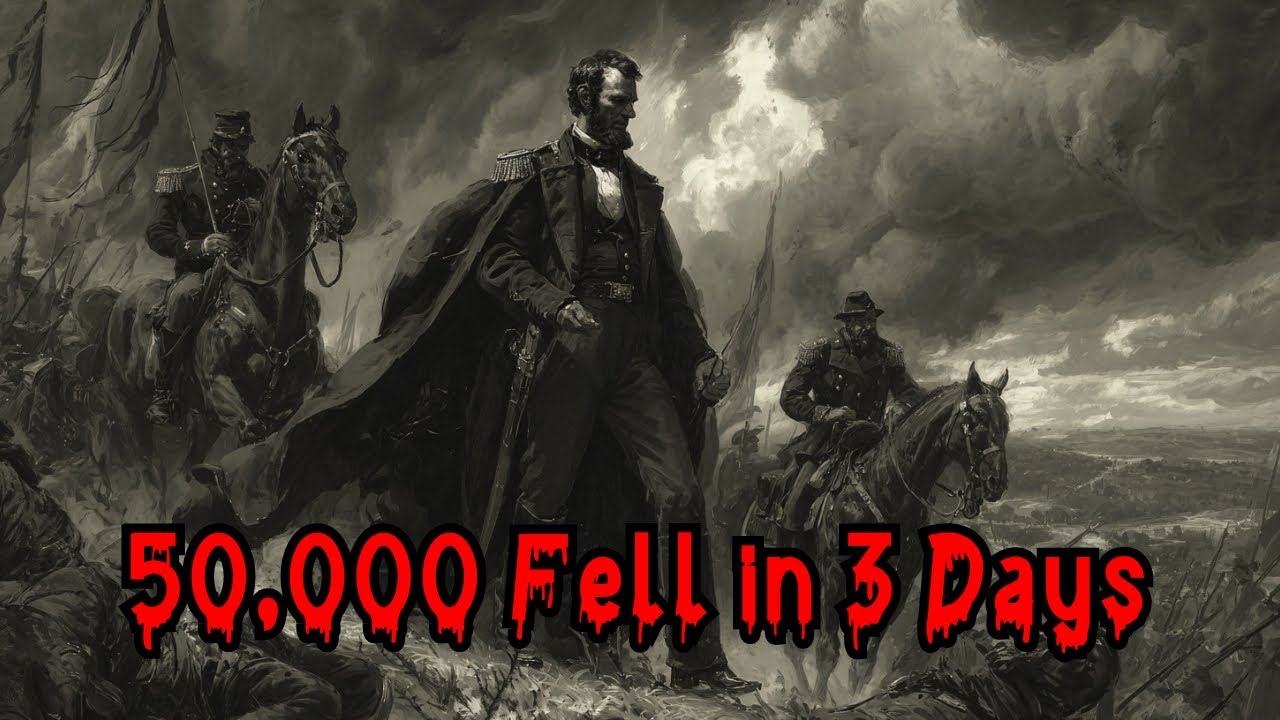
On July 1, 1863, a minor encounter between Union cavalry patrols and Confederate soldiers foraging for supplies outside the small town of Gettysburg, Pennsylvania, exploded into one of the most ferocious confrontations of the American Civil War. What began as a chance meeting in the rolling hills of southern Pennsylvania spiraled into a three-day struggle that would claim tens of thousands of lives and shift the momentum of the war. By the time the fighting ended on July 3, the Union had repelled General Robert E. Lee’s audacious invasion of northern territory, and the Confederacy had suffered losses from which its Army of Northern Virginia would never fully recover.
In the early summer of 1863, Lee stood at the height of his military prestige. His Army of Northern Virginia had just achieved a stunning victory at the Battle of Chancellorsville, where he had outmaneuvered a larger Union force through bold and risky tactics. Emboldened by that triumph, Lee proposed a daring plan to Confederate leadership in Richmond: carry the war into Pennsylvania, strike a decisive blow against the Union army on its own soil, and shatter Northern morale. He believed that a Confederate victory in Union territory would erode public support for President Abraham Lincoln’s war policies, inspire anti-war sentiment across the North, and potentially secure foreign recognition for the Confederacy.
Lee repeatedly expressed unwavering confidence in his troops, trusting their resilience and fighting spirit to see the campaign through. On June 28, while Lee’s forces advanced through Pennsylvania, Lincoln made a critical decision. He relieved Major General Joseph Hooker from command of the Army of the Potomac and appointed Major General George Gordon Meade in his place. It was the third command change for the beleaguered Union army in 1863, and the soldiers, though confident in themselves, remained uncertain about their leadership after a string of commanders had come and gone.
Meade took over at a pivotal moment, just days before the army would be tested in the largest battle of the war. Lee soon learned troubling news. The Union army was closer than he had expected, and his cavalry, under General J. E.
B. Stuart, was off on a raid and failing to provide reliable intelligence about enemy movements. Abandoning plans to push deeper into Pennsylvania toward Harrisburg, Lee ordered his scattered forces to concentrate at Cashtown, a small village about eight miles west of Gettysburg. Gettysburg itself was a key crossroads, with nearly a dozen roads leading into and out of town, making it a natural gathering point for troops on both sides.
On June 30, Confederate divisions moved toward Gettysburg in search of shoes and supplies. There they encountered two brigades of Union cavalry. Neither Meade nor Lee had selected Gettysburg as the battleground; the clash ignited almost by chance. What started as a skirmish between scouting parties quickly grew into a full-scale engagement, and the Confederates resolved to return to the town the following day, driven by the need for food, ammunition, and medical supplies to sustain their campaign.
On July 1, the first day of fighting, the Confederate forces pushed the Union troops back through the streets of Gettysburg, forcing a retreat that at times bordered on chaos. Yet the Union soldiers clung tenaciously to the high ground south of town, securing their position along Cemetery Ridge. That elevated terrain, with its commanding views of the surrounding countryside, would prove decisive in the days to come. On July 2, Lee aimed to crush both flanks of the Union line with coordinated assaults.
But hesitancy and indecision among his subordinate commanders slowed the Confederate attacks, giving the Union time to reinforce its positions. Fresh troops strengthened the federal defenses, and the day’s brutal fighting across the rocky Pennsylvania terrain resulted in more than twenty thousand soldiers killed, wounded, or captured. It was one of the bloodiest days of the entire war, and neither side gained a clear advantage. Lee tried again on July 3, convinced that one more push would break the Union line.
He ordered an assault on the center of the federal position, a charge led by General George Pickett with fewer than fifteen thousand Confederate soldiers. The attack was a catastrophic failure. Nearly 5,600 Confederate soldiers were killed, wounded, or captured in the assault. The Confederates never reached the main Union line in force, and Pickett’s charge became a symbol of the battle’s devastating cost.
The following day, Lee began moving his army south, with Meade in pursuit. But when the Confederates dug in along the Potomac River, Meade decided against launching an attack, allowing Lee’s forces to cross the river back into Virginia. Lincoln was furious that Meade had let the Confederate army escape, but the immediate threat to the North was over. The Battle of Gettysburg had ended.
The toll was staggering. Approximately 28,000 Confederate soldiers were killed, wounded, or unaccounted for, representing a third of Lee’s entire fighting force. Among the fallen were numerous seasoned officers and some of Lee’s most reliable commanders. The losses crippled the Army of Northern Virginia, sapping its strength and morale in ways that proved irreparable.
Lee would later win battles south of the Mason-Dixon line, but the destruction at Gettysburg ended any realistic prospect of mounting another offensive into northern territory. The battle marked a decisive turning point in the Civil War, leaving the Confederacy’s depleted ranks to struggle in the conflict’s remaining years. For the Union, the victory at Gettysburg was a profound morale boost. When paired with General Ulysses S.
Grant’s near-concurrent capture of Vicksburg in the western theater, the two victories shifted the war’s momentum decisively in favor of the North. Days after the fighting ended, The Philadelphia Inquirer proclaimed in a bold headline, “Waterloo Surpassed. ” Northern citizens and newspapers quickly compared Gettysburg to the battle that had toppled Napoleon in 1815, drawing a parallel between the two decisive defeats that reshaped the course of history. The comparison underscored the significance of Gettysburg, not only as a tactical victory but as a turning point that rekindled hope across the Union.
For Union soldiers, stopping Lee’s invasion and defeating Confederate forces on northern soil delivered a vital surge of confidence. The victory reinforced their resolve as they braced for the long, grinding campaigns still ahead, and the fields of Gettysburg became a symbol of resilience, a reminder that the Union could prevail. In November 1863, the battle gained even greater historical weight when Lincoln traveled to Gettysburg to dedicate a cemetery for the fallen. In a speech lasting only a few minutes, Lincoln honored the soldiers who had died and redefined the purpose of the war.
It was no longer merely a fight to preserve the Union; it became a cause rooted in liberty and equality. He told the gathered crowd that the nation must resolve that the dead had not perished in vain, that the Union would experience a new birth of freedom, and that government of the people, by the people, for the people, would not perish from the earth. The address, though brief, wove together grief, hope, and resolve, transforming Gettysburg into a symbol of national redemption and a testament to the enduring power of democratic ideals.