In the summer of 1945, eighteen-year-old Bernhard Randerath stood on the Dutch coast, clearing mines his own army had buried months earlier. Drafted into the Wehrmacht in December 1944 with only six weeks of training, he had been sent to the Netherlands at the end of January. His war lasted three months. On May 4th, 1945, German forces in the Netherlands, Denmark, and northwest Germany surrendered at Lüneburg Heath.
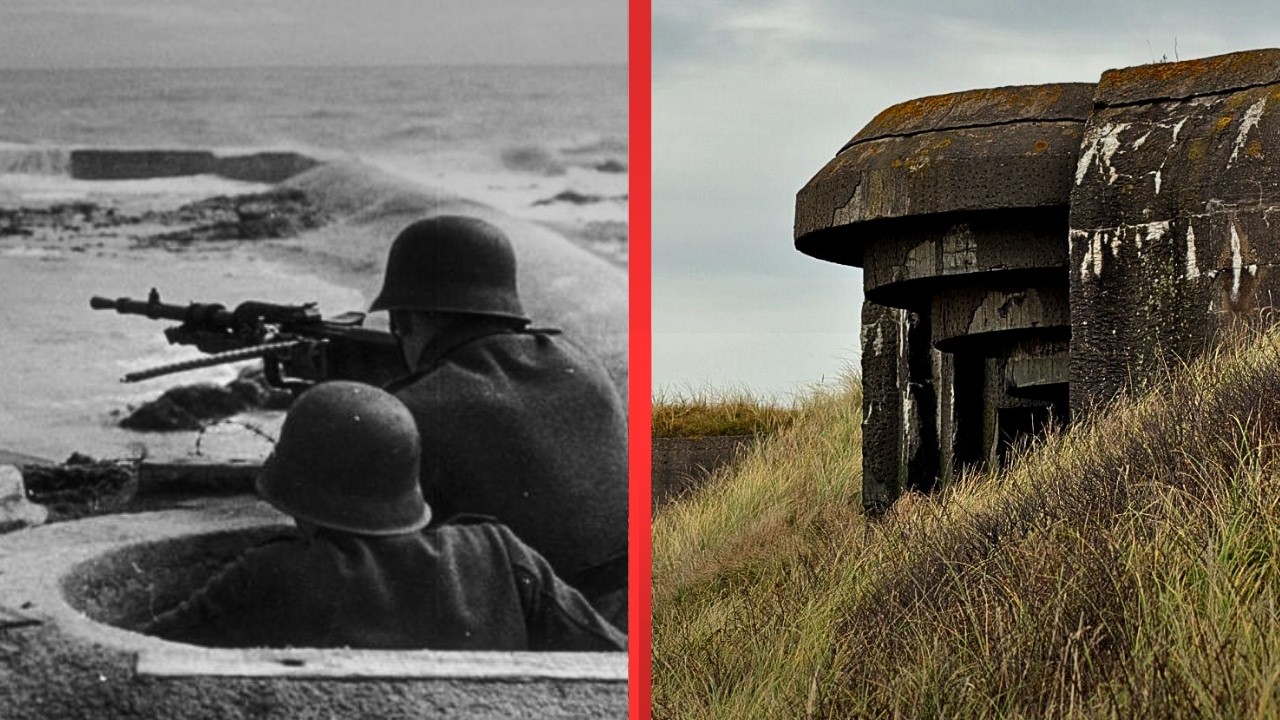
The surrender terms included one line that decided what he would do next: German commanders were to carry out every Allied order at once, without argument or comment. The first order that mattered concerned mines. The Germans had buried them by the million along the Dutch and Danish coasts, and the Allies intended the men who buried them to lift them. There was a legal obstacle.
The 1929 Geneva Convention barred the use of prisoners of war on dangerous work. The solution was administrative. Instead of treating the surrendered Germans as prisoners of war, the British classified them as surrendered enemy personnel, a category that could be sent onto the minefields. Randerath was assigned to the Dräger Brigade, named for the Wehrmacht engineer who ran it.
The unit grew past 3,000 men and lifted over a million mines from Dutch soil that year, with 179 killed and 381 injured. Records noted that of the men hit by anti-tank mines, sixty percent were killed. Randerath spent part of that year clearing fields around Roermond, thirty kilometers from his parents’ house, and was forbidden to go there. Three hundred men worked at IJmuiden, quartered on ships off the coast.
When a stretch of coast was declared clear, the men who had cleared it were given what was called a free day, spent on the ground they had just swept. They could swim, walk, and lie in the sun, but they could not leave. “We had to test with our own lives,” Randerath wrote afterwards, “whether the ground was really free of mines. ”
The work stretched back to the structure those minefields protected.
In early 1942, Hitler ordered construction of the Atlantic Wall, a defensive system running 5,000 kilometers from northern Norway to the Spanish border. The name was propaganda, as was the image of an unbroken barrier manned by elite troops. What stood on the ground was a chain of separate strong points, held by relatively few men. Building it consumed more than seventeen million cubic meters of concrete, and Organization Todt ran the work from a catalog of standard designs that fixed in advance what each structure needed.
At its peak, half a million people worked on it, and Vichy France sent hundreds of thousands of conscripted workers to the coast. Some of that labor was not labor at all. On Alderney, a Channel Island emptied of its population, the Germans ran camps for the men building the fortifications. Two of them, Sylt and Norderney, were handed to the Waffen SS in 1943 as satellites of Neuengamme.
Prisoners were worked in the open through the winter and underfed. Hundreds died on an island that was on paper British soil. For all of it, the wall did not do the job. The plan called for 15,000 bunkers along the Dutch, Belgian, and French coasts.
By the deadline of May 1st, 1943, around 6,000 existed, and the Netherlands had 510 of a planned 2,000. The men inside them were often recovering from wounds or too old for the front. On June 6th, 1944, the wall held the Allies for hours. Eleven months later, Germany surrendered.
Allied officers walked into the bunkers, tested the radar sets, and took the equipment away. Stoves and bunks were reused, and most bunkers were bricked up and left to the drifting sand. Denmark did the same work on a larger scale. German forces had laid roughly 1.
4 million mines along Danish beaches. Clearance began on May 11th, 1945, a week after the surrender, and was formalized that June as Mine Commando Denmark. What made the speed possible was paperwork. The teams knew where almost every mine was, because German records were precise.
In the summer of 1944, at a Luftwaffe radio station in central Denmark, a lance corporal named Bussa drew a map of 5,983 anti-personnel mines laid around the station, recording every block, every count, which mines were rigged to explode if lifted, and which had been left out of the pattern. His drawing is precise enough to work from today. In just under five months, the Danish teams cleared nearly 1. 39 million mines from 1,103 square kilometers, more than 9,000 a day.
Many of the men were teenagers with no training, prodding the sand by hand. By December 1945, the Danish Mine Control Office listed 149 dead, 165 severely injured, and 167 lightly injured. One mine-clearer in five had been killed or hurt. The law caught up in 1949.
Denmark, the Netherlands, and France had between them put tens of thousands of German prisoners into minefields. In France alone, at least 1,800 died. When the Geneva Conventions were rewritten that year, the new text held that no prisoner of war could be made to do dangerous work, and added a line that had not been there before: the removal of mines was to be considered dangerous labor. Demolition of the bunkers began within months of liberation.
The reasons were not mainly practical. The bunkers were the most visible thing the occupation had left behind, and people did not want to look at them. Dutch crews went at the smaller ones with explosives, but standard bunkers had walls and roofs at least two meters thick. The submarine pens were in another class entirely.
The base at Saint-Nazaire held fourteen pens under a roof eight meters deep. Removing them cost more than governments recovering from the war would spend, so the cheapest options were to fill a bunker with sand or lock it shut. Most of the ones filled with sand still are. A survey of part of the North Holland coast in 1953 recorded the fate of each structure in three words: cleared, stripped, buried.
The ones left standing were put to use. Crew bunkers had been built to house men, so from 1946, they housed men again. On Texel, a cluster became known as the Bunker Dorp, the bunker village, and the first people to live there were Texel families who could not get a house in the post-war shortage. Ten years later, those families were moved out against their will.
The bunker village had become worth more as a holiday destination. Owners enlarged the windows and hung checked curtains. Similar parks opened at Bloemendaal and Zandvoort. From the 1950s to the 1980s, spending your summer inside a German bunker was an ordinary Dutch holiday.
Other bunkers went to stranger uses: ammunition archives, art storage, mushroom growing. Denmark kept captured coastal batteries manned into the early 1950s, and the French navy took the pens at Brest. In the 1980s and 1990s, Dutch volunteers dug bunkers back out so bats could overwinter in them. Then a disaster settled the argument the demolition crews had lost.
On the night of January 31st, 1953, a North Sea storm surge broke through the Dutch dikes. Several of the breaches were at points where bunkers had been built into the dike body. Through the 1960s, many bunkers in Zeeland and South Holland were finally destroyed, not as relics of the occupation, but as a danger to the sea defenses. The wall built to keep an army out was being blown up to keep the water out.
Denmark was still clearing the wall’s minefields in the twenty-first century. The one place where German record keeping had failed was Skallingen, a sand spit near Esbjerg, where the mines shifted underground. Around 72,000 were laid there, and 61,000 lifted by 1947. The rest stayed.
Between 2005 and 2012, Denmark cleared the last minefield believed to remain on the peninsula, destroying a further 3,357 mines, sixty-seven years after the war ended. The bunkers themselves took longer to be seen as anything but rubbish. In 1958, a young Frenchman named Paul Virilio began photographing them along the Atlantic coast and kept at it for seven years. In December 1975, the pictures appeared in Paris as a book, Bunker Archaeology, arguing that these were not war debris but a new kind of building.
The French state was never persuaded. Thousands of blockhouses still stand along its coast, and no national effort has preserved them. Elsewhere, the opposite happened. The first Dutch Atlantic Wall Museum opened at Hook of Holland in 1996, and in 2012, fifteen buried bunkers were dug out at the Pointe du Hoc in France.
In Denmark, the Tirpitz gun bunker at Blåvand became a museum in 1991, a position built for four naval guns with a range of fifty-five kilometers, whose barrels were still at a railway station outside Esbjerg at liberation. The battery never fired a shot. In some places, the biggest mark the wall left behind had nothing to do with bunkers. Until 1942, the ground behind what is now the Museon in The Hague was Zorgvliet, a neighborhood of large detached houses.
The Germans cleared a strip ten kilometers long and five hundred meters wide for an anti-tank ditch across the city. Roughly 135,000 people were ordered out. Some were taken in by other families in the city, others sent to the far side of the country. Many never came back.
That cleared ground now holds the Organization for the Prohibition of Chemical Weapons and the headquarters of Europol, two of roughly 160 international bodies in the city. The Hague built itself around the scar as a center for international law. On Alderney, the reckoning never came. Captain Theodore Panchev completed a British investigation into the camps on September 12th, 1945, and the Judge Advocate General’s office found conditions had been comparable to camps elsewhere in occupied Europe.
The report was classified. Because most of the victims had been Soviet citizens, Britain passed the case onto the Soviet Union, which did not pursue it. No German officer was ever tried in a British court for what happened there. In May 2024, a British government review revisited how many died there and concluded the toll was higher than the long-quoted 389, but no higher than 1,134.
Eighty years on, the counting was not finished. The Germans had recorded every mine they buried down to the last one in the last block. Nobody kept that kind of record of the men sent to lift them.