In 1967, Mars, the corporation behind M&M’s and Snickers, launched a new chocolate bar in the United Kingdom. It was a crisp shortbread biscuit topped with caramel and coated in milk chocolate, a direct response to the growing popularity of Kit Kat, which had captured a significant share of the British market for crunchy chocolate snacks. The new product offered the same convenient elongated shape, and it could be broken into portions for snacking throughout the day. Mars marketers named it Twix, a shortened combination of the phrase “twin sticks,” a reference to the two identical bars packaged together.
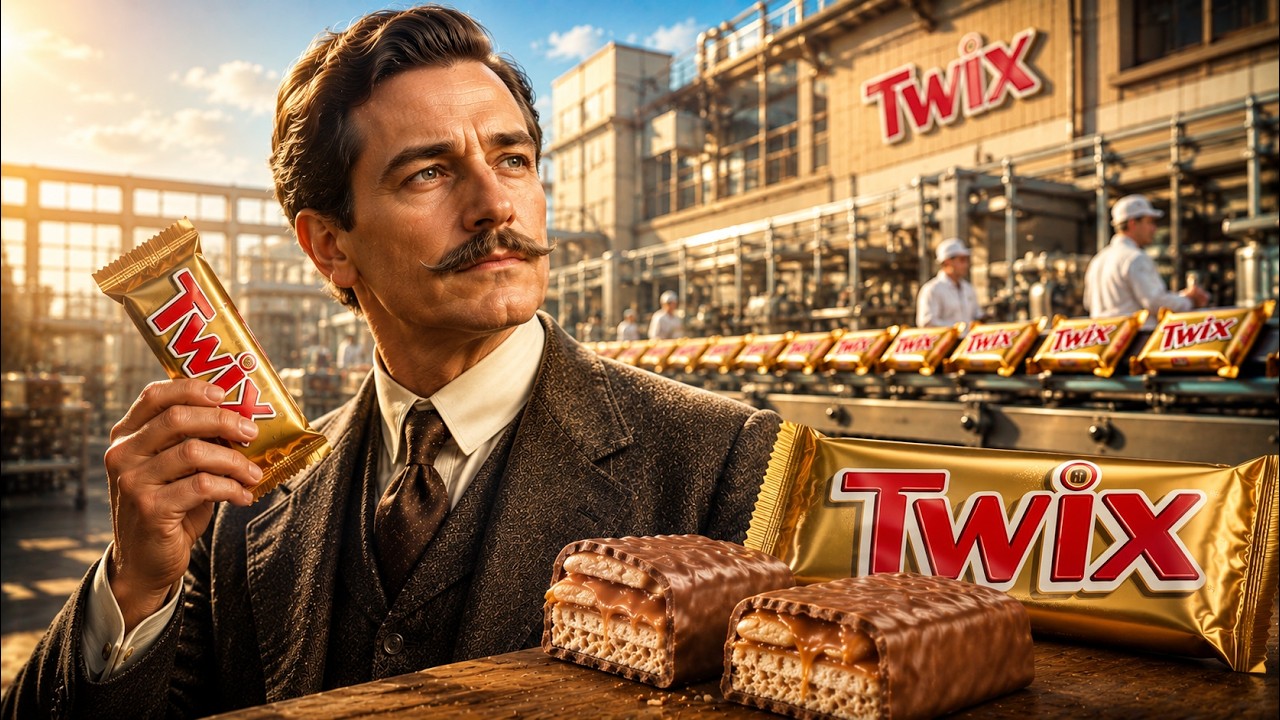
From the start, the concept centered on a pair of bars that could be eaten at once, saved for later, or shared with another person. The product quickly found a loyal audience in the United Kingdom. Mars then set its sights on continental Europe, expecting to repeat that success. But an unexpected legal obstacle emerged.
In several European countries, rights to names that sounded or looked similar to Twix were already held by other local brands. The prospect of long and expensive trademark disputes led Mars to a pragmatic decision. Across much of continental Europe, the bar would be launched under a different name entirely: Raider. For more than twenty years, the exact same product existed under two parallel names.
In the United Kingdom, Ireland, and a few other markets, it was Twix. In Germany, France, Scandinavia, and the Benelux countries, it was Raider. The packaging, typeface, and logo were completely different, and an entire generation of European consumers grew up buying Raider bars, unaware that an identical product was being sold just across the English Channel under a name they had never heard. Mars had deliberately accepted a split in its brand to avoid legal disputes, a move that stood in sharp contrast to other international companies that fought for decades to establish a single global name.
Only in 1991, as the European market moved toward greater standardization and globalization, did Mars decide to abandon the Raider name entirely and switch to Twix worldwide. The transition was gradual. Old packages were replaced store by store over several years, and for many continental European consumers, the rebranding came as a genuine shock. Their favorite childhood chocolate bar suddenly had a new name for no apparent reason, and the familiar Raider label disappeared from shelves.
Meanwhile, the bar had entered the American market with no legal obstacles. From the beginning, it was sold as Twix, and the two-in-one format became a recognizable feature of the brand. The package that held two identical bars established itself as a practical snacking option, easy to save for two separate moments or share with someone else. For decades, Twix remained a steady and successful product in America, ranking near the top of best-selling chocolate bars alongside Snickers, M&M’s, and Kit Kat.
Its advertising, however, was modest and predictable, focusing on taste, texture, and the crunch of the biscuit. Nothing suggested that this ordinary chocolate bar would one day become the subject of one of the most memorable advertising campaigns in confectionery history. In 2013, the Twix marketing department in the United States launched a campaign that initially sounded like an absurd joke. The company officially claimed that every package of Twix actually contained two chocolate fingers produced by two completely separate factories: the left factory and the right factory.
These fictional factories supposedly made their products according to slightly different, closely guarded recipes and had been competing for years for the title of the best half of the bar. Actors were hired to play the directors of these non-existent factories, delivering their lines with completely serious expressions, discussing classified production processes and the fundamental rivalry between the two independent companies. There was no wink at the camera. The presentation was conducted in an extremely serious, almost corporate tone, as though these really were two separate companies rather than one product rolling off the same production line.
The campaign captured the public’s attention precisely because of the absurdity presented with complete sincerity. Ordinary consumers began seriously discussing whether there was any real difference between the left and right fingers, tasting and comparing the two halves side by side, sharing their impressions on social media, and openly choosing a side. What began as a humorous marketing concept grew into a lasting cultural phenomenon. The campaign expanded into an entire universe of content.
The company produced dozens of commercials, each developing the fictional rivalry further. In one, a director accused the competing factory of industrial espionage and stealing the caramel recipe. In another, pseudo-documentary short films explored the corporate culture of each non-existent company. The brand released limited packages with “Left Twix” or “Right Twix” printed across them, even though the contents remained identical.
It launched a mobile game in which users took virtual jobs at one of the factories, and it placed separate shelves in retail stores divided into left and right sections, with identical bars on both. The company even filed to register separate trademarks for Left Twix and Right Twix, legally formalizing a fictional division of a single product. One particularly revealing episode played out the idea of an actual lawsuit, presented completely straight-faced, as though one factory had filed a case against the other over a caramelization process. The commercials were filmed in the recognizable style of courtroom dramas, with lawyers, witness testimony, and dramatic music.
Of course, anyone with a basic understanding of food manufacturing knew that both bars came off the exact same production line, seconds apart. The campaign became a textbook example of transforming an identical product into a source of genuine emotional engagement. People are psychologically inclined to choose sides and defend their opinions, even when the subject is trivial. Twix exploited this tendency, turning a simple purchase into an act of personal identity.
Sales increased noticeably during the most active advertising periods, and the “choose your side” concept spread across social media for free. Users created memes, jokes, and arguments around the two identical halves, effectively doing much of the marketing work themselves. The campaign continued for over a decade, regularly refreshed with new twists in the rivalry. Today, the concept of left Twix and right Twix is so deeply embedded in the minds of American consumers that many genuinely believe there must be some real difference between the two bars, even though Mars has never seriously hidden that the entire story is pure marketing fiction.
Independent analysts later described the campaign as one of the best examples of keeping an audience engaged with an everyday product for years without changing the product itself, simply by building an evolving fictional universe around it. The full story of the modest chocolate bar spans nearly six decades. Invented as a competitive response to Kit Kat, it spent twenty years existing under two different names on opposite sides of the English Channel because Mars chose to avoid legal battles rather than fight for a single name. Decades later, that same company created a completely fictional conflict between two identical halves of the same bar.
It proved so convincing and so well executed that millions of people sincerely chose a side in a war that never existed. There is also the quieter, almost forgotten chapter: those twenty years when the same bar lived under two names, and most continental European consumers had no idea that Twix even existed. Today, the name is known almost everywhere. And despite knowing that both bars inside the package are absolutely identical, produced on the same equipment just a few meters apart, people still choose a favorite side.
It simply feels more honest that way.