The night she decided to poison the entire family was the same night she realized she would never survive in that house—not as a wife, not as a daughter-in-law, not even as a human being. She could still recall the way her hand shook as she crushed the bitter herbs into the evening stew, her heart pounding so loudly she feared the servants in the kitchen could hear it. Weeks earlier, she had been forced to marry her master’s son, paraded around like a prize and told to be grateful for the honor. She had not always been this person.
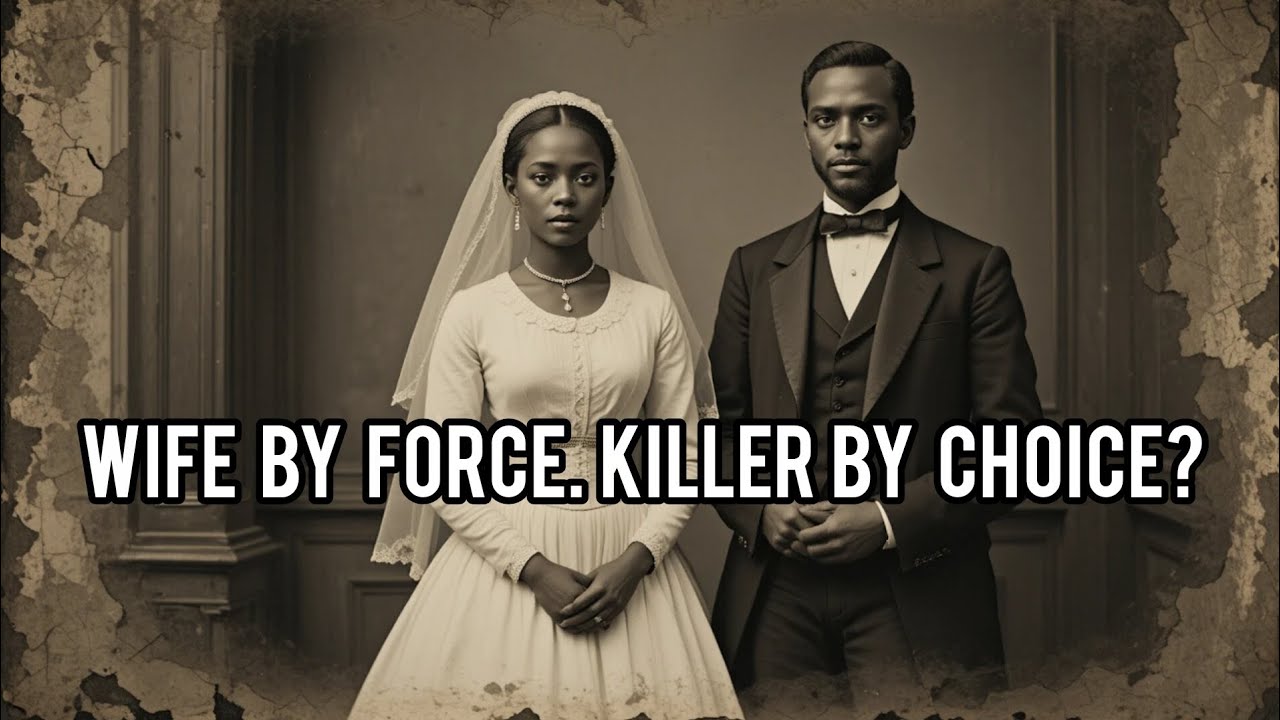
Before the house, before the wedding, before the poison, she was just a girl trying to survive. She was born on a plantation, raised to work the fields, taught early that her body, her time, and her future did not belong to her. Her mother used to whisper stories at night about freedom, about running north, about a life where they could choose whom they loved and where they lived. But her mother died when she was fourteen, taken by fever in the middle of summer, and with her went the last bit of softness in the girl’s world.
After the funeral, she was moved from the fields to the main house. They said it was because she was well-mannered and pleasant to look at, and she knew what that meant. She scrubbed floors, washed linens, polished silver, and learned to move silently through hallways filled with people who would never see her as anything more than property. The master of the house was a cold man, but it was his wife who truly terrified her.
The mistress had a way of smiling while saying the cruelest things, as though amused by her very existence. Their son, Edward, had just returned from university when the girl turned eighteen. He was older by nearly ten years, educated, well-dressed, and bored. She noticed the way his eyes lingered on her the first time he saw her carrying a tray into the dining room.
She kept her gaze down, just as she had been taught, but that did not stop him. It started with small things: he would call her into the study for no real reason, asking for tea he did not drink or books he did not read. He would stand too close, brush his fingers against hers, ask about her life as if it were some exotic tale. She answered carefully, always aware that one wrong word could cost her everything.
He liked to remind her that she was different from the others, that she was special. She knew better than to believe him. One evening, waiting outside the parlor doors to clear the glasses, she overheard something that changed her life. Edward was laughing with his father.
“I’ve made up my mind,” he said. “I want her. ” His father asked, amused, “The little house girl? ” Edward replied, “Yes, why not?
It’ll be good for her, better than the fields. ” They spoke about her like livestock, as if she had no ears, no heart, no fear. A week later, the mistress summoned her and announced she had been chosen for a great honor: her son had decided to take her as his wife. She stared, certain it was some kind of joke.
Slaves did not marry into the master’s family. But the mistress explained it was not about love or equality—it was about control. If the girl became his wife, she would belong entirely to him. No risk of another man claiming her.
No risk of her bearing children that were not his. It would secure his legacy. She tried to protest, saying she did not want this, that she was not worthy. The mistress slapped her so hard her ears rang for hours.
“You don’t get to want,” she said quietly. “You don’t get to choose. ”
The wedding was small and private—no celebration, no music, just a preacher, the master, the mistress, and Edward standing beside her in a stiff black suit. She wore a plain white dress they had picked out, not for beauty, but for symbolism.
She remembered thinking how ironic it was that they cared about purity when they had stolen everything else from her. Edward held her hand during the ceremony, gripping tightly enough to hurt when the preacher pronounced them husband and wife. Everyone smiled except her. That night, she learned what her new role truly meant.
Marriage did not make her safer or more equal. It only gave him legal and moral permission to do whatever he wanted. She lay staring at the ceiling afterward, feeling as though she had left her body. Something inside her cracked.
The days that followed were worse than she had imagined. The mistress treated her like a servant who had overstepped her place, criticizing the way she poured tea, the way she spoke, the way she walked. “You may carry our name now,” she would say, “but don’t forget where you came from. ” Edward treated her like a possession he had just purchased, showing her off to guests and making her stand beside him in the drawing room while they stared.
Some were shocked, others amused. No one asked how she felt. The final straw came about a month into the marriage when she discovered she was pregnant. Edward seemed pleased at first, but his mother’s reaction was ice cold.
She pulled the girl aside and whispered that if she gave birth to a child who looked too much like her, there would be consequences. She did not need an explanation of what that meant. That night, sitting alone in the small room she was allowed to call hers, she realized something horrifying: her child would be born into the same cage she had lived in her entire life—owned, controlled, powerless—and she would have helped put them there. She began to think in ways she never had before.
She paid attention in the kitchen to the herbs the cook used, to the remedies the older women whispered about. She remembered her mother’s stories about plants that could heal and plants that could harm. At first, these thoughts terrified her. She was not a violent person.
She did not want blood on her hands. But the house grew more suffocating each day. Edward became more possessive, more unpredictable. The mistress watched her like a hawk.
The master barely acknowledged her existence unless it was to remind her of her place. She realized there was no future here, no escape. They would never let her leave, especially not with a child carrying their blood. The decision came quietly.
It was not dramatic, not fueled by rage in the moment. It was slow and deliberate. She began collecting small amounts of certain herbs from the garden and the storage room—nothing that would raise suspicion. She ground them into fine powders and hid them in a small cloth pouch beneath a loose floorboard in her room.
Her hands shook the first time she prepared them, not because she doubted what they could do, but because she knew there would be no turning back. She chose a night when the entire family would be present for dinner. The master had invited a business associate earlier in the week, but the man had cancelled that morning. It felt like fate clearing the room.
The cook was overwhelmed, and she offered to help prepare the stew. The cook barely looked at her, just waved her toward the counter. When no one was watching, she added the powder—just enough, not dramatic, not immediate. She did not want a scene at the table.
She wanted them to feel it later, in the quiet of their own rooms, when it was too late to do anything about it. They sat at dinner like any other night. Edward talked about expanding the plantation. The master nodded approvingly.
The mistress complained about the servants. She forced herself to eat a small portion she had prepared separately earlier, keeping her face calm and her voice steady. If they noticed anything unusual, they did not show it. The first signs came an hour later.
The mistress excused herself, complaining of dizziness. The master followed soon after, looking pale. Edward tried to brush it off as spoiled food, but she saw fear flicker across his face when he began to feel it too. By midnight, the house was in chaos—servants running back and forth, doors slamming, groans echoing down the hall.
She stayed in her room, sitting on the edge of the bed, listening. Her heart felt like it was being squeezed in a fist. She was not smiling. She was not triumphant.
She was terrified, not of them, but of what she had become. By morning, the house was silent. The doctor who arrived later that day declared it a sudden illness—food poisoning, perhaps, something unfortunate, tragic, but not suspicious. She had been careful.
There was no evidence, no reason to point a finger at her. As the only surviving member of the immediate household and legally Edward’s wife, she inherited more than anyone ever expected. The estate did not automatically grant her freedom in the eyes of the law, but it gave her leverage. Distant relatives contested it, of course, but none had lived in the house, none had cared for Edward as his wife.
The paperwork, twisted as it was, worked in her favor. Within months, she sold the majority of the property and freed every person who had been enslaved there, using the legal authority she now held. Some looked at her with confusion, others with gratitude, a few with suspicion. She did not blame them.
They did not know what she had done. They only knew the family was gone. She left that town before her pregnancy began to show and traveled far to a place where no one knew her name. She gave birth to a daughter in a small cottage by the sea.
When she held her for the first time, she cried—not out of guilt or fear, but out of relief. Her daughter would never know chains. She would never be owned. She thinks about that night every single day.
She thinks about Edward’s laugh, the mistress’s cold smile, the master’s indifferent gaze. She thinks about the choice she made and the lives she ended. She does not pretend it does not weigh on her. There are nights she wakes up sweating, hearing echoes of that chaotic evening.
But then she looks at her daughter, watches her run freely along the shore, her laughter carried by the wind, and she knows that if she had done nothing, the girl would have been born into the same nightmare she escaped. Her actions were dark, there is no denying that, but they were born from desperation, from survival, from a mother’s refusal to let history repeat itself.