On October 30, 2025, Buckingham Palace stripped a man of his title. Andrew would no longer be a prince, would no longer be the Duke of York, and would have to leave Royal Lodge for a house on the Sandringham estate, funded privately by his elder brother. The public read it as the monarchy finally losing patience over the Jeffrey Epstein affair. The official papers told a colder story.
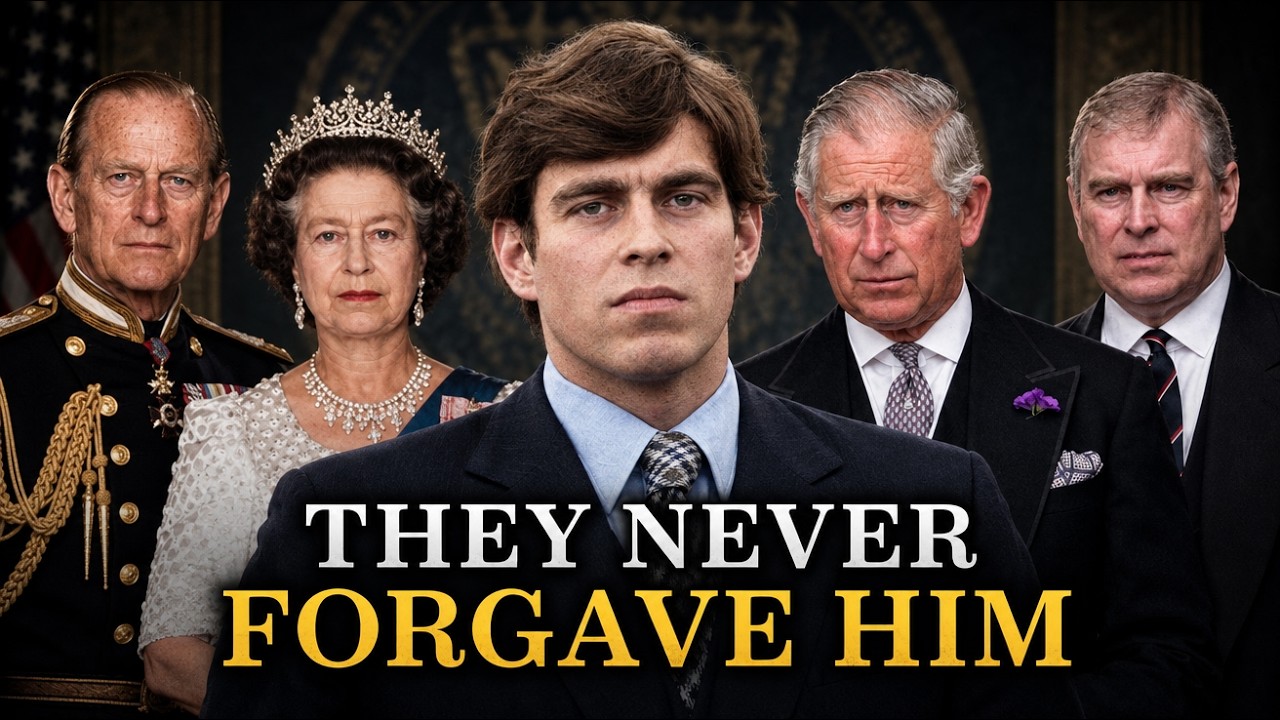
His removal had been nearly impossible because of a lease his mother had allowed him to sign in 2003. Seventy-five years at a peppercorn rent. Thirty rooms. Three years earlier, Parliament had quietly legislated around him.
Begin with the lease, because the lease is the heart of the entire story. In 2003, the Crown Estate granted Andrew a 75-year lease on Royal Lodge, a Grade II listed house on roughly 98 acres in Windsor Great Park, the home where his grandmother had lived until her death the year before. He paid an upfront sum estimated at around one million pounds. He committed to spending nearly seven and a half million more on repairs and renovations, a figure the Crown Estate later confirmed when the terms were made public.
After that, the rent was nominal. In the literal legal sense, a single peppercorn if requested. No one ever requested it. This arrangement is why it took 22 years.
Most people assume royal residences work like hotel keys, distributed and retrieved at the monarch’s whim. Royal Lodge did not work that way. Andrew held a commercial lease with a diminishing compensation schedule tied to the money he had poured into the building. The Crown Estate is legally bound to act in its own commercial interests, not the personal interests of the monarch.
There was no clause saying, except if the family causes embarrassment. If Charles wanted his brother out, he could not simply issue an order. He had to make Andrew choose to give up a lease that was, on paper, extremely good. So when the palace statement came in October 2025 and the world read it as a belated act of moral housecleaning, what had actually occurred was narrower and in some ways crueler.
A tenant had finally been forced to hand back a lease. The language of the statement was precise and carefully considered. The King had begun a formal process to remove titles, honors, and distinctions. These sanctions were deemed necessary despite the fact that Andrew continued to deny the allegations against him.
That last clause was the sound of lawyers in the room. No one was admitting anything about guilt. They were just taking back the house and the name. Which raises the question that echoes through every year of this story.
It is not a question about scandal. Who was paying for Andrew? Not metaphorically. Literally.
The allowances, the security, the staff, the travel, his daughters’ upbringing, the renovation of a 30-room house for a man who had held no salaried public role since 2011. Someone had been writing those checks for decades. And when you find out who, you also understand why his brother and sister spent most of their adult lives regarding him with something the tabloids eventually called hatred, which might be more accurately described as a long, very detailed bill. None of the siblings ever said that word.
Anne does not give interviews about her feelings. Charles communicates through other people or not at all. Edward learned early what happens to a Windsor who speaks. What we have instead are decisions.
And decisions are better evidence than an anonymous quote in a Sunday paper. Funding decisions, housing decisions, and one decision in particular that almost no one noticed at the time tells you the family had settled this matter years before the final announcement. In 2022, Parliament passed the Counsellors of State Act. Counsellors of State are the people who can legally act for the monarch when he is abroad or ill, signing documents, holding Privy Council meetings, carrying out constitutional duties.
Under the old formula, the task went to the sovereign’s spouse and the next four adults in the line of succession. By the autumn of 2022, that list included Andrew, who had withdrawn from public life, and Harry, who had moved to California. The government’s solution was elegant and faintly humiliating. It did not remove them.
Removal would have required argument, and argument would have required naming the problem out loud. Instead, the law simply added Princess Anne and Prince Edward to the list, so the two unwanted names would never be called. Think about what that meant. The Princess Royal and the Earl of Wessex, the two siblings who had spent 50 years being told their constitutional usefulness came after Andrew’s, were now officially placed above him in the only mechanism that actually mattered.
It passed the House of Lords in November 2022 and received royal assent in December. No scandal accompanied it. No headlines. The Queen had been dead for three months.
That is the timeline to hold onto because it dismantles the narrative everyone believes. The family did not turn on Andrew in 2025 when Virginia Giuffre’s posthumous memoir and Epstein’s emails surfaced. They removed him from the machinery of the monarchy within weeks of their mother’s funeral. Everything after that was a long property dispute.
Andrew was born at Buckingham Palace on February 19, 1960. He was the first child born to a reigning British monarch in 103 years, since Queen Victoria gave birth to Princess Beatrice in 1857. That might seem trivial. It is not.
It meant that from the first hour of his life, Andrew occupied a place within the institution that no one of his generation possessed and no one could bestow. He was the son of a working queen, born in the heart of the operation. And he was second in line to the throne. Under the male-preference primogeniture rules then in force, Andrew outranked his older sister.
Anne, born in 1950 ten years before him, had been second in line until the moment he arrived, then permanently moved backward because of her sex. She spent her entire life as the hardest-working member of the family, logging numbers of public engagements that embarrassed the others, and never again approached the center of the order. Edward, arriving in 1964, was born at the bottom of the structure and stayed there. Charles’s position was different, and in some ways worse, because what Charles lost to Andrew was not rank.
It was their mother. The gap matters. Charles was eleven when Andrew was born; Anne was nine. Their early childhoods coincided exactly with their mother’s accession, her long Commonwealth tours, the period when the young queen was being shaped by courtiers who believed work came first and childcare second.
By 1960, the Queen was thirty-three, settled in her role, more confident in what she could refuse, visibly more present. She postponed engagements. She kept the baby with her. The second family, as the palace quietly called Andrew and Edward, got a version of her that the first family never had.
There is a documented disparity in maternal warmth. And more importantly, there is a documented disparity in what she was later willing to do about it. In the spring of 1982, Britain fought a war over the Falkland Islands, and the government seriously considered keeping the Queen’s second son away from the task force. The Queen’s position, published at the time and confirmed repeatedly since, was that he should go with his ship.
He went. He flew Sea Kings from HMS Invincible with 820 Naval Air Squadron. Part of that mission involved flying the helicopter into the path of incoming Exocet missiles so the missiles’ radars would track the aircraft rather than the carrier. On June 21, 1982, while Andrew was still in the South Atlantic, his brother Charles and his wife Diana had a son.
William’s arrival shifted Andrew’s standing in a way no amount of courage in the South Atlantic could compensate for. He had been second in line since birth. He ceased to be second in line in the middle of a war and learned of it by radio signal. By the time Invincible returned to Portsmouth on September 17, 1982, he was third.
Within a few years, fourth, then fifth, and the decline never stopped because Charles kept having children and those children had children, and every birth pushed Andrew further down the list he had topped for 22 years. The return photo is what everyone remembers. The Queen went to Portsmouth to meet the ship. She stood on the naval dockyard with Philip waiting for the carrier to approach, and Andrew came down the gangway with a red rose between his teeth.
The photo records not a mother’s relief, though every mother on that dock felt relief. It records the Queen of the United Kingdom going to him publicly. That was the real privilege. Not rank.
Her, physically, visibly, before a crowd. He was 22, the most popular royal in the country. Fleet Street affectionately called him Randy Andy, which shows how different the press environment of 1982 was from the one that eventually tore him apart. He was a war hero with a naval career and a face that sold newspapers.
Four years later, they monetized it. On July 23, 1986, Andrew married Sarah Ferguson in Westminster Abbey before a global television audience estimated at 500 million people. That morning, the Queen created him Duke of York, the title traditionally given to the monarch’s second son. The wedding worked commercially and politically.
Then came the house. The Queen’s wedding gift to Andrew and Sarah was Sunninghill Park in Windsor Great Park. A new house was built for them, completed in 1990 with around 12 bedrooms and a swimming pool. The cost was estimated at around 5 million pounds, paid from the Queen’s private funds.
Compare that with what his siblings received. Anne married in 1973; her wedding gift was Gatcombe Park, an existing estate that had been purchased, and she ran it as a working farm. Edward, when he married Sophie Rhys-Jones in 1999, was given Bagshot Park on a lease from the Crown Estate, for which he and Sophie paid, and they funded their own renovation. Anne bought a working farm.
Edward took a leasehold and paid for it. Andrew had a house built for him. That pattern continued for 50 years, and it is the foundation of the siblings’ resentment, far more than anything that happened with Jeffrey Epstein. Here is what most people do not know about how the modern royal family is funded.
Until 1992, the Civil List, the parliamentary grant covering the Queen’s official expenses, also covered allowances for a number of working royals, including Andrew. The sums were public. Andrew’s share was in the region of 249,000 pounds a year. Then came the annus horribilis, the Windsor Castle fire, the public controversy over whether taxpayers should fund the repairs, and the Queen’s agreement to start paying income tax.
As part of that settlement, from 1993, the Queen personally repaid those parliamentary allowances for minor royals to the Treasury. The headline figure stayed roughly the same. The source changed completely. Since 1993, Andrew’s income no longer came from Parliament, which could have cut it after debate, or from the Prince of Wales, who would have attached conditions.
It came from his mother’s private account. There was no oversight mechanism. No committee. One woman decided every year to keep paying, and she did so for the next 29 years.
She kept paying through everything. In 2001, after leaving the navy following 22 years of service, Andrew was appointed the UK’s special representative for international trade and investment, a position with no salary but with travel, security, and accommodation expenses covered from public funds. They gave a man with no job and an unlimited budget a reason to get on airplanes. For the first few years, he did the work.
But he was not cheap. Costs emerged gradually through parliamentary questions and Freedom of Information requests, forming a picture the press eventually named. Air Miles Andy. A single trip to Northern Ireland in 2004 by helicopter cost around 3,000 pounds for a journey that could have been made commercially for a fraction of that.
A round of golf at a championship course on the day of an official visit. 3,000 pounds of public money to fly to the Open. The numbers were small compared to government spending, but enormous as symbols. For the first time, Andrew’s consumption of institutional resources became a public audit record.
Something Charles and his office knew about and could do nothing about was now in the parliamentary record. And Charles was, at exactly that moment, building the second great cause of his life. The slimmed-down monarchy was not a phrase invented by commentators. It was a project Charles had been working on since at least the late 1990s.
The institution could not survive the 21st century funding dozens of adults to cut ribbons. The future belonged to the sovereign, the heir, and their immediate families. Everyone in the working royal family understood what that meant for them personally. Anne, who worked harder than anyone, understood and agreed anyway.
Edward and Sophie, after losing their commercial careers, were folded into the shrinking core. The people to be excluded were those with high costs and low output. That was Andrew’s profile, written by his brother from roughly 2002 onward. And Charles could do nothing about it because of what happened in March 2002.
Queen Elizabeth, the Queen Mother, died at Royal Lodge in Windsor on March 30, 2002, aged 101. Within about 18 months, its tenure passed to Andrew. The Crown Estate, which owns it, granted him a 75-year lease. He paid a premium reported at around one million pounds and carried out renovation work later valued by the Crown Estate at approximately seven and a half million.
After that initial outlay, the rent was nominal. The lease runs to 2078, when Andrew will be 118. Two things about that deal deserve pause. The first is where the eight and a half million pounds came from.
Andrew had no salary. He had an allowance from his mother, estimated at around a quarter of a million annually, plus a navy pension. That does not buy a 75-year lease on a Georgian mansion and then pay for its restoration. The Crown Estate always maintained the deal was at market value and commercially appropriate, and perhaps it was for them.
They got a listed, derelict building restored at no cost to themselves. But the money that restored it did not come from Andrew’s earnings, because Andrew had no earnings. The sources of his capital in that period were never fully publicly disclosed. The second thing is the structure.
Charles was simultaneously arguing the monarchy should shrink while his younger brother had just signed a contract for a 30-room house in Windsor Great Park until 2078 at no rent, with no work, and no mechanism by which anyone could remove him. A residence granted by royal favour could be withdrawn. A commercial lease could not. His mother had allowed him to convert her protection into a legal instrument, and legal instruments outlive mothers.
In 2007, he sold the other house. Sunninghill Park had been on the market since 2005 at an asking price of around 12 million pounds. It sold in 2007 for 15 million. Three million over asking, in cash, after two years of no interest.
The buyer never moved in, never rented it, never developed it. The house sat empty and deteriorating for years and was eventually demolished in 2016. The buyer was eventually identified as a company linked to Timur Kulibayev, the billionaire son-in-law of Nursultan Nazarbayev, then president of Kazakhstan, a country Andrew had visited repeatedly as a trade envoy. All involved always denied wrongdoing.
No investigation established an exchange of favours. But the Treasury Select Committee noticed. The press noticed. And inside the family, the people who had spent decades being cautious about this kind of thing noticed more sharply.
What the Sunninghill sale proved was that Andrew had an independent income source no one in the family could see, generated by relationships no one in the family had examined, with people whose interest in him was inseparable from his position. That is not a scandal. That is a security problem, and it concerned the entire family. He stepped down as trade envoy in July 2011, and the reason was a photograph.
In February 2011, the Mail on Sunday published a picture taken in late 2001 in New York. It showed Andrew with his arm around the waist of a 17-year-old girl named Virginia Roberts at a Belgravia house belonging to Ghislaine Maxwell. Roberts, later known as Virginia Giuffre, claimed she had been trafficked to him by Jeffrey Epstein. Andrew always denied this, categorically and consistently, and was never convicted in any court.
Separately, there were photos of Andrew walking through Central Park with Epstein in December 2010. Epstein had been released from prison in Florida in 2009 after a conviction for soliciting prostitution from a minor. Andrew had traveled to New York and stayed at his house. The Central Park photos are what ended his job.
They proved nothing about Giuffre’s allegations. What they proved was a personal choice. After the conviction, after everything was public, Andrew got on a plane, stayed in that house, and went for a walk in a Manhattan public park with a registered sex offender. Political pressure built through the spring.
The Foreign Office could not defend him. In July 2011, it was announced he would stand down from his trade role. Now assemble the facts as his family was forced to do. Andrew was 51.
He had no job and no prospect of another. He had no income except his mother’s allowance. He had no public duties that justified security officers costing hundreds of thousands of pounds a year. And he had a 30-room house in Windsor Park on a 75-year lease at no rent.
The family reached the position it would occupy for the next eleven years. They could not fire him from a job because he had no job. They could not evict him because of the lease. They could not cut off the money because the money came from a woman who would not stop.
And they could not say any of this publicly because the only way to explain why Andrew was a problem was to talk about Epstein. The ending did not come from an investigation. It came from an interview he requested. On November 16, 2019, BBC Newsnight broadcast an hour with Emily Maitlis, filmed in the state rooms of Buckingham Palace.
He said he did not remember ever meeting Virginia Giuffre. He said the photograph could not be him. He said that on the night in question, he had taken his daughter Beatrice to a Pizza Express in Woking for a party. He remembered it because going to a Pizza Express in Woking was unusual.
He said he had a medical condition since the Falklands War that prevented him from sweating, contradicting a woman’s account. Asked about Epstein and whether he regretted the friendship, he said the time he spent there was very useful because he met lots of people. He said he had gone to Epstein’s house in December 2010, after the conviction, specifically to end the relationship because doing it in person was the honourable thing to do. No one needed to investigate him after that.
Four days later, on November 20, 2019, he issued a statement saying he had asked the Queen’s permission to step back from public duties for the foreseeable future and she had given it. Examine the structure of that sentence. He asked. She granted.
It was framed, to the last, as a mother’s decision about her son. What followed over the next two years was a slow transformation of a private family problem into a legal one. In August 2021, Virginia Giuffre filed a civil suit against Andrew in the Southern District of New York under New York’s Child Victims Act. On January 12, 2022, Judge Lewis Kaplan denied the motion to dismiss.
Andrew would have to give testimony. The palace moved the next day. On January 13, 2022, Buckingham Palace announced his military affiliations and royal patronages had been returned to the Queen. He would no longer use the style His Royal Highness in any official capacity.
He would defend the case as a private citizen. Five weeks later, on February 15, 2022, the settlement was filed. Andrew would pay an undisclosed sum, widely reported at around 12 million pounds, without admission of liability. The source of the funds was never officially confirmed.
Contemporary reports indicated a significant portion came from the Queen’s private funds, possibly via the Duchy of Lancaster, with the sale of the chalet in Verbier, jointly owned with Sarah, covering part of it. The last significant thing she did for him was pay to prevent him from having to answer questions under oath. She died on September 8, 2022 at Balmoral. Andrew was there.
He walked behind the coffin in Edinburgh and in London, in civilian clothes rather than military uniform because the uniform no longer belonged to him. At the Vigil of the Princes in Westminster Hall, the new King made a specific decision to allow Andrew and Harry to wear military uniform for that occasion only. It was reported as a gesture of sympathy, and perhaps it was. It was also the last thing Charles gave him.
The accounts changed overnight. The allowance had been a private payment from a private person. That person was gone. The Duchy of Lancaster now belonged to the King, and the King had spent 30 years arguing the institution could not afford men like his brother.
Two months later, the Counsellors of State bill was presented to the House of Lords. The mechanics of that law tell you everything about how this family handles its members. There was no debate about Andrew’s suitability. No clause naming him.
The Lord Chancellor’s office simply proposed adding Anne and Edward to the list of available counsellors, with explanatory notes coldly referring to ensuring there were sufficient working royals. Working. One word doing all the work. It passed.
Royal assent came in December 2022. Anne, displaced from second in line by her brother’s birth in 1960, now officially outranked him in the one function carrying actual constitutional authority. Edward, who had lost his company because Charles would not tolerate embarrassment, was there with her. Neither said anything.
Punishment is administrative, and silence is the point. Then the King began closing the taps one by one. The private allowance stopped, or was significantly reduced. Reports throughout 2023 and 2024 consistently indicated Charles ended the annual payment of around a quarter of a million pounds.
The funding of Andrew’s security at Royal Lodge, which the King had been covering personally after the Met police withdrew state-funded protection, became the subject of public leaks. Andrew was offered Frogmore Cottage, which Harry and Meghan had vacated. Five bedrooms. He refused.
He could refuse because of 2003. The Crown Estate was not the owner of the property by royal grace; it was a contract, and the contract said he had paid an upfront sum, spent seven and a half million on the building, and was entitled to stay until 2078 at a peppercorn rent, provided he maintained the property in good condition. That last clause became the pressure point. Throughout 2023 and 2024, a leak war raged over the condition of the house, whether the roof had been maintained, whether he had breached the contract.
He held out for two years with no income, no role, no security funding, no allies inside the palace. He kept a 30-room house in the face of the King of England. What finally broke the impasse was not Epstein. It was a Chinese businessman and an immigration court document.
In December 2024, the Special Immigration Appeals Commission in London issued a ruling in the case of a man identified in proceedings only as H6, who had been excluded from the UK in 2023 on national security grounds. He was later identified as Yang Tengbo. The ruling revealed he had been invited to Andrew’s birthday party, that he had been authorized to act on Andrew’s behalf with potential investors in China, and that documents found on his phone at his border detention in 2021 included a letter from Andrew’s then-senior advisor, Dominic Hampshire. That letter stated Yang was able to provide the right kind of confidential relationships that Andrew required.
Yang consistently denied any wrongdoing. The court did not find him guilty of anything criminal. But it upheld the Home Secretary’s assessment that his exclusion was in the public interest. The judgment placed in the public record something the family had suspected since the 2007 Sunninghill sale and had never been able to prove.
Andrew was running a private commercial operation out of Royal Lodge with unvetted advisors, cultivating relationships with foreign nationals whose interest in him was inseparable from his residence in Windsor Great Park. That is not a scandal about a photograph from 2001. That is a live security vulnerability two miles from the King’s bedroom, now in a published legal document anyone could read. He did not attend the family Christmas celebration at Sandringham that year.
Throughout 2025, the pressure became procedural rather than moral. Parliamentary committees began asking the Crown Estate direct questions about the Royal Lodge lease. In the summer, the Public Accounts Committee requested the terms. The Crown Estate released them, and the numbers that had been rumored for 20 years became official.
The premium of around a million, the seven and a half million in works, the peppercorn rent. The committee’s interest was not sexual abuse allegations. It was whether a public body had granted a man a 75-year lease on a Grade II listed mansion without rent. That question had no good answer.
For the first time, the house itself, not its occupant, was the problem. Then, in October 2025, two things happened in the same month. The first was the publication of Virginia Giuffre’s memoir, which she had completed before her death in April 2025 at age 41 and was published posthumously. The second was correspondence.
Emails between Andrew and Jeffrey Epstein were published, showing communication in February 2011, after the date Andrew told Emily Maitlis he had ended the friendship in person in December 2010 because it was the honourable thing to do. One email, written days after the Mail on Sunday published the photo with Giuffre, had Andrew telling Epstein they were in this together and had to get through it. That is the detail that ended it, not the allegation he always denied and never tested in court. The lie about the date, in his own words, contradicted by his own emails, six years after he voluntarily put the story on camera in his mother’s palace.
On October 17, 2025, a statement was issued in Andrew’s name, saying that in discussion with the King, he had agreed that his continued use of his titles diminished the monarchy’s work, and he would therefore not use the Dukedom of York or its associated titles. He continued to deny the allegations against him. Thirteen days later, the King finished the job properly. The October 30 statement announced a formal process had begun to remove titles, honours, and distinctions.
He would henceforth be known as Andrew Mountbatten-Windsor. The Royal Lodge lease would be surrendered. He would move to a private residence on the Sandringham estate, with the King personally funding his expenses. Six words in that statement do the work of the whole story.
Private residence, privately funded by the King. The allowance did not end. The payer changed. For 29 years, the mother gave with no conditions.
Now the brother paid, and the conditions were the house, the name, and the distance. Sandringham is in Norfolk, 150 miles from Windsor. Parliament moved separately on the dukedom itself, since a peerage created by letters patent in 1986 cannot be erased by press release. A Titles Deprivation Bill was introduced to deal with what the palace could not.
Even at the end, the mechanism was administrative. No one stood up and explained why. Consider what Anne and Edward received from all this. Anne, who lost her second place in the succession in 1960 for being a girl, became in 2022 one of those authorized to act for the monarch.
She still lives at Gatcombe. She still performs more official engagements than almost anyone else in the family. Edward, whose production company was closed partly because Charles tolerated no breach of agreements, became Duke of Edinburgh in March 2023, the title Charles gave him on his 59th birthday, fulfilling the wish their parents had expressed at his 1999 wedding, left hanging for 24 years. The brother who submitted to discipline received their father’s title.
The brother who received legal protection lost his name. That is the family’s judgment, delivered in the only language it uses. What must be said clearly is that the title of this story is the tabloid version, and the tabloid version is lazy. There is no evidence Charles, Anne, or Edward hated their brother.
No quotes. No letters. What exists instead is 50 years of decisions, remarkably consistent ones. They watched a house be built for him while they bought or leased their own.
They watched parliamentary allowances become private payments from their mother that no one could question. They watched him cost public money for a role that produced nothing and ended in scandal, yet kept the allowance. They watched him sign a 75-year lease on the best private house in Windsor Great Park in the same years Charles was telling anyone who would listen the monarchy had to shrink. They watched him refuse to leave for two years after the death of the woman who funded him.
The resentment was structural before it was personal, and it was personal before it had anything to do with Jeffrey Epstein. Andrew no longer controls almost anything. He has a distinguished naval record. He has two daughters who have never abandoned him.
He has one hour of television he volunteered to appear in that will be aired as long as television exists, now serving as the primary document in the case against himself. His account of events lives mainly in a book written by a woman he said he never met. The denial remains. He was never charged, never convicted, never held accountable in court.
That must be said every time. And the settlement he paid bought a permanent impossibility of resolution. Now return to Portsmouth. September 1982.
The carrier approaches the dock, the Queen stands among the crowds of families, her son comes down the gangway with a rose between his teeth, and the photo leads the front pages. For 40 years, that photo meant exactly what it appeared to mean. A mother who could not wait for the private moment. A queen who broke protocol because her boy had come home from war.
It still means that. She went to him. In a family where the architecture of every room was designed for people to come to her, she went down to the water and waited. What the photo does not show is that she was the only transferable asset he ever had, and she was not transferable at all.
Everything that followed, the dukedom, the house built in Windsor Great Park, the quarter of a million a year, the 75-year lease, the 12 million that ended a lawsuit, all of it came from that one relationship and passed through that one person. Charles had the throne. Anne had the work. Edward had the discipline.
Andrew had his mother, who spent 30 years converting her preference for him into property, income, and protection he could not have earned for himself and his siblings could not touch. She died on a Thursday in September. The accounts were settled by Christmas. Look at the photo again.
Everyone else on that dock went home to lives they had built themselves. Andrew went home to a woman who paid for his life, and when she stopped, there was nothing underneath it.