The American soldiers who walked into Dachau in the spring of 1945 had known they were marching toward a concentration camp, but knowing and seeing were two different things. What they found inside and around the camp grounds led some of them to open fire on the SS men who had been captured there. By the end of the first hour, 122 SS men were dead, shot by American troops. Another 40 were killed by the prisoners themselves.
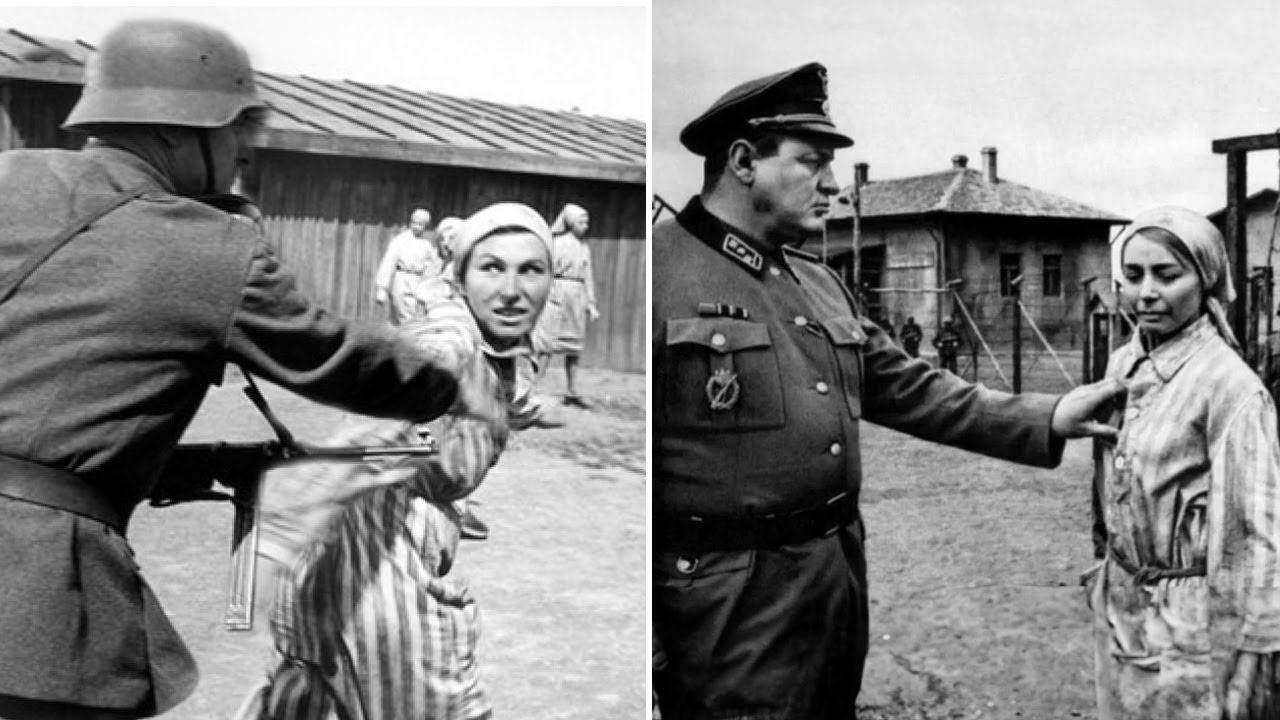
A subsequent American military court would examine the incident and rule that the actions of the U. S. Army servicemen were justified. Dachau had been one of the oldest camps of the Third Reich, operating on German soil from 1933 until its liberation in 1945.
Over those twelve years, the camp became a place where the Nazi regime gave its most sadistic personnel the freedom to realize their darkest fantasies. Among those who served there was a doctor named Sigmund Rascher, whose taste for cruelty rivaled that of the more famous Josef Mengele at Auschwitz. Rascher conducted experiments on living prisoners as a matter of routine. He could spend hours watching a man submerged up to his neck in icy water, studying the body as it shut down.
Then he would attempt his so-called rescue procedures on the frozen prisoner. As a rule, these procedures failed, and the subject died. This did not trouble Rascher much, because there was always another victim ready to replace the last one. Rascher also infected prisoners with malaria, tuberculosis, dysentery, typhus, and other diseases.
He deliberately allowed the illness to progress to its final stage before beginning the so-called treatment, which involved giving the sufferer experimental drugs that had never undergone serious testing. The mortality rate among his test subjects reached 80 percent, and those who survived had nothing to hope for, because they remained living material for further experiments. Rascher was not alone in his work at Dachau. His colleague, a Dr.
Heiner, also styled himself a researcher. On one occasion, Heiner ordered the selection of ninety Gypsies who were then deprived of food and water and given only seawater to drink. Within days, the prisoners were so dehydrated that according to recollections of other prisoners, they licked the washed floor with their tongues, scrambling for any remaining moisture. Heiner found this greatly amusing.
The camp also had its own informers among the prisoners. Those suspected of having spoken ill of Hitler were punished with a particular form of torture: they were dipped upside down into barrels of sewage and feces. Such treatment could last for hours, until the prisoner choked to death. Beyond the medical experiments and the hard labor, the prisoners of the concentration camps lived under the absolute autocracy of the staff.
The guards and their henchmen, the kapos who were prisoners recruited to cooperate with the Nazis in exchange for privileges, became the executioners of their fellow inmates. These camp executioners loved to arrange sadistic entertainments, and often the objects of their games were defenseless children. One such game was known as siren torture. At the sound of a siren, the children had to run to the barracks where their mothers were held.
But as soon as they reached their mothers, another siren sounded, and they had to run back to their own barracks. The children who arrived late were beaten with batons or kicked. Another form of entertainment was the murder of a child in front of its mother. The guards would take the child by the legs, spin it around, and smash its head against a table or a wall.
This was done to punish the mother for any offense or disobedience. Mothers often could not endure such torture and took their own lives. Drunken guards also organized races in which prisoners were harnessed to carts. The teams could be made up of men, women, or children.
The drunken fascists competed to see whose team would arrive first. The last prisoner to arrive was sent to the gas chamber. Meanwhile, the executioners urged on their human teams with whips and forced them to sing songs. The prisoners of the Nazi camps also served as suppliers of blood and skin for wounded and burned German soldiers and officers.
After several blood withdrawals, the already weakened prisoners were doomed. The camp guards also enjoyed bullying women, and a particularly cruel fate awaited virgins, who were subjected to repeated rape. The violence could last for hours as the guards took turns. At other times, the guards forced prisoners to crawl on the ground where stones, manure, and broken glass had been scattered, leaving the prisoners smeared, cut, and exhausted.
Jews and prisoners of war faced especially harsh conditions. A memorandum sent from the head of the SMERSH counterintelligence unit, Viktor Abakumov, to the chairman of the Council of People’s Commissars, Andrei Vyshinsky, dated mid-January 1943, described what Soviet forces found when they captured a transit camp for prisoners of war known as Dulag 205. Hundreds of thousands of corpses of prisoners of war and commanders who had died from exhaustion and cold were discovered in and around the camp. Several hundred tortured and starving former servicemen were also released.
An investigation revealed that German officers and soldiers, following the instructions of the German military command, had treated the prisoners with humiliation, brutally exterminating them through mass beatings and executions, creating unbearable living conditions, and starving them to death. The key phrase in that document was that the German officers and soldiers were carrying out the instructions of the German military command. This was the whole point of what happened. For such treatment of prisoners, the Nazis did not merely receive indulgences from the authorities; they were carrying out orders.
The camp staff also enriched themselves from the prisoners. Gold crowns were typically removed by the kapos, who broke them out of the mouths of prisoners, both dead and living, and then exchanged them for vodka with the SS guards. The male half of the camp staff held a special position, acting as masters whose wishes were law for everyone, above all for the prisoners. They often organized so-called death races, standing in two ranks facing each other to form a corridor.
Prisoners had to run through the gauntlet while the guards shoved and struck them. Anyone who fell was killed on the spot. The crematoria and gas chambers of the concentration camps worked almost nonstop. The use of the poisonous gas Zyklon B, a hydrogen cyanide compound, was initiated by a man named Karl Fritzsch, who calculated that ten kilograms of the gas was enough to destroy four thousand people.
In 1942, seven and a half tons of the gas were supplied to Auschwitz. In 1943, the figure rose to 12. 2 tons. In some gas chambers, special windows were built so that the guards could watch the torture of the people inside.
At Auschwitz, Josef Mengele conducted his own experiments on living people. He especially liked to castrate boys and men without any anesthetic. One prisoner recalled that while in the camp, he saw boys between the ages of nine and fourteen who had undergone and survived the operation. They were afterwards used in various jobs.
The prisoner said that he could not look into the eyes of these poor children without pain, as their gaze was lifeless, apathetic, and slow. Mengele also tested electrical shocks on women and performed experiments on the female uterus, injecting poisons, gases, and all kinds of infections into the organ. In the camps, houses of tolerance were set up for the kapos and low-ranking camp servants as a form of motivation. Beautiful women were taken to a separate barracks where they were sent to work less often and given somewhat better food.
But their fate was unenviable. They had to serve several guards per night, and if a guard or kapo was displeased, the woman could be beaten or maimed. Many women agreed to this role for the sake of their children, who were also held in the camp. Escape attempts were punished through the principle of collective responsibility.
For one escaped prisoner, ten prisoners could be killed. Punishment was also carried out through roll call, which could last for ten to fifteen hours. On one occasion at Auschwitz, a roll call lasted almost a full day, twenty hours, and as a result, some exhausted prisoners could not reach their barracks on their own. Decimation was also used, in which lots were cast among hundreds or several thousand selected prisoners.
Those who drew the unlucky lot, which could be several dozen or even a hundred people, were sent to the gas chamber. Torture was also carried out using a machine called the goat, to which a prisoner was bound and stretched, then beaten with a stick while forced to count the blows in German. If the prisoner became confused or made a mistake, the process started over. The Nazis also used the gallows for entertainment.
A prisoner or a group of prisoners was led to the gallows, a noose placed around their necks. A drum roll sounded, a command rang out, and then the executioner kicked the stool out from under them, but only slightly, not enough to kill them completely. The SS men were greatly amused by the sight of prisoners who had already said goodbye to life. Two main causes drove the atrocities in the concentration camps and prisoner-of-war camps.
The first was the agreement of the leaders of Nazi Germany to exterminate people as thoroughly as possible by any means. The second was the manic tendencies of the camp staff themselves, whose impunity opened a wide field for them to indulge their unhealthy addictions. According to the memoirs of a survivor of Auschwitz, a Jew named Edmund Sidel, it was a real hell, a vicious circle behind barbed wire from which there was no way out. But even in those inhumane conditions, people did not lose faith in the victory of justice.
The prisoners lived, fought, and died, but the Nazis failed to break their spirit.