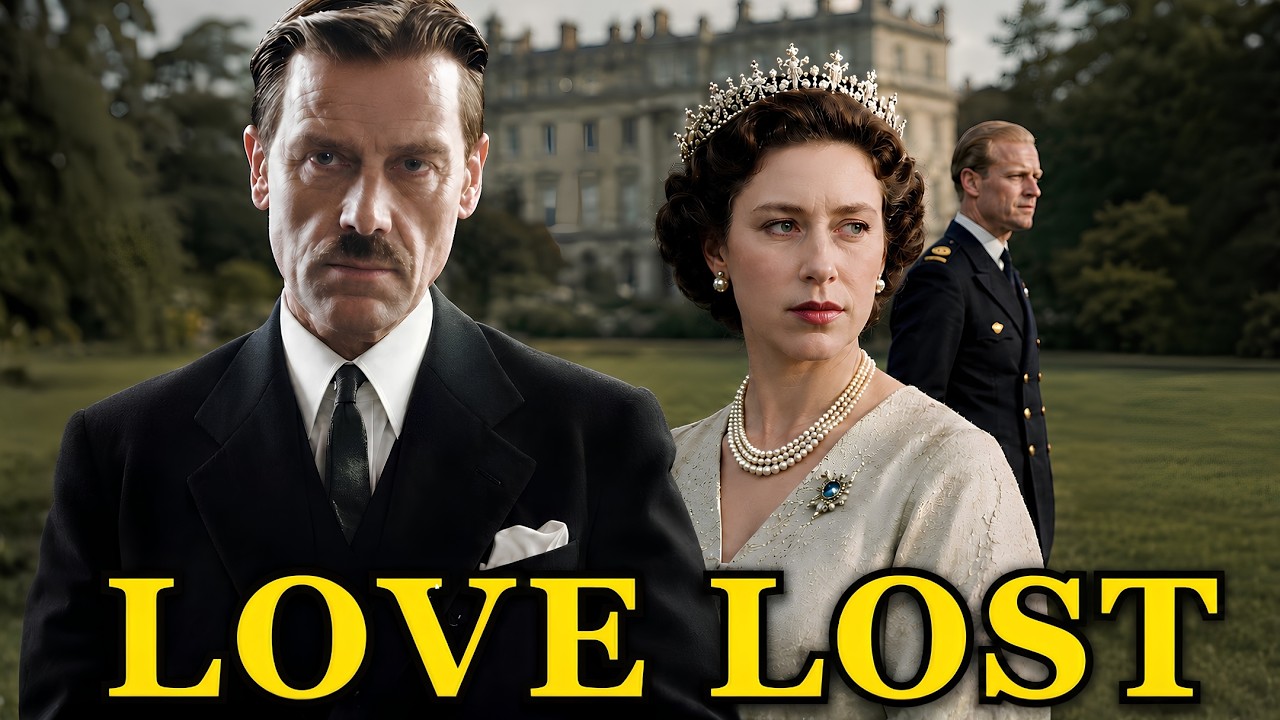
Before Elizabeth II became the steady queen the world remembers, she had to learn one of monarchy’s coldest lessons behind palace doors. Love could be sincere and still be treated as a threat. Her husband wanted his name to matter.
Her sister wanted Peter Townsend. Her family wanted tenderness after years of abdication, war, grief, and fear.
But Tommy Lascelles had seen what one royal romance could do to a throne. He did not ask first whether the feeling was real. He asked what it would cost.
Under that question, Philip lost the public victory of seeing his name define the dynasty. Margaret lost the future she imagined with the man she loved. Elizabeth lost the right to be only a wife, only a sister, or only a daughter.
And somewhere behind the velvet, the old answer waited. The crown first. The human being after.
Tommy Lascelles did not wear a crown, and that made his power easier to miss. He did not stand on a balcony as crowds shouted his name. His authority was quieter, more bureaucratic, and in some ways more frightening.
He knew the diary. He knew the letters. He knew which private requests sounded harmless but carried a constitutional fuse.
He understood that royal trouble rarely begins as public disaster. It begins as loneliness, a private exception, a delayed warning, a romance everyone calls manageable until the whole palace begins moving around it. Tommy was not dangerous because he enjoyed cruelty.
He was dangerous because he could recognize danger before the person wanting something had finished calling it love.
The palace needed men like that because the royal family was never only a family. A quarrel at breakfast could become gossip by dinner. A friendship could become influence.
A marriage could become policy. A private wound could become a public argument about whether monarchy still deserved trust.
Tommy had been trained by class, war, and court service to distrust the beautiful version of any emotional plea. He knew that love could arrive with clean hands and still make a room unsafe. He had learned to ask the question others preferred to postpone.
If this person gets what they want, what does the crown lose?
He had grown up close enough to aristocracy to understand its codes and far enough from effortless power to respect usefulness more than charm. In his world, mistakes were rarely punished by shouting. They were punished by doors closing.
A person became inconvenient, then invitations grew colder, letters shorter, rooms smaller.
He had also learned from war that noble language cannot save people from consequences. The First World War left his generation with a hatred of pretty illusions. A bad decision did not remain poetic once men were dead.
Tommy carried that severity into palace life. He was not interested in the argument that a royal person felt deeply because he had seen that deep feeling could still lead to shallow judgment.
George V and Queen Mary became the great school of that discipline. George V had little patience for glamour when respectability was available. Queen Mary understood that monarchy lived in rooms, rituals, objects, titles, and the exact placement of people around power.
She had been shaped by dynastic rearrangement herself, and she knew what it meant for private feeling to be folded away under duty.
Together, George and Mary taught him that survival was not sentimental. It was daily maintenance. Deny appetite, control access, protect the symbol.
Do not let the public see how much fear lives inside the family.
That is why when Elizabeth came to the throne, Tommy did not arrive as a man with a fresh theory. He arrived as the carrier of an older royal grammar. He had watched desire almost break the line of succession.
He had watched George VI repair what Edward had cracked. He had watched the public forgive monarchy not because it became warmer, but because it became useful again.
The Queen Mother complicated that world in a quieter way. She had been the wife of a second son before abdication made her queen. She had watched her husband pushed into a role that exhausted him.
She had watched Edward and Wallace become the glamorous wound that never quite closed. Her warmth with the public was real, but warmth did not mean softness toward the Duke and Duchess of Windsor, nor toward any situation that seemed to repeat the old danger.
Elizabeth inherited not only official duty, but the emotional weather of people who had paid for Edward’s freedom. The early reign was not a clean stage where Elizabeth could make choices alone. It was crowded with living memory.
Queen Mary represented old form. The Queen Mother represented wartime warmth hardened by resentment. Philip represented private marriage under public inspection.
Margaret represented youth, glamour, and longing inside a family trained to fear both.
Tommy stood among them as the person who knew how to translate all those pressures into one cold sentence. What does the crown require?
That question did not begin with Elizabeth. It was sharpened by Edward VIII. Edward, still David to his family, had charm in dangerous quantities.
He was modern, restless, adored by crowds, and hungry for the kind of warmth the palace had never known how to give him. The public saw a golden prince. Courtiers saw a man who liked affection more than duty.
Wallis Simpson did not invent his weakness. She gave it a shape the crown could no longer ignore. She made him feel like a man before an office.
That may have been human. It was also impossible for a future king whose marriage could never be only private.
When Edward became king, the problem moved from the edges of the household to the center of the state. A prince in love could be managed, scolded, or delayed. A king in love was different.
He was head of a church, constitutional sovereign, imperial symbol, and public proof that privilege served something higher than appetite.
The abdication in 1936 did not end when Edward left the throne. It stayed inside the palace like a warning system. Bertie, the shy second son with a stammer, had to become George VI.
Elizabeth Bowes-Lyon, who had married a duke and built a private shelter around a nervous husband, had to become queen. Princess Elizabeth moved closer to a future no child had chosen. Princess Margaret became the spare inside a newly arranged emotional order.
Tommy saw the lesson with brutal clarity. One royal romance had not merely changed a marriage, it had redistributed destiny. Every later request for love, name, freedom, exception, or mercy would be measured against him.
The facts did not have to be identical. Fear rarely waits for identical facts. It looks for a familiar shape.
George VI restored the crown not by brilliance but by work. He had not wanted the throne. He feared public speech.
Yet he stayed. He read the papers. He endured audiences.
He worked with Lionel Logue and forced words through fear because the office required a voice. Queen Elizabeth stood beside him with warmth over steel.
During war, that steadiness became national property. Buckingham Palace was bombed. The King and Queen visited damaged streets, hospitals, factories, and troops.
They did not erase privilege, but they made privilege look obligated. After Edward’s glamour, obligation became a form of moral rescue.
Elizabeth watched all of this as a child and then as heir. She learned that the crown could survive charm only if someone stronger repaired it with duty. At Windsor Castle during the war, she absorbed the household’s deepest rule.
Never again let the crown become hostage to one person’s longing.
By the time Elizabeth reached adulthood, the royal family needed renewal without losing control. Philip Mountbatten was handsome, capable, blunt, intelligent, and proud. He had served in the Royal Navy.
He knew movement, command, discipline, and practical usefulness. He was not built to become a decorative shadow in drawing rooms.
Elizabeth loved him. But in Tommy’s world, love was never judged only as love. It was judged by what it might bring too close to the crown.
Philip had foreign birth, complicated family links, Mountbatten ambition around him, and a temperament that did not easily shrink.
Before the marriage, Philip gave up much. He renounced his Greek and Danish royal titles, became a naturalized British subject, and took the surname Mountbatten from his mother’s family. The wedding in 1947 gave Britain a beautiful image, a serious young princess, a handsome naval officer, youth after austerity, continuity after fear.
George VI loved his daughter and wanted her happiness. That made the next part more painful, not less. He was still king, but the strain of duty, war, illness, smoking, travel, and public service was wearing him down.
Private secretaries see decline before photographs admit it. They see the shortened days, adjusted schedules, medical whispers, fatigue hidden under ceremony.
Prince Charles was born in 1948. Princess Anne followed in 1950. Publicly, the line looked secure.
Privately, Elizabeth’s roles began crowding one another. Wife, mother, daughter, heir, future sovereign. Philip’s naval career mattered because it was one of the few places where he could be judged by competence rather than by marriage.
But as George VI weakened, that independent future narrowed. The palace surrounded him with reasons. The king is ill.
Elizabeth is needed. The tour matters. The heir must be supported.
Each reason made sense. Together, they closed like a door.
In January 1952, George VI saw Elizabeth and Philip off at London Airport before their Commonwealth tour. He was visibly unwell. But he went because duty had trained him beyond comfort.
Elizabeth did not know she would never see him alive again.
In Kenya, the message came. George VI had died at Sandringham. For a few hours, Elizabeth did not know that her life had already changed.
The office moves before the heart has been told. A daughter is still unaware that her father is dead while the state has already begun calling her queen.
Philip was told first. Whatever frustrations would later shape his place beside her, that moment required tenderness. He had to tell his wife that her father was gone and that she was sovereign.
Elizabeth returned composed because composition was the first service demanded of her. Grief traveled with protocol. The person grieves, the office continues.
This was the moment when the lesson of Edward became the structure of Elizabeth. She had seen what happened when royal desire reached the throne before discipline did. She had seen her father pay for his brother’s choice.
Now the old doctrine settled around her. The sovereign does not belong wholly to herself.
One of the earliest private tests was Philip. He had married the queen, but he was not sovereign. In ordinary marriage, the distinction between love and authority can already bruise.
In monarchy, it becomes architecture.
The question of the royal house name turned private hurt into dynastic battle. Windsor versus Mountbatten could look petty. But a surname in monarchy is never only a surname.
It is territory. Windsor had been chosen during the First World War to protect the family from German association. It had carried George V through revolution abroad and unrest at home.
It had carried George VI through abdication and war.
To change it at Elizabeth’s accession would suggest that marriage had shifted the dynasty into Philip’s line. Philip saw the matter differently. He had already given up titles, nationality, career expectation, and much of his independent future.
In ordinary families, children often take their father’s name. Was even that basic dignity to be treated as dangerous?
The palace, the government, Queen Mary, the Queen Mother, and men like Tommy saw the larger danger. Philip had married the Queen. He had not captured the monarchy.
Lord Mountbatten’s ambitions made the issue even more sensitive. The answer was Windsor.
Philip could be loved and contained at the same time. That is one of monarchy’s quieter violences. It does not always reject a person.
Sometimes it welcomes him, thanks him, needs him, and then shows him the edge of the room he must not cross.
For Elizabeth, the surname decision was not simply a victory of institution over husband. It was a wound inside marriage. She had to be wife and sovereign in the same body, and the sovereign could not bend where the wife might have wished to soothe.

There was no painless answer.
Then came the coronation. Elizabeth had been sovereign since her father’s death, but the coronation in 1953 would make that fact visible, sacred, and national. The country was still marked by war, rationing, grief, and imperial transition.
Television was entering homes. People wanted access, but monarchy still needed mystery.
Queen Mary died only weeks before the coronation. Her death removed one of the last living bridges to the Victorian and Edwardian world of distance, form, dynastic marriage, and hard restraint. Elizabeth had lost her father.
She had lost her grandmother. Her mother was newly widowed and displaced. Philip was unsettled in his role.
Margaret’s heart was beginning to move toward danger.
Television created the greatest test. Millions could watch the ceremony, but the deepest sacred moment, the anointing, would be kept from the cameras. Show enough to bind the people, hide enough to preserve awe.
Elizabeth moved through the Abbey as a young woman under impossible weight. The crown was placed upon her head while the country watched.
And almost as soon as the coronation gave the monarchy its great image of order, private disorder pressed toward the surface.
Princess Margaret had been near Elizabeth all her life. First as the lively younger sister, then as the spare in a household reshaped by abdication. She was beautiful, witty, vivid, and watched.
She had glamour without full authority, attention without full freedom, youth without privacy.
Peter Townsend entered that emotional landscape with dangerous dignity. He had served George VI as equerry. He was controlled, brave, serious, and connected to the memory of the father Margaret had lost.
He was not a vulgar adventurer. He was not a cartoon villain. That made the attachment harder to dismiss and more painful to contain.
Townsend was divorced with a former wife still living. Modern ears may miss the weight that word carried then. In the early 1950s, divorce was not merely a personal history.
It was a religious obstacle, social mark, and constitutional echo inside the royal household.
Margaret was not sovereign, but she was the queen’s sister. Elizabeth was not only a sister, but queen and supreme governor of the Church of England. That fact turned family pain into institutional danger.
Margaret as a woman could love Townsend. Margaret as the queen’s sister could not do so privately.
Nobody had to behave like a cartoon villain for the pain to become real. Margaret could sincerely love Townsend. Townsend could sincerely wish for a future with her.
Elizabeth could sincerely want her sister happy. The Queen Mother could sincerely understand feeling and still fear consequence. Tommy could sincerely believe the crown must be defended.
Sincerity solved nothing. It merely made the pain harder to dismiss. The tragedy was not that everyone lied.
The tragedy was that several people may have been telling the truth. And the truth still could not fit inside the institution.
The echo of Edward and Wallace was impossible to miss. The details were different. Margaret was not king.
Townsend was not Wallis. The country had changed since 1936. Public sympathy might be warmer.
Divorce was becoming more visible. But memory does not require identical facts to become alarmed.
Margaret had not abdicated. She had not brought Wallis Simpson into the center of state. She had not shaken the monarchy in 1936.
Yet the consequences of that crisis reached forward and wrapped around her life. She was not being judged only for loving Peter Townsend. She was being judged inside the fear Edward had left behind.
Tommy Lascelles had retired from official office in 1953. So the story must be told carefully. He did not personally write every later consequence.
His power was subtler. He had helped build the logic by which the case would be judged. When love approached the crown, the palace asked not whether it was beautiful, but whether it was safe.
Peter Townsend was sent to Brussels as air attaché at the British Embassy. Officially, it could be described as career and service. Emotionally, it functioned as distance.
A painful separation did not have to be announced as separation. It could be dressed as duty, timing, appointment, and practicality.
Margaret waited. Townsend waited. The public gradually understood enough to care.
The story had every ingredient that makes royal sympathy dangerous. A young princess, a handsome war hero, a forbidden marriage, an older divorced man, a sister on the throne, the memory of a dead father.
Elizabeth stood at the center of that pain. Not only Queen Elizabeth II, sovereign and head of state, but Elizabeth, the sister, the girl who had shared childhood with Margaret, wartime rooms at Windsor, family jokes, fear, music, and the strange closeness of two sisters raised inside a cage of ceremony.
She could know Margaret as no minister knew her. Yet the crown did not let love remain only love. As queen, she had to see church, government, commonwealth, public precedent, and the memory of Edward.
As sister, she could see Margaret’s face. Elizabeth did not have to be cruel to become the person Margaret could not fully forgive. She had to be sovereign.
By 1955, Margaret was 25, and the issue could no longer be kept in the shadows. Townsend returned from Brussels. The separation had not turned him into an easy memory.
The public wanted movement. Newspapers wanted answers. The church stood as warning.
Ministers watched constitutional implications.
Margaret had possible routes, but each route carried a cost. She could lose status, income, position, and the only world that had taught her who she was. Freedom in royal life often arrives with a knife hidden behind its back.
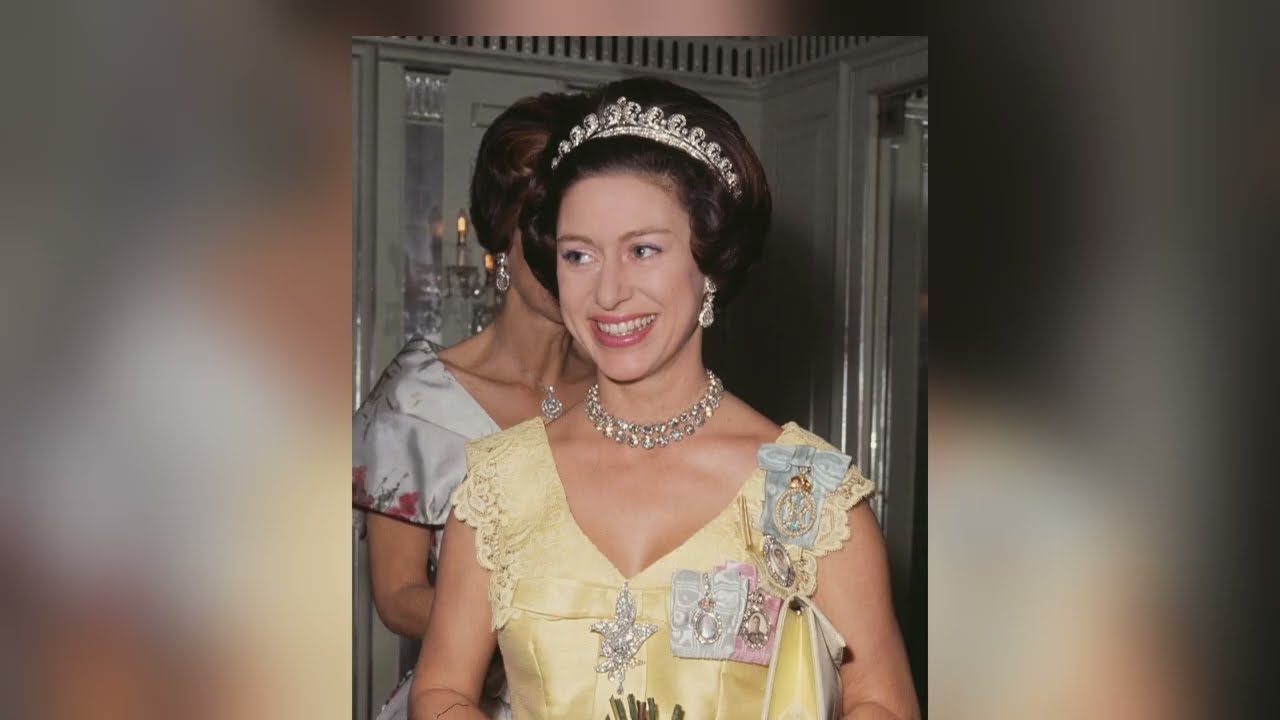
Townsend offered devotion and escape. The crown offered belonging and burden. Both choices were traps.
Only one allowed her to remain Princess Margaret.
In October 1955, Margaret made her statement. She said she had decided not to marry Group Captain Peter Townsend, mindful of the church’s teaching that Christian marriage is indissoluble, and conscious of her duty to the Commonwealth. The words were careful, dignified, and devastating.
They turned private heartbreak into acceptable public grammar.
The decision allowed some people to see Margaret as noble, some as trapped, some as obedient, some as defeated. Ambiguity helped the palace survive. Margaret stayed.
Townsend faded from the immediate royal stage. The crown avoided rupture, but avoidance should never be confused with happiness.
Margaret did not stop being Margaret. She would go on to be glamorous, witty, difficult, adored, criticized, wounded, and wounding. She would later marry Anthony Armstrong-Jones, and that marriage would bring modernity, style, photography, conflict, and another form of public pain.
But the Townsend decision remained part of her legend.
For Elizabeth, the outcome was not innocent, either. A sovereign who protects the crown from her sister’s desire does not emerge untouched. Somewhere beneath that calm is the knowledge that queenship required her to disappoint someone who knew her before she was majesty.
That is monarchy’s most intimate violence. It does not only separate lovers. It separates people from the versions of themselves that might have chosen differently.
Elizabeth could not be only a sister. Margaret could not be only a woman. Townsend could not be only a man in love.
That was Tommy’s world. He did not invent every no. He did not personally create every wound.
But he helped shape a palace language in which no could sound like wisdom. Delay could sound like duty. Distance could sound like service.
And heartbreak could be made to look orderly.
His logic was harsh, but it was not stupid. The monarchy had really been endangered by Edward VIII. The church question really mattered in that period.
A royal exception could become precedent. The crown did need discipline to survive the 20th century. He was often right.
That is the uncomfortable part.
A villain would be easier. A villain breaks hearts because he enjoys power. Tommy Lascelles was colder than that.
He could look at a feeling, understand that it was sincere, and still choose the crown. He did not ask whether Margaret’s pain was real. He asked what permission might cost.
He did not ask whether Philip’s hurt was understandable. He asked what Mountbatten would look like on the dynasty.
Publicly, the monarchy moved on. That is what institutions do. Engagements were scheduled, speeches were given, trains were boarded.
The queen appeared. The Queen Mother smiled. Philip adjusted, argued, supported, and endured.
Margaret dressed beautifully and carried herself with the glittering edge of someone who knows the room is watching and refuses to look defeated.
The crown survived. That was always the measurement. But survival is not innocence.
Sometimes survival is only the word a powerful system uses after it has taught people to cut away parts of themselves and call the wound service.
This is why Tommy Lascelles matters beyond his title. He stands for the cold intelligence behind monarchy. The person who understands that the greatest threat does not always come from newspapers, republicans, war, or enemies outside the gates.
Sometimes it comes from the private sentence that begins, “But I love.”
Edward had made that sentence dangerous. George VI had repaired the damage by staying. Elizabeth inherited the fear.
Philip felt it in a name. Margaret felt it in a man. And Tommy made sure the fear became procedure before it became disaster.
The final question is not whether Tommy was simply right or simply wrong. The real question is what kind of monarchy survives by teaching the people inside it to distrust their own humanity. If the crown endures, does that prove the sacrifice was necessary?
Or does endurance become the excuse used after the apology has been buried?
Tommy would probably have disliked the softness of the question. His answer would have been practical. The monarchy survived.
The Duke of Windsor was contained. The house remained Windsor. The coronation succeeded.
Margaret did not create another abdication crisis. Elizabeth became steady. The machine held.
But the viewer can ask what Tommy did not. Who paid for the machine to hold? Edward lost a throne, but others inherited the burden.
George VI lost the private life he had built around fear and family. Philip lost the public victory of seeing his name define the dynasty. Margaret lost the future she imagined with Peter Townsend.
Elizabeth II lost the luxury of being only a sister, only a wife, only a daughter, and sometimes even only a woman.
Through all of it, the same answer remained. The crown first, the human being after. That was not warmth.
That was not mercy. But it was monarchy. And for much of the 20th century, it worked.