In 1944, at Camp Gruber, Oklahoma, a German prisoner of war named Karl Heinz Mertens went to the mess hall with the other men from his compound. There were tables, trays, cooks, guards, and the ordinary noise of men waiting for food. Years later, Mertens remembered what surprised him. The prisoners were eating the same basic food as the American soldiers in the camp.
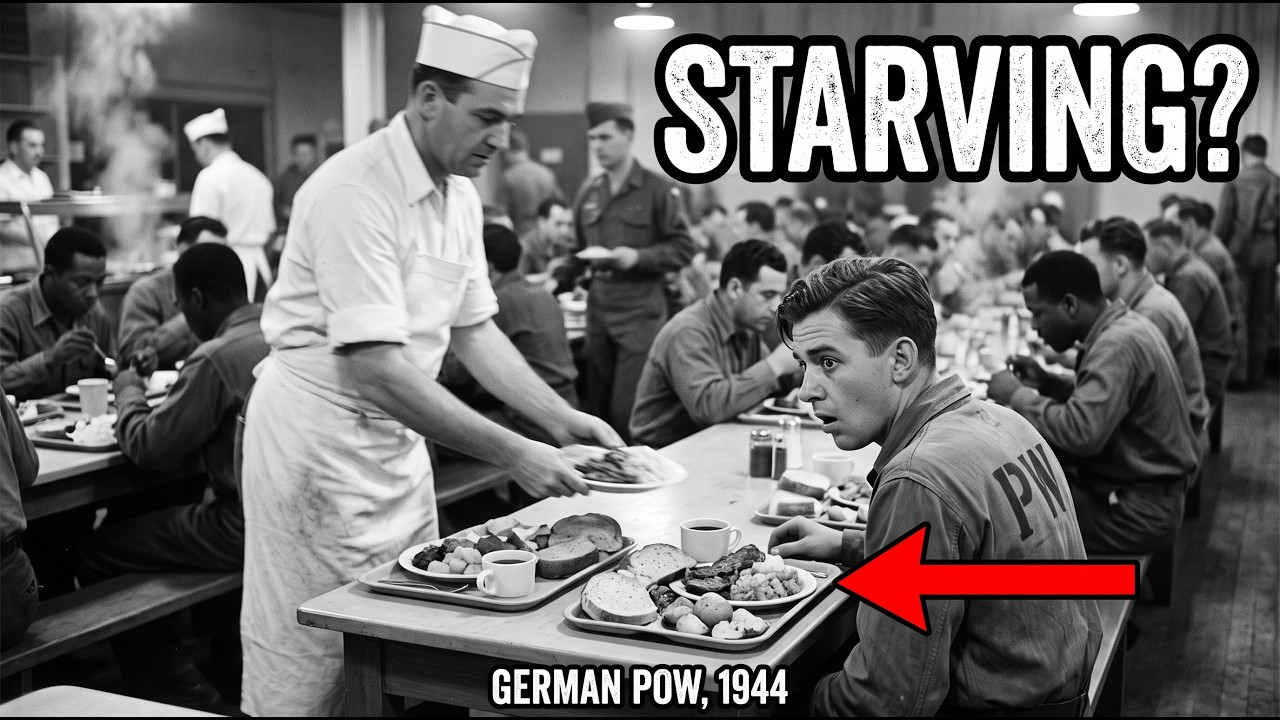
Not the same table, not the same freedom, but the food was there. Bread, meat, potatoes, coffee, fruit when it was available, and enough of it that the prisoners began to worry about getting fat. A few years earlier, Nazi propaganda had told Germans a different story about America. America, Joseph Goebbels wrote, was a country of unemployment, class conflict, and economic decay.
The United States had wealth, the propaganda said, but it was in the hands of a few men. The ordinary worker suffered, the farmer suffered, and the country had been weakened by the depression. Then the war sent hundreds of thousands of German soldiers across the Atlantic. And in camps from Maine to California, they found American kitchens serving food on a scale that did not fit the picture they had been given.
The picture from Germany had begun before the war. In the 1930s, food had become one of the central concerns of the Nazi state. Germany could not grow enough of everything it needed. It imported animal feed, fats, coffee, fruit, and other goods from abroad.
The government pushed farmers to produce more. It urged Germans to eat less meat, less butter, and fewer imported foods. Then came war. In September 1939, Germany introduced ration cards.
Bread, meat, fats, sugar, clothing, and many other goods were controlled. At first, rations were kept relatively high because Germany was taking food from occupied countries. Poland, the Netherlands, Denmark, France, and later the Soviet Union all became part of the German war economy. But the system depended on conquest.
The German army needed food, German cities needed food, and as the war widened, the food situation grew worse. By 1944, German civilians were living with smaller rations, substitute foods, shortages, and long lines. Coffee was often not coffee. Butter was scarce.
Meat was limited. Eggs could be difficult to find. Then German soldiers were captured. After the surrender in Tunisia in the spring of 1943, tens of thousands of German prisoners were shipped to the United States.
More came after the fighting in Italy, after the invasion of France, and after the collapse of German forces in 1944. By the end of the war, the United States held more than 370,000 German prisoners of war. They arrived at camps built on American soil. Camp Gruber in Oklahoma, Camp Swift in Texas, Camp Blanding in Florida, Camp Shelby in Mississippi, Camp Carson in Colorado, Camp Robinson in Arkansas.
Some lived in large base camps. Others were sent to smaller branch camps near farms, canneries, lumber operations, and factories. And every camp had to feed them. The Geneva Convention of 1929 said prisoners of war should receive food rations equal in quantity and quality to those issued to depot troops.
That did not mean every meal looked identical. Prisoners ate separately from guards. They had German cooks in many camps. The army adjusted meals where it could to German habits.
There was dark bread in some places and recipes that looked more familiar to men from Germany. But the rule mattered. The prisoners were not supposed to be fed starvation rations. They were not supposed to live on scraps.
The United States Army had to provide enough food to maintain them. And American soldiers were eating from one of the largest food systems in the world. Before the war, American agriculture already produced more food than the country could always sell. During the depression, one of the problems facing farmers had been overproduction.
Then the war changed the question. The government now needed to feed the army, the navy, the allies, American cities, and prisoners of war. In 1940, the United States had about 132 million people. During the war, American farms also supplied enormous quantities of food overseas.
Britain depended on American shipments. Soviet forces received American food through Lend-Lease. American troops crossed oceans with canned meat, flour, sugar, coffee, dried milk, and powdered eggs. The food did not appear by accident.
The farms had tractors, trucks, combines, elevators, railroads, refrigerated warehouses, canneries, meat-packing plants, and factories that made tins by the millions. In 1944, American farmers produced more than 12 billion bushels of corn. They produced more than 1 billion bushels of wheat. They sent hogs and cattle into a meat-packing system that could feed cities and armies at the same time.
The men behind the wire saw the result. At Camp Atterbury in Indiana, German prisoners remembered American white bread. For many, it seemed strange. German bread was often darker, denser, and made from rye or mixed grains.
American bread could look soft and pale. It was not always admired. Some Germans thought it tasted sweet, but there was plenty of it. At camps around the country, prisoners wrote home about food.
Letters were censored and the men knew that. They could not write everything they wanted. Still, families in Germany received descriptions of meals that did not resemble the shortages at home. There was coffee, there were cigarettes, there was fruit, there were desserts.
At Camp Hearne, Texas, prisoners operated parts of their own camp economy. They received pay under the rules for prisoner labor. With that money, some bought items at the camp canteen. The canteen could sell tobacco, soap, writing paper, candy, and other small goods.
The American army did not give prisoners freedom. It did give them a place to spend money. For a German soldier who had come from a country at war since 1939, that was another thing to explain. The ration system in Germany had not been simple.
A civilian needed ration cards. A worker in heavy industry might receive a different allowance from an office worker. Children received different amounts. Pregnant women received supplements.
Farmers had access to food that city people did not always have. But the amount on paper did not always match what a family could buy. A ration card did not put butter in a shop. It did not make an egg appear.
It did not bring coffee from Brazil or bananas from Central America through a British naval blockade. Germany had tried to become self-sufficient. It expanded synthetic fuel production. It pushed domestic substitutes.
It urged people to use potatoes, cabbage, turnips, and locally available foods. But Germany’s problem was not that it had no farms. It was that its agriculture had less machinery, less fuel, less imported fertilizer, and fewer workers as the war went on. The army took men.
It took horses. It took trucks. And the war took land out of production across Europe. In the United States, the war also pulled millions of men from farms and factories.
But American production rose. Women entered factory work in vast numbers. Mexican laborers came through the Bracero program. Prisoners of war were sent into farm labor.
And American farmers used machines. A farmer with a tractor, a truck, and a combine could do work that had once required many men and horses. That did not mean there were no shortages in America. There were.
Sugar was rationed. Coffee was rationed for a time. Meat, butter, canned goods, and gasoline were controlled. Americans used ration books, too.
A family could not simply buy everything it wanted. But American rationing was different from the rationing that German prisoners had known. The United States rationed consumption while expanding production. Germany rationed consumption while fighting a long war for the food, oil, labor, and raw materials it could not produce enough of at home.
The difference could appear in a camp dining hall. At Camp Trinidad in Colorado, German prisoners worked on farms and ranches. They picked vegetables, handled sugar beets, and worked in food processing operations. Then they returned to camp and ate meals prepared from the output of the country around them.
In parts of the American West, prisoners saw cattle operations that stretched farther than farms they had known in Germany. In the Midwest, they saw grain elevators beside railroad lines. In California, they saw fruit and vegetable production on a scale that required camps of workers, trucks, packing sheds, and rail connections. The food in the mess hall had come from somewhere.
The prisoners could see where. At Camp Papago Park in Arizona, German prisoners received parcels from the Red Cross. These parcels could include canned meat, biscuits, powdered milk, chocolate, coffee, cigarettes, and other items. The Red Cross parcels were not unique to America.
Prisoners in other countries received them, too, when supply lines allowed. But in the United States, the parcels entered a camp system that already had food. They were additions, not the only thing standing between a prisoner and hunger. Some prisoners complained anyway.
They complained about unfamiliar food. They complained about white bread. They complained about American coffee. They complained when a camp kitchen did not prepare a dish the way it was made at home.
They were prisoners. Complaining was part of camp life, and the camps were not resorts. There were guards, fences, roll calls, censorship, work details, and the constant fact that the men could not leave. But the food was one of the things they remembered.
At Camp Aliceville in Alabama, prisoners built gardens and cultivated vegetables inside the camp. They made their own improvements where they could. They organized theatrical productions, classes, and sports. The American authorities allowed many of these activities because the prisoners had time, because the Geneva Convention required certain standards, and because a camp that was orderly was easier to run.
But the basic fact remained. The United States could feed captured enemy soldiers while sending millions of its own men overseas. It could feed prisoners while supplying Britain. It could feed prisoners while shipping food to the Soviet Union.
It could feed prisoners while American civilians still bought meat, bread, milk, vegetables, and canned goods in stores. The Nazi leadership had described America as weak, divided, and exhausted by capitalism. The prisoners found a country that had ration books, yes, but it also had warehouses. It had refrigerated rail cars.
It had grain moving by train. It had canned food stacked for armies. And it had mess halls where an enemy soldier could sit down with a tray and wonder how the country had made so much food. The difference was not that Germany had no farms.
Germany had farms. The difference was not that Germans did not work. They did. The difference was the scale of production, the fuel, the machines, the transportation, and the space between one field and another.
In 1944, at Camp Gruber, a German prisoner walked into an American mess hall. He was still behind wire. He was still far from home.
But on the tray in front of him was the part of America that Nazi propaganda had failed to explain.