On the morning of June 6, 1944, Allied forces stormed the beaches of Normandy in Operation Overlord, the largest seaborne invasion in history. D-Day was the beginning of the long campaign to liberate France from German occupation, a presence that had settled heavily over the country for years. The operation demanded colossal planning, including elaborate deception efforts in Britain meant to convince the Germans that no invasion was coming. Among the five landing zones, Omaha Beach became the bloodiest and most punishing, where Allied soldiers met a wall of machine-gun fire, mines, and tangled barbed wire.
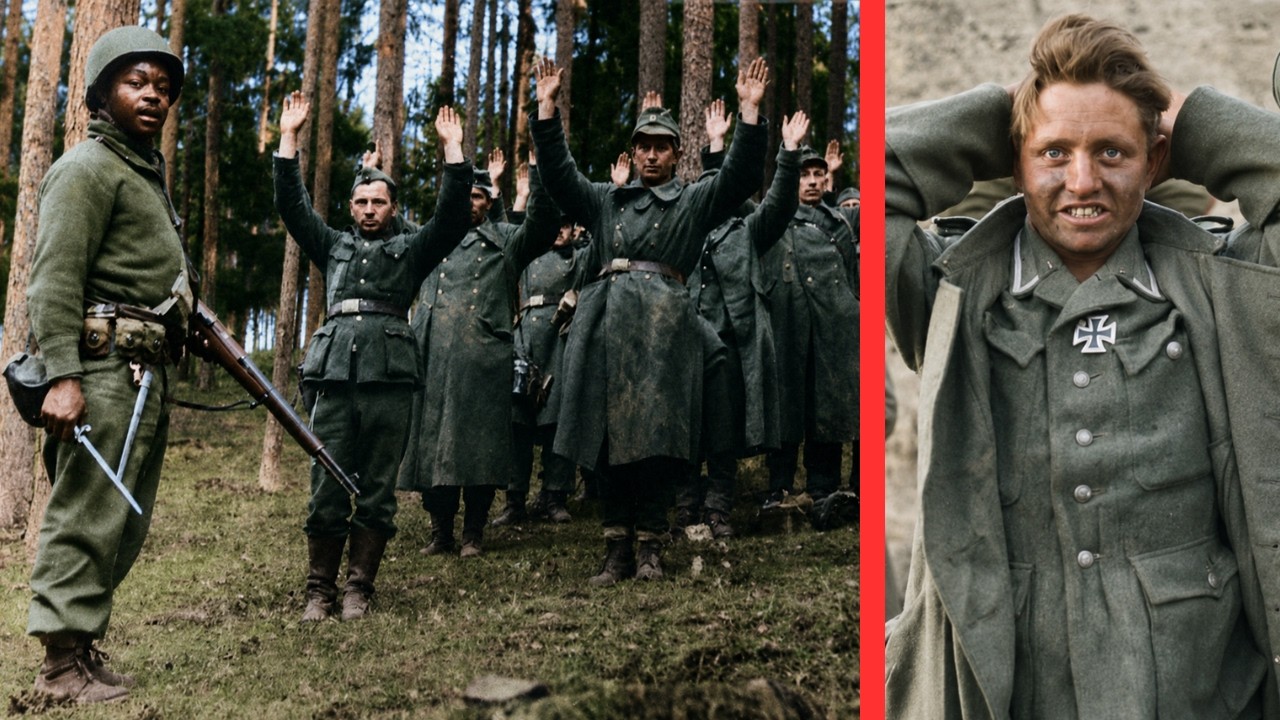
Hours of brutal fighting passed before the Allies managed to push off the sand, seize the German positions, and secure their first crucial foothold in France. But the chaos of that day produced horrors that went beyond the battlefield. Amid the slaughter, where hundreds of men died before ever reaching dry ground, Allied troops captured a number of German soldiers. They also carried out brutal acts of revenge, including the killing of prisoners of war and men who had already surrendered.
Much of this violence was born of the terror the Allied soldiers had just endured on the beaches. They had watched friends, comrades, and even family members die beside them. Some never left their landing craft. For many, the rage was immediate, and they wanted the enemy to pay for the lives taken from them.
As the Allies advanced inland, they were in no position to manage prisoners. They had a foothold to widen and waves of men and equipment still coming ashore. They simply did not have the time to deal with captives. Some German soldiers surrendered anyway.
In many cases, they were shot on the spot by Canadian, British, and American troops. In the region around the beaches, French eyewitnesses later described seeing Allied forces execute German soldiers, with paratroopers especially singled out for killing prisoners. One such event took place in the village of La Hurerie, near Andouville-la-Huber. A group of Allied paratroopers, who had landed ahead of the seaborne assault, gathered roughly twenty-five German prisoners.
These men had been wounded during fighting near Utah Beach and had been tasked with defending the bridgehead. The prisoners were held in front of a farm for several hours. Then, on the afternoon of the landings, the paratroopers took them to the side of the road and shot a number of them in cold blood. The killings were attributed to men of the 502nd Parachute Infantry Regiment.
The anger driving them was understandable. They had seen their comrades die and wanted revenge. Intelligence reports reaching the Germans accused British forces specifically of routinely executing prisoners as they pushed through Normandy. The British were generally considered more disciplined than other units, and Allied soldiers did not kill prisoners as official policy.
But on the ground, the reality was different. One Canadian soldier later recalled that the Germans were not very eager to surrender and that his unit took no prisoners from the SS, sometimes treating regular Wehrmacht formations the same way. SS officers and men were seen as particularly valuable targets for execution. They were considered the most fanatical and brutal of the Nazis, often refusing to surrender and sometimes faking surrender, which made Allied troops reluctant to take them alive.
Stories circulated among Allied soldiers about comrades executing the enemy. One of the most notorious figures in these accounts was Lieutenant Colonel Ronald Charles Speirs. He had been assigned to D Company of the 2nd Battalion before the Normandy invasion and quickly gained a fearsome reputation among American soldiers for shooting Germans. He later commanded Easy Company, the unit made famous by the series Band of Brothers.
Speirs had a distinguished military career. He parachuted into Normandy and linked up with other American forces, gathered a small group of men, and helped capture a German gun. His unit spent the rest of the night moving and preparing for further combat. But in those early hours, he was also involved in acts that cemented his terrifying reputation.
In the hours before the main landings, a group of German soldiers voluntarily surrendered to his unit. Speirs then ordered them executed, reportedly because he could not risk taking prisoners with such a small force. Speirs appeared to be a man who did not like taking prisoners. On one occasion, he shot a sergeant, claiming self-defense.
A witness, Private First Class Desio, said he was lying next to the sergeant when an order came to hold the position. The sergeant refused and wanted to advance and attack the Germans head-on. Speirs repeated the order, but the sergeant defied him and reached for his rifle. Speirs warned him, then fired, killing him.
Several American soldiers backed his account, the incident was reported to the commanding officer, and it was ruled self-defense. No further action was taken against him. His fellow soldiers viewed him as a brilliant fighter, but he was also a killer who sometimes acted for shock value. Captain Richard Winters later testified that he saw Speirs open fire on six German prisoners of war with his Thompson submachine gun.
Again, no action was taken. In the days following D-Day, more examples emerged of Allied soldiers executing captured Germans who were technically prisoners of war. These killings were more common than the official record suggests, and many were carried out by individual soldiers acting as their own executioners. The Germans were given no court-martial and no trial.
This was not official policy. The Allied command issued no orders to shoot prisoners, and doing so was technically a war crime. On June 8, 1944, armored cars from the Inns of Court Regiment moved south with a number of German artillery officers in their custody. Around ten men had been captured.
They belonged to a Panzer artillery regiment and had been positioning their guns when they were taken. After interrogation, the prisoners were ordered to march in front of the Allied armored cars as human shields. The hope was that the Germans would hesitate to fire on the Allies if their own men were in front of them. This too was technically a war crime, and some of the Germans protested.
A senior officer named Luxenburger was beaten by the Allied troops and lost consciousness. He was then reportedly tied to the front of an armored car. Fire from the 12th SS Panzer Division destroyed one of the vehicles. Luxenburger died of his wounds after being taken to a hospital.
The account, however, comes from a German prisoner who was later tried as a war criminal, leaving the details open to question. The Allies were in no mood to take German prisoners in the days after D-Day. They wanted to break through the beach fighting and establish a major foothold in Normandy, which would allow them to advance through France and into Germany. Some of the soldiers who fought on the beaches were consumed by rage after watching their comrades fall under a hail of bullets.
They wanted immediate revenge, and that drove them to shoot German prisoners. Others believed they simply had no time or resources for captives. Paratroopers, in particular, could not afford to take prisoners after landing. They had to deal with the enemy quickly, before the Germans could raise the alarm.
SS troops were shot without mercy because of their reputation for committing atrocities wherever they went. The violence did not end with the Allies. In the days that followed, the Germans responded in kind, and Allied prisoners would suffer their own horrors. In one of the most infamous incidents, 158 Canadian prisoners of war were executed by the 12th SS Panzer Division Hitlerjugend.
But that is another story.