In the United States, the term Mexican is often used loosely to describe a person’s race or ethnicity. This generalization is inaccurate and misleading, given the vast racial and ethnic diversity found in Mexico, among Mexican Americans, and across Latin America as a whole. A widespread but incorrect assumption holds that everyone living south of the U. S.
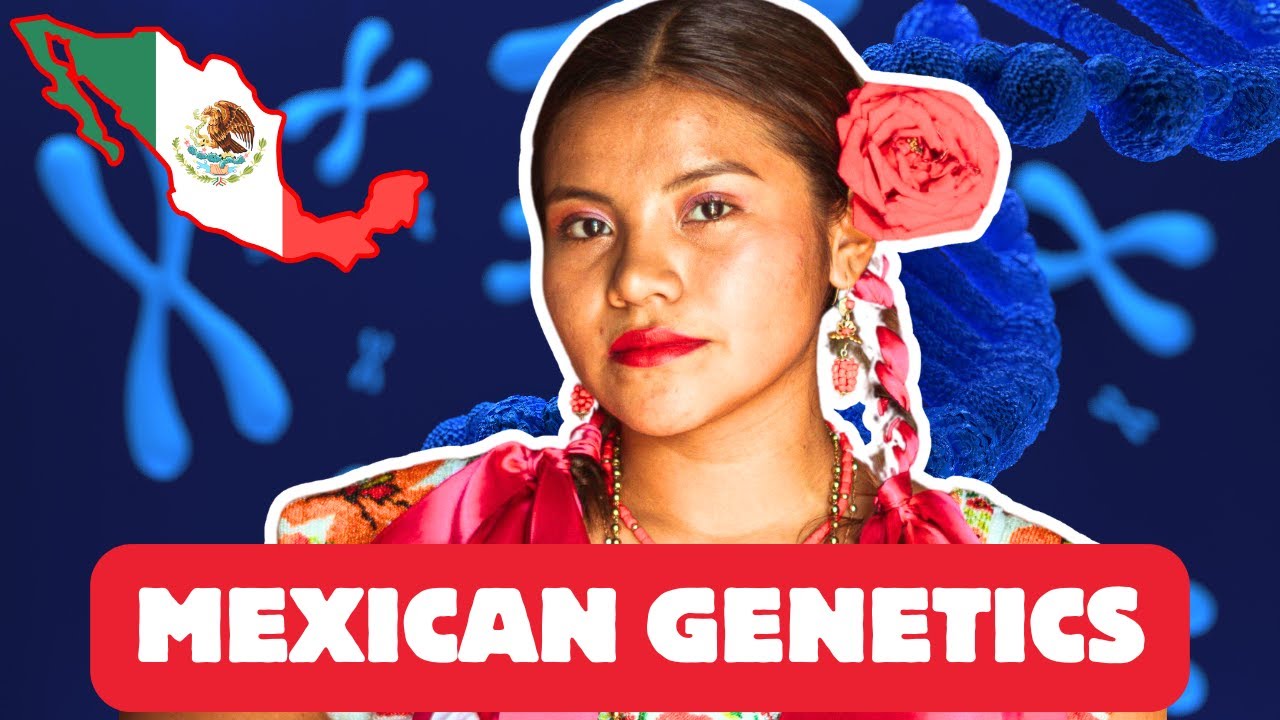
border shares a common brown skin tone or a single ancestral background. That stereotype overlooks a rich tapestry of cultures and origins that defies simple classification. Race in Latin America is a nuanced subject with boundaries far less rigid than those traditionally drawn in the United States. This complexity traces back to the colonial era, when Portuguese and Spanish colonizers imposed hierarchical systems of race and class.
These structures encouraged individuals to identify in specific ways and shaped social status for centuries. Understanding this history is essential to appreciating how race and identity function in the region today. The system that governed this social order was known as the casta system, a variation of the South Asian caste system. It was largely hereditary, assigning people roles and status based on family lineage and class.
At its peak, it created a finely graded social ladder in colonial Latin America. The first major shift in the region’s racial composition began immediately after Christopher Columbus reached the Americas in 1492. Whether viewed as a bold explorer or a controversial figure driven by greed, the colonization and mass migration that followed were unprecedented. This era permanently transformed the demographic and cultural landscapes of the entire continent.
Even after most Latin American territories gained independence in the mid-1800s, the casta system’s influence persisted, deeply affecting politics, culture, and race relations in the newly formed nations. Although slavery was abolished relatively early in most Latin American countries, a significant population of African descent remained in the region. Historically tied to slavery, they were placed at or near the bottom of the social hierarchy. Above them stood Indigenous Americans, who had originally formed a large portion of the population.
However, as European settlers arrived in growing numbers and many Indigenous people assimilated into emerging multiracial societies, they gradually became a minority in their own lands and found themselves near the lower end of the social scale. Various mixed-race groups occupied the middle tiers. Individuals who were half Indigenous and half European, or half African and half European, were typically placed somewhere in between. They enjoyed more rights than full-blooded members of the lower groups but remained below the top of the hierarchy.
At the summit were Europeans of Spanish descent, who held the most privileges. Even within this elite group, a telling distinction existed: those born in Europe were considered superior to pure-blooded whites born in the colonies. This preference for European-born individuals influenced social status and access to opportunity, underscoring the era’s deep preoccupation with origins. The Spanish colonizers not only established a strict racial hierarchy but also devised specific names for the new groups that emerged from intermixture.
Individuals of mixed Indigenous and European ancestry were called mestizos, a term meaning mixed. Those of mestizo and European descent became known as castizos, while people with mixed mestizo and Indigenous heritage were called cholos. This classification expanded into dozens of combinations, reflecting the complex social stratification imposed by the Spanish. Their sense of superiority can be traced back to the Iberian Peninsula, which for centuries had been occupied by the Moors, a Muslim people of North African origin.
The long occupation by a non-European, non-Christian group led the Christian kingdoms of Europe to unite in the Reconquista, and this history may have contributed to a heightened sense of racial and religious superiority that the Spanish carried into their colonies. The result of this intricate history is a region with an extraordinary range of physical traits. Members of the same family may appear to belong to different racial groups. There is no single Latin American appearance.
Instead, the population is composed of a multitude of racial and ethnic backgrounds. The largest demographic in Spanish-speaking Latin America is made up of mestizos, followed by populations identifying as European, Indigenous, and African. But these categories are fluid and overlapping due to centuries of intermarriage and cultural blending, making it difficult to neatly assign individuals to specific groups. The term mestizo theoretically refers to someone who is fifty percent European and fifty percent Indigenous.
In reality, genetic composition is far more complex due to continuous mixing across generations. A person identifying as mestizo may have anywhere from forty to sixty percent European or Indigenous ancestry. Studies in countries like Mexico and Chile have found correlations between socioeconomic status and genetic ancestry. Mestizos of lower economic status often carry a higher percentage of Indigenous DNA, while wealthier individuals tend to have a greater share of European ancestry.
The complexity becomes even more pronounced when considering significant populations from other parts of the world. Latin America hosts the largest number of people with Middle Eastern ancestry outside the Middle East itself. Countries such as Brazil, Argentina, Chile, and Mexico have substantial communities of Palestinians, Lebanese, and Syrians that outnumber those found in Europe or the United States. There is also a notable presence of East Asians, particularly those of Japanese and Chinese heritage.
Brazil has the highest number of ethnic Japanese outside of Japan, surpassing even the United States. In Peru, up to fifteen percent of the population has some Chinese ancestry, often integrated into mestizo communities. Mestizos from countries like Mexico, Panama, Colombia, and Venezuela may also possess a small degree of African ancestry, stemming from the relatively small number of Africans brought to those regions. In many Latin American countries, the line between self-identified Europeans and mestizos is often blurred.
Although the degree of genetic mixing varies significantly from country to country, studies have shown that the average Latin American identifying as white has roughly seventy-five to eighty-five percent European ancestry. The remainder is typically a mixture of Indigenous, African, or Middle Eastern DNA. This overlap means that a significant number of individuals could identify either as white or as mestizo, which explains the wide variations in estimates of the white population across Latin America. Estimates of self-identified whites in Mexico, for example, range from as low as five percent to as high as thirty percent.
Still, a large number of people of full European descent remain, especially in the Southern Cone countries of Brazil, Uruguay, Argentina, and Chile, which received significant numbers of European immigrants. The situation grows even more complicated when immigrants from Latin America arrive in the United States. The U. S.
has traditionally maintained a stricter and more limited definition of whiteness, while applying a more flexible standard for those identifying as racial minorities. People of mixed Black and white heritage in the U. S. , for instance, often identify solely as African American, reflecting different societal attitudes toward race and identity.
In the U. S. Census, people of mixed-race heritage frequently present challenges to conventional classification systems. For example, people who are half white and half Indigenous identify exclusively as Indigenous about seventy percent of the time.
This tendency historically confused census officials unaccustomed to large numbers of individuals with such varied racial backgrounds. In response, officials categorized everyone from Spanish- or Portuguese-speaking regions of the Americas under the broad labels Hispanic or Latino. This generalization overlooks the complex reality of racial and ethnic identities, especially given that people from Spain are included in the Hispanic category despite being European, while people of Portuguese descent are often classified differently. The U.
S. Census defines Hispanic or Latino as an ethnicity, not a race. It allows individuals to choose from primary race categories like white, Black, Asian, or Indigenous, but there is no specific option for mestizo. Although the census offers a choice for two or more races, this does not fully resolve the issue.
The majority of Latin American mestizos in the U. S. do not perceive themselves as multiracial but rather as a distinct racial group unto themselves. Just as modern Central Asians do not consider themselves mixed-race despite having East Asian, Middle Eastern, and European ancestry, most mestizos see themselves not as simultaneously European and Indigenous but as an entirely separate race.
This explains why only about six percent of Latinos in the U. S. choose the two-or-more-races category. Many with mestizo ancestry select a different single race option, and some may not even be familiar with the term mestizo, instead using terms like moreno to describe Latinos with darker skin tones.
The complexity of race and ethnicity in Latin America and among Latinos in the U. S. is truly intricate. This complexity underscores the importance of understanding these diverse identities.
Recognizing this helps explain why using broad terms like Hispanic, Latino, or Mexican to refer to a person’s race is not merely oversimplified but simply inaccurate.