Despite her intelligence and respectable upbringing, Jane’s life was about to take a decidedly darker turn. According to later accounts, while she was still seventeen or eighteen years old, she fell victim to a seducer—an older man who was said to have charmed the young woman with promises of love and marriage before ultimately abandoning her. In nineteenth-century America, few scandals could destroy a woman as completely as this one. A woman who had been seduced and then deserted was often regarded as morally fallen, cast out from respectable middle-class society, and left to face the world alone.
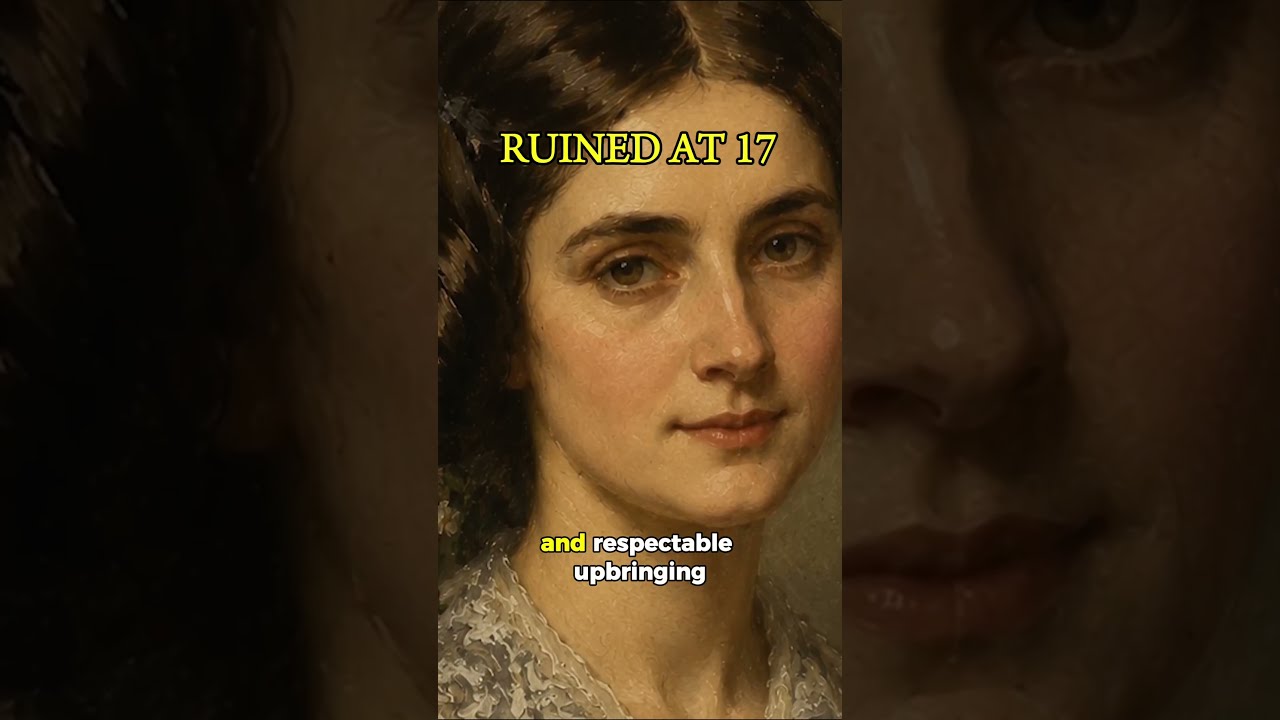
Perhaps this was what soon drove her to New York City. In the bustling metropolis, Jane found herself in a precarious position. With her reputation ruined and her prospects dimmed, she struggled to find stable footing in a city that offered both opportunity and peril. The exact circumstances of her arrival remain unclear from the historical record, but what is known is that she sought work and independence in a society that offered few respectable options for a woman alone.
New York in the mid-nineteenth century was a city of stark contrasts. Immigrants poured into its ports, industry expanded along its waterfront, and a growing middle class defined itself through respectability and domestic virtue. For a young woman without family protection or a solid reputation, survival required resourcefulness. Jane possessed intelligence, but intelligence alone could not shield her from the harsh judgments of a society that equated a woman’s worth with her virtue.
The records show that Jane eventually found her way into the world of work, though the nature of that work and the conditions she endured are not fully documented. What is clear is that her path crossed with figures and circumstances that would shape the remainder of her life in ways she could not have anticipated. The city’s crowded streets, its boarding houses, its places of employment and leisure, all formed the backdrop for a struggle that was both personal and social. As time passed, Jane’s situation grew increasingly difficult.
The stigma of her past followed her, closing doors that might otherwise have opened. Employers who might have hired her were wary of a woman without references, without family, without the protective shield of a respectable reputation. Landlords were suspicious. Neighbors gossiped.
Every interaction carried the weight of social judgment. It was under these pressures that Jane made choices that would be scrutinized and condemned by those who never knew the full circumstances of her life. Later commentators, writing with the benefit of hindsight, would describe her actions as those of a woman who had lost her moral compass. But the historical record also suggests a more complex picture: a young woman of intelligence, denied the social protections that shielded others, doing what she could to survive in a world that had already condemned her.
The accounts available do not permit us to reconstruct Jane’s inner thoughts or her private motivations. We know only what she did, not what she felt. And what she did, according to the sources, was to become involved in circumstances that would lead her into a life that respectable society viewed with horror. Eventually, Jane’s activities brought her into contact with people and situations that carried grave risks.
The evidence suggests that she moved through circles where criminality and exploitation were common, where women in her position were often preyed upon rather than protected. Whether she entered these circles by necessity or by choice remains a matter of interpretation, but the outcome was the same: her name became attached to a series of events that would be remembered long after her death. The precise details of what Jane did during these years, and the full extent of her involvement in the events that made her notorious, are not fully established in the historical record. What is documented is that her life followed a trajectory from respectable beginnings, through social ruin, to a series of increasingly desperate circumstances in New York City.
In time, Jane’s story would be told and retold, each telling shaped by the moral assumptions of its audience. Some would present her as a cautionary tale, a warning to young women about the dangers of trusting seducers and straying from the path of virtue. Others would portray her as a woman who willfully chose immorality and paid the price. The reality, as far as it can be reconstructed from the available sources, was undoubtedly more complicated than either of these simple narratives.
What we know is this: Jane began life with promise, was undone by a betrayal that society punished far more harshly than it punished the betrayer, and then made her way to a city where she faced the consequences of that fall with limited resources and fewer options. The decisions she made in those years, whatever we may think of them, were made by a young woman navigating a world that offered her little mercy and even less opportunity for redemption. The story does not end with reconciliation or forgiveness. The historical record shows that Jane’s later years were marked by the continued consequences of her earlier choices, and that the circumstances of her death were themselves the subject of scrutiny and speculation.
She died in a manner that invited more questions than answers, leaving behind a legacy that would be debated for generations. In the end, Jane’s life serves as a window into the harsh realities faced by women in nineteenth-century America who fell from respectability. Her intelligence and upbringing could not protect her from the social catastrophe of seduction and abandonment, nor could they secure her a dignified path forward once that catastrophe had occurred. The city of New York, with all its promise and peril, became the stage for a struggle that was both deeply personal and broadly social.
The sources do not permit us to know everything about Jane’s life, and any account must acknowledge the limits of what can be established. But the known facts are enough to trace the arc of her story: a promising young woman, a ruinous betrayal, a journey to a great city, a series of difficult choices, and a legacy that outlived her. It is a story that illuminates both the individual tragedy of one woman’s life and the broader social forces that shaped the destinies of countless women in her position.