Frank Hamer, the former Texas Ranger who ended the criminal reign of Bonnie and Clyde, was born in Fairview, Wilson County, Texas, in 1884. His father ran a blacksmith shop, and Hamer was one of five sons raised in a devoutly Presbyterian family, four of whom went on to become Texas Rangers. He grew up on the Welch Ranch in San Saba County and later spent time in Oxford, Llano County, where he joked about being the only Oxford-educated Ranger, despite his formal education ending after the sixth grade. As a child, he displayed unusual abilities, including extremely high intelligence and a near-photographic memory.
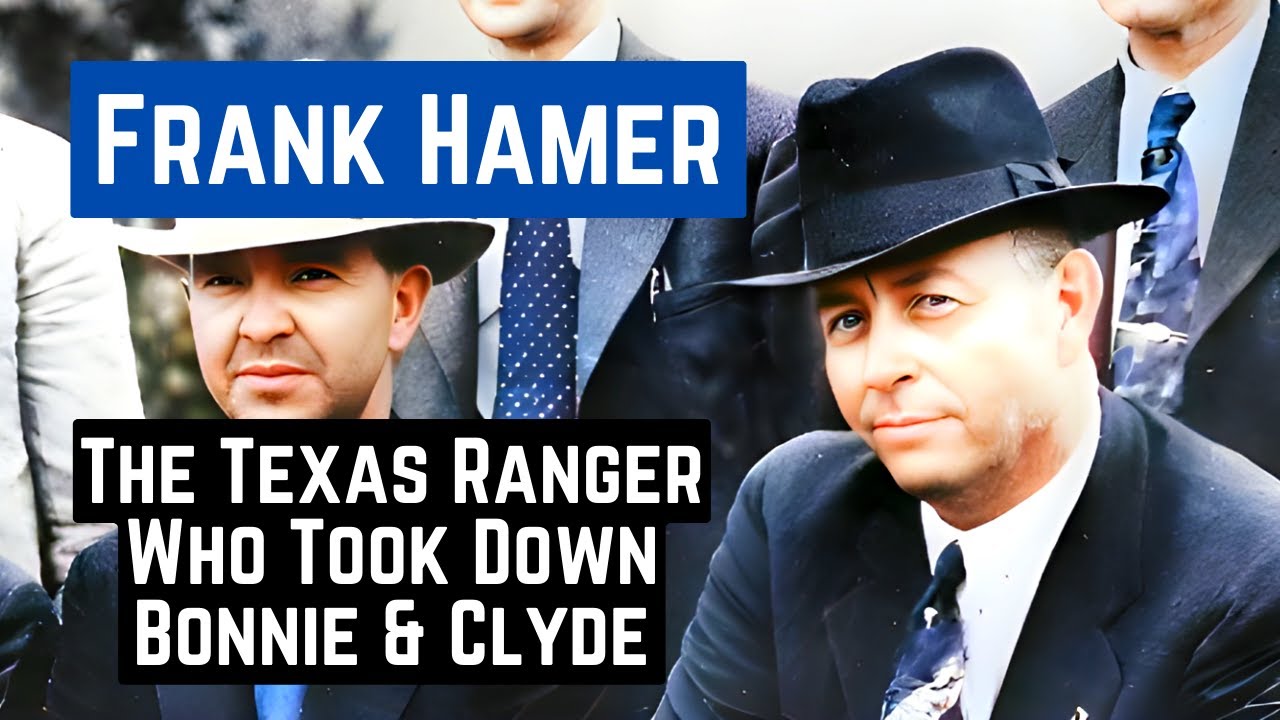
Hamer made his law enforcement debut in 1905 while working on a ranch in West Texas when he apprehended a horse thief. The following year, he joined the Rangers on the recommendation of a local sheriff who was impressed by his knowledge of nature and his comfort on the Texas prairie. Hamer famously interpreted men in terms of animal characteristics, once remarking that the criminal is a coyote, always looking over his shoulder. Over the course of his adult life, he served as a Ranger intermittently, frequently resigning to take on other work.
As a young Ranger, Hamer was assigned to lawless boom towns plagued by violence. Shootouts on the main street were so frequent that in two years, at least a hundred men died. At the age of 24, Hamer settled in and began enforcing the law. He relocated to Houston in 1911 to work in law enforcement before rejoining the Rangers in 1915.
During the Bandit War in La Matanza, he was tasked with guarding the South Texas border near Brownsville, a result of the ongoing unrest in Mexico during the Mexican Revolution. In 1917, Hamer’s life took a tragic turn. On October 1st of that year, his brother-in-law Gus McMeans unexpectedly appeared while Hamer, his wife Gladys, and other family members were stopped at a garage in Sweetwater to get gas. The Hamers and McMeans engaged in a gunfight.
McMeans, a former Texas Ranger and sheriff of Wichita County, was a bitter enemy of Hamer. Hamer was injured in the exchange, but McMeans died after taking a bullet to the heart. The gunfight resulted in ten shots being fired, and police seized three rifles, two semi-automatic pistols, and seven revolvers from the two sides. Soon after this incident, Hamer resigned from the Cattlemen’s Association to work as a federal agent in the Prohibition unit for about a year.
After his time in El Paso, Hamer relocated to Austin in 1921 and took on the position of senior Ranger captain. In 1922, while serving in this role, Hamer began leading the struggle in Texas against the Ku Klux Klan. During this period, he faced a dangerous situation when a sizable mob drew near a courthouse where a prisoner was being held. Hamer shot and injured two of the mob members himself, but the courthouse was destroyed by the mob, and Hamer and the Rangers were unable to reach the prisoner before he left the building.
Hamer ended a murder-for-hire ring in 1928, and the extraordinary methods he used made him a household name across the country. The Texas Bankers Association had started paying five thousand dollars for dead bank robbers, not a cent for live ones. According to Hamer, this reward system led to men being killed by complicit police officers who would collect the rewards and pay finders’ fees to those who helped locate the criminals. After almost 27 years with the Rangers, Hamer left the force just one week before Miriam Ferguson successfully reclaimed her position as governor for another term.
Ferguson had previously served as governor, and at least 40 Rangers had resigned rather than serve under her when she was first elected following the impeachment and forced removal of her predecessor. In 1934, Hamer was persuaded to go after Bonnie and Clyde by Lee Simmons, the head of the Texas prison system. Despite being appointed as a Texas highway patrol officer, Hamer was seconded to the prison system as a special investigator tasked with tracking down the criminal duo. Barrow and Parker had been moving through the lower Midwest, dodging state borders whenever they could to take advantage of the fact that law enforcement officers could not pursue suspects across state lines.
Hamer studied Barrow’s movement patterns, routines, mentality, and propensities to anticipate their next moves. Hamer was investigating both the bank robberies and the murders committed by the gang. On Easter Sunday, April 1st, 1934, the gang murdered two Texas Highway Patrol officers in Grapevine, Texas, which heightened public resentment against Barrow and Parker. A witness account that received extensive newspaper coverage claimed that Bonnie shot patrolman Murphy in the stomach at Grapevine while laughing as she did it.
Five days later, the murder of constable Calvin Campbell, a 60-year-old single father, by Barrow and Methvin near Commerce, Oklahoma, further polarized public opinion against the criminals. Percy Boyd, the chief of police for Commerce, was taken hostage and transported into Kansas before being freed. Henry Methvin’s family got in touch with Bienville Parish Sheriff Henderson Jordan in the middle of March to discuss their son’s legal issues and his association with Barrow. Hamer, who was by nature a loner, eventually put together an inter-jurisdictional posse and devised a scheme to ambush the gang.
The first members of the posse were Sheriff Jordan and his skilled marksman deputy, Prentice Oakley. Hamer invited Manny Gault and other lawmen to join them. Hamer had been assigned to the case full-time by Dallas County Sheriff Smoot Schmidt late in November 1933. Close to Sowers, Texas, the two deputies and Schmidt attempted to ambush Bonnie and Clyde.
During this attempt, Hinton requested a Browning automatic rifle after they looked at a bullet-riddled abandoned V8 Ford and saw that his Thompson submachine gun hadn’t caused any damage to the vehicle’s body. After 102 days of tracking Bonnie and Clyde, the posse finally caught up with them at 9:15 a. m. on May 23, 1934, on a country road close to Gibsland, Louisiana.
Slightly different accounts exist for the final seconds before gunfire broke out when Barrow stopped his car at the ambush location. However, all six posse members concurred that Deputy Oakley stood and fired the first shot from his Remington Model 8. The bullet struck Barrow’s left temple and killed the outlaw instantly. Another 100-plus rounds were fired by the posse, all of which would have been fatal for Parker and Barrow.
Hamer used a modified . 35 Remington Model 8 semi-automatic rifle during the ambush. Frank Hamer experienced a heat stroke in 1953. He survived for another two years but never fully recovered his health.
He passed away on July 10, 1955, at the age of 71, having lived a life defined by his relentless pursuit of justice and his role in ending one of the most notorious crime sprees in American history.