Wilhelm Keitel was a career soldier who became one of the most powerful military figures in Nazi Germany. Born on September 2, 1882, in Helmscherode, Germany, he joined the Prussian Army and fought on the Western Front for the Imperial German Army during World War I.
By the end of that war, he had risen to the rank of Lieutenant Colonel and joined the Weimar Republic's Reichswehr. It was his involvement in Germany's secret rearmament that eventually attracted the attention of Nazi officials.
In 1935, Keitel was appointed head of the Reich Ministry of War's Armed Forces Office, the Wehrmachtamt, with the rank of Lieutenant General. His loyalty and ambition caught the attention of Nazi leaders after he passed on evidence that War Minister Werner von Blomberg's wife was a former prostitute to Hermann Göring, which led to Blomberg's dismissal and advanced Keitel's own career.
In his pursuit of ultimate control over the Wehrmacht, Hitler saw Keitel as an ideally loyal senior officer he could control. Blomberg had described him as "just the man who runs my office." In 1938, Hitler promoted Keitel to Field Marshal and appointed him chief of the Oberkommando der Wehrmacht, or OKW.
In that position, he earned the nickname "Lakeitel," a wordplay combining his surname with the German word "Lakai," meaning lackey. Far from simply acquiescing to the Nazi regime's genocidal policies, Keitel was responsible for issuing and approving some of its most infamous criminal orders.
He signed off on the Commissar Order, which instructed Wehrmacht officers and soldiers to summarily execute any captured Soviet political commissars. He also called for ruthless and energetic action "especially also against the Jews, the main carriers of Bolshevism."
Keitel did not originate the Night and Fog decree, which dictated the secret arrest, deportation, and disappearance of individuals suspected of anti-German activities, but he expanded its mandate to all territories under German occupation. His special contribution was ordering that any prisoners not immediately executed be handed over to the Gestapo, a fate few survived.
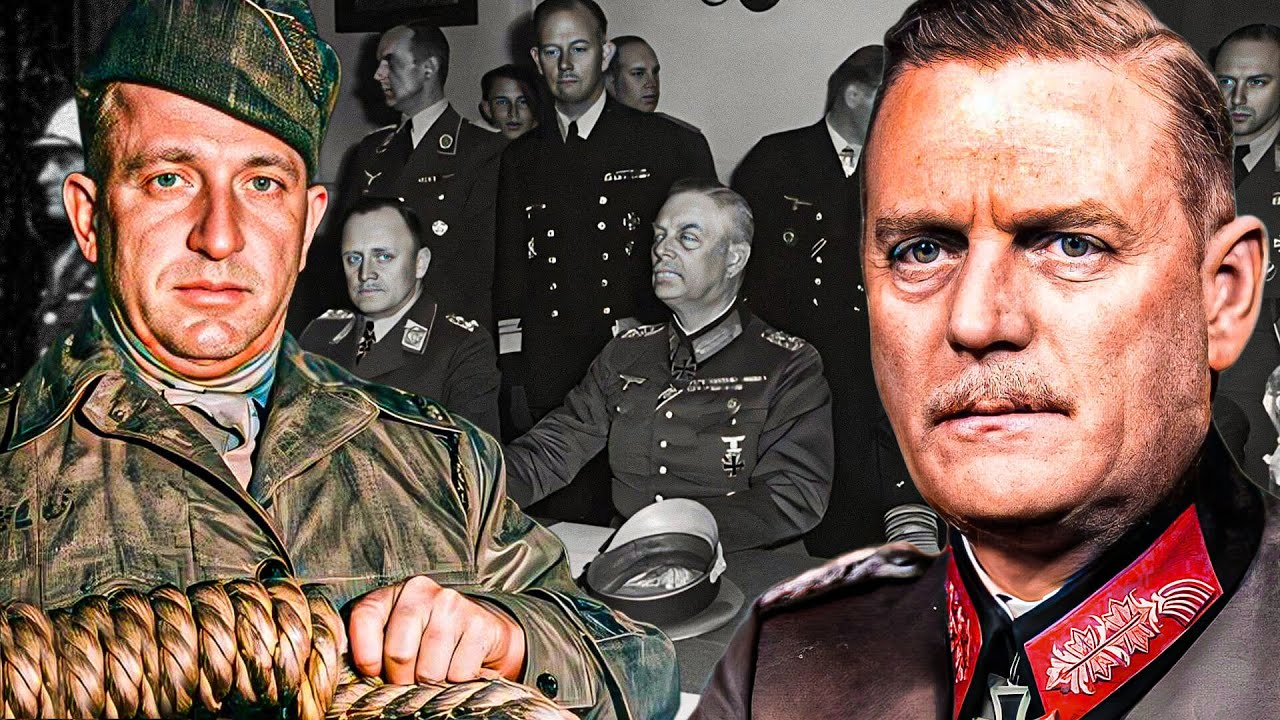
In October 1942, he added the Commando Order to his record, instructing the Wehrmacht to execute all Allied Special Operations troops even when captured or arrested in full uniform. He continued to fulfill his duties until the end, right up until his arrest on May 13, 1945, five days after signing Germany's unconditional surrender to the Allies.
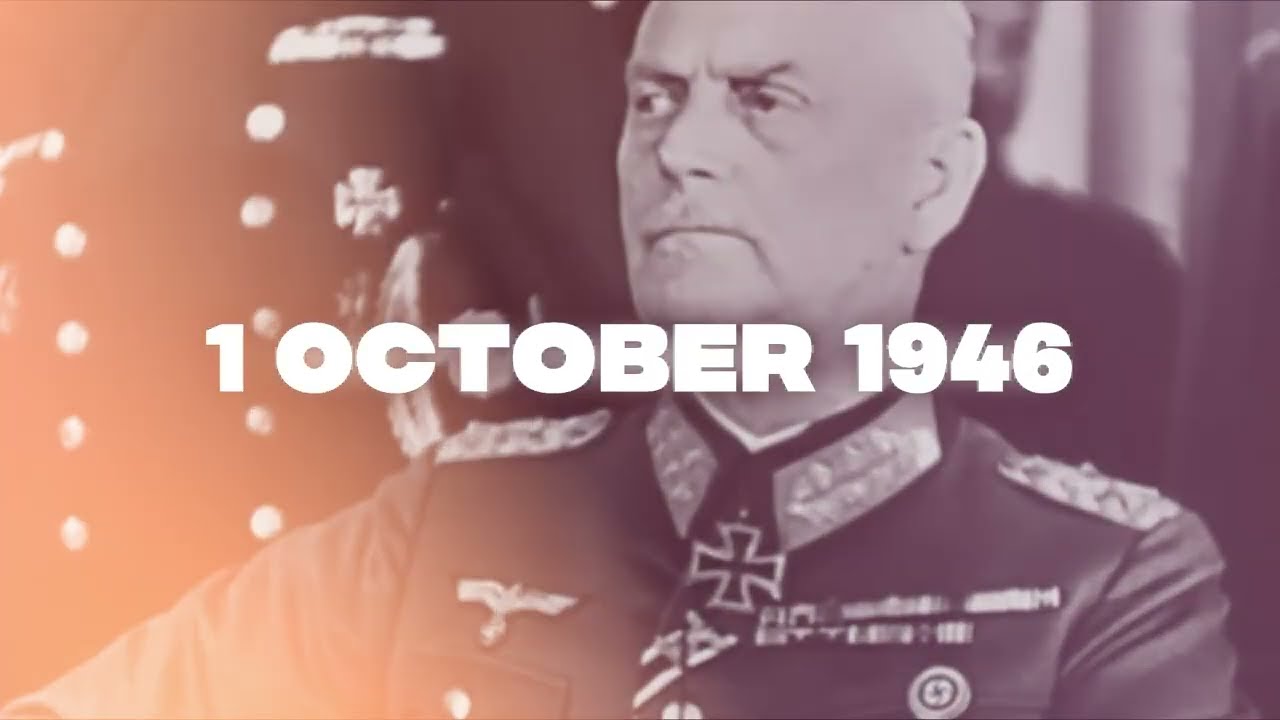
When the International Military Tribunal convened for the first time on November 20, 1945, in Nuremberg, Keitel was indicted on four counts: conspiracy to commit crimes against peace, waging wars of aggression, war crimes, and crimes against humanity. His defense of following orders was rejected, and he was sentenced to death on October 1, 1946.
Eleven other high-ranking members of Nazi Germany's political and military leadership received the same sentence. They included Hermann Göring, Joachim von Ribbentrop, Alfred Rosenberg, Hans Frank, Wilhelm Frick, Julius Streicher, Fritz Sauckel, Alfred Jodl, and Arthur Seyss-Inquart, along with Martin Bormann, who was sentenced in absentia.
The executions were scheduled for October 16, 1946, in the gymnasium of the Nuremberg Palace of Justice, to be carried out by US Army personnel. The order of executions placed Keitel right behind Ribbentrop.
The man the US Army picked for the job was Master Sergeant John C. Woods. By many accounts, he was neither a professional nor an experienced executioner.
A native of Wichita, Kansas, Woods spent a year in the US Navy between 1929 and 1939 before being dishonorably discharged for going AWOL. He was court-martialed and diagnosed with psychopathic inferiority without psychosis, yet he was allowed to enlist in the US Army when America joined the war, presumably because no one checked his prior records.
Assigned to Company B of the 37th Engineer Combat Battalion in the Fifth Engineer Special Brigade, he likely landed on Omaha Beach on D-Day. Only a couple of months later, he jumped at the opportunity for a safer job when the Army sought volunteer executioners for soldiers sentenced to death for murder, rape, or desertion.
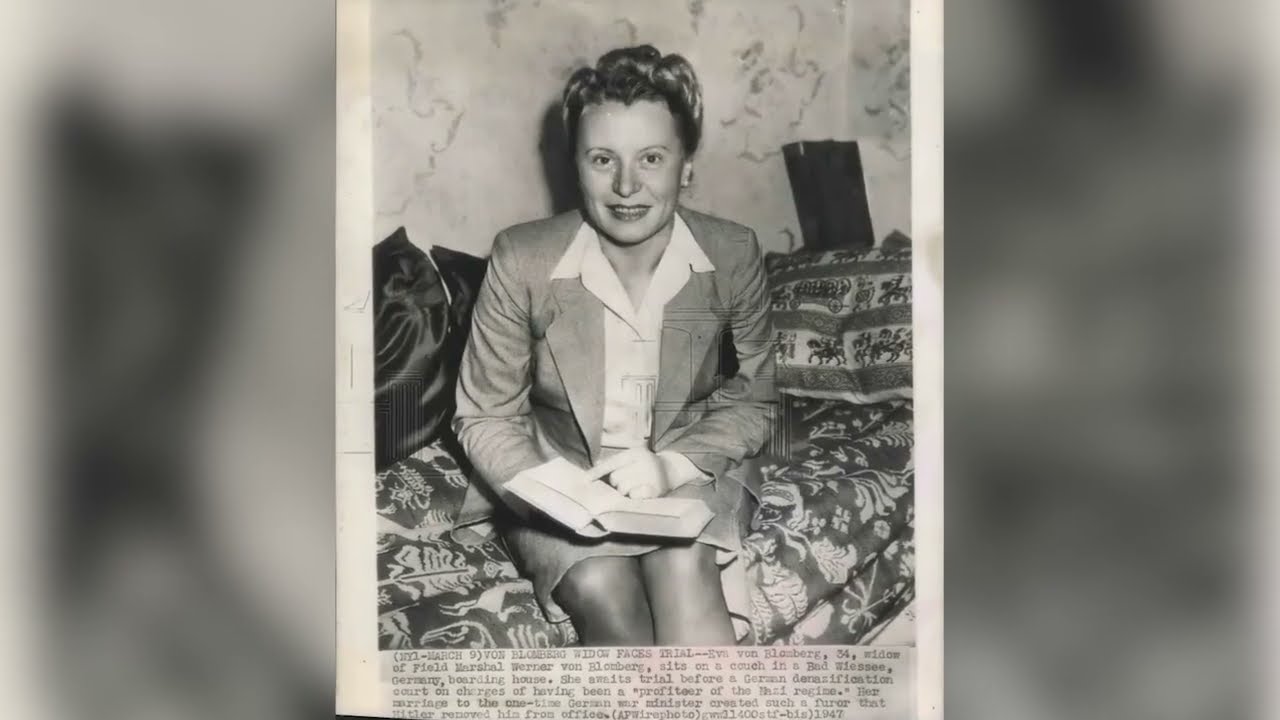
The problem was that Woods's supposed experience hanging inmates in Texas and Oklahoma was a fabrication. In a stunning omission of a background check, the Army promoted him to Master Sergeant and hired him as chief executioner. Later records revealed he botched at least 11 hangings of US soldiers between 1944 and 1946.
When the time came to hastily convert the gymnasium into an execution chamber, Woods and his assistant executioner, MP Joseph Malta, set the stage for a gruesome spectacle. By 1:00 a.m. on October 16, 1946, everything was ready.
Göring had chosen to kill himself with a cyanide capsule the day before, so Ribbentrop was first in line. At 1:11 a.m., he was led up to the gallows. Woods tightened the noose around his neck and positioned him over the trapdoor.
After Ribbentrop said his last words, Malta pulled the lever. The rope swung back and forth with a creak, and all seemed to be proceeding according to standard procedure.
A few minutes later, Keitel entered the gymnasium. As he ascended the 13 steps to the gallows, he remained stoic, his demeanor betraying little emotion. Witnesses noted that he maintained a military bearing until the end.
Once at the top, his hands were bound and a black hood was placed over his head. Woods then positioned the noose around Keitel's neck. When asked for his final words, Keitel exclaimed, "I call on almighty God to have mercy on the German people. More than 2 million German soldiers went to their deaths for the Fatherland before me. I now follow my sons, all for Germany."
At 1:20 a.m., Malta pulled the lever. Instead of a short drop and a sudden stop, onlookers were treated to the sound of Keitel's head slamming against the trapdoor and then the sides of the rope wildly swinging about. Woods had made the trapdoor too small.
When Woods and a doctor went behind the curtain below the gallows, it was clear the rope was set too short. Keitel was convulsing as the rope slowly strangled him, his face mangled and bleeding. Meanwhile, Ribbentrop was still alive, also being slowly strangled to death.
Ribbentrop's official time of death was recorded at 1:30 a.m. Keitel would struggle for another 24 minutes, with his official time of death recorded at 1:40 a.m.
The rest of the executions went just as badly. At least Frick also hit his head against the trapdoor, and all the condemned died from strangulation over periods of 14 to 28 minutes. The last, Seyss-Inquart, was reported dead at 2:59 a.m.
The bodies of all those executed, together with Göring's, were cremated at Ostfriedhof Cemetery in Munich, and the ashes were spread over the Isar River. Their deaths, painful and drawn out, ironically mirrored the suffering endured by countless victims of the Nazi regime's brutality, and in a way they sullied what was supposed to be a final act of justice.
One would expect Woods to be removed from his position for such unprofessional conduct, or at least to show some shame. Neither was the case. He continued to carry out executions of war criminals badly for several months.
He bragged about his job in interviews, stating, "I hang those 10 Nazis and I'm proud of it. I wasn't nervous. A fellow can't afford to have nerves in this business." After his services as hangman were no longer needed, Woods was reassigned to the Seventh Engineer Brigade, stationed on Eniwetok Atoll in the Marshall Islands.
He remained steadfast in his conviction that his was a job well done, adding, "10 men in 106 minutes, that's fast work." He claimed to have carried out a total of 347 executions, though the number was likely closer to 90.
He continued to make such claims right up until his own grim but ironically quick death by electrocution on July 21, 1950, while he was changing a light bulb or standing in a pool of water.