One of history’s most notorious Nazi war criminals died a free man on a Brazilian beach, and the world would not know for six years that the “Angel of Death” of Auschwitz had finally been claimed by the sea rather than by justice.
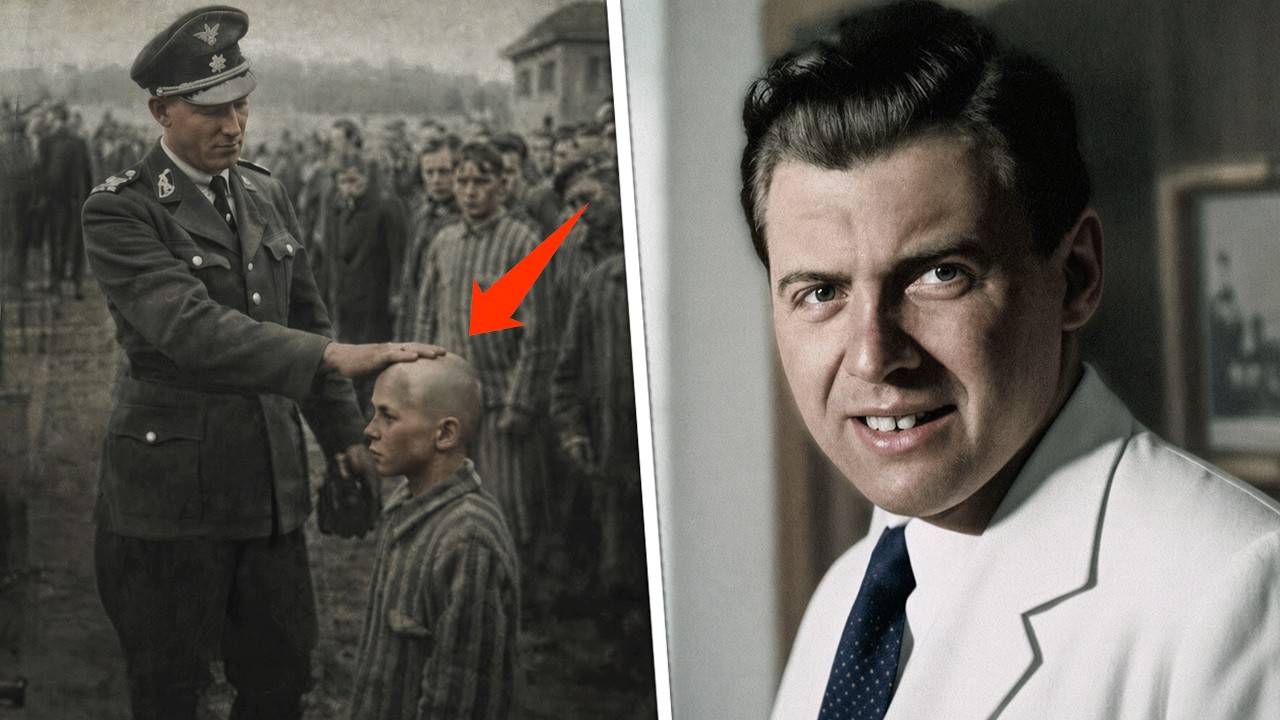
On February 7, 1979, an elderly German pensioner named Wolfgang Gerhard waded into the warm Atlantic surf near Bertioga, Brazil. He suffered a stroke in the water and drowned. The few bystanders who witnessed the scene saw only a frail old man succumbing to the ocean.
They had no idea they had just watched Josef Mengele, the SS doctor who decided with a flick of his finger who lived and who died at Auschwitz, die as a free man.
For 34 years, the world had hunted him. Israel’s Mossad, West German prosecutors, Nazi hunter Simon Wiesenthal, a bounty that climbed into the millions of dollars. All of it aimed at a single man.
All of it failed. He was never captured, never tried, never made to answer for a single life he destroyed.
This is not the story of what Mengele did inside Auschwitz. That horror is extensively documented. This is the story of how he vanished, who paid to keep him hidden, and why the world’s most wanted Nazi slipped every net for the rest of his life.
Josef Mengele was not a brute. He was educated, cultured, and clever, which made him far more chilling than any thug. Born in 1911 into wealth and respectability in Gunzburg, Germany, he earned two doctorates in medicine and anthropology, studying under racial biologist Otmar von Verschuer.
He was charming, ambitious, and academically gifted with a brilliant career ahead of him.
But Mengele came of age as a poisonous idea swept through German science: the notion that some human beings were biologically superior and others were waste to be discarded. He embraced it completely. He joined the SS and rose to the rank of SS Hauptsturmführer, the equivalent of a captain.
He bound his medical training to the machinery of Nazi racial theory.
He served as a medical officer on the Eastern Front, but after being wounded in 1942 and declared unfit for combat, he was reassigned in May 1943. That path carried him to the place where his name would become a curse: Auschwitz.
At Auschwitz-Birkenau, Mengele served as one of the camp’s physicians. It was here the prisoners gave him the name history remembers: the Angel of Death. He was not the only doctor at Auschwitz, but he became its symbol.
There were reasons for that.
Mengele performed selections at the ramp with chilling calm, sometimes smiling or whistling, immaculate in his uniform, sending thousands to the gas chambers with the ease of a man sorting mail. He was entirely indifferent to the suffering he inflicted.
Mengele obsessively collected twins for racial experiments, injecting dyes into eyes, infecting one twin to study disease progression, then killing both to compare organs on a dissection table. Of approximately 1,500 sets of twins who passed through his hands, most did not survive.
That combination, the educated doctor, the calm cruelty, the obsession with the helpless, is what set Mengele apart in the public imagination. He became the face of Nazi medical evil. The single name that captured the cold clinical horror of the camps.
And so when Auschwitz was liberated and the scale of what had happened there became known to the world, Josef Mengele was marked. His name went onto the lists of the most wanted war criminals on earth. The hunt for the Angel of Death was about to begin.
But here is what no one expected. He was already gone.
As the Red Army approached in January 1945, Mengele fled with a medical unit weeks before the camp was liberated. The trail was cold before the searches even started.
The man who walked away in January 1945 as Soviet tanks closed in on Auschwitz did not wait to be liberated. He packed his most precious possessions. Not gold.
Not valuables. His research files, the records of his experiments. He fled west, away from the advancing Red Army, disappearing into the chaos of a collapsing Germany.
Those files would later surface. Some were destroyed. Others were captured by the Soviets.
But Mengele carried the most important ones with him, keeping them as proof of his work, even in hiding.
When the Soviets walked through the gates of Auschwitz on January 27, 1945, the Angel of Death was already gone. And what happened to him over the following months is in many ways the most infuriating part of the entire story.
Because the world’s most wanted man was caught and then simply let go.
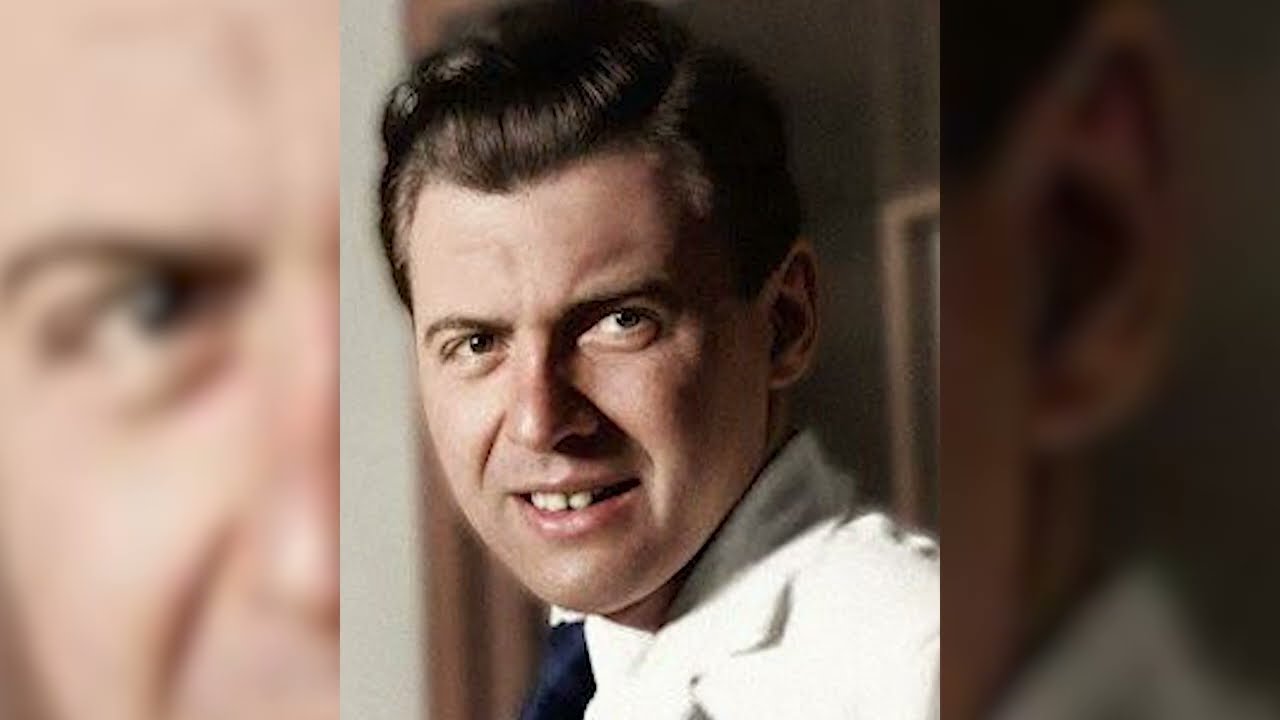 In June 1945, near the Bavarian town of Altötting, Mengele was swept up like millions of other soldiers and held by American forces as a prisoner of war. The man who had stood on the ramp at Auschwitz was, for a brief window, sitting inside an Allied POW camp. The hunt that would later span continents and decades could have ended before it began.
It didn’t. And the reasons reveal just how thin the line between justice and escape really was.
First, there was the name. Mengele was registered under a slightly altered identity, and crucially, his name was not yet near the top of the urgent wanted lists circulating among Allied units. The Allies were still piecing together the names of Auschwitz personnel.
The comprehensive wanted lists, the ones that would eventually circle the globe, had not yet been compiled. To the overwhelmed Americans processing endless columns of prisoners, he was just another captured German officer in a sea of them.
But there was a second factor, and this one was the result of Mengele’s own foresight. The SS branded its members with a small tattoo under the left arm indicating their blood group, a practical measure for battlefield transfusions. After the war, that tattoo became a fatal marker.
Allied screeners learned to check armpits, and the blood group tattoo instantly identified a man as SS.
Mengele, however, had taken the precaution of having his SS blood group tattoo removed. A standard trick used by fleeing SS men to avoid identification. When the Americans searched him, there was no tattoo to betray him.
Nothing on his body marked him as what he was.
In the camp, Mengele kept his head down. Polite, cooperative, unremarkable. He was just another German soldier waiting to be processed.
And then came the moment that should chill anyone who believes justice is inevitable. According to some accounts, a fellow prisoner recognized Mengele, knew exactly who he was, and chose to say nothing. Whether out of loyalty, fear, or simply the chaos of the camp, the man kept silent.
The one thread that might have unraveled everything held instead.
He spent roughly two months in American custody, and then in late summer 1945, the Americans, having no reason to hold him, released Josef Mengele. He walked out of captivity a free man, carrying false papers, melting back into the wreckage of postwar Germany.
From 1945 to 1949, Mengele hid in plain sight as a farmhand in rural Bavaria under the name Fritz Ullmann, bankrolled by his family’s fortune while the world hunted him. By the time the first arrest warrant was issued in 1945, he was already working in a Bavarian field.
He was hunted in headlines and courtrooms. In reality, he was a quiet farm worker a few hours from his childhood home. Bavaria was occupied by American forces, but the rural areas were filled with former Nazis who looked after their own.
Mengele was among friends.
But Mengele knew the disguise could not last forever. Germany was becoming too dangerous, the net too tight. It was time to vanish completely.
And for that, he would need help, money, and an ocean between himself and his crimes.
By 1949, the ground in Germany was shifting under Mengele’s feet. War crimes investigations were intensifying. The hunt for fugitive Nazis was gathering pace, and the quiet life of a Bavarian farmhand was no longer safe enough.
He needed to get out of Europe entirely.
And to do that, he turned to one of the most shameful secrets of the postwar world: the Rat Lines.
The Rat Lines were clandestine escape networks that smuggled wanted Nazis out of Europe and into safe havens overseas. They were aided by a disturbing combination of forces, forged documents, and figures within the Catholic Church who helped provide the papers and passage. Through this underground pipeline, some of the worst criminals of the Reich slipped across the Atlantic.
In 1949, Josef Mengele became one of them, traveling under a false identity and boarding a ship bound for Argentina. He was sailing toward a country that would welcome him.
Argentina in 1949 was ruled by Juan Perón, whose regime quietly opened its doors to fleeing Nazis, offering them sanctuary, anonymity, and in many cases, active protection. For a man like Mengele, it was close to ideal. He arrived in Buenos Aires and began to build a new life.
And here the second great advantage of his existence came into play: money.
Most fugitives ran out of resources and lived in fear and poverty. Mengele did not. Back in Gunzburg, the family firm, Karl Mengele and Sons, was prospering, and the family never abandoned him.
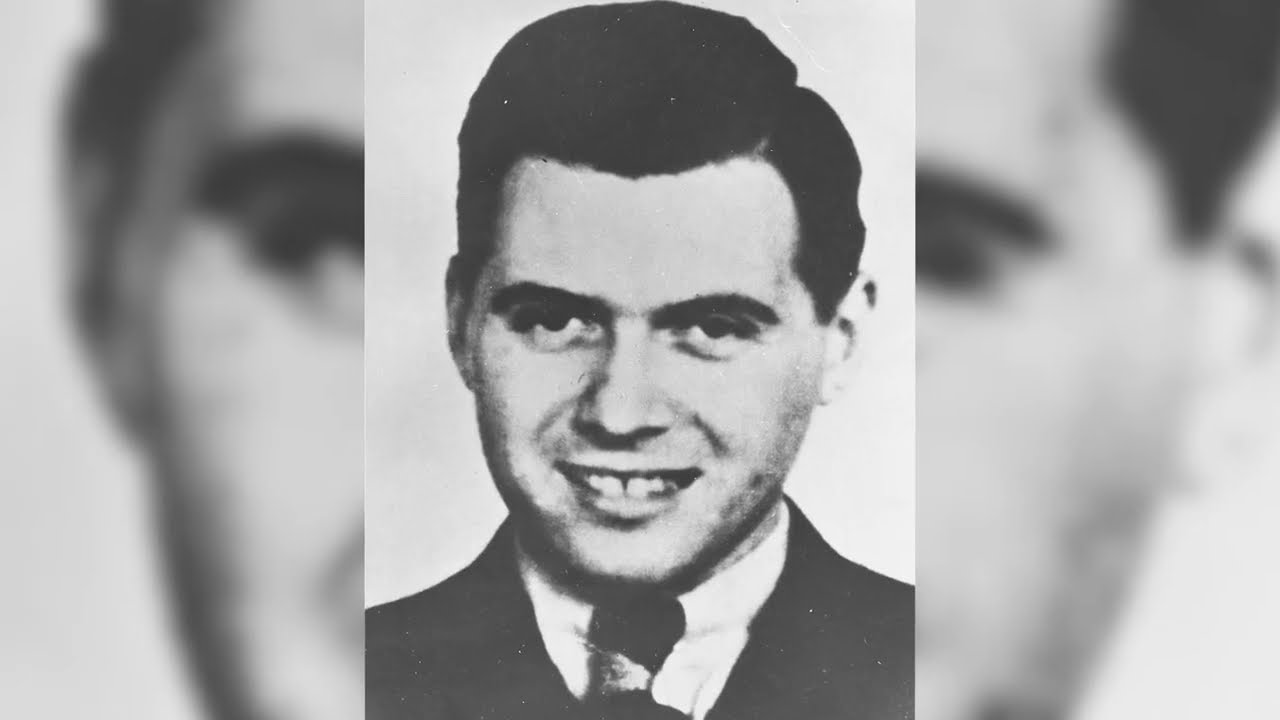 For decades, the Mengele fortune quietly financed his life on the run, funding his travel, his documents, his housing, his safety.
He was not a desperate man hiding in shadows. He was a wealthy fugitive cushioned by an industrial fortune that stretched across an ocean.
The crucial link in that chain was a man named Hans Sedlmeier, a trusted employee and friend of the Mengele family firm. Sedlmeier became Josef’s lifeline to home, the discreet middleman who passed money, messages, and letters between the fugitive in South America and the family in Bavaria.
For years, Sedlmeier was the thread connecting Mengele to everything he had left behind. And as it would turn out decades later, that same thread would eventually help bring the whole story to light. But for now, it kept him safe, supplied, and connected.
With money flowing and a regime looking the other way, Mengele rebuilt. He settled into Buenos Aires society, moved in expatriate circles, and lived with a confidence that bordered on arrogance. By the mid-1950s, he was no longer cowering.
In 1956, he felt so secure that he obtained official Argentine identity papers under a lightly disguised version of his own name: José Mengele. He even traveled, reconnected with members of his family, and lived something close to an ordinary, comfortable life.
Think about what that means. Just over a decade after Auschwitz, the Angel of Death was a settled, prosperous man in Buenos Aires, holding legal documents, protected by his wealth and a friendly government, sleeping soundly while survivors of his crimes lived with their nightmares.
This is the hard, uncomfortable lesson buried in this chapter of the story. Justice is not blind to wealth. Mengele escaped not because he was clever or careful alone, but because he was rich and because powerful people chose to shelter him.
The Rat Line carried him across the sea. The family fortune built the golden cage he lived in once he arrived.
For a few years, it must have seemed to Mengele that he had truly gotten away with it. But that comfort was about to shatter. The hunters were finally closing in.
The comfortable years ended in 1959. That was when West German prosecutors, slowly assembling their case, finally confirmed what survivors had long suspected: Josef Mengele was alive and living in Argentina. They issued a warrant and began pressing for his arrest.
For the first time since the war, the machinery of justice was pointed directly at him.
And Mengele, sensing the shift, did what he would do again and again for the rest of his life. He ran.
He slipped across the border into Paraguay, a country ruled by Alfredo Stroessner, who was even friendlier to fugitive Nazis than Perón had been. Mengele was granted citizenship and for a time protected so thoroughly that he reportedly lived under his own name, almost openly, shielded by a government that had no intention of handing him over. The hunters knew roughly where he was.
They simply couldn’t reach him.
Then came the event that changed everything. Not for the hunters, but for Mengele’s nerves.
In May 1960, Israeli Mossad agents abducted Adolf Eichmann, one of the chief organizers of the Holocaust, off a street in Buenos Aires. They smuggled him out of Argentina and flew him to Israel to stand trial. The message to every fugitive Nazi in South America was unmistakable.
Nowhere was safe anymore. The Israelis would come for you in the night, snatch you from your own neighborhood, and you would vanish.
Mengele understood instantly that he was a prime target, and the realization broke something in him. The bold, comfortable man of the 1950s disappeared. In his place came a paranoid fugitive who would spend the rest of his life looking over his shoulder.
He fled Paraguay and went deeper underground than ever before, slipping into Brazil, into rural isolation, into a shrinking world of false names and a tiny circle of trusted helpers.
The hunt intensified around him. In 1964, a bounty was placed on his head that would eventually climb into the millions of dollars. The famed Nazi hunter Simon Wiesenthal pursued every lead and rumor, and the Mossad, fresh from the Eichmann triumph, set its sights on the Angel of Death.
They came astonishingly close.
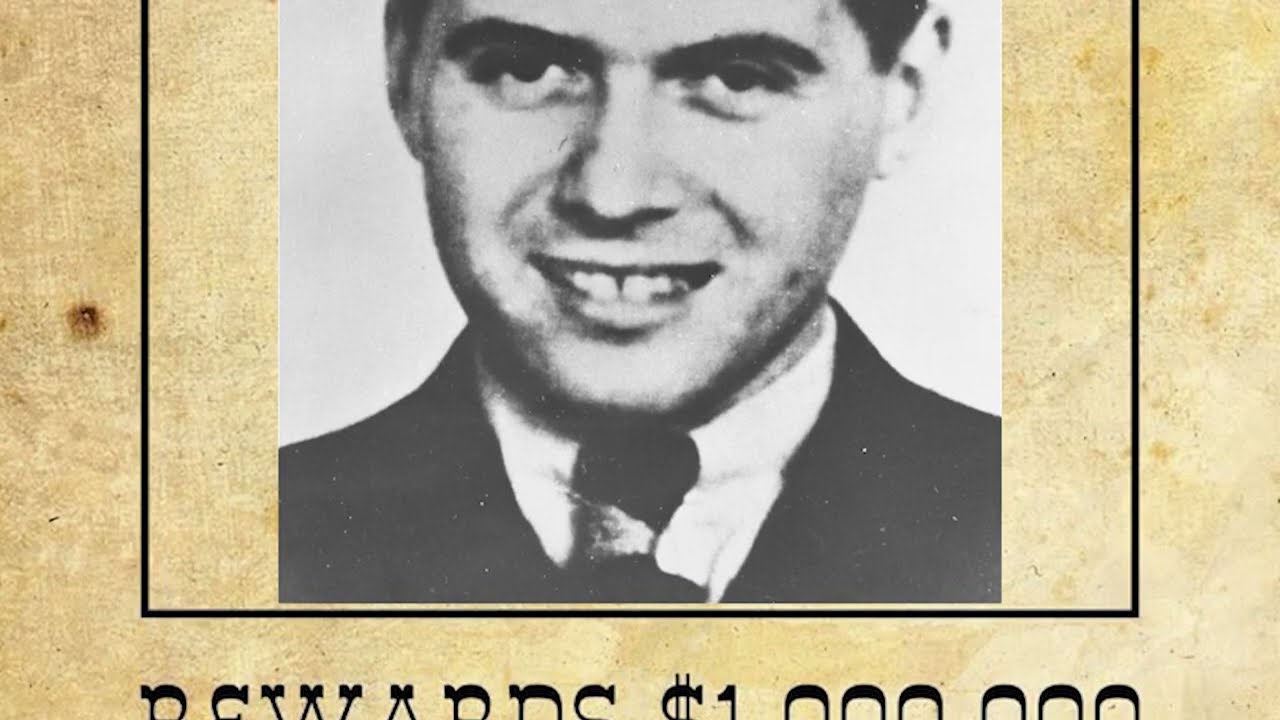 In 1962, Mossad agent Zvi Aharoni, one of the men who had helped capture Eichmann, tracked Mengele’s trail to a remote farm in Brazil. He got near enough to believe he had finally found his quarry. But the lead slipped through his fingers.
By the time the agents could move, the trail had gone cold. The opportunity evaporated, and it would never come again so close.
And here is the bitter truth about why Mengele was never caught in these years. The hunt, for all its intensity, was never sustained with full force. The Mossad had a young nation’s many pressing priorities.
Resources shifted, attention moved elsewhere, and the search for one aging doctor in the Brazilian backcountry was repeatedly deprioritized.
Meanwhile, Mengele was protected by a loyal network of German expatriate helpers who hid him, moved him, and kept his secret for decades.
There was one last human glimpse of the man behind the legend. In 1977, his son Rolf, who barely knew his father, traveled to Brazil to meet him at last. Rolf hoped perhaps to find some flicker of regret.
Instead, he found a bitter, defensive old man who justified everything he had done, who expressed no remorse for Auschwitz, and who defended his actions to the very end.
The Angel of Death had not changed. He had only grown old, hidden, and hateful. And he was running out of time.
The end, when it came, was almost insultingly peaceful. On February 7, 1979, Josef Mengele was swimming off a beach near Bertioga, Brazil, when he suffered a stroke in the water and drowned. He was 67 years old.
He died as he had lived for 30 years, under a false name, this time as Wolfgang Gerhard, the borrowed identity of a fellow German immigrant.
He was buried quietly in a cemetery in Embu, near São Paulo, beneath a headstone bearing another man’s name. No one outside his tiny circle of protectors knew the Angel of Death was dead.
And so began one of the strangest chapters in the entire story. For six years, the world went on hunting a man who was already in the ground. The bounty still stood.
The warrant stayed open. A fresh arrest warrant was even issued in 1981. Investigators chased rumors of Mengele sightings across South America while his bones lay quietly in a Brazilian cemetery.
The most wanted man on earth had slipped even the knowledge of his own death.
Then in 1985, everything broke open at once. It was the 40th anniversary of the liberation of Auschwitz, and the world’s conscience stirred. Public outrage that Mengele had never faced justice reached a peak, and the governments of West Germany, Israel, and the United States finally agreed to pool their efforts in a coordinated hunt.
The break came not in the jungles of South America, but back in Germany. West German police raided the home of Hans Sedlmeier, the family firm’s man, the lifeline who had funneled money and letters to Mengele for decades. And there they found the thread that unraveled everything.
Correspondence revealing not only where Mengele had lived and died, but the mind of the man himself.
The letters were damning in a way no investigator had expected. In them, Mengele expressed no remorse whatsoever. He complained bitterly that he was being persecuted, as though Auschwitz had been some terrible misunderstanding, as though he were the victim.
Decades in hiding had taught him nothing. He had defended the indefensible to his final breath.
The letters led investigators to the contacts who had hidden him, and from them to the grave at Embu. In June 1985, before the world’s cameras, the grave was opened and the remains exhumed. Forensic scientists examined the bones and concluded they belonged to Josef Mengele, but the identification was contested, doubted by some, and so the case was not fully closed until science caught up.
In 1992, DNA extracted from a fragment of the femur was matched to Mengele’s surviving relatives, and the last shred of doubt vanished. It was beyond any question him. He had been dead for 13 years.
So what is the final verdict on the hunt for the Angel of Death? It is an uncomfortable one. Mengele died free, an old man in warm water, far from the ramp at Auschwitz, never having spent a single day in a courtroom, never having answered for one of the lives he destroyed.
His body was exhumed, identified, and, in a final irony no one could ignore, kept as a teaching specimen in a Brazilian medical school. The doctor who had abused medicine now a set of bones in a classroom.
This is the hard truth the file leaves behind. We want to believe that evil on that scale cannot escape. That justice is certain.
Mengele’s life says otherwise. He was never caught. He was never tried.
Protected by money, sheltered by sympathetic regimes, hidden by loyal believers, and overlooked by a world whose attention wandered, he won the only victory that mattered to him.
He died free. And no exhumation, no DNA, no headline could ever take that away.