In September 1944, in western France, a German general commanding 20,000 men faced an impossible choice. His army was trapped, his ammunition was gone, and his escape route was blocked by an American armored division. French resistance fighters were operating against his soldiers through the hedgerows.
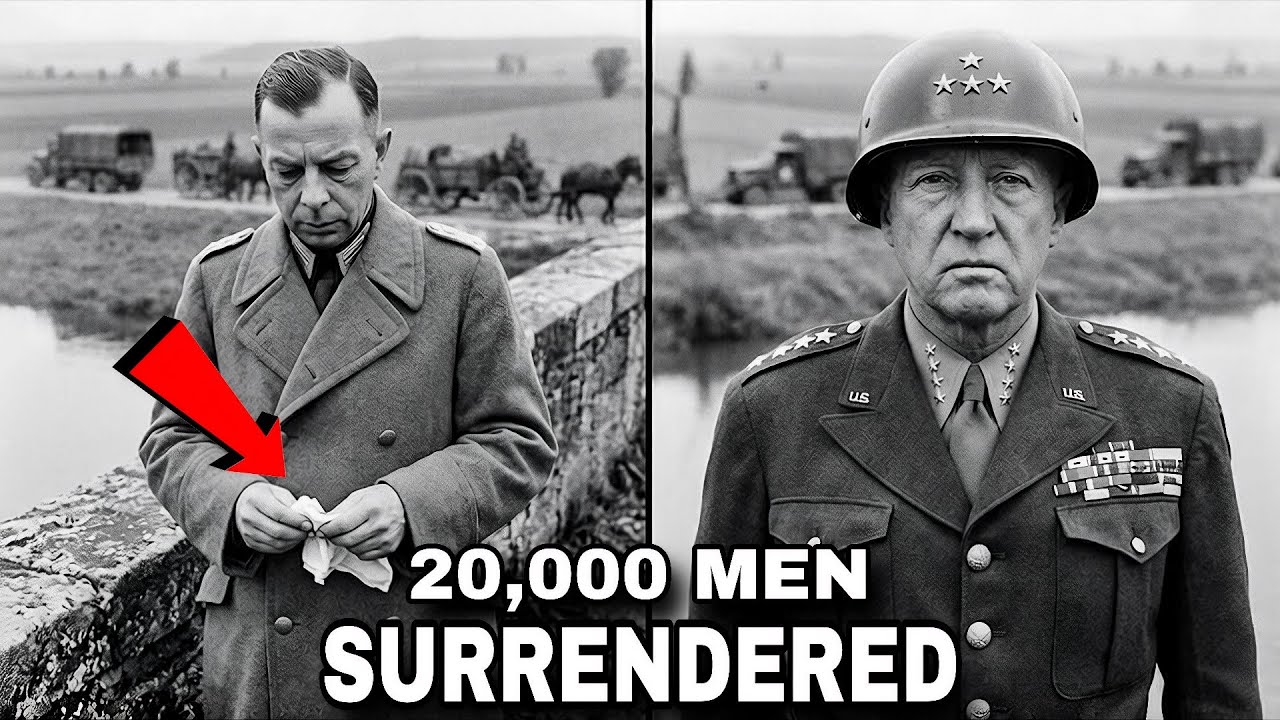
General Botho Henning Elster held a pistol in his hand. He could order his men to continue fighting, or he could do something no German general of his rank had done before. He could walk across a bridge under a white flag and surrender an entire army to the United States.
For 80 years, historians have asked why General George S. Patton allowed the surrender to happen without interference, and what agreement was made on that bridge that neither man ever fully revealed.
To understand what happened at Beaugency on September 16, 1944, one must first understand the impossible logistics of the German situation in southwestern France.
Four weeks earlier, on August 15, the Allies launched Operation Dragoon, the invasion of Southern France. American and French forces came ashore near Marseille and began racing north at a speed that surprised even their own commanders.
Simultaneously, Patton's Third Army had already moved out from Normandy and was advancing eastward across the French countryside. Between these two large forces sat approximately 150,000 German troops spread across the Atlantic coastal forts and the interior garrisons of southwestern France.
They were not elite Panzer divisions. They were occupation forces, coast defense units, logistics battalions, and support troops. They had trucks, horses, bicycles, and in some cases nothing but their boots.
General Elster's command was particularly mixed. He had been the Feldkommandant of Mont-de-Marsan, a quiet town near the Spanish border. When the retreat order came, he gathered every German soldier he could find, including regular army, air force ground crews, naval personnel far from the coast, police units, and even customs officials.
The total was approximately 20,000 men. They had no unified command structure, no standardized equipment, and no reliable radio contact with Germany.
Elster's first decision revealed something about his character that would matter enormously in the coming days. He received orders to damage electrical power plants and industrial facilities as he withdrew. He refused.
When his subordinates asked why, he reportedly said that the French civilians would need those facilities after the war. That decision saved millions of francs in infrastructure damage. It also put Elster in direct violation of the scorched earth directive from the German High Command.
But the French resistance did not know about Elster's restraint. All they saw was a German column of 20,000 armed men moving through their villages. They had been fighting a guerrilla campaign for four years.
In the Indre department alone, approximately 6,000 fighters organized under the Charles Martel Brigade and armed by British personnel mobilized to disrupt Elster's forces. They damaged bridges, intercepted supply columns, and conducted monitoring operations every night.
Elster's men responded with the tactics they had used in previous campaigns. They took defensive measures. In villages like Gençay and Bondilly, German soldiers took actions that further inflamed tensions. By the time the column reached the Loire River Valley, both sides had experienced events that made any peaceful resolution seem impossible.
Then came the American intervention. On September 7, 1944, Lieutenant Samuel Wallace Magill, a 24-year-old officer commanding the intelligence and reconnaissance platoon of the 329th Infantry Regiment, 83rd Infantry Division, did something that defied direct orders.
His platoon, nicknamed Platoon International, consisted of 24 American soldiers plus European volunteers who collectively spoke 12 languages. Magill had been ordered not to cross the Loire River. The division was spread thin covering 300 kilometers of riverbank.
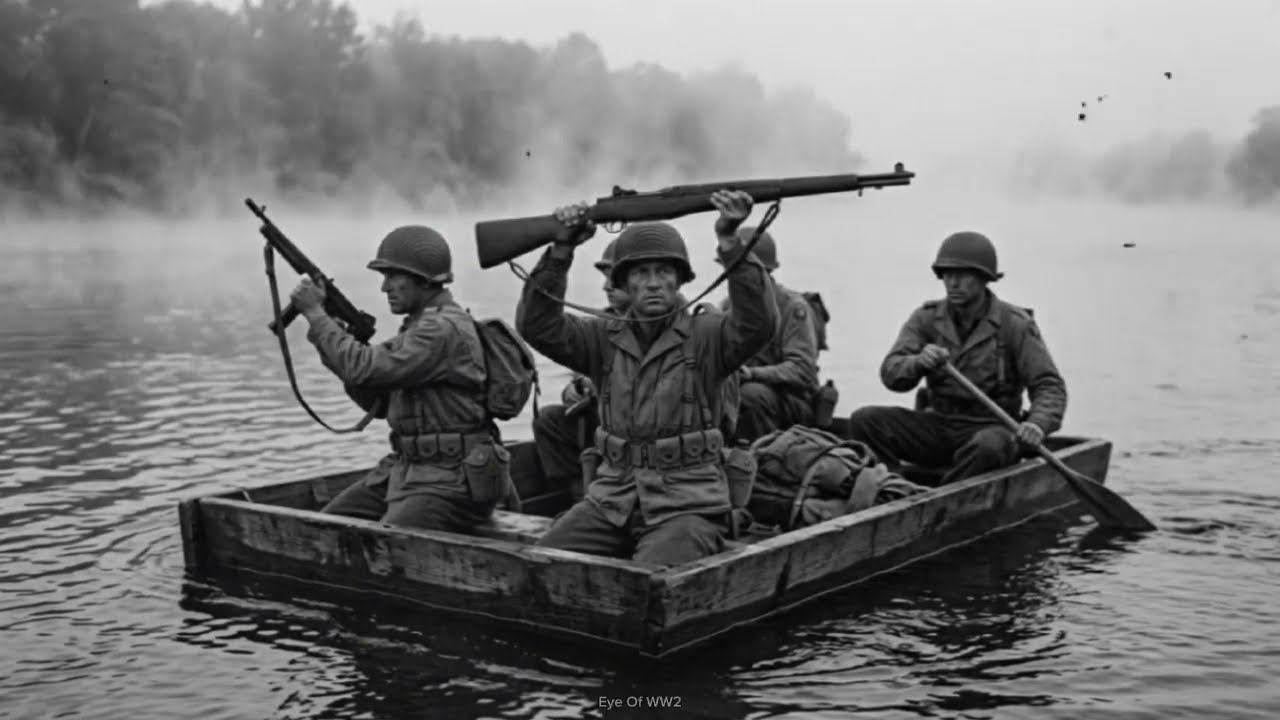
But Magill had heard rumors from French farmers that a large German column was approaching from the south. He decided to see for himself. He took a driver, a radio operator, and a Belgian interpreter named Felix Van de Velde. They built a raft and crossed the Loire at night.
What Magill found on the south bank surprised him. Thousands of German soldiers were encamped in and around the town of Issoudun. They were not preparing to attack, and they were not digging defensive positions. They were waiting.
French resistance fighters approached Magill and told him something even more surprising. A German general wanted to discuss a surrender. But there was a condition. The general would only discuss surrender with American forces. He absolutely refused to discuss it with the French.
Magill understood the reason immediately. There had been serious confrontations between German forces and resistance fighters during the retreat. Elster believed that if he handed his 20,000 men to the French, they would be harmed.
Magill requested permission to meet with the German general. His superiors hesitated. A lieutenant meeting with a German major general was unprecedented. But Magill insisted.
Accompanied by two French resistance captains and a Scottish officer named Tommy Macpherson, who famously wore a kilt throughout the campaign, Magill walked into Issoudun carrying a white flag.
The meeting took place in a municipal building. General Elster stood at the end of a long table surrounded by his staff officers. He was a tall man, 60 years old, with the bearing of a professional officer, but his uniform was dusty and his eyes showed exhaustion. Magill later wrote that Elster looked like a man who had not slept in a week.
The discussion that followed was tense, professional, and surprisingly civil. Elster spoke through the Belgian interpreter. He explained that his column had no ammunition left for any meaningful engagement. His men were running out of food, and his horses were in poor condition.
But he made a specific demand. He would not surrender unless two full American infantry battalions were present to accept his capitulation. Elster was thinking about his professional reputation. If he surrendered to overwhelming American force, he could tell himself and his surviving officers that he had no choice.
If he surrendered to a single lieutenant and a handful of resistance fighters, he would be remembered as having given up too easily. The distinction mattered to him, and Magill understood that distinction well enough to discuss it rather than dismiss it.
Magill returned to American lines with Elster's proposal, but there was a problem. The 83rd Infantry Division was spread so thin that Major General Robert Macon, the division commander, could not assemble two full battalions at Issoudun without leaving other critical positions along the Loire.
Macon faced a tactical dilemma. If he concentrated his forces to accept Elster's surrender, he might leave gaps that other German units could use. If he refused the surrender, 20,000 German troops would either continue resisting or scatter into the countryside. Either outcome would create additional risk for American forces and prolong the campaign in France.
Macon needed a creative solution, and he found one. Macon called the United States Army Air Force. He requested a demonstration of air power, not a bombing attack. The message to Elster would be clear: your 20,000 men cannot succeed against this.
On September 8, 1944, at precisely 2:47 p.m., 16 Republic P-47 Thunderbolt fighters appeared over Issoudun. They flew at treetop level, their engines roaring, their equipment clearly visible under the wings. They made three passes over the German encampment, then climbed and circled overhead.
Magill watched Elster's face during the flyover. The German general looked up, watched the fighters for a long moment, and then nodded slowly. He understood. The Americans did not need two infantry battalions. They had something far more significant.
On September 10, 1944, Major General Macon traveled to Issoudun to sign a preliminary surrender agreement with General Elster. The meeting included Major Arthur H. Clutton of the British forces, who signed on behalf of the British and for French resistance leader Raymond Schmoll.
One witness described the atmosphere as two professional officers making an agreement under circumstances made difficult by the presence of some frustrated French representatives. The French resistance leaders were angry. They had fought for years to liberate their country and had lost thousands of their people, and now they were being excluded from the surrender proceedings of a German army that had been in their region. That tension would continue in the coming days.
The preliminary agreement contained a clause that would become deeply controversial. Elster insisted that his troops retain their small arms and ammunition during the march from Issoudun to Beaugency, a distance of approximately 120 kilometers through territory controlled by the French resistance. Macon agreed to this condition.
Why would an American general allow an enemy force to keep their weapons while marching through hostile territory? The answer is practical, but difficult. Macon believed correctly that if Elster's men disarmed before the march, the resistance would attack them, and many would be hurt.
Such an event would create a political problem between the Americans and their French allies. By allowing the Germans to keep their rifles, Macon ensured that the resistance would think twice before attacking. Armed Germans could defend themselves. Unarmed Germans would be vulnerable.
The march took four days and it was unusual. Contemporary accounts describe German soldiers moving in organized formation through villages, carrying their unit standards and flags and singing marching songs. This was not how defeated troops typically behaved.
French civilians watched in stunned silence as columns of armed German soldiers passed through towns that had been liberated only weeks earlier. Some French resistance fighters wanted to attack anyway. Their leaders restrained them, but barely. The agreement held, but barely.
Magill later admitted that he spent those four days expecting conflict to break out at any moment. It never did, but the psychological impact on French pride was lasting.
One dramatic moment during the march involved the Château de Valençay. This magnificent Renaissance building housed priceless art treasures from the Louvre Museum, including historical sculptures moved from Paris for safekeeping.
Magill learned that elements of Elster's column might pass near the château. He deployed his platoon to secure the access road. No German soldier approached the château. The art remained safe, but the incident reveals how close the entire operation came to breaking down. A single German soldier wandering off to explore a French castle could have triggered an incident that would have unraveled the surrender of 20,000 men.
Now we reach the moment where General George S. Patton enters the story directly, and what follows contradicts almost every popular narrative about this event.
Philippe de Vomécourt, a French resistance leader and British liaison, was furious about the surrender terms. He believed with justification that allowing armed German soldiers to march through liberated France was an insult to every French man and woman who had fought against the occupation.
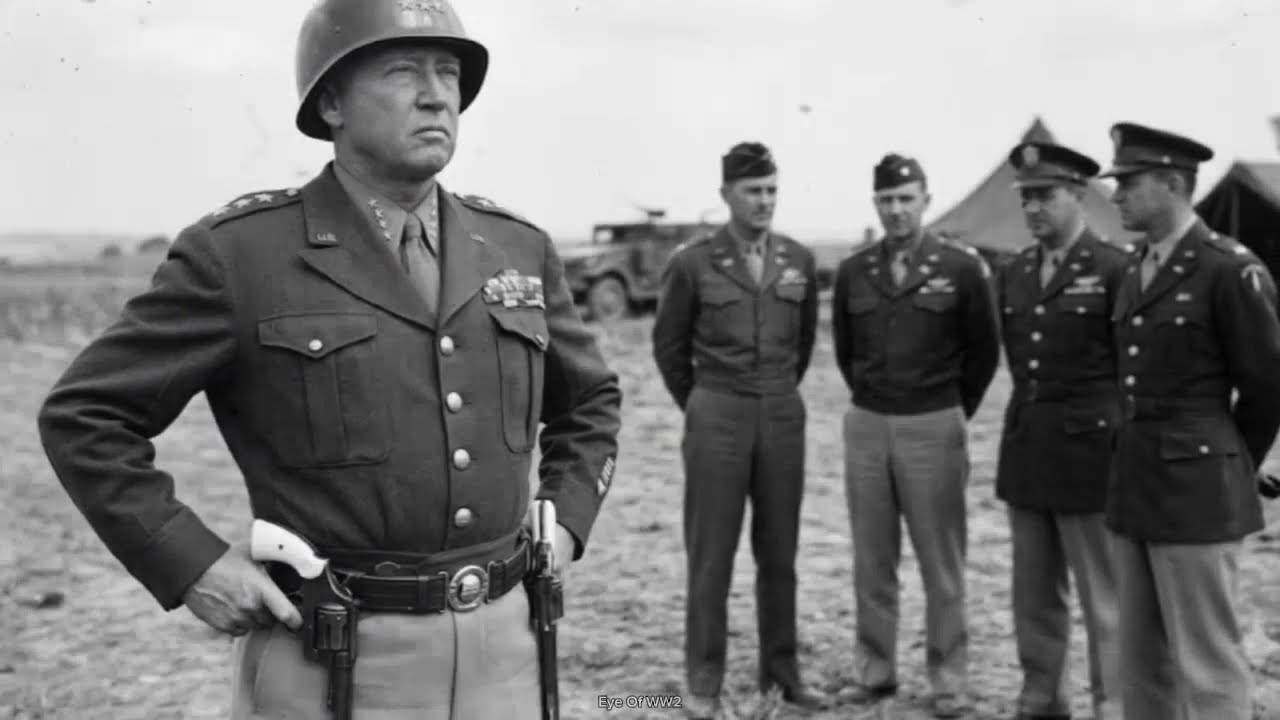
De Vomécourt drove to Patton's headquarters to demand that the agreement be renegotiated. Patton listened to his argument. According to multiple historical sources, General George S. Patton agreed with the French resistance leader. Patton prepared an order to cancel or modify the surrender terms.
But history took a different turn. As Philippe de Vomécourt was driving back from Patton's headquarters to deliver the general's new order, his automobile crashed. He was seriously injured. The order never arrived. The original surrender agreement remained in effect.
This is the historical truth that contradicts the popular story of Patton's support toward Elster. Patton did not help the German general. He attempted to impose different terms. The only reason the original terms stood was an automobile accident that prevented Patton's messenger from reaching the negotiating site.
Think about that for a moment. 20,000 German soldiers surrendered under terms that their own commander had sought. The American commanding general wanted to change those terms to something less favorable to the enemy. And the only reason he failed was an accident on a French country road.
This revelation forces us to reconsider what we thought we knew about Patton's role. The general who famously had a public confrontation with a soldier in a field hospital, who made strong statements about the dangers of being soft on the enemy, and who built his reputation on relentless aggression, wanted to deny Elster the favorable terms that a lieutenant and a division commander had already granted.
Patton's objection was not humanitarian. It was strategic and political. He understood that allowing an armed German column to march through France would anger the French people. He understood that the resistance might break the agreement and attack anyway. And he understood that if the attack happened, Patton's Third Army would be caught in the middle of a difficult situation that would damage the alliance.
The formal surrender ceremony took place on September 16 and 17, 1944, on the old bridge spanning the Loire River at Beaugency. Newsreel cameras from multiple companies, including British Movietone and Pathe, recorded the event.
Colonel Bertram Kalisch, a pictorial officer on General Bradley's staff, filmed the surrender with his personal camera. He later claimed that he convinced Elster to allow filming by telling the German general that the footage would help him maintain his professional dignity.
The film shows Elster approaching the American line. A translator relays his words. Elster says that his command had the ability to continue, but lacked the means to reach the German frontier. Therefore, he surrenders. Then he presents his sidearm to General Macon.
Macon said, "You, your officers, and men will be given treatment in accordance with the principles of the Geneva Convention." He did not say they would be punished. He did not say they would be treated harshly. He said they would receive the treatment required by international agreements.
That sentence, spoken in front of newsreel cameras, was broadcast to every German unit still fighting in France. The message was clear. Surrender to American forces, and you will be treated according to established international rules. You will receive food, shelter, and medical care. You will not be harmed.
That message encouraged dozens of other German units to surrender in the following weeks. By September 1944, the United States Army had learned a difficult lesson from the Battle of Normandy. German troops who believed they would be harmed upon capture continued to resist until their resources were completely exhausted. German troops who believed they would receive humane treatment according to the Geneva Convention surrendered as soon as further resistance became impossible.
The Elster surrender was a proof of concept for the psychological approach. Accept 20,000 prisoners without a fight. Treat them according to international rules. Let every other German commander in France see the newsreels. Then watch as more white flags appear on the battlefield.
This strategy saved American lives. It saved German lives. And it accelerated the end of German resistance in the West.
The surrender statistics tell the story of a logistical challenge. The final count included 754 officers, 18,850 enlisted men, and two female auxiliaries, approximately 19,606 personnel in total. The Americans also received 400 trucks, 1,000 horse-drawn wagons, 2,000 horses, 4,000 automatic weapons, and countless artillery pieces and small arms.
Feeding and sheltering 19,000 prisoners required resources that the 83rd Infantry Division did not have. The division solved the problem by turning the prisoners into their own caretakers. German officers organized their men into work parties. German cooks prepared meals from American rations. German medics treated German wounded. The Americans provided guards, perimeter security, and overall supervision. The system worked because Elster maintained discipline among his troops even after surrender.
But one detail from the surrender has never been fully explained. A German paymaster approached the regimental command officer accompanied by two soldiers carrying a large chest. The chest contained approximately 50,000 francs, the column's payroll funds.
The RCO was busy handling the surrender of 20,000 men. He told the paymaster to find the regimental supply officer. What happened to the chest after that is not documented in any available records. The money was not recorded as received in any American military archive. No German soldier ever filed a claim for lost pay. Somewhere in the Loire Valley, a chest containing 50,000 francs in World War II currency either sits in a forgotten location or was quietly divided among soldiers who never spoke of it again.
The Americans also received approximately 800 German horses. The 83rd Division had no supplies for them and no experience managing large animals. The solution was unexpectedly American. The division located 20 men who had worked with horses before the war. These soldiers moved the horses to the Loire River twice daily for water. They let them graze on French farmers' fields. The farmers were offered horses as compensation.
As one American officer later recalled, the division did not care how many the farmers asked for because they had many horses. Within two weeks, the 800 horses had been distributed to French farmers across the region. Some of those horses were still working on French farms in the 1950s.
Many popular history videos claim that General Patton personally intervened to save Elster from harm. This claim is not supported by primary sources. He wanted different terms. The only person who prevented Patton from changing the agreement was a French resistance leader who crashed his car.
Furthermore, Elster was never at risk of harm from the Americans. The Geneva Convention protected prisoners of war. The German High Command, however, did issue a legal judgment against Elster in absentia for surrendering without permission. That judgment was not carried out because Germany surrendered before Elster could be returned to German custody. He lived peacefully in West Germany after the war.
The strategic legacy of the Elster surrender extends far beyond September 1944. Military academies still study this event as a case study in surrender negotiation. The key principles are clear. First, create an overwhelming force difference so the enemy understands further resistance is not possible. Second, provide a way for enemy commanders to surrender while maintaining their professional dignity. Third, guarantee humane treatment according to international law. Fourth, publicize the surrender terms to encourage other enemy units to follow the same path.
These principles have been referenced in every major conflict since World War II. The Elster surrender was not just a battle outcome. It became a model for ending conflicts faster and with fewer casualties on both sides.
We must also acknowledge the complex aspects of this event. The German soldiers who surrendered at Beaugency included individuals who may have participated in actions against French civilians during the retreat. Some of those individuals were later investigated. But under the terms of the surrender, they were treated as ordinary prisoners of war.
The Americans did not conduct individual screenings at the bridge. They accepted everyone. This decision was practical because screening 19,000 people would have taken weeks. But it also meant that some individuals received the same treatment as others. The French government protested quietly but accepted the reality. They had larger concerns, including rebuilding their country and establishing a post-war government.
Lieutenant Samuel Magill, the young officer who had crossed the Loire River against orders, never received the recognition he deserved. He was not promoted. He was not awarded a medal. The official reports credited General Macon with the surrender.
Magill returned to civilian life after the war and rarely spoke of his role. His obituary in 2015 mentioned the Elster surrender in one sentence. But military historians who have studied the primary sources agree that without Magill's decision to build that raft and cross that river, the surrender would likely not have happened when it did. Elster would have waited for American forces that were not coming until the resistance intervened, and then 20,000 men would have been in a desperate, difficult situation in the streets of Issoudun.
The final scene of this story occurred not on the bridge at Beaugency, but in a courtroom in Berlin. The German military court that issued the judgment against Elster made a revealing admission in its written verdict. It acknowledged that Elster had faced a significantly larger opposing force, and that his troops had been without ammunition, without food, and without hope of reinforcement.
The court still issued the judgment because the German legal system at that time required commanders to continue regardless of the situation. Elster chose a different path focused on preserving the lives of his personnel. The court called that a violation of duty. Historical analysis has offered a different perspective.
The lesson of the Elster surrender is not that war is clean, or that enemies can always become allies. The lesson is that in difficult situations, individual decisions matter as much as grand strategies. A lieutenant who built a raft, a division commander who thought creatively about air power, a German general who refused to damage power plants, and a French resistance leader who crashed his car all shaped the fate of 20,000 men.
History is not only written by large forces. It is also written by people making choices under impossible pressure. And sometimes, not always, but sometimes, those choices lead to a bridge where a German general hands his pistol to an American general, and everyone walks away alive.
The Elster surrender was not the end of German presence in France. It was a sign of the approaching end. The newsreels showing thousands of German prisoners marching across that bridge convinced other German commanders that surrender was preferable to continuing a hopeless situation.
In the weeks that followed, more than 50,000 additional German troops surrendered to American forces in France. The Allied advance accelerated. The war in Europe ended eight months later.
General Botho Henning Elster, the man who made the difficult choice, lived to see that end from a prisoner of war camp. He had preserved 20,000 lives. He had been condemned by his own government. And in the end, history remembered him not as someone who gave up, but as a general who understood that sometimes the most difficult decision is also the most responsible one.