Tony Curtis died on September 29, 2010, at his home in Henderson, Nevada. He was 85. The cause was cardiac arrest following years of chronic obstructive pulmonary disease.
His wife Jill was with him. She said he died peacefully in the bedroom he loved, surrounded by his paintings, after the family decided to bring him home from the hospital rather than let him die in a clinical setting.
Five days later, on October 4, he was buried at Palm Mortuary and Cemetery in Green Valley, Nevada. In the casket with him were a Stetson hat on his chest, an Armani scarf around his neck, driving gloves on his hands, an iPhone loaded with his favorite music, and a copy of the novel "Anthony Adverse."
His daughters Jamie Lee Curtis and Kelly Curtis were there. His widow Jill, decades younger than him, was there. Friends, former co-stars, and fans who had waited in the Nevada heat were there.
The daughters were composed. They stood where daughters stand at funerals. They grieved. They did not yet know what was coming.
Five months before he died, Tony Curtis signed a will. The document named all five of his surviving children. It listed them, acknowledged them, and then stated in language a probate court would later uphold that he intentionally chose to leave them nothing.
The estate went to Jill. The children received the experience of reading their own names inside a legal instrument designed to exclude them.
The man the world remembered as half of Hollywood's golden couple, the husband of Janet Leigh, the star of "Some Like It Hot," the immigrant son who reinvented himself into American royalty, had written his final act. His children were not in it.
This is the story of what happened inside that family. Two famous parents, six children, six marriages, one death by overdose, and a 60-year pattern of damage that a will did not create, but only at the very end made permanent.
To understand how a family arrives at a document like that, you have to go back much further than the funeral. You have to go back before the money, before the fame, before the magazine covers and the red carpets and the Beverly Hills address.
You have to go back to who these two people actually were before Hollywood made them into a fantasy. What happened to their children was not an accident of old age or a young widow's manipulation, though the tabloids would eventually try to make it that simple.
It was the final act of a pattern that had been running for decades. A pattern rooted in two people who wanted entirely different things from life and who mistook the intensity of that difference for love.
Tony Curtis was born Bernard Schwartz on June 3, 1925, in the Bronx. Almost nothing about his childhood suggested the glossy future he would build for himself.
His parents, Emanuel and Helen Schwartz, were Hungarian Jewish immigrants who had come to New York without money, without connections, and without the emotional stability that might have given their children a floor to stand on.
The family lived in a series of cramped apartments where poverty was a daily condition. Emanuel worked as a tailor, and the income was unsteady. The household was shaped by the kind of desperation that poverty and displacement produce.
Helen Schwartz would later be diagnosed with schizophrenia. Bernard and his younger brothers, Julius and Robert, grew up navigating a mother whose presence could shift from warmth to confusion to violence without warning.
The illness was not understood, not treated, not named in any way that might have given the family a framework for what was happening inside their own home. It was simply the weather of the house.
Robert was killed in childhood, struck by a truck in the street. The loss carved itself into the family without ever being fully processed. There was no therapy, no community support system, no space in the daily machinery of survival for grief.
At times, when things at home became unmanageable, Bernard and Julius were placed in an orphanage, not because they were orphans, but because there was not enough food and not enough sanity under the same roof to keep them safe.
What Bernard Schwartz learned from all of this was simple and permanent. Survival meant charm. It meant speed. It meant making yourself so appealing, so watchable, so impossible to look away from that the world would let you in despite everything it could see about where you came from.
He served in the Navy during the Second World War, came home, studied acting under the GI Bill at the New School in New York, and headed west with the single-minded intensity of a man who believed that failure meant going back to the Bronx.
He changed his name. He changed his accent. He changed everything he could change about the surface, because the surface was the only thing that had ever gotten him anywhere.
What Tony Curtis wanted was not simply a career in motion pictures. He wanted entry. He wanted status, beauty, proof that he belonged in rooms where men like Bernard Schwartz had never been welcome.
Janet Leigh came from the opposite direction, which is not to say she came from comfort. She was born Jeanette Helen Morrison on July 6, 1927, in Merced, California.
Her family was working class in the way rural California families often were during the Depression and its long aftermath. Not destitute, but limited, careful with money, shaped by scarcity even when they did not talk about it directly.
Where Tony's emotional formation was chaos and deprivation, Janet's was discipline and presentation. She was bright, studious, churchgoing, the kind of girl who understood early that being acceptable had value.
She learned, as many women of her generation learned, that prettiness and moral legibility were not vanity but currency. If you could be beautiful and careful and controlled, the world would reward you.
Her entry into Hollywood came not through ambition or struggle but through the kind of fairy tale accident the studio system loved to market. Norma Shearer noticed a photograph of the young Jeanette Morrison at a ski lodge in Northern California, where her parents worked the front desk, and brought it to the attention of people at MGM.
Within months, the girl from Merced had a studio contract, a new name, and a career that would unfold with the managed precision of a publicity campaign. MGM knew what it had: a face that photographed beautifully, a temperament that could be shaped, and a willingness to be molded.
If Tony Curtis was improvisation and appetite, Janet Leigh was presentation and control. What she wanted was not chaos or spectacle. She wanted a protected life, work she could take seriously, a home she could manage, a marriage that would hold.
That mismatch, his hunger and her order, his improvisation and her control, his need to be adored and her need to be safe, is the engine of everything that follows.
When they met in 1950 at a party at the home of Jerry Lewis and his wife Patty, the chemistry was immediate and by every account genuine. Tony was magnetic and reckless and alive in a way that made rooms tilt toward him.
Janet was luminous and composed, a woman who had already learned how to navigate an industry that consumed women who could not protect themselves. He was still climbing. She was already established, already inside the rooms he coveted.
They were drawn to each other with the force of two people who each saw in the other something they desperately lacked. They mistook the intensity of that attraction for compatibility, one of the oldest and most destructive errors two people can make.
Their elopement on June 4, 1951, in Greenwich, Connecticut, happened despite resistance from both studios and objections from Janet's family, who sensed something volatile in the match. Jerry Lewis served as best man.
The press covered the marriage as a love story too powerful to be contained by corporate logic, which was exactly the narrative both studios eventually embraced because the public wanted it so badly.
But inside the ceremony was the asymmetry that would eventually split the marriage apart. Tony was marrying up into the world he wanted, and he knew it. Janet was marrying a man whose energy thrilled her precisely because it was nothing like the order she had spent her life building.
Those two impulses, his need to rise and her need to contain, were not partners. They were opposing forces, temporarily sharing a house, and the house, however beautiful, was not strong enough to hold them both forever.
The daughters arrived into that house before the opposing forces became visible to anyone outside it. Kelly Lee Curtis was born on June 17, 1956, in Santa Monica.
She was the first child, the oldest sister, the girl who would grow up as the quiet watcher in a family that generated more noise than it could manage. Jamie would later describe Kelly as her first friend and lifelong confidant.
That description carries more weight than it appears to. It tells you that the bond between the sisters was forged not in comfort but in shared witness. Kelly was the one who would remember more, who was old enough to absorb the earliest fault lines.
Jamie Lee Curtis was born on November 22, 1958, also in Santa Monica, two years after Kelly, into a marriage that was still photogenic enough for the fan magazines but already hardening at its private edges.
By the time Jamie arrived, the family had the full architecture of the fantasy. A famous father, a famous mother, two daughters, a beautiful house, and the implicit promise that glamour could protect children the way it protected careers.
That promise was a lie, but it was a lie that would take years to reveal itself. In the meantime, the Curtis family had to live through its best years, the ones the public would remember, the ones that made what came after feel not just painful but deliberately cruel.
In the mid to late 1950s, Tony and Janet Curtis were as close to Hollywood royalty as a couple could get without being born into it. They were young, wealthy, relentlessly photographed, and professionally ascending.
Their joint films, "Houdini" in 1953 and "The Vikings" in 1958, fused their screen chemistry with their public marriage so completely that the audience could no longer tell where the performance ended and the relationship began.
That fusion was not an accident. The studios wanted it, the magazines wanted it, and Tony and Janet, each for their own complicated reasons, needed it.
Tony needed it because being seen as half of a golden couple was the ultimate proof that Bernard Schwartz from the Bronx had made it. Janet needed it because the marriage, as long as it looked right, was the stable structure she had always wanted to build her life around.
This was postwar Hollywood, a world in which studios still manufactured women into types and sold domesticity as proof of moral worth. A successful actress was expected to be glamorous on camera and orderly at home.
But from the beginning, there was a split-screen quality to the marriage that only the people inside the house could see. The house in Beverly Hills was Janet's domain, and she managed it with exacting, almost architectural control.
Jamie would later describe growing up in a home where order was not comfort but enforcement, where the immaculate rooms felt less like a place to live and more like a set prepared for photographers who might arrive at any moment.
Janet tidied the living room almost as fast as Tony used it. She corrected his behavior at parties, how to hold a glass, how to speak to the right people, which fork to use in which company.
Tony, who had spent his childhood in rooms where nothing was controlled and everything was chaotic, experienced that effort not as love but as judgment, not as care but as surveillance.
He remained profoundly conscious of class and ethnicity in a way that the more WASP-coded Hollywood social world did not accommodate. He was the Jewish kid from the Bronx in rooms full of people who had never worried about the rent.
Every correction Janet offered reminded him of the distance between who he actually was and who this world required him to be. She was telling him, in a hundred small corrections a day, that who he was naturally was not good enough for the world she had built.
The career milestones stacked on top of each other in a way that made the marriage feel successful even as it grew more brittle underneath. Tony earned serious critical respect with "The Defiant Ones" in 1958, playing opposite Sidney Poitier.
The film earned him an Academy Award nomination and proved to the industry and to himself that he was more than a face. Then came "Some Like It Hot" in 1959 opposite Marilyn Monroe and Jack Lemmon, which gave him global immortality.
Janet, meanwhile, was doing her own strongest work. In 1960, Alfred Hitchcock cast her as Marion Crane in "Psycho."
The role became one of the most iconic performances in the history of American film. It also reveals something about where Janet was internally. She took a role of guilt, fear, rupture, and violent exposure at a moment when, by later accounts, her marriage was already deteriorating into cold war behind the Beverly Hills doors.
Marion Crane is a woman who makes a desperate choice and then cannot escape the consequences. Whether Janet saw herself in that story is something only she would know, but the timing is hard to ignore.
The family dynamic during those peak years should be understood through all four of its members. Tony was the absent-present center of gravity. Thrilling when he was there, the life of any room he entered, but unreliable as a daily father.
He loved the children the way he loved an audience, with warmth, with charm, with a charisma that could fill a room and then leave it without warning.
Janet was the stabilizer, the schedule keeper, the enforcer of bedtimes and manners, and the domestic order that she believed was the only thing standing between her family and the chaos she had seen consume other Hollywood marriages.
But she was also increasingly brittle. The effort of maintaining the image, of keeping the house perfect, of correcting Tony, of performing wellness for the cameras and the neighbors and the studio publicists, was consuming energy that might otherwise have been used to address what was actually wrong.
Kelly, old enough by the late 1950s to sense the shift in a room's temperature when a parent entered, became the child who registered the tension first. She was the watcher.
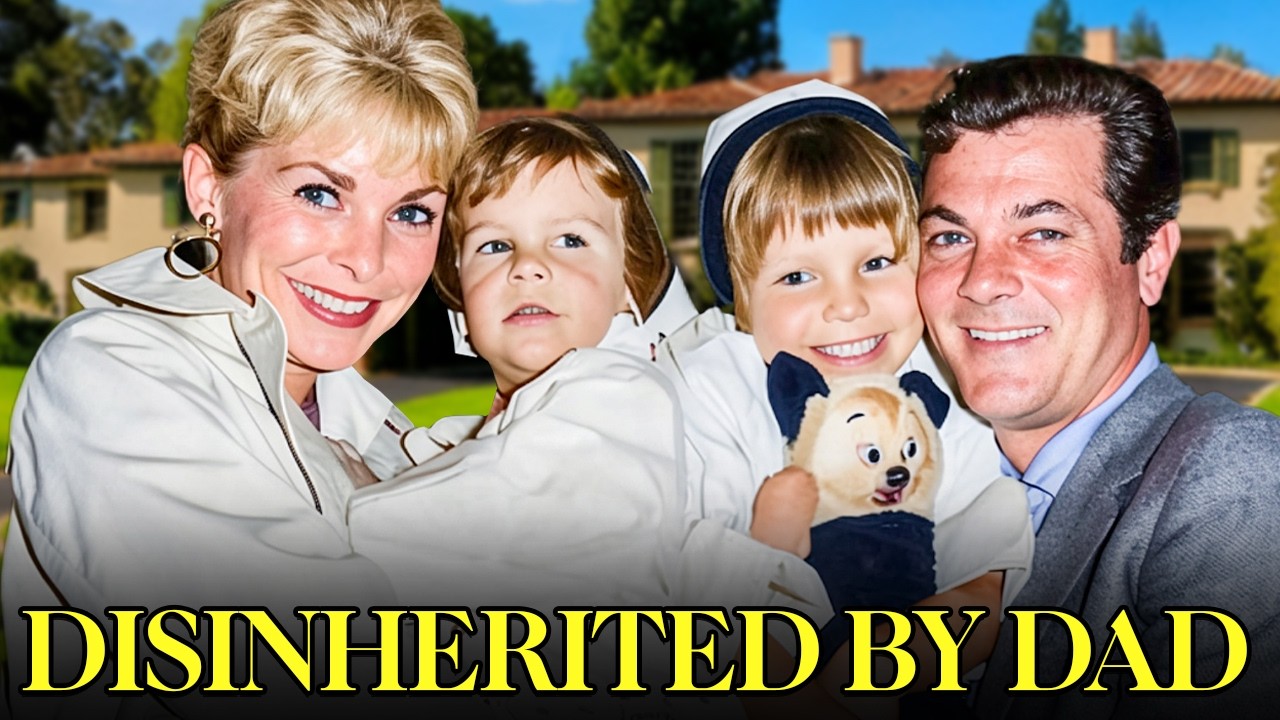
Jamie, still very young, absorbed atmosphere more than explanation. She did not need to understand infidelity or class resentment or alcoholism to understand that something in the house felt wrong. Children do not need the facts to inherit the mood.
In June 1961, the Curtises threw a 10th anniversary party. It became one of the most talked-about social events of that Hollywood season.
They built a dance floor over the swimming pool. They hired a full orchestra. They erected platforms for tables and set out flowers and crystal and linens for roughly 250 guests drawn from the film industry's most powerful circles.
It was extravagant, even by the standards of a community that understood extravagance as a professional requirement. And it should have been a celebration. Ten years, two daughters, two thriving careers, a house that belonged on the cover of a magazine.
But the scale of the party is a detail. It was compensating for something. The couple celebrating a decade of marriage that night were not, by multiple later accounts, a couple who were happy when the guests went home.
They were a couple who had perfected the performance of happiness so thoroughly that stopping the performance would have meant admitting the whole thing was a set. And so they kept performing.
By late 1961, the private reality behind that anniversary party had become unmanageable. The sequence of events that shattered the remaining structure of the marriage came not as a single blow but as a cascade.
Janet's father came seeking money, and the request was neither small nor simple. It landed in a household already strung with tension, where sympathy between husband and wife had been replaced by mutual exhaustion and barely suppressed disdain.
Tony resented being corrected, being managed, being made to feel like the outsider he had always feared he was. Janet resented being the only one holding the structure together while her husband collected adoration and gave nothing back that she could use.
Then, at the International Red Cross Ball in Monte Carlo, an event hosted by Princess Grace and attended by European royalty and international celebrity, Janet broke.
The accounts describe her retreating from the ballroom, overwhelmed, unable to maintain the composure that had been her armor for a decade. She ended up in a powder room or back in her hotel room, undone not by a single event but by the accumulated weight of a life spent performing wellness.
She was in one of the most glamorous settings in Europe, wearing a gown, surrounded by people who saw only the surface. The surface had finally cracked.
Shortly after that night, the exact sequence varies depending on the source, but the emotional proximity is what matters, Tony called with the news that her father had died by suicide.
The details of that death belong to Janet's family and should be handled with the restraint they deserve. But the fact of it is essential to what happened next because it destroyed the last structural support holding the marriage in place.
Janet could no longer keep the inside sealed off from the outside. The controlled, beautiful life she had spent her adult years constructing could not absorb a father's suicide on top of a failing marriage.
She moved toward collapse and defense. Tony moved toward escape. That had always been his pattern. When the room became uncomfortable, he found another room. When the relationship demanded more than charm, he left.
He was not built for sustained intimacy with grief. He was built for the next entrance, the next crowd, the next version of himself that did not have to sit with what he had done or failed to do.
The daughters were still small. Kelly was about five. Jamie was about three. They were not old enough to understand what was happening in any analytical sense, but they were old enough to live inside it.
They felt the change in the house's atmosphere. They registered the absence of safety. They absorbed into their nervous systems the particular anxiety of a home where both parents are breaking and neither one is able to protect the children from the damage.
That is the inheritance that does not appear in any will. It is the inheritance that arrives years before anyone thinks to put anything in writing.
The family left for Argentina, where Tony had been cast in "Taras Bulba." The production took them overseas and across an ocean into a foreign country, carrying grief and resentment and two small daughters, as if a change of scenery could repair what a decade of performance had failed to hold together.
It was there, on that set, with his wife and children nearby, that Tony Curtis fell in love with a teenage co-star named Christine Kaufmann.
Christine Kaufmann was 17 years old. Some sources say 18, depending on when the relationship is dated from, but the distinction matters less than the image. A man in his mid-30s on a location in Argentina with his wife and two small daughters, falling for a girl young enough to be mistaken for one of the crew's children.
Kaufmann was a German-born actress, talented enough to have been working in European films since childhood. She had been cast opposite Tony in "Taras Bulba."
The attraction was apparently mutual, apparently intense, and apparently impossible for Tony to contain, or more precisely, impossible for Tony to want to contain.
He had spent his entire adult life chasing the next version of himself. Christine Kaufmann represented something that Janet Leigh by 1961 could not: the uncomplicated admiration of someone who did not know him well enough to be disappointed.
She was not correcting his manners. She was not grieving her father. She was not maintaining a house or managing a decade of accumulated resentment. She was young and foreign and dazzled by him. For Tony, who had built his entire identity on being dazzling, that was enough.
The affair effectively ended the marriage, though the legal paperwork took longer. Tony and Janet divorced in 1962, and the speed of what followed tells you how little structure was left to dismantle.
The press covered the split with the mixture of titillation and moral judgment that a Hollywood divorce always attracted in that era. The fact that Tony was leaving for a woman barely out of her teens made the story particularly punishing for Janet.
Janet married stockbroker Robert Brandt that same year, not as a rebound but as a pivot, a deliberate and almost defiant turn toward the kind of steady, private, emotionally reliable life she had wanted all along.
Brandt was not famous. He was not dazzling. He was present and he was consistent. For a woman who had just survived a decade of Tony Curtis, those qualities were not settling. They were salvation.
Tony married Kaufmann in 1963 and moved into the next chapter of a life that would be defined by its refusal to stay in any one chapter for long.
The golden couple was finished. The magazine fantasy was over. And the two daughters, Kelly, six years old, and Jamie, three or four, were handed over to the custody of a reality that had nothing to do with the photographs anyone had seen.
Jamie would later say that Robert Brandt raised her from the age of three. That sentence tells you with devastating efficiency how early Tony Curtis's practical fatherhood ended.
He did not disappear entirely. He was not dead. He was simply elsewhere, in another marriage, in another country, in another version of his life that did not include the daily work of raising the daughters he had helped create.
Brandt became the man who showed up. He became the man who sat at the dinner table and drove the girls to school and provided the ordinary, unglamorous continuity that children need more than they need a famous last name.
Janet's second marriage would last more than four decades, until her death in 2004. The stability of that marriage is one of the story's sharpest contrasts.
The woman who had been publicly humiliated by Tony Curtis's affair went on to build the quiet, durable domestic life she had always wanted. Tony, the man who left, kept starting over, kept marrying, kept proving that no single relationship could hold him.
Tony married six times in total. Janet married four times, though her last marriage was the one that defined the rest of her life.
When Jamie Lee Curtis spoke about this decades later in a 2026 interview with "60 Minutes," she framed it with the dark humor of a woman who had spent years in recovery learning how to tell the truth without being destroyed by it.
She counted the marriages, her mother's, her father's, her stepfathers', and said the number left her with an immediate family built entirely on marital failure.
She also said explicitly that her own commitment to staying married to Christopher Guest for more than four decades was not accidental. It was a conscious correction.
She had seen what serial marriage did to the people inside it, not just the spouses but the children. She had decided, with the deliberateness of someone reversing an inheritance, that she would not repeat the pattern.
Kelly and Jamie both moved toward acting as young women, which meant the Curtis name never really loosened its hold on either of them. Jamie got famous fast, in horror films, in comedy, in a career that would eventually span decades and earn her an Academy Award.
Her fame was always in part a conversation with the family she had come from. She was Tony Curtis's daughter and Janet Leigh's daughter, and every interviewer who sat across from her knew it.
Even at the beginning of her career, she was telling the truth in fragments. In early interviews that People magazine later recirculated, she said she did not know her father very well. After his death, she said it more directly: he was not interested in being a father.
Those statements are important because they show that the rupture revealed by the will was not retroactive. Jamie was not rewriting the past out of bitterness after being disinherited. The distance between Tony Curtis and his daughters was the past. It had been the past for decades.
Kelly's path was quieter and in its own way more difficult to read from the outside. She acted. She assisted Jamie on projects. She moved in and out of the entertainment industry without weaponizing the family legend.
Where Jamie processed the family wound through public speech, interviews, memoirs, and recovery narratives, Kelly processed it through proximity and silence.
She was the older sister who remembered more and said less. The one who had been old enough to see the original marriage up close. Old enough to remember Tony before the divorce. Old enough to carry memories that Jamie, three years younger, could only inherit secondhand.
The contrast between the sisters would hold for the rest of their lives. Jamie became the public interpreter of the family wound, the one who could speak about it with clarity and even humor. Kelly became the private keeper of whatever could not be spoken.
The damage was not contained to the first marriage. Tony had more children: two daughters, Alexandra and Allegra, with Christine Kaufmann during their marriage in the 1960s, and two sons, Nicholas and Benjamin, with his third wife, Leslie Allen, in the 1970s.
The pattern of partial presence continued across all of them. Tony was capable of warmth, of charm, of the kind of dazzling attention that could make a child feel briefly like the center of the universe. But he was not capable of consistency.
He was not capable of showing up on the days when showing up was boring, when it required nothing more glamorous than sitting at a kitchen table and asking about homework.
People's reporting across multiple retrospective profiles describes estrangement as the baseline across much of his children's lives, with somewhat closer though still complicated ties to the sons.
That pattern matters because it means the will was not an isolated act of spite directed at Jamie Lee Curtis or at any one child. It was the terminal legal expression of a decades-long pattern in which Tony Curtis treated fatherhood as something he could perform when it suited him and abandon when it did not.
Then came the tragedy that proved the family's damage was no longer only emotional or symbolic. It had become lethal.
Nicholas Curtis, Tony's youngest son with Leslie Allen, died in 1994. He was 23 years old. The cause was a heroin overdose.
UPI reported the following year that two men were charged with supplying the heroin that killed him. Later reporting noted that Nicholas had been sober for a period before relapsing, which is its own particular cruelty.
Tony would later say that the loss of Nicholas was the great sadness of his life, and there is no reason to doubt him. But the loss also sits inside a larger pattern the family could no longer avoid seeing.
The inheritance moving through the Curtis bloodline was not just divorce and distance and emotional inconsistency. It was addiction. It was death. It was the next generation paying the price for damage the previous generation had never addressed.
Tony's own life in the decades after the first marriage followed a trajectory that was simultaneously public and evasive. He battled alcohol and cocaine addiction, not quietly, but in the messy, visible, career-damaging way that addiction operates when it has money and opportunity and no accountability.
His film career, extraordinary in the late 1950s and early 1960s, declined through the 1970s and 1980s into smaller roles and less prestigious projects. He had severe health problems that accumulated with age, including lung disease and breathing difficulties.
He kept marrying, six times total, as if each new wife might be the one who could finally make the story come out right. Christine Kaufmann lasted until 1968. Leslie Allen lasted until 1982. The marriages after that grew shorter.
Each one represented, at least in part, the same pattern: the initial dazzle, the intensity, the belief that this time it would be different, and then the slower-sudden unraveling as the fundamental architecture of Tony's personality reasserted itself.

He also kept painting, kept writing memoirs, kept cultivating the persona of the aging Hollywood icon who had survived everything the industry could throw at a man.
By the early 2000s, he was living in Henderson, Nevada, with Jill Vandenberg, his sixth wife, decades younger than he was. The late-life public story shifted from heartbreak to eccentricity: the old star as painter, memoirist, horse rescuer, survivor.
A 2002 profile in The New Yorker captured the contradiction with precision. The old need for attention remained. The old hunger to be seen and admired and told he mattered. But underneath it was something more vulnerable than vanity.
He was an aging man from the Bronx who had never stopped running from the apartment where his mother lost her mind and his brother died in the street. He had built an extraordinary life on top of that foundation, but the foundation had never been repaired.
This was the period in which the children were all adults. The first marriage was ancient history to anyone who had not lived through it. And yet the unresolved emotional ledger between Tony Curtis and his sons and daughters remained open.
He had not reconciled with them in any way that erased the decades of distance. He had not become in old age the father he had failed to be in youth.
He was still Tony Curtis, charming, self-mythologizing, capable of making you feel like the only person in the room and then forgetting you existed. The children had learned to live with that. They had built their own lives around the shape of his absence.
But living with it is not the same as resolving it. And when resolution finally came, it did not come in the form any of them expected.
Tony Curtis died on September 29, 2010, at approximately 9:25 in the evening. The cause was cardiac arrest following years of chronic obstructive pulmonary disease.
His wife Jill was with him. She said he died peacefully in the bedroom he loved, surrounded by his paintings and his things, after they had made the decision together to bring him home from the hospital.
Jamie Lee Curtis issued a public statement that was graceful, composed, and carefully worded. It was the statement of a woman who understood that the world was watching and who knew from a lifetime of practice how to perform public grief without letting the private version show through.
He had already been frail for months. In July of that year, he had been hospitalized after an asthma attack during a book signing in Henderson. The hospitalization was a signal that the end was approaching, even if nobody said so publicly.
By the time he died, Tony Curtis was no longer the man from the 1950s. He was an old man in Nevada with a much younger wife, a house full of his own paintings, chronic illness, and a family relationship complicated enough that public civility told you almost nothing about what was actually happening underneath.
The funeral followed on October 4 at Palm Mortuary and Cemetery in Green Valley, near Las Vegas. The service was public, attended by Jamie Lee Curtis, Kelly Curtis, Jill, friends, fans, and former co-stars.
Tony Curtis was buried with a Stetson hat, an Armani scarf, driving gloves, an iPhone loaded with his favorite music, and a copy of the novel "Anthony Adverse."
The objects told you exactly who he still believed himself to be. Even at the end, the man who had changed his name from Bernard Schwartz went into the ground as Tony Curtis, surrounded by the accessories of a self-invention that had lasted a lifetime.
The daughters were there. They were composed. They did what children of difficult fathers do at funerals. They stood, they mourned, they performed the rituals of public grief without letting the private grief, the messier kind, show through.
For a few days, the story appeared to be over. The famous father had died. The family had gathered. The burial had happened. The public had its obituaries, its retrospectives, its clip reels of "Some Like It Hot" and "The Defiant Ones."
The narrative had reached its expected conclusion. A great career, a complicated life, a peaceful death, a dignified farewell. And then the will became public.
The document had been signed and notarized on May 5, 2010, nearly five months before Tony died, and filed in Clark County, Nevada, on October 12, just eight days after the funeral.
RadarOnline, following an Inside Edition report, published the details on March 7, 2011. What the document contained was not ambiguous.
Tony Curtis had acknowledged the existence of his five surviving children by name. He had then stated, in language that left no room for interpretation, that he intentionally chose not to provide for any of them.
The estate, worth tens of millions of dollars depending on which public estimate you consult, went to Jill. The children received nothing. Not a token amount, not a personal item, not a letter of explanation softened by affection or regret.
They received the experience of seeing their own names written into a legal document whose only purpose, as far as they were concerned, was to confirm that their father's final formal act on this earth was to exclude them.
That is the central tragedy of this story. And it is important to understand why it is not primarily a money story.
Tony Curtis's children were not, for the most part, people who needed an inheritance to survive. Jamie Lee Curtis was wealthy in her own right, famous in her own right, and had spent decades building a life that did not depend on her father's approval or his finances.
The others had made their own ways, some more publicly than others, some more successfully than others. None of them were waiting for a check from Nevada to keep their lives afloat.
The wound of the will was not financial. It was existential. It was the difference between a father who dies without leaving you money and a father who dies after writing your name into a legal document specifically to state that you have been excluded.
The first is an omission. The second is an act. Tony Curtis did not forget his children. He named them. He listed them. And then he drew a line beneath the list and wrote, in effect, that his final wish was for them to receive nothing.
After a lifetime of intermittent attention, of showing up and then vanishing, of being the dazzling absent center of a family he kept restarting with new wives and new households, Tony Curtis had made his last entrance. His children were not in the room.
The immediate aftermath tracked along lines that were both predictable and heartbreaking. Kelly Curtis contested the will and sought Jill's removal as executrix. The challenge was denied.
Other children, including Allegra, spoke from a position closer to shock than surprise, questioning publicly whether this decision sounded like Tony at all, whether the man they knew, however imperfect, would have chosen such total and deliberate erasure.
Jill, for her part, maintained that Tony had been very specific in his wishes. Later coverage reported that she insisted he had made his intentions clear to the family before his death.
That dispute, whether the children were blindsided or had been warned, remains contested and should be understood as such, because it goes to the heart of the story's cruelty.
If Tony told them and they chose not to believe it, the wound is one kind of thing. If the will arrived as an ambush after the funeral, after the Stetson hat and the Armani scarf and the composed public mourning, then the wound is something else entirely.
The public record of the children's reaction makes it read like ambush. Jill's account makes it read like a final wish honored. The truth, as it usually does in families like this one, probably lives somewhere in the space between those two versions.
The tabloids and entertainment press did what they always do with stories like this. They flattened it. The old star, the younger widow, the disinherited children, the fortune. It became a probate spectacle.
But that framing misses everything that matters. This was not primarily about money. This was about a father whose final formal statement to his surviving children was exclusion.
Exclusion delivered in legal language, filed in a county courthouse, made available to the public after a lifetime in which emotional absence had already done most of the work.
The will did not create the wound. It translated the wound into documentation. It gave it a file number and a notary stamp and a date.
Tony Curtis was gone. The funeral was over. The file was open. And his children were left to grieve a man who had just told the world in writing that they were not part of his final plan.
The legal aftermath moved quickly and settled nothing that mattered. Kelly Curtis challenged the will and sought Jill's removal as executrix, arguing through the mechanisms available to her that the document did not represent her father's true intentions.
The challenge failed. The court upheld the will. Jill remained the executrix and the sole beneficiary. The estate fight became one more public arena in which Tony Curtis's children were forced to negotiate their father's legacy through intermediaries and attorneys.
The man had died without giving them what they needed, and the legal system, which is designed to honor the wishes of the dead rather than the grief of the living, confirmed that his wishes were exactly what the documents said they were.
There would be no reversal. There would be no hidden letter softening the blow. There would be no second will discovered in a drawer, written in a moment of late-life clarity, apologizing for the first one.
The document signed on May 5, 2010, was the final word, and the final word was exclusion.
The public conversation that followed was predictable in its shape and useless in its depth. Entertainment media and tabloid outlets ran the story as a familiar Hollywood morality play.
Commentators speculated about Jill's influence. Message boards debated whether Tony had been manipulated or whether he had simply been, in the end, the same man he had always been, a man who prioritized the person standing closest to him at any given moment and let everyone else recede into the background.
The children's grief was turned into content. Their private reckoning with a father who had in legal language confirmed a lifetime of emotional absence was flattened into a segment, a headline, a talking point.
None of that public noise touched what was actually happening inside the family, which was something quieter and harder to photograph: five adults sitting with the knowledge that their father's last formal act had been to write their names into a document for the sole purpose of crossing them out.
Jill became, in the years that followed, the official steward of the late-life Tony Curtis story, the person through whom the public's memory of him was filtered and maintained.
She was the widow. She was the estate representative. She was the woman who had been beside him at the end, who had brought him home from the hospital, who had chosen the Stetson hat and the Armani scarf and the iPhone and the copy of "Anthony Adverse" that went into the casket with him.
She had defended his wishes publicly and had never wavered from the position that Tony knew what he was doing when he signed that document in May.
In the public narrative of Tony Curtis's final chapter, Jill was the central figure. Not the daughters, not the sons, not the first wife who had helped make him famous or the children who had grown up scattered across the wreckage of his departures.
That mattered structurally and emotionally, because it meant the version of Tony Curtis the public was left with at the end was not the young husband of Janet Leigh, not the absent father of Kelly and Jamie, not the grieving parent who had called Nicholas's death the great sadness of his life.
It was the older Tony, the Nevada Tony, the man who painted and rescued horses and married a woman young enough to be his granddaughter and in his final legal act chose her over every child he had ever brought into the world.
For the children, that was not merely a financial exclusion. It was an erasure from the final chapter of their own father's story. The public would remember Tony through Jill's version of him, and Jill's version did not require them to be present.
To understand the full weight of what the will did to the daughters, you have to understand that by the time Tony died, they had already lost their mother. And the way they lost her was the precise opposite of the way they would lose him.
Janet Leigh died on October 3, 2004, at the age of 77 in Beverly Hills. The cause was vasculitis, an inflammation of the blood vessels. She died with Robert Brandt and her daughters Kelly and Jamie beside her.
That detail, the presence of the daughters, the husband of four decades at the bedside, the family gathered and accounted for in the room where someone they loved was leaving, is the sharpest possible contrast to what would happen six years later.
Janet's death was grief, but it was grief inside a structure of love. It was the kind of death that families can absorb because the relationships that survive it were real and tested and maintained through decades of ordinary, unglamorous commitment.
The mother who had spent her second marriage building the stability she had always wanted had given her daughters the things she always said she wanted to give them: a family that held even at the worst moment.
Robert Brandt had been the father figure since the girls were small. He had been the man who drove them to school and ate dinner at the same table and was there on the mornings when nothing dramatic happened, which are the mornings that matter most to children.
He had stayed. And when Janet died, the family she had built around herself, the second family, the real family, the one that had none of the glamour of the first but all of the durability, was intact.
Tony's death offered no such consolation. The contrast between the two parents' endings is one of the story's most devastating structural facts, and it is worth stating plainly because the daughters lived inside that contrast for the rest of their lives.
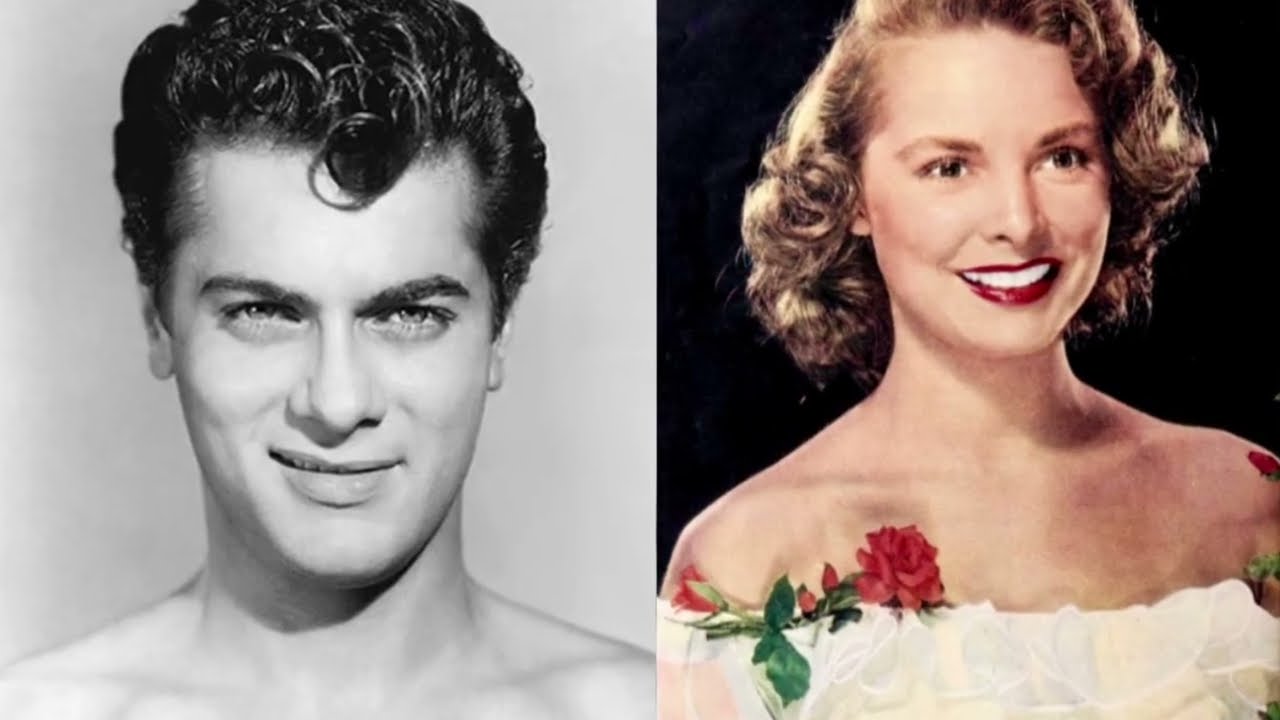
Janet died surrounded by the people she had spent 40 years loving, in a marriage that had lasted longer than most Hollywood careers. Tony died in a house in Henderson, Nevada, with a wife his children barely knew, leaving behind a legal document that formally severed whatever remained of the bond between father and child.
One parent had spent a lifetime repairing what the first marriage broke. The other had spent a lifetime replacing what he could not repair. And the daughters, Kelly and Jamie, had to absorb both of those endings.
Jamie Lee Curtis carried them forward in the most public way. And the way she carried them is itself one of the more remarkable acts of emotional labor in the history of Hollywood families.
By the time of her father's death, she was already in her 50s, already famous on her own terms, already the author of a life story that she had been telling and retelling for years.
She had been open about her addiction to painkillers, which had begun after a routine cosmetic procedure and had consumed years of her life before she found her way to sobriety. She had been open about the terror of that addiction and the daily discipline of recovery.
She had been open about the way her parents' serial marriages and emotional inconsistencies had shaped her understanding of love, commitment, and the cost of a famous name.
Growing up inside the wreckage of the Curtis marriage had taught her, before she was old enough to articulate it, that love was something that arrived with intensity and departed without warning, and that the only way to build something different was to choose every day not to repeat the pattern.
In a 2026 interview with "60 Minutes," recorded when she was 67 years old, she spoke about her parents with the clarity of someone who had spent decades in therapy and in rooms where honesty is the only currency that works.
She said she had surpassed her parents, not in fame or achievement, but in emotional freedom. She said her mother had lived inside restrictions that Janet herself could not always name, restrictions of composure and control and the belief that if the surface looked right, the interior would eventually follow.
She said her father had lived inside a pattern of departure that he could not or would not break, the pattern of the man who enters a room and lights it up and then walks out before anyone can ask him to stay.
She said her own marriage to Christopher Guest, which by then had lasted more than 40 years, was not an accident or a piece of luck but a decision, a daily, deliberate, sometimes difficult refusal to repeat the pattern she had inherited.
She was not offering herself as a triumph over her parents. She was offering herself as evidence that surviving a family like hers required not a single heroic act but a lifetime of conscious, unglamorous, repetitive work: the work of staying when every inherited instinct says to leave.
That interview matters because it shows that Jamie's response to the will was not bitterness or public grievance or the kind of performative outrage that celebrity culture rewards. It was the same response she had been practicing for decades.
Tell the truth, acknowledge the damage, refuse to be destroyed by it, and build something different on top of it.
She did not make the disinheritance the center of her public identity. She did not wage a media campaign against Jill or spend years relitigating the will in interviews and on talk shows.
She absorbed the blow the way she had absorbed every blow the family had delivered: by naming it, by placing it inside a larger pattern she already understood, by refusing to let it become the defining fact of her life, and by continuing to live the life she had chosen rather than the one her parents' failures might have sentenced her to.
There is something about that response worth sitting with, because it is not the response of a woman who was surprised by what her father did. It is the response of a woman who had been preparing for it, in one form or another, since she was three years old.
Kelly's path through the aftermath was quieter, and it ended sooner than anyone expected. She had always been the less visible sister, not because she lacked talent or intelligence or depth, but because she had chosen, or perhaps been temperamentally suited to, a life lived at lower volume than the one her family name made available.
She worked in the entertainment industry in various capacities, acting, production work, the kinds of roles that keep a person adjacent to the industry without placing them at its center.
She supported Jamie through the years of Jamie's rise and Jamie's struggles and Jamie's recovery, and she was supported in return.
She carried the memories of the original family: the Beverly Hills house, the anniversary party over the swimming pool, the sound of their parents' voices in the rooms where the tension was permanent and unspoken.
She carried the particular quality of a childhood lived inside a marriage that looked perfect from the outside and felt like something else entirely from within, with a privacy that Jamie, by nature and by public position, could never maintain.
Kelly did not give the long interviews. She did not write the memoirs. She did not stand at a podium and tell the world what it had been like to grow up as Tony Curtis's daughter.
She held whatever she held inside the relationship with her sister, which both women described across decades as the most constant and most reliable thing in their lives, the one bond that had survived every fracture the family produced.
Kelly Lee Curtis died on May 30, 2026, at the age of 69. Jamie described her publicly as her first friend and lifelong confidant.
The weight of that description is almost unbearable in context, because it means the person who had been there from the very beginning, before the divorce, before the will, before the decades of distance from Tony, before the recovery and the fame and the Academy Award and the "60 Minutes" interview, was gone.
Kelly was the one who had been old enough to remember the marriage before it ended. She was the one who had watched Tony leave from closer range than Jamie, who had been too young to carry explicit memories of the household with both parents in it.
She was the first witness to a family story that would eventually become public property. And she had carried that witness quietly, privately, without the public platform that might have allowed her to process it the way Jamie did.
Some reporting places her death at home in California. The Wood River Chapel obituary places her in Bellevue, Idaho. The discrepancy is minor and may simply reflect the difference between where she was living and where the family chose to hold services.
What matters is that the Curtis-Leigh family had lost another member. And the circle of people who knew what it had actually been like inside that house in the 1950s, who had felt the atmosphere, not just read about it, was now smaller than ever.
The other surviving children moved through the decades after the will in ways that reflected their own particular relationships to the Curtis name and the damage attached to it.
Alexandra Curtis, born in 1964 to Tony and Christine Kaufmann, kept the lowest public profile of any of the children, a deliberate, sustained retreat from the visibility that had defined and distorted her father's life.
She did not give interviews about the will. She did not appear on entertainment programs to discuss her feelings about the inheritance. She simply withdrew, and that withdrawal was itself a kind of statement about what the Curtis name had cost her and what she was unwilling to pay further.
Allegra Curtis, born in 1966, also to Tony and Kaufmann, remained the more public of the two Kaufmann daughters, working as an actress and businesswoman primarily in German-language media contexts, carrying the Curtis name in a different country and a different cultural landscape than the one that had created it.
She was among the children who expressed shock when the will became public, questioning whether the decision sounded like the father she had known. That reaction, genuine surprise mixed with the recognition that surprise might itself be naive given everything they already knew about Tony, was shared in different forms across the family.
Benjamin Curtis, born in 1973 to Tony and Leslie Allen, settled in Maine, far from Hollywood, far from Nevada, far from the geography of his father's fame. He managed a bar.
He lived a life that would have been unrecognizable to the man who had changed his name from Bernard Schwartz and built an empire out of charm and the refusal to stay in one place.
He spoke in the occasional interview about how seriously he took being a present father to his own children, about the conscious daily effort of doing what his father had not done, of being in the room rather than leaving it.
That detail is the one that cuts deepest across the family's entire story, because it shows the inheritance moving through another generation in the only form that matters. Not money, not fame, not a name on a document, but the decision to reverse a pattern rather than repeat it.
Benjamin Curtis did not need his father's estate to understand what his father had failed to give him. He needed only his own children and the determination to give them something different.
Nicholas, dead since 1994, remained the absence around which much of the family's grief still organized itself. The child who did not survive the inheritance. The son who was 23 and then was gone.
No will or estate fight or public statement could change that. No amount of money, divided or withheld, could address what his death had taken from the family. It was the proof that the damage Tony Curtis left behind was not merely emotional or symbolic. It had a body count.
The cultural afterlife of the Curtis-Leigh story has not produced the kind of single dominant prestige adaptation that some American dynasty stories eventually generate.
No limited series, no Oscar-nominated film, no one narrative that the public treats as the authorized version of what happened inside this family.
Instead, the story has lived on through a slower, less dramatic accumulation of memoirs, retrospective profiles, and literary re-examination, each one offering a partial view of a family whose full reality no single account has ever captured.
Janet Leigh's "There Really Was a Hollywood," published in the 1980s, kept her own carefully managed self-mythology in circulation, the girl from Merced who became a movie star, told in the controlled presentational voice that had defined every aspect of her public life.
Tony's own memoirs did the same for his version, though his telling was characteristically looser, more self-serving, more willing to mythologize the past and less willing to sit with what the mythologizing had cost the people closest to him.
In 2023, Laurence Leamer's "Hitchcock's Blondes" revived the marriage as a psychologically rich and specifically detailed Hollywood story. The Vanity Fair excerpt drawn from it brought the private details back into public conversation.
The swimming pool dance floor at the anniversary party, the Monte Carlo breakdown, the class resentment, the wine glass corrections at dinner parties, all returned with an intimacy and a specificity that earlier, more surface-level accounts had lacked.
There was also a 2008 documentary, "The Jill and Tony Curtis Story," which is revealing not for what it contains but for what it chooses to omit.
It centers Tony's late life with Jill: the painting, the horse rescue, the Nevada sunsets, the gentle eccentricity of an aging Hollywood icon. It gives almost no meaningful space to the daughters' long estrangement, to the decades of emotional distance, or to the pattern of abandonment and replacement that would eventually culminate in the will.
That absence is, in its own quiet way, a final repetition of the family's central dynamic. The story of Tony Curtis kept being told in versions that did not require his children to be present. Even the documentary meant to honor his life managed to edit them out.
Jill herself moved forward after Tony's death in a direction that his children experienced not as resolution but as a continuation, the ongoing presence of the woman their father had chosen over them, now carrying his name and his estate into a life they had no part in.
Public records and the Shiloh Horse Rescue website show that Jill Curtis Weber, along with Todd Weber and Sally Vandenberg, relocated the horse rescue operation from Nevada to South Dakota in 2019.
The rescue work, which had been part of Tony and Jill's shared identity during the Henderson years, became the most stable and most publicly sympathetic thread of her post-Tony life. It gave her a narrative that was softer and more generous than the one the tabloids had constructed during the will controversy.
She was no longer only the young widow who had inherited everything while the children received nothing. She was the woman who rescued horses in Deadwood.
Whether that narrative offered any comfort to Tony's children, or whether it simply extended the particular pain of watching someone else inhabit the final version of their father's story, is not something the public record answers.
Jamie Lee Curtis is 67 years old. She is still married to Christopher Guest. She has two adult children. She is sober. She won an Academy Award.
She has spoken more openly than almost any other child of Hollywood royalty about what it costs to grow up inside a famous name and what it takes to build a life that is not defined by the damage that name carries.
She is not the redemptive ending to this story, because redemptive endings require the damage to be resolved, and the damage in this family was never resolved. It was survived. That is a different thing. And Jamie has been clear-eyed enough to say so.
What this family story reveals is not that fame ruins people or that money corrupts love. Those are easy lessons, and easy lessons are almost always wrong.
What this story reveals is something more specific and more painful: that a famous name can preserve beauty long after it stops preserving intimacy.
Tony Curtis and Janet Leigh gave their daughters a legend before they gave them a stable truth. And for the rest of their lives, those daughters lived in the space between the two.
Between the photograph and the household. Between the public version and the private one. Between the father who could light up a room and the father who could not be bothered to stay in it.
One daughter spent her life explaining that gap to the world. The other carried it more quietly until the end. And when Tony Curtis finally put his last wishes into legal language, he did not create the wound. He gave it a file number.
The public saw a golden couple, then a glamorous divorce, then an ugly probate story. The real story was always the children, living for decades inside the distance between those.