Don King never threw a punch, never lured up a glove, and never bled in a ring. Yet the most powerful man in boxing history walked away from championship fights wealthier than the fighters who actually fought them. The most stunning part is that he did it legally, for the most part. King’s story begins in Cleveland, far from the bright lights of Las Vegas.
As a young man, he ran an illegal numbers operation, finding opportunity underground. That life came with deadly risks. After an argument over a $600 debt—one version of the story claims King was collecting the money for someone else—King beat a man to death. He was convicted of second-degree murder and served nearly four years in prison.
Prison changed King in a way nobody expected. He emerged quoting Shakespeare, the Bible, the Declaration of Independence, and the Constitution, sometimes in the same sentence. People didn’t know whether to laugh or take notes, and that confusion was exactly what King wanted. He was about to take over professional boxing.
King’s unlikely guardian angel was Muhammad Ali. By 1974, King had pulled off the most audacious move in sports promotion history, convincing both Ali and George Foreman to fight in Kinshasa, Zaire, in the legendary “Rumble in the Jungle. ” Each fighter received $5 million. The following year, King promoted the “Thrilla in Manila.
” Within three years of leaving prison, he had promoted two of the greatest fights in history. Beyond the spectacle, King secured something more valuable than any single purse: contracts with option clauses that gave him the right to promote a fighter’s next fight, and the one after that. These contracts were so long and dense that most fighters, many with limited education, signed them without fully understanding what they were giving away. When Tim Witherspoon’s legal team finally analyzed his earnings, they concluded King owed their client between one and two million dollars.
The dispute was settled, but the terms were confidential. Witherspoon’s story is what happens when a fighter lets Don King handle his money without a lawyer who frightens him. By the late 1970s, Las Vegas was undergoing its first identity crisis, and King was central to it. His first major partner was Caesars Palace, but the relationship between King and the city operated on a simple logic.
Sanctioning fees, training expenses, and promotional costs would appear on settlement sheets, and what happened between King and his fighters was treated as somebody else’s problem. In the era before Tyson, King lost his mentor, trainer Cus D’Amato, who had been the one person with both the authority and the genuine desire to protect Mike Tyson. After D’Amato’s death, Tyson’s personal life spiraled, notably during his disastrous marriage to actress Robin Givens. By 1988, King had maneuvered himself into Tyson’s orbit, and by the early 1990s, when Tyson went to prison following a rape conviction in Indianapolis, King was the dominant figure in his professional life.
Following Tyson’s release, King promoted a string of fights at the MGM Grand, including wins over Peter McNeeley, Buster Mathis Jr. , Frank Bruno, and then two fights against Evander Holyfield. In June 1997, Tyson bit off a piece of Holyfield’s ear, and the arena erupted into chaos. Each of those fights was promoted by Don King.
Each took place in Las Vegas. King’s relationship with his fighters was defined by an extraordinary pattern of revenue control. Multiple people in the negotiating room have confirmed that the accounting was opaque. Fighters rarely knew how much the total pot actually was, and King often collected far more than the paper contracts showed.
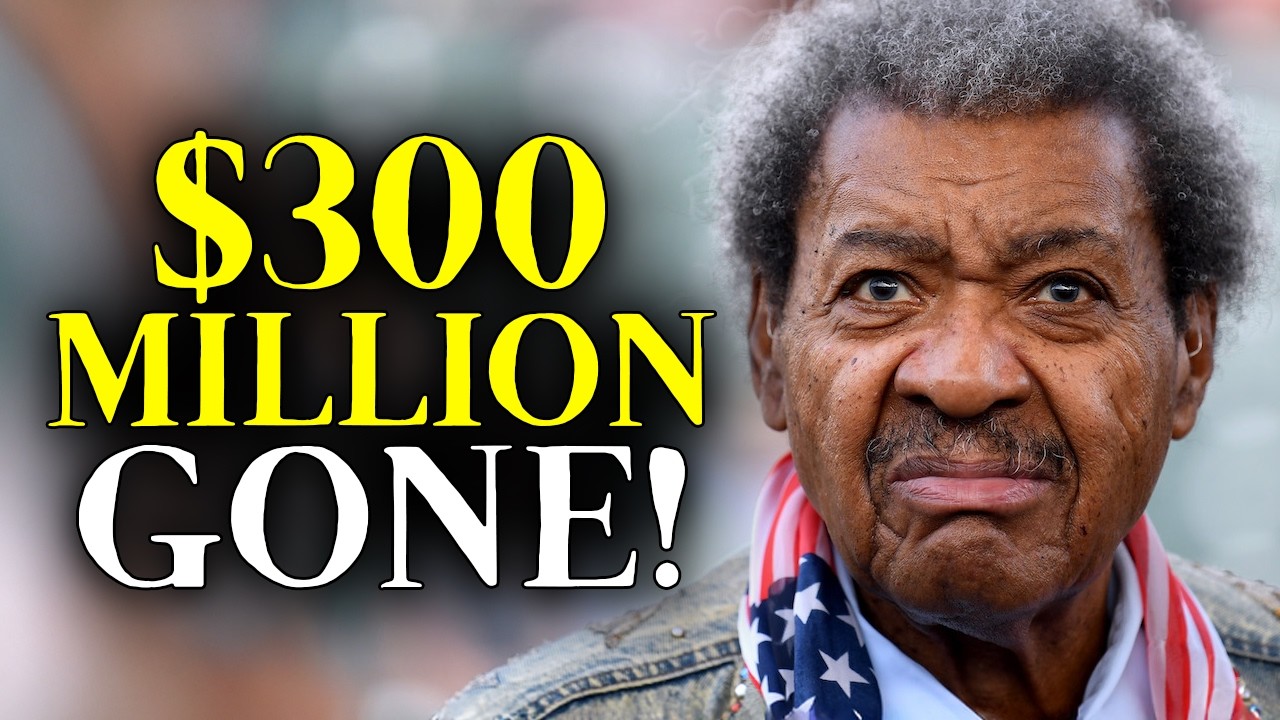
The most damaging allegations emerged in a lawsuit filed by Mike Tyson, who claimed King had stolen approximately $100 million through fraudulent accounting, undisclosed conflicts of interest, and contractual manipulation. Some estimates, including statements Tyson made in interviews, put the figure as high as $300 million. King denied all of it. The legal system did little to hold King accountable.
In the 1990s, he was charged with submitting fraudulent insurance claims related to a canceled fight. King was convicted in federal court in 1995, but the conviction was overturned on retrial in 1998, after his lawyers successfully argued problems with the original prosecution. Between the conviction and the acquittal, King had spent three years as a convicted federal felon. In 1994, a Senate Judiciary Subcommittee held hearings specifically examining corruption in professional boxing.
Don King sat before United States senators and did what he always did. He quoted Shakespeare and baffled the senators, who did not quite know what to do with him. The pattern across King’s era became a system in itself. Fighters had contracts they didn’t fully understand and lawyers they couldn’t always afford.
Each time a dispute went to court, it was settled. Each settlement was confidential. That sue, settle, and silence pattern was a machine for containing the damage. The result was that many viewers who watched suspicious stoppages and bizarre scorecards began abandoning boxing for mixed martial arts.
The fighters most damaged by King’s era never fully recovered financially. What was written on the paper and what was actually paid were sometimes separated by a significant distance that King’s accounting departments occupied. Skeptics point out that the fights were legal, the venue deals were legal, and the pay-per-view contracts were legal. The investigations generated enormous amounts of paper and very little else.
The state of Nevada, the same state that padlocked Binion’s Horseshoe over a labor dispute, watched King operate as the dominant force in Las Vegas boxing for 20 years and essentially concluded that his accounting practices were a matter between him and his fighters. King was not simply greedy in the way most powerful sports figures are greedy. He understood the system better than anyone. As one observer noted, King bought a palace in Connecticut and filled it with antique furniture he’d never look at.
He once claimed you can do both at the same time, referring to making money and exploiting fighters. Today, Don King is still alive. He still grants the occasional interview. He still quotes Shakespeare.
And boxing is still broken in many of the ways he helped break it. Most of the men who fought for him never knew exactly how much their sacrifice was worth. Every single dollar.