Nguyen Thuc Quyen was born in 1970 in Buon Ma Thuot, Vietnam, one of five children. After the war, her father was sent to a re-education camp, leaving her mother, a middle school math teacher, to raise the family alone during one of the country’s hardest periods. The family moved constantly through harsh rural economic zones where food was scarce and electricity unreliable. Some days there was barely enough rice to eat, and some nights there was no light at all.
By age five or six, Quyen gathered firewood, dug sweet potatoes, carried water, cleaned, and fished for food. She already understood that nobody was coming to rescue her family. On dark nights, she wished she could somehow save sunlight so children could study after sunset. Years later, that dream would shape her scientific career.
In 1991, Quyen and her family immigrated to the United States through the humanitarian resettlement program. She barely spoke English, and everything felt unfamiliar—the culture, classrooms, conversations, even the way people interacted. The first years were painfully lonely. Some nights the family considered returning to Vietnam.
A teacher mocked her English in front of the class, and a stranger once told her directly, “Go back to your country. ” Quyen cried many times during those years, but she refused to give up. She had already survived hunger and watched her mother sacrifice everything for the family, so she believed she could survive humiliation, too. She enrolled in three different high schools at once to improve faster.
During the day she attended non-stop classes. At night, she watched American news programs for hours, teaching herself English sentence by sentence. In 1993, Quyen applied to Santa Monica College but was rejected because her English was still too weak. She attended regular classes during the day, took free English courses, and enrolled in additional language classes for foreign students.
Her parents worked exhausting jobs in restaurants and garment factories, and she relied on government loans to continue her education. Eventually, Quyen became fascinated by experiments and asked if she could help with research. Someone told her research was not for everyone and that she should focus on improving her English instead. Despite the rejection, she kept working quietly and began outperforming nearly everyone around her.
She pursued a PhD and completed it in only three years, far faster than most students. Many doctoral students published one or two papers. The immigrant girl once mocked for her English had become one of the university’s most exceptional doctoral candidates. She earned her doctorate before many of the people in the same program.
From 2015 to 2018, she was repeatedly named among the world’s most influential scientific minds and recognized among the top 1% most highly cited researchers in her field. Yet, she never forgot where she came from. Even after becoming one of the world’s top scientists, Vietnam remained close to her heart. She believed Vietnamese scientists were just as capable as anyone else in the world.
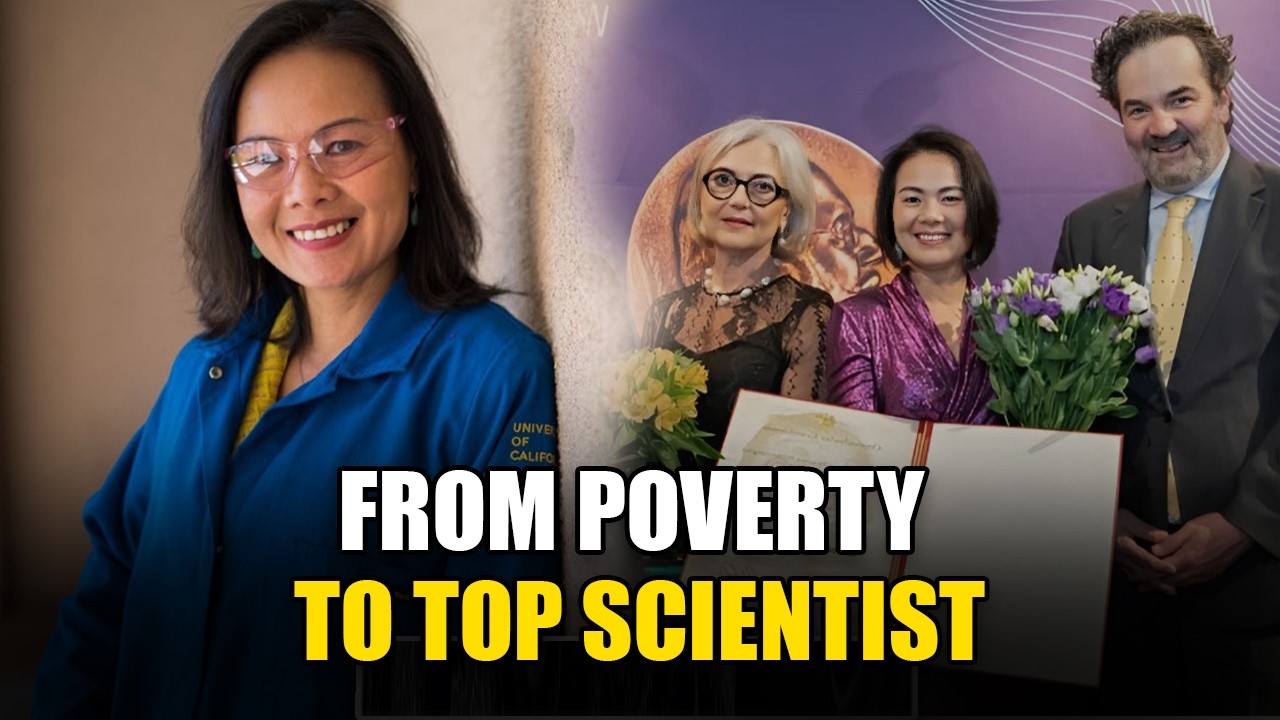
When she received the prestigious Wilhelm Exner Medal in Austria in 2023, becoming the first Vietnamese-born scientist ever to receive the honor, she spoke not only about personal success but about creating opportunities for future generations. Quyen understood something many successful people forget. Sometimes the greatest victory is not proving your critics wrong.
It is becoming proof for someone else that impossible dreams can still come true.