In the spring of 1944, somewhere in England, George S. Patton was doing what he could never fully stop himself from doing. He was talking.
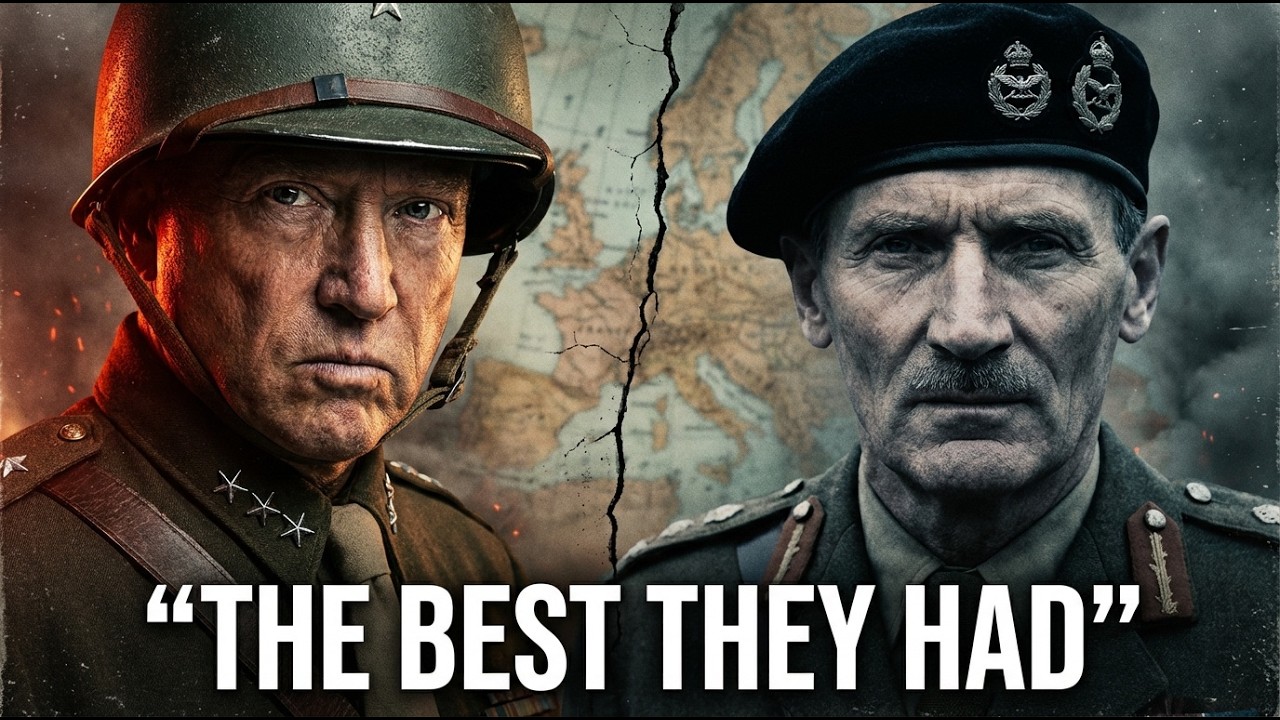
Someone asked him about Bernard Montgomery, the British general whose picture appeared in every newspaper and whose name was spoken alongside Wellington and Marlborough. Patton smiled and let a moment pass. Then he said Montgomery was probably the best general the British had.
The room went quiet, because everyone understood what the words meant underneath. Being the best general the British had was not the same thing as being a great general.
When Montgomery heard the quote, he did not laugh and did not dismiss it. He filed it away in the catalog of offenses he kept against Patton, with the diligence of an accountant who knows a debt will one day be settled.
What followed was not simply a rivalry between two difficult men. It was a collision between two opposite ideas about what war was, what leadership was, and what a general was supposed to be.
It played out from North Africa to Sicily to France to the banks of the Rhine, with consequences that shaped the most important military campaign in history.
By 1943, the Allied war in the West had produced two commanders whose names everyone knew. One was the hero of Britain, the other the problem child of America. Both knew it. Both believed the other was getting credit he had not earned.
The war required nations that had never fully trusted each other to trust each other completely. The British and Americans had to share commands, resources, strategy, and credit. Into that arrangement, history placed Patton and Montgomery.
George Smith Patton Jr. was born in 1885 into a California family that had produced soldiers in almost every American war. He read Caesar and Napoleon the way other boys read adventure novels. He was educated at West Point and competed in the modern pentathlon in the 1912 Olympics.
He spent the interwar years studying armored warfare with an intensity that bordered on obsession. He was loud, physical, and profane, wearing polished boots and ivory-handled revolvers. He believed war was won by speed, aggression, and the willingness to accept risk.
He was also, beneath the theater, one of the most gifted operational minds in the American military. He read terrain like a topographer and moved troops with an instinctive spatial intelligence that even his critics acknowledged.
Bernard Law Montgomery was born in 1887 in London, the son of a bishop. He was educated at Sandhurst, served in the trenches of World War I, was shot through the chest and left for dead, survived, and spent the next 20 years applying those lessons with methodical precision.
He was small and wiry and sharp-featured. His vanity expressed itself not in theater but in certainty. He was certain about strategy, tactics, and his own judgment, and certain in a way that approached the theological that he was the finest military mind among the Allied commanders.
He wore a beret with two cap badges. He did not drink. He went to bed at 9:00. He prepared every operation with painstaking thoroughness, refused to attack until he was certain, and then attacked with overwhelming force. He had defeated Rommel, and he had the photographs to prove it.
The two men first occupied the same theater of war in 1943. The temperature dropped immediately.
Montgomery had been in Africa since 1942. He had rebuilt the Eighth Army and chased Rommel from El Alamein across Libya into Tunisia, carefully and methodically, with British national morale riding on every step.
Patton arrived in March 1943 to take command of II Corps after the catastrophe at Kasserine Pass. He had 21 days and used them. El Guettar proved that American forces had been transformed.
But in the broader campaign, it was Montgomery's Eighth Army the press covered and Montgomery's advance the public narrative tracked. Montgomery made sure that narrative stayed centered on him.
When Patton was awarded a decoration by the British High Command for his work at El Guettar, he accepted it with the expression of a man doing something his dentist recommended. When Montgomery was mentioned in dispatches that should also have mentioned American contributions, Patton noted it. He noted everything.
The invasion of Sicily in July 1943 was supposed to be Montgomery's show. The Eighth Army would drive northeast toward Messina. Patton's Seventh Army would protect the British flank.
Montgomery had designed the plan and was comfortable with it. Patton saw several problems with it, the central one being that it required him to spend the campaign guarding a flank while Montgomery played the headline act.
Patton requested permission to drive northwest toward Palermo. It was not the axis of advance the plan called for, but Palermo was a major city, the kind of objective that generated headlines. He got permission.
He took Palermo in 12 days, then turned east toward Messina. Montgomery was already driving northeast toward the same destination. It became explicitly a race.
Patton's forces drove through terrain military orthodoxy said was impassable. They conducted amphibious landings to outflank German defensive lines and moved with a speed and improvisation German defenders found genuinely disorienting.
Patton reached Messina first by a margin of hours, but first. He was standing at the waterfront watching the last German forces evacuate across the strait when British forces arrived behind him. He turned and greeted them. British officers present reported his expression as insufferable. They were correct.
The exact context of when and where Patton said the quote has been disputed for 80 years. The words appear in multiple accounts from multiple sources between Sicily and Normandy. What is consistent is the sentence.
Montgomery was probably the best general the British had. Six words, a dependent clause, a compliment that contained its own demolition.
The sentence did not say Montgomery was a great general. It said he was the best the British had. It set a ceiling on his achievement by making the comparison internal, as if the only meaningful competition for his excellence was British.

Patton, who had been studying rhetoric since he could read, knew exactly what he was saying. When Montgomery heard it, he understood immediately.
He had spent his career arguing that he was not merely the best British general but among the finest commanders in the Allied forces. Patton had taken that argument and broken it with a single sentence.
The worst part for Montgomery was that there was no clean way to respond. He could not say the quote was wrong without drawing attention to it. He could not issue a rebuttal without making clear it had landed. He filed it away. The account would be settled later.
What kept the rivalry alive through three campaigns and two continents was that both men had genuine cases.
Patton could point to Sicily, where he moved faster than any Allied commander in the theater. He could point to France, where his Third Army advanced across a front so wide and rapid that German defenders could not track it. He could point to the Bulge, where his forces turned 90 degrees and drove north through winter conditions to relieve Bastogne.
Montgomery could point to El Alamein, where he inherited a beaten army and turned it into a force that broke Rommel permanently. He could point to his casualty discipline, his refusal to spend lives on operations he had not prepared thoroughly. He could point to the Rhine Crossing, Operation Plunder, executed with meticulous precision. No operation he personally commanded ever resulted in catastrophic defeat.
Both cases were real. Both were incomplete.
Patton's recklessness was real. His Third Army's advances across France came with supply lines so extended they eventually outran their own logistics. His conduct in Sicily, striking hospitalized soldiers he accused of cowardice, nearly ended his career before France.
Montgomery's caution was real. Market Garden, his attempt to end the war quickly with a bold airborne offensive in September 1944, was the largest Allied defeat of the Western campaign. The man who built his reputation on preparation had failed spectacularly when he tried to be Patton.
After Normandy and the liberation of Paris, the strategic argument between the two became impossible to separate from the operational one.
Montgomery argued for the single thrust. All Allied resources should concentrate behind one powerful northern drive into Germany's industrial heartland. Strip Patton's army of supplies if necessary. One thrust, maximum force, end the war before Christmas.
Patton argued for the broad front, multiple armies advancing simultaneously. Give each commander resources and objectives and let them advance at the speed their skill and the terrain allowed. On some days in August 1944, his forces advanced 60 miles.
Eisenhower supported the broad front. American logistical planning was built around it, and political realities between the Allied nations made single thrust plans almost impossible to sustain. But the argument never really ended. It simply changed venues.
In private, Patton told his staff that Montgomery was overcautious and that the single thrust argument was less about strategy than about making sure Montgomery was at the front of the photograph. In private, Montgomery told his staff that Patton was reckless, that an army advancing faster than its supplies could follow was creating future crisis.
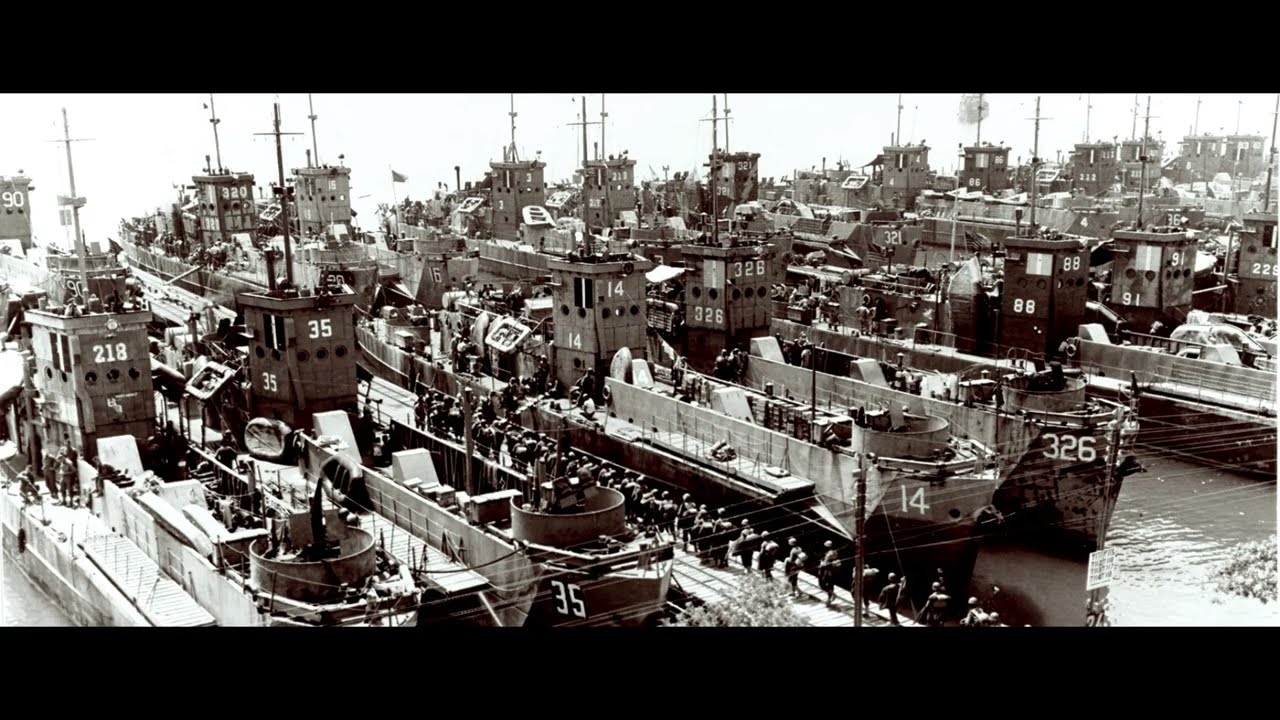
Both men were describing real problems in the other's approach. Both were using real problems to justify arguments that served their own ambitions. They were not wrong about each other. They were also not objective.
The quote metastasized. British press responses began appearing, not direct responses, but coverage that credited Montgomery with strategic vision and emphasized his El Alamein record. American correspondents responded in kind, quoting officers about the frustration of operating alongside an ally that needed weeks to prepare what American forces accomplished in days.
The soldiers who actually inhabited these armies mostly found the rivalry remote and baffling. The British Tommy in Normandy did not particularly resent the American GI in the adjacent sector. But the rivalry at the top had real operational consequences. Supply decisions were made with one eye on the strategic argument. Operations were sometimes accelerated or delayed because the timing of success affected which general's argument was vindicated.
After the war, military historians spent decades trying to determine which man was right. On the narrow question of tactical command, Patton's record in mobile operations is essentially unmatched in the Allied forces. The advance of Third Army across France in August 1944 remains one of the great operational achievements of the war. The relief of Bastogne is studied as a model of rapid operational decision-making.
On preparation and systemic command, Montgomery's record of limiting casualties while achieving objectives is equally impressive. His army's track record of avoiding catastrophic defeat, with the exception of Market Garden, reflects an organizational discipline that was not common among senior commanders on either side.
Patton's great limitation was that he was almost impossible to integrate into a coalition. He competed constantly, at a cost to the larger effort, and made Eisenhower's job significantly harder. Montgomery's great limitation was that he was almost impossible to correct. Even when he was wrong, he interpreted events in ways that preserved his self-assessment intact.
The quote was, in its precise way, a description of that limitation. Not the compliment, the ceiling it set. Patton was saying Montgomery had reached the peak of a particular kind of excellence and stayed there.
George Patton died on December 21, 1945, in a car accident in occupied Germany. He had been in the country less than two weeks. He survived the initial injury, lingered in the hospital for 12 days, and died of pulmonary edema. He was 60 years old.
He had won every significant engagement he commanded and had never been defeated in the field. He had also never stopped making enemies, never learned patience, and never discovered the political intelligence that would have allowed him to survive the peace as well as the war.
Montgomery lived until 1976. He had decades to shape his own legacy. He wrote his memoirs, gave interviews, attended commemorations, and maintained with consistency that he had been right about everything that mattered. He never directly addressed the quote in any public forum. He did not need to. He had outlived Patton by 30 years.
But the quote survived too, because it contained something the passage of time could not neutralize. The best the British had. Not the best, not among the best, the best the British had.
Neither man was entirely wrong. Neither was entirely right. That is the honest verdict.
There is something useful in a rivalry between two people who are right about each other's flaws. It means the flaws are real. Patton was right that Montgomery was cautious to the point of missed opportunity. Montgomery was right that Patton was reckless to the point of crisis. Both spent the war proving the other's point at the most inconvenient moments possible.
But the rivalry was not a competition between good and bad generalship. It was a competition between two models of war, two philosophies that each worked brilliantly in the conditions they were designed for and each failed in the conditions they weren't.
Patton's model said move fast, hit hard, accept risk, trust momentum. That model liberated France, relieved Bastogne, and pushed into Germany at a speed German defenders could not match. Montgomery's model said prepare thoroughly, protect your soldiers, never commit to an operation you haven't thought through. That model rebuilt a broken British army, defeated Rommel, and crossed the Rhine with minimal casualties.
The war needed both. The Allies won because they had both, even when both were making the war harder with the volume of their mutual contempt.
George Patton said Montgomery was probably the best general the British had, and he said it because he wanted it to sting. It did. But the sentence had a second meaning he perhaps did not intend. The best the British had was good enough to win. The best the Americans had was good enough to win. Together, imperfectly and competitively, they were good enough to end the war. No insult, however precisely aimed, changes that.