The Oregon Trail promised a fresh start in the West, but for thousands of emigrants in the 19th century, it delivered a brutal reckoning with disease, accidents, and violent conflict. Stretching more than 2,000 miles through unforgiving terrain, the route claimed countless lives before settlers ever reached their destination. While popular culture often framed Native Americans as the primary threat to westward travelers, historical records tell a more nuanced story. Between 1840 and 1860, roughly 360 settlers died in direct confrontations with Native Americans—a small fraction of the tens of thousands who made the journey.
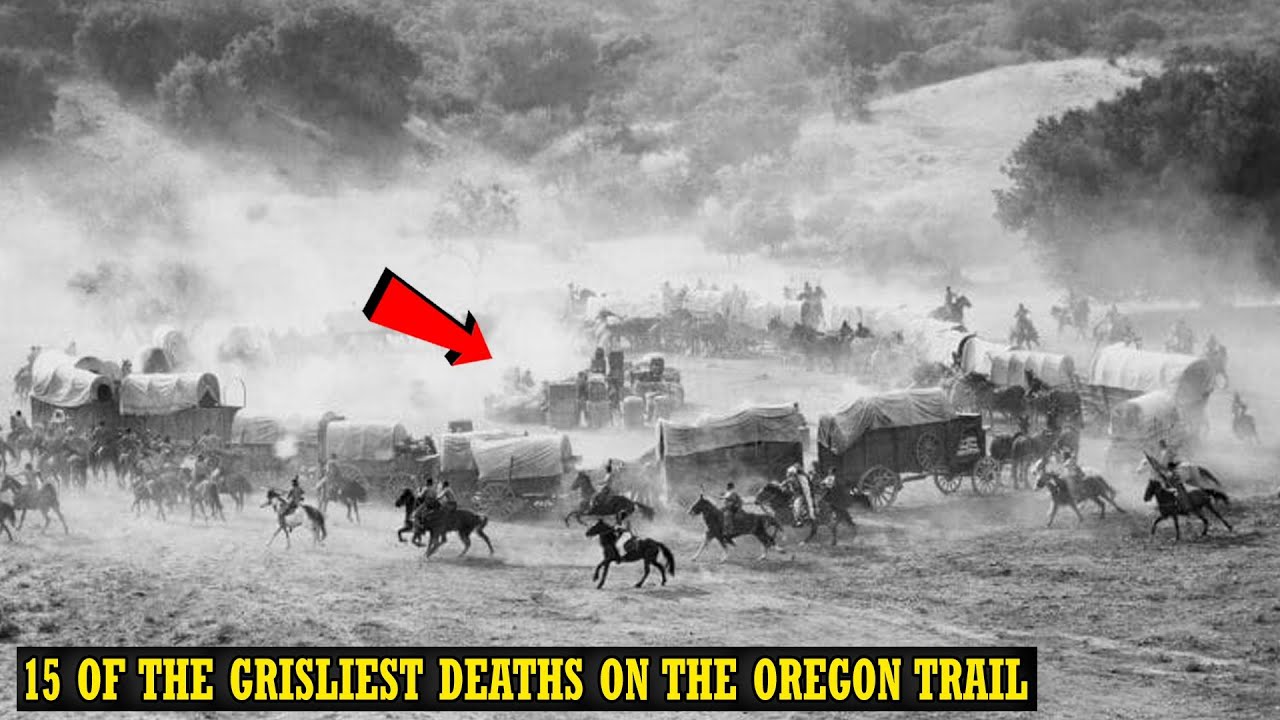
Disease, accidents, and poor preparation killed far more. Yet when tensions did erupt into violence, the results could be catastrophic for everyone involved. One of the most infamous events tied to the trail centered on Marcus and Narcissa Whitman, missionaries who helped lead the first large wagon party to Oregon and established a mission near present-day Walla Walla, Washington, in 1836. Their stated goal was to convert and educate the Cayuse people while offering medical care and assistance to settlers.
Over the following decade, however, cultural misunderstandings, competition for resources, and conflicting worldviews fueled deep mistrust between the Whitmans and the Cayuse. The situation reached a breaking point in 1847 when a measles outbreak devastated the Cayuse population. Lacking immunity, many Cayuse fell ill and died while nearby settlers appeared to suffer far fewer fatalities. The disparity deepened suspicions among the Cayuse, who blamed Marcus Whitman’s medical treatments—fearing he had intentionally caused the disease.
Such beliefs were not uncommon in that era, as Native communities struggled to reconcile the arrival of settlers with the devastating illnesses they brought. In the aftermath, Cayuse leaders confronted the Whitmans, and the situation escalated into violence that killed the couple along with others at the mission. The event, later called the Whitman Massacre, shocked the nation and prompted Congress to formally establish the Oregon Territory in 1848, laying the groundwork for further expansion. The Whitmans’ legacy remains contested—some view them as pioneers of westward expansion, others as symbols of cultural imposition.
Their story illustrates how misunderstanding, disease, and conflicting interests shaped the tragic history of the Oregon Trail. Accidents were another relentless killer on the trail. In August 1852, a gang of gold robbers led by brothers Henry and Jack Trescott passed through the Oregon Trail, fleeing east after their heists. Their journey led them to Sailor’s Diggings in Oregon, a booming mining town later renamed Waldo.
At its peak, the settlement was one of the largest in the Oregon Territory, thriving on gold fever but notorious for its chaotic, unregulated environment. The Trescott brothers and their gang wasted no time indulging in the town’s raucous atmosphere, heading straight to a local saloon where heavy drinking gave way to rising tension. Accounts suggest the gang’s reckless behavior escalated quickly, climaxing in a spontaneous act of aggression. One member allegedly drew a firearm, resulting in the tragic death of an innocent person.
In the ensuing chaos, reports claim the Trescott gang killed 17 more people and looted a warehouse containing $75,000 in gold—a substantial sum at the time. The robbery shocked the local community and exposed the vulnerabilities of frontier towns, where wealth often moved faster than the infrastructure to protect it. A group of miners organized themselves into a posse, determined to pursue the outlaws and restore order. The chase culminated in a confrontation outside town, where all five members of the Trescott gang were killed in a shootout.
The stolen gold, however, vanished and its location remains a mystery to this day, fueling legends of lost treasure in the region. Not all tragedies involved violence. The story of 8-year-old Richard Harvey is a heartbreaking reminder of the everyday dangers of wagon travel. The heavy wagons used by pioneers were essential for transporting supplies but posed significant risks, especially on steep descents where controlling their momentum was nearly impossible.
While trying to climb onto the moving wagon, Richard fell beneath its wheels. One traveler recorded the incident in simple, poignant language: “He attempted to get on the wagon and fell. The wheels passed over him. ” The stark description reflects the harsh realities emigrants faced, where even devastating events were accepted as part of the dangerous journey.
The trail also took a profound toll on emotional and psychological resilience. The story of Elizabeth Markham unfolded while traveling along the Snake River in the Pacific Northwest. On an ill-fated day, Elizabeth reportedly told her husband Samuel and their five children that she could not continue the journey. Unable to persuade her to move forward, Samuel took their children and wagons, leaving Elizabeth behind with plans to return for her later.
Worried for her safety, he sent their teenage son John back to bring her to the group. What happened next remains the subject of conflicting accounts. Elizabeth eventually rejoined the family on her own but claimed she had hurt John during their encounter. Panicked, Samuel rushed back to search for his son.
During this period of confusion, another catastrophe struck: the family’s supply wagon caught fire. Accounts suggest Elizabeth was near the burning wagon, appearing highly agitated. Details about John’s fate are contradictory—some reports indicate he was unharmed, others claim he was injured but survived, and some allege he died from his wounds, though this remains unconfirmed. Despite the ordeal, the Markham family completed their journey to Oregon.
After arriving, they welcomed another child who grew up to become Edwin Markham, a celebrated poet whose work reflected themes of humanity and suffering. The strain between Samuel and Elizabeth continued, however; Samuel eventually left for California alone, and Elizabeth never saw him again. In August 1854, a tragic event occurred on the trail in what is now western Idaho. A group of 20 emigrants known as the Ward party was ambushed by a band of Shoshone.
The attack killed 18 members of the group, leaving only two young boys alive. The incident shocked emigrants and authorities alike, highlighting the ongoing tensions between westward settlers and Native communities responding to encroachment on their lands. The attack led to a significant shift in U. S.
military policy regarding the protection of westward settlers. Recognizing the vulnerability of wagon trains traveling through remote areas, the army abandoned certain forts it had established along the trail. Instead, they prioritized providing military escorts for emigrant groups to reduce the risk of future encounters. In 1855, a year after the ambush, the U.
S. military launched a retaliatory campaign, targeting and detaining more than a dozen Shoshone individuals. Many of those affected, however, had not been directly involved in the initial ambush, reflecting the broader challenges and moral complexities of such military responses. Fear of Native American attacks—often fueled more by anxiety than actual threat—drove many settlers to arm themselves heavily.
Wagon companies carried staggering numbers of firearms, but many pioneers had little or no experience using them. This lack of training frequently led to accidents that harmed settlers and those around them. One of the earliest recorded deaths from such an incident involved a man named John, or James according to some sources, who was shot in 1841. He died when he reached for a carelessly stored rifle with its muzzle pointed toward him; tragically, the gun discharged, ending his life.
Careless handling of weapons was common on the trail, with firearms treated as tools of convenience rather than instruments requiring skill and care. Constant firing of guns, often without any clear target, was not unusual, reflecting both the settlers’ lack of knowledge and their deep anxieties about the journey. These behaviors led to thousands of injuries and deaths over the years. As wagon trains moved west, the rates of these accidents began to decline as emigrants gained more experience with their weapons and learned safer handling practices.
The pursuit of alternative routes to the West also proved deadly. The Bozeman Trail stretched from the Bighorn Mountains in Wyoming to the goldfields of Montana. Though promising in theory, the route passed through lands already ceded to local Native tribes, including the Crow, under existing treaties. These lands held deep cultural and economic significance for the tribes, and tensions escalated as settlers began encroaching.
By 1866, the Civil War had ended, and the Bozeman Trail was heavily used by emigrants seeking prosperity in the West. The U. S. military constructed several forts along the trail to protect settlers, but this was viewed by the tribes as an invasion of their lands and a violation of agreements.
Red Cloud, a Lakota leader, emerged as a key figure opposing this expansion. Despite a peace treaty being proposed, the growing pressure on Native lands led Red Cloud to refuse its terms and actively resist settlement of the region. His opposition sparked what became known as Red Cloud’s War, a sustained campaign of resistance against U. S.
forces. The conflict reached a turning point on December 21, 1866, in what became known as the Fetterman Fight or the Battle of the Hundred Slain. A U. S.
detachment of 80 soldiers led by Captain William Fetterman faced a formidable force of about 1,000 Cheyenne, Arapaho, and Lakota warriors, including the famous leader Crazy Horse. The U. S. troops were surrounded and defeated, with the entire unit lost.
Most accounts indicate the forces were unprepared for the size and strategy of the opposing force, which relied heavily on traditional warfare methods. The devastating outcome underlined the depth of Native resistance to westward expansion. The Bozeman Trail was abandoned shortly afterward. Red Cloud’s War is remembered as a rare and significant victory for Native peoples during a period when they faced relentless pressure from settlers and government forces.
In September 1860, years of escalating tension with the Shoshone culminated in a devastating attack on a wagon train led by Elijah P. Otter, northeast of present-day Murphy, Idaho. The train, consisting of 44 people including 21 children, faced repeated attacks over two grueling days. As exhaustion and desperation grew, the group split apart, with each family taking its wagon in an attempt to escape.
Tragically, this made them more vulnerable to the ongoing attacks. Among the victims were Elijah Otter, who lost his life trying to protect his family, and his wife and three children, who were killed while attempting to recover his body. Survivors of the initial attacks traveled more than 75 miles to establish a temporary camp. From there, a smaller group set out to seek help, including members of the Van Ornum family and two of Otter’s surviving sons.
This rescue attempt ended in tragedy when the adults were killed and the children were kidnapped. Those remaining at the camp endured harsh conditions, with many—including children—succumbing to starvation while waiting for relief. When soldiers finally reached the site, they found grim evidence of the violence. The kidnapped children were sold into slavery, though some were later rescued and returned to their communities.
The events surrounding the Otter-Van Ornum tragedy highlighted the growing friction between Native groups and westward settlers, paving the way for further clashes between the Shoshone and U. S. forces, including retaliatory military campaigns with severe consequences for the Shoshone community. Some stories from the trail are remembered not for their drama but for their simple endurance.
S. M. Marshall, an Oregon Trail emigrant, succumbed to cholera, a common and deadly disease in the mid-19th century, on May 27, 1849, somewhere in Kansas. Even his full name remains unknown, with only his initials surviving.
What makes Marshall’s story noteworthy is that his grave did not fade into history. While countless travelers were buried in unmarked or unfindable graves, Marshall’s resting place was marked with a limestone headstone bearing his name. It remained untouched for 80 years until 1928, when it was entrusted to the Kansas Historical Society, preserving a tangible link to the hardships emigrants faced. Cholera itself was one of the most lethal threats on the trail, capable of ending a life within hours.
Spread through contaminated water, the disease struck with terrifying speed, especially along the Platte River in Nebraska and Wyoming. Emigrants often camped near fresh streams feeding the river, seeking cleaner water for drinking and daily use. But these streams, used by large numbers of travelers for washing and camping, lacked any natural purification system. The water became heavily contaminated with bacteria, contributing to the spread of cholera.
Thousands of emigrant families were affected, and many victims were buried in hastily dug, unmarked graves along the riverbanks. Entire families were lost, their names and stories fading into obscurity. The Donner Party, though not traveling the Oregon Trail itself, remains one of the most famous and tragic stories of westward migration. On April 16, 1846, a wagon train carrying 89 men, women, and children from the Donner and other families left Springfield, Illinois, bound for California.
Initially, the journey proceeded without major incident, but trouble began in Wyoming when the group was misled by a guide who promised a shortcut through a newly proposed route across the Wasatch Mountains in Utah—a route that proved disastrously difficult. The group lost precious time following this poorly planned path, and by the time they reached the Sierra Nevada, winter had already arrived. By late October, a severe storm trapped them in the mountain passes, cutting off any escape. With supplies running out and the cold making survival increasingly difficult, the group found themselves at the mercy of nature.
Families, most with little experience in harsh outdoor conditions, were forced to make unimaginable decisions to survive. They ate their oxen, which had previously supported the structures of their cabins, just to stay alive. As winter dragged on, a small group of volunteers set out to cross the mountains on foot, hoping to reach help. The treacherous conditions claimed the lives of most of these individuals.
After a month of horrifying travel, a few survivors reached a small farming community, exhausted and emaciated. Of the 89 members of the Donner Party, only 45 survived the ordeal. The story became a tragic symbol of the risks pioneers faced on western routes, highlighting the challenges of survival in the unforgiving wilderness and the unforeseen consequences of poor decisions. The Oregon Trail was fraught with danger at every turn, where the promise of a new life often came at an unimaginable cost.
From deadly diseases to harsh terrain, the struggles of the pioneers left behind countless stories of grief and survival.