At 2:38 p.m. Central Standard Time on November 22, 1963, Lyndon Baines Johnson raised his right hand in the cramped conference room of Air Force One at Love Field in Dallas, Texas. His left hand rested on a Catholic missal mistaken for a Bible found in President Kennedy's bedroom.
Twenty-seven people crowded into the 12-by-5-foot stateroom. There was no air conditioning, and four jet engines were warming up outside. The temperature was rising, and everyone was sweating.
To Johnson's right stood Lady Bird Johnson, his wife. To his left stood Jacqueline Kennedy, still wearing her bloodstained pink Chanel suit, still in shock, still covered in her husband's blood and brain matter. She had refused to change. "Let them see what they've done," she had said.
Federal Judge Sarah Hughes, the first woman ever to administer the presidential oath, read the words slowly. Johnson repeated them.
White House photographer Cecil Stoughton stood on a leather couch, camera raised, capturing the moment. He shot frame after frame, 19 photographs in total, from different angles and at different moments in sequence.
Then, seconds after the oath was complete, something strange happened. Something that would haunt conspiracy researchers for decades. Something captured in a single photograph that, by many accounts, shouldn't exist.
Lyndon Johnson, just sworn in as president of the United States, standing next to a grief-stricken widow still wearing her husband's blood, turned around. He looked back over his shoulder and he smiled. A wide, unmistakable smile.
He was looking at Congressman Albert Thomas, his longtime friend from Texas. And Albert Thomas, standing in the back, surrounded by somber faces and shocked officials, winked. He smiled back, a knowing grin.
The famous official photograph shows Johnson in the center frame, right hand raised, left hand on the missal. His expression is solemn. Jackie Kennedy stands to his left, grief-stricken. Lady Bird Johnson stands to his right, composed. Judge Sarah Hughes administers the oath in front of him. Somber faces surround them.
But that photograph, the famous one, was carefully staged. Photographer Cecil Stoughton suggested the positioning. He placed Jackie Kennedy next to Johnson and angled her away from the camera so bloodstains on her suit wouldn't show.
Johnson wanted Jackie there. He insisted. Some historians say it was to show continuity, to demonstrate that Kennedy's people were supporting the transition, and to reassure the nation that this wasn't a coup. Others say Johnson wanted her there as a symbol, as evidence that he was the legitimate successor.
Jackie didn't want to be there. She was in shock and traumatized. She had been holding pieces of her husband's skull in the limousine. She had cradled his shattered head in her lap. She had refused to let go of his body at Parkland Hospital.
Now, less than two hours after watching him die, she was being asked to stand next to Lyndon Johnson while he became president. But Johnson insisted, and Jackie, numb and broken, complied.
Stoughton took his photographs, 19 frames in all. The official record, history documented, the solemn moment preserved for posterity.
But one photograph, one frame, captured something different. Something unscripted. Something that would only emerge years later when researchers began examining the full contact sheets from that day.
The photograph shows Johnson seconds after taking the oath, turning around, looking back, and smiling. Not a polite smile, not a nervous smile, but a wide, genuine smile. The smile of a man who just won something, who just achieved something, who just got exactly what he wanted.
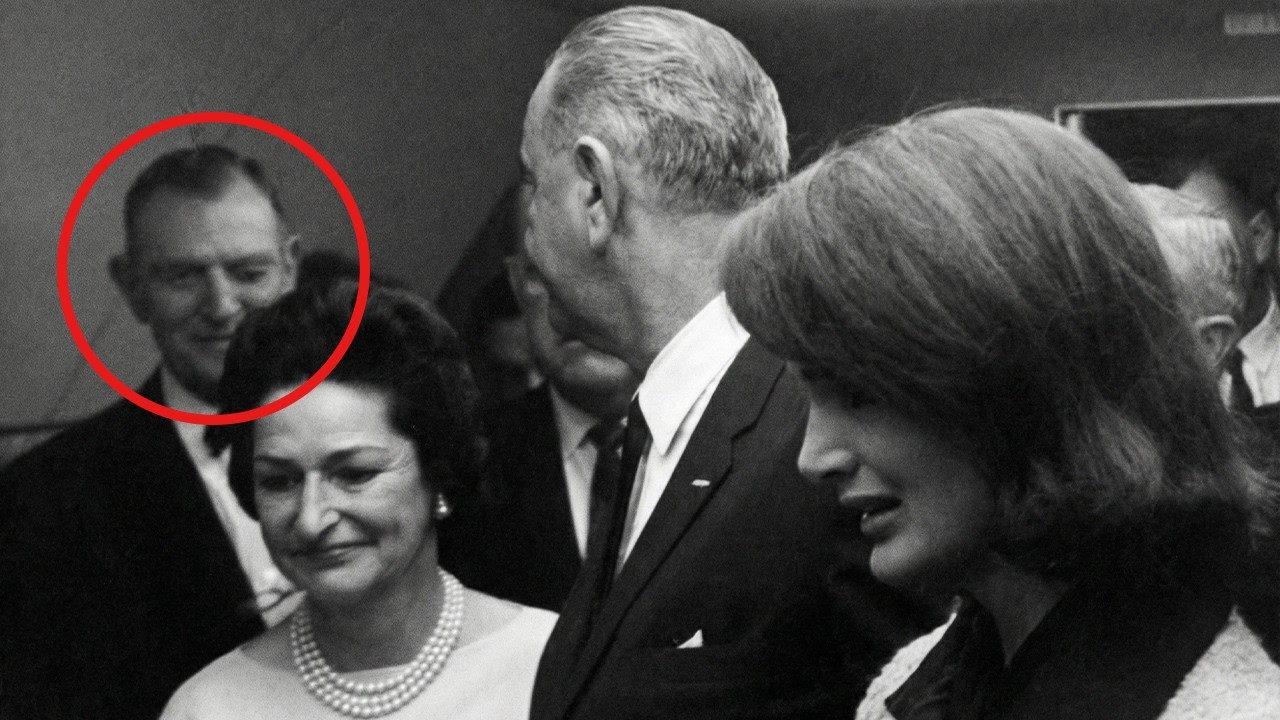
And there in the background is Albert Thomas, congressman from Texas, Johnson's friend for decades. And Thomas is smiling back. More than smiling. He's winking, his right eye closed, a knowing expression.
The photograph is called "the wink." When it first appeared in David Lifton's 1980 book, "Best Evidence," it shocked researchers. Because this wasn't grief. This wasn't solemnity. This wasn't the appropriate response to a national tragedy.
This was celebration. This was victory. This was two men sharing a moment of triumph.
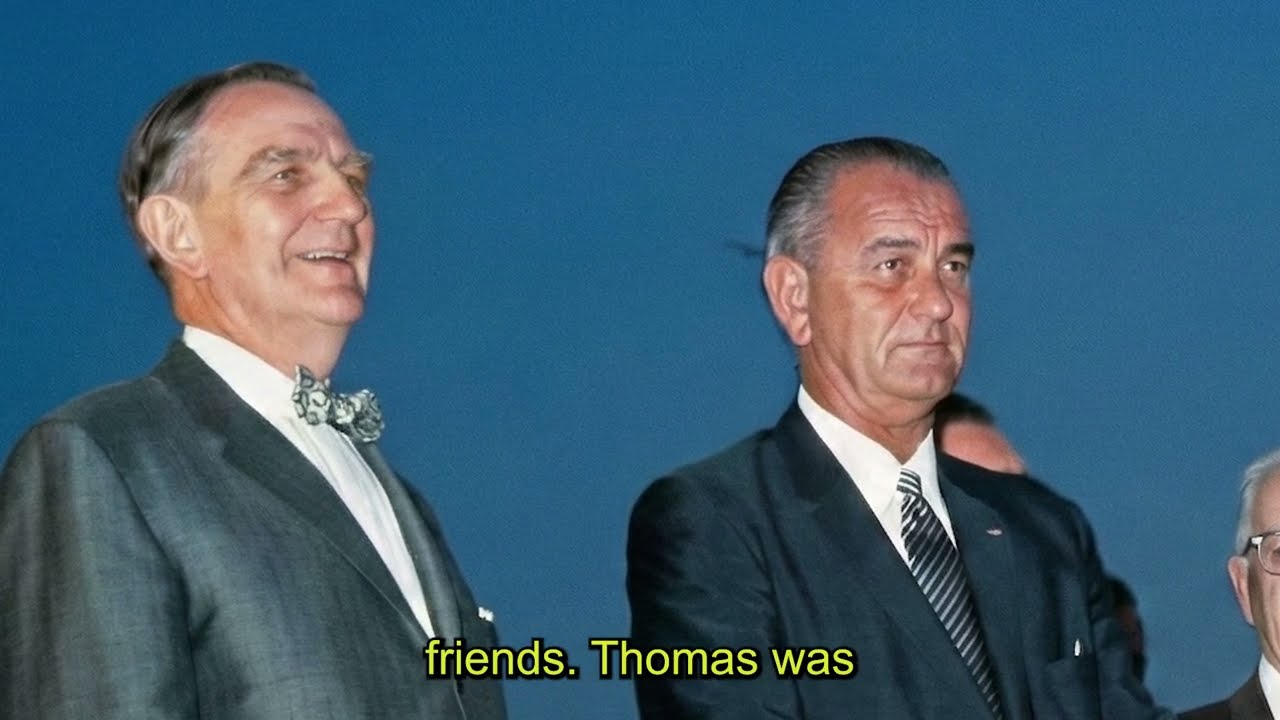
Albert Richard Thomas was born April 12, 1898, in Nacogdoches, Texas. He was a Rice Institute graduate and attended the University of Texas Law School. He served as a district attorney and was a U.S. congressman since 1937.
He spent 26 years in the House of Representatives, serving as chairman of the House Defense Appropriations Committee, a member of the Joint Committee on Atomic Energy, and a member of the Suite 8F group.
The Suite 8F group was the most powerful political machine in Texas, named after a suite in the Lamar Hotel in Houston where they met. The group included Texas oil billionaires, defense contractors, and politicians. Men like George Brown of Brown and Root, later Halliburton, oilman Hugh Roy Cullen, banker Gus Wortham, and their political operatives Lyndon Johnson and Albert Thomas.
These men controlled Texas. They controlled federal contracts. They controlled defense spending. They made fortunes from government appropriations. And Lyndon Johnson was their man in Washington. Albert Thomas was their second man.
Together, they funneled billions of dollars to Texas companies, defense contracts, oil subsidies, and NASA facilities. It was Albert Thomas who secured the location of NASA's Manned Spacecraft Center, later renamed the Lyndon B. Johnson Space Center in Houston. He convinced Rice University to donate land. He pushed through appropriations. He made Houston the center of America's space program.
Thomas was Johnson's closest ally in Congress. When Johnson was Senate Majority Leader, Thomas was his counterpart in the House. When Johnson became vice president, Thomas continued to push his agenda. They spoke constantly. They coordinated strategies. They were a team.
On November 21, 1963, Albert Thomas accompanied Kennedy and Johnson to Texas. He was on the plane to San Antonio, to Houston, to Fort Worth. And on November 22, he was in the motorcade in Dallas. He witnessed the assassination. He rode to Parkland Hospital. He got on Air Force One with Johnson, and he was there in that crowded conference room when Johnson took the oath.
So why did Albert Thomas wink at Lyndon Johnson seconds after Johnson became president? Conspiracy researchers have asked this question for decades, and the answers fall into two camps.
The official explanation is that it was nothing. A moment of relief, a reassuring gesture between old friends. Thomas was telling Johnson, "You've got this. You can do this. Everything will be okay." A human moment, inappropriate perhaps given the circumstances, but understandable.
The conspiracy explanation is darker. The wink was a signal, a confirmation. We did it. We pulled it off. You're president now. A moment of shared knowledge between two men who knew the truth: that Kennedy's assassination wasn't random, wasn't the act of a lone gunman, was planned, was executed, was successful.
And Johnson, turning around and smiling, not at his wife, not at Jackie Kennedy, not at Judge Hughes, but at Albert Thomas, was acknowledging the success.
This interpretation sounds extreme until you look at the other photographs from that day. The wink wasn't the only disturbing moment captured on film.
Lady Bird Johnson is smiling in multiple photographs. Not the polite, composed smile of a woman trying to maintain dignity during tragedy, but genuine smiles, happy expressions. In one photograph taken moments before the oath, Lady Bird is beaming, radiant, as if this is the happiest day of her life.
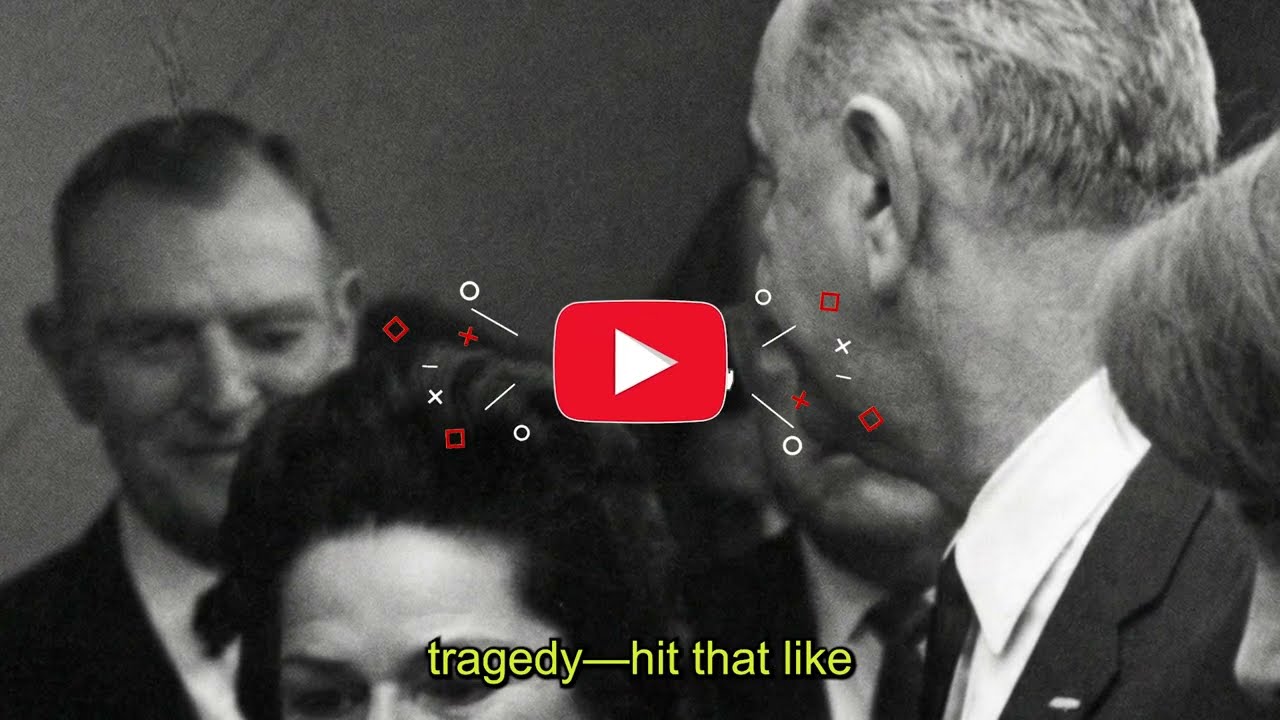
And it was, because Lady Bird Johnson knew her husband was about to become president of the United States. She was about to become first lady. After years as second lady, a role she hated, she was ascending to the highest position in the land.
Then there's Johnson himself. In the moments before the oath, Johnson was calm, composed, almost businesslike. He gave orders. He made phone calls. He coordinated the transition. He behaved like a man who had been preparing for this moment.
Conspiracy researchers note that Johnson knew Kennedy was planning to drop him from the 1964 ticket. Johnson knew the Bobby Baker scandal was about to destroy him. Johnson knew Life magazine was preparing an exposé that could send him to prison. Johnson knew he had weeks, maybe days, before everything collapsed.
And then Kennedy was shot and everything changed instantly. The scandals disappeared. The investigations stopped. The exposé was cancelled, and Johnson became president. The timing was perfect. Too perfect.
The oath wasn't immediate. There was a delay. Kennedy was pronounced dead at Parkland Hospital at 1:00 p.m. Johnson left the hospital at 1:20 p.m. He arrived at Air Force One at 1:33 p.m., but he didn't take off. He waited for over an hour.
Air Force One sat on the runway at Love Field while Johnson made calls, gave orders, and coordinated the oath. The official explanation is that Johnson wanted Judge Sarah Hughes to administer the oath. He insisted on waiting for her to arrive. He wanted a proper swearing-in with witnesses and a photographer.
But there's another explanation. Johnson was waiting for Jackie Kennedy. He wanted her on that plane. He wanted her in the photograph. He needed her presence to legitimize his presidency.
Jackie didn't want to leave Parkland Hospital. She was with her husband's body. She refused to leave him, but eventually, under pressure, she agreed to go to Air Force One. She insisted Kennedy's body come with her, and at 2:18 p.m., Kennedy's casket was loaded onto the plane. Jackie boarded shortly after.
Only then did Johnson proceed with the oath. He insisted Jackie stand beside him. She didn't want to. Kenny O'Donnell, Kennedy's aide, tried to protect her, but Johnson insisted, and Jackie, broken and traumatized, stood next to the man who was taking her husband's job.
The oath took 28 seconds. At 2:38 p.m., Lyndon Johnson became president. And at 2:41 p.m., three minutes later, Air Force One took off for Washington. Three minutes. That's how long Johnson waited after becoming president before ordering the plane to leave Dallas.
During the flight back to Washington, something else disturbing happened. Multiple witnesses reported it. A retired Secret Service agent mentioned it years later. Johnson went into the presidential bedroom, Kennedy's bedroom, and sprawled on the bed. He smoked a cigar, and he laughed hysterically. Not nervous laughter, not shock, but hysterical laughter.
Jackie Kennedy remained in the back of the plane, sitting next to her husband's casket, numb, destroyed, while Johnson laughed in the bedroom.
There is something else strange about the wink photograph. The original negative is missing. In 1995, researcher Richard Trask wrote "Pictures of the Pain," a comprehensive book about the photography of Kennedy's assassination. Trask interviewed Cecil Stoughton extensively. He examined the contact sheets from Air Force One. He analyzed every frame Stoughton shot that day.
Trask discovered that all of Stoughton's negatives from the swearing-in ceremony exist, except one. The negative for the wink photograph is missing. The photograph exists only as a copy negative, a reproduction, not the original.
Why? Where did the original negative go? Who removed it and why? Trask provides no explanation. He reproduces the photograph from a copy negative and moves on as if the missing negative means nothing.
But it means something, because someone didn't want that original negative to exist. Someone removed it from the archives. Someone made sure the highest-quality version of the wink could never be analyzed, never be examined, never be proven authentic or inauthentic.
That raises another question. Is the wink photograph real, or was it fabricated? Some researchers claim the photograph is fake. They point to technical inconsistencies. The lighting doesn't match other frames. The contrast is too high. The grain structure is different. Albert Thomas appears slightly out of focus, as if his image was added later.
But other experts disagree. They say the photograph is authentic. The lighting differences are explained by Stoughton switching cameras mid-ceremony. He started with a Hasselblad, then switched to a Contax. The high contrast is due to the lack of flash. Stoughton shot with available light because the plane was being powered up and the external power had been disconnected. The out-of-focus Thomas is explained by movement. He was winking, which involves movement, which would cause slight blur.
In 2017, a blogger analyzed the photographs extensively. His conclusion: the photograph is real, but the wink was captured accidentally. Stoughton had put his first camera down. He thought he was done shooting, but then he grabbed his second camera and fired off one more frame. And in that frame, he caught Thomas winking, something Thomas thought no one would see because the photographer had put his camera down.
That explanation makes the photograph even more sinister. Because if Thomas thought no one was watching, the wink becomes more genuine, more revealing, an unguarded moment of celebration.
Stoughton himself described the photograph as sinister. That's the word he used. Not inappropriate, not awkward. Sinister. Why would Kennedy's official photographer, the man who captured Camelot, describe a photograph of the presidential oath as sinister? Because he saw something in that moment that disturbed him. Something wrong. Something that shouldn't have been there.
Albert Thomas died on February 15, 1966, less than two and a half years after Kennedy's assassination. He died in Washington, D.C., at age 67. He never commented publicly on the wink photograph. He never explained it. He never addressed the theories. He died before most conspiracy theories had been invented, before the photograph became famous.
His widow, Lera Thomas, was elected to complete his term. She became the first woman to represent Texas in Congress. The Albert Thomas Convention Center in Houston was named in his honor.
And the photograph remained, filed away in the archives, largely ignored until David Lifton published it in "Best Evidence" in 1980. Suddenly, researchers couldn't stop talking about it.
The wink captured something undeniable. Two men smiling and winking at each other seconds after the president of the United States was sworn in following an assassination, in the presence of the murdered president's widow, still covered in his blood. No matter how you interpret it, it's wrong. It's inappropriate. It's disturbing.
And it raises the same question people have asked for decades. What did Lyndon Johnson and Albert Thomas know? And when did they know it?
Possibility one: the wink meant nothing. It was an inappropriate moment between old friends. Thomas was trying to reassure Johnson in a stressful situation. Johnson smiled back out of politeness. Nothing more. But that explanation doesn't account for the genuine, wide smiles on both their faces seconds after a presidential assassination, in front of a widow.
Possibility two: the wink was a signal of relief. Thomas was telling Johnson, "You made it. You survived. You're safe now." Because there were fears that this was a larger conspiracy, that Johnson might be next, and Thomas was reassuring him that the danger had passed. But if that was the concern, why was Johnson so calm? Why did he insist on waiting for Judge Hughes? Why did he choreograph the photograph? Why did he demand Jackie Kennedy stand beside him? A man fearing for his life doesn't delay takeoff for an hour.
Possibility three: the wink was a conspiracy signal. Thomas was confirming the success of the plot. Johnson was acknowledging it. They shared a moment of triumph because they had just pulled off the assassination of a sitting president. And Johnson, who had everything to gain from Kennedy's death, was celebrating his victory.
In the official photograph, the one published everywhere, Johnson looks solemn, appropriate, presidential. The weight of the moment is captured on his face. But that was the pose. That was the performance. The image carefully staged for public consumption.
The wink captured what came after. When Johnson thought the performance was over, when he turned around, when he let his guard down for just a second and smiled at his friend who winked back. That's the photograph that haunts researchers. That's the image that won't go away.
Because grief doesn't smile. Trauma doesn't wink. Tragedy doesn't celebrate. But conspiracy does. Victory does. Success does.
And on Air Force One on November 22, 1963, in the seconds after Lyndon Johnson became president, someone captured a moment that shouldn't exist. A smile, a wink, a celebration.
The question isn't whether the photograph is real. The question is what does it mean? And after more than six decades, we still don't have an answer. We have theories. We have interpretations. We have arguments. But we don't have proof.
What we have is a photograph, and two men smiling, and a dead president's widow standing right there, and the uncomfortable truth that something about that moment is wrong. Deeply, fundamentally wrong.