Princess Margaret died at 6:30 a.m. on February 9, 2002, at King Edward VII Hospital on Beaumont Street in London. She was 71 years old and died in her sleep.
Her son, David, Viscount Linley, and her daughter, Lady Sarah Chatto, were at her side. They had been there through the night.
Outside, London was waking into an ordinary Saturday. Inside, the most dazzling woman of her generation was gone.
The public knew Margaret as the rebel princess, the difficult guest, the beautiful spare who smoked too much, drank too much, and made rooms revolve around her. The private story was more complicated and more devastating than that caricature allowed.
Margaret Rose was born on August 21, 1930, at Glamis Castle in Scotland, the ancestral seat of her mother's family, the Bowes-Lyons. Her father was then the Duke of York, a dutiful younger son of George V who had no expectation of the throne.
Her mother was the former Lady Elizabeth Bowes-Lyon, charming and socially deft. Margaret's elder sister, Elizabeth, was four years old.
The family lived at 145 Piccadilly in London. Their life had the shape of privileged obscurity, a royal duke and duchess raising two daughters at one comfortable remove from the center of power.
That distance collapsed in December 1936. Edward VIII abdicated to marry Wallis Simpson, and Margaret's father became King George VI overnight. Margaret was six years old.
Elizabeth, at 10, became heir presumptive. Margaret became the other one, the spare, whose purpose from that moment forward would be defined not by what she was, but by what she was not.
Before the abdication, both girls occupied roughly the same social space. After it, one sister was given the most clearly defined role in British public life, and the other was given proximity to that role without any of its substance.
Elizabeth would have a job for life. Margaret would have a title, a wardrobe, a diary of engagements, and an unanswerable question: what, exactly, was she for?
The childhood that followed was tender and enclosed. Both girls were educated at home and kept close to their parents in a genuinely affectionate family unit.
Margaret learned piano early and played well, and music became one of her few private refuges throughout her life. She rode, she swam, she joined the Girl Guides.
George VI was devoted to both daughters, but there was a particular bond with Margaret. She was the lively one, the funny one, the child who could make him laugh when the weight of kingship bore down.
The family moved to Buckingham Palace after the coronation, and the war years drew them closer still. The King and Queen remained in London through the Blitz, while the princesses were sent to Windsor Castle.
Margaret was nine when the war began and 15 when it ended. By the time it was over, Elizabeth was preparing for public life and eventually marriage to Philip Mountbatten. Margaret was preparing for nothing in particular.
The death of George VI on February 6, 1952, broke that family open. Margaret was 21 and lost the parent she adored.
In the same stroke, she lost any remaining ambiguity about her place. Elizabeth was now queen, and the hierarchy that had been implicit since the abdication was now permanent and absolute.
Margaret moved to Clarence House with her mother. The arrangement gave her companionship and status, but not independence.
She was 21 years old, living with her mother in a house shaped by bereavement and propriety, inside a family system with very clear ideas about what a princess could and could not do.
Then there was Peter Townsend. Group Captain Peter Townsend had been her father's equerry, a decorated war hero, handsome, kind, 16 years older than Margaret, and divorced.
They fell in love. In 1953, at Elizabeth's coronation, a journalist noticed Margaret brushing a piece of lint from Townsend's uniform, and the gesture made headlines around the world.
Margaret wanted to marry him. Under the Royal Marriages Act of 1772, she needed the Queen's consent to marry before the age of 25.
The Queen, advised by the government and the Church of England, could not give it. Not for a divorced man, not in a monarchy still haunted by the abdication.
Townsend was sent to Brussels as air attaché. Margaret waited. In October 1955, she issued a statement that she would not marry Townsend, citing the Church's teaching that Christian marriage is indissoluble and her duty to the Commonwealth.
She was 25 years old. She gave up the man she loved and received in return the same undefined role she had always had.
That wound did not heal. It hardened.
By the late 1950s, Margaret had become the most glamorous figure in the British royal family and the least purposeful. She was photographed constantly and dressed by the best couturiers in London and Paris.
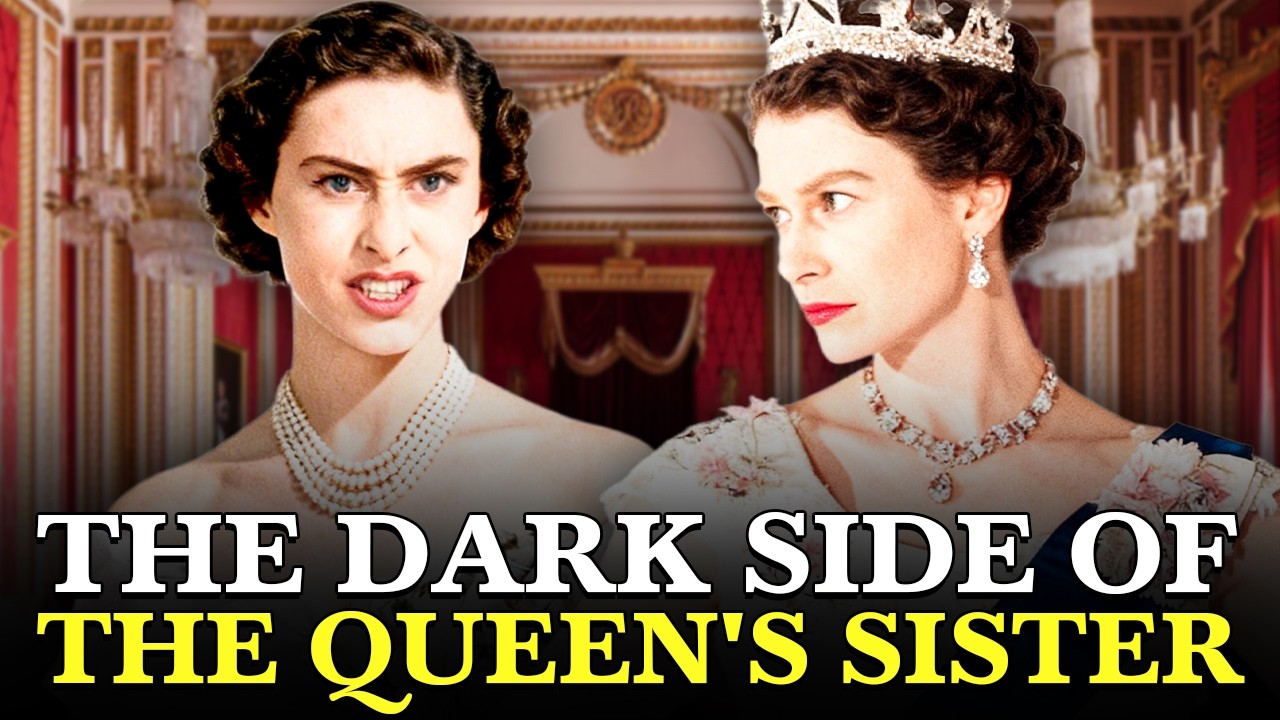
She was the center of what the press called the Princess Margaret Set, a social circle of young aristocrats, artists, and socialites. She was described repeatedly as the Diana of her day.
Margaret was sharp, well-read, musically gifted, and socially alert to the point of ruthlessness. What she did not have was a role that matched her intelligence.
Then, in 1958, she met Antony Armstrong-Jones. He was a professional photographer who moved in bohemian circles, educated at Eton and Cambridge but at home in studios and darkrooms rather than the court circular.
He was clever, tactile, funny, and possessed of a physical magnetism that contemporaries described in vivid terms. He was, in almost every respect, the opposite of Peter Townsend.
They married on May 6, 1960, at Westminster Abbey, the first royal wedding to be televised, watched by an estimated 300 million people worldwide. Armstrong-Jones was created Earl of Snowdon.
They honeymooned on the royal yacht Britannia, with a stop at Mustique, where Colin Tennant, later Lord Glenconner, had given Margaret a plot of land as a wedding gift. That land would later become Les Jolies Eaux.
The first years of the marriage were by most accounts genuinely happy. Margaret and Tony shared a sense of humor that could be cruel but was also deeply intimate, and they loved the arts.
Their apartment at Kensington Palace became one of those rare spaces where the arts and the establishment met and mingled. Dancers, photographers, designers, diplomats, and aristocrats filled their drawing room.
David was born on November 3, 1961, and Sarah followed on May 1, 1964. The family unit was complete, and photographs from this period show what looks like a genuinely contented household.
But two people who each require the center of every room they enter have a structural problem. By 1964, that problem was already becoming visible.
Tony's work took him out into the world. He traveled, took commissions, and moved in professional circles that had nothing to do with the palace. Margaret's work kept her inside the ceremonial machine.
He had a career. She had a schedule. He could leave. She could not.
In November 1965, tensions were temporarily submerged by triumph. Margaret and Snowdon undertook an American tour of more than 60 engagements over roughly three weeks.
They attended a White House dinner hosted by President Lyndon Johnson and moved through Hollywood and San Francisco. The British government called the visit an outstanding success.
But back in London, members of Parliament questioned the cost and the flashiness. The very glamour that made Margaret useful abroad made her suspicious at home.
Anne Glenconner, who was closer to Margaret than almost anyone outside the family, later said that both Margaret and Tony were used to being the star. Both were quick-witted, charming, and capable of cruelty when crossed.
In the early years, that symmetry was exciting. But symmetry in a marriage is not the same as balance, and by the mid-1960s the marriage had begun to operate as a competition rather than a partnership.
The marriage did not collapse all at once. It rotted in style, held in the same household by children, by title, and by the sheer institutional weight of a royal marriage that cannot simply end.
By 1966, Tony was spending longer stretches away from Kensington Palace. Margaret was locked into the ceremonial rhythm that had defined her existence since her father's death.
Tony channeled his unhappiness outward, into work, travel, and relationships outside the marriage. Margaret channeled hers inward and then sideways, into the social performance that had always been her strongest instrument.
She entertained. She held court. She drank whiskey, mostly, in quantities that friends noticed and biographers later documented.
She smoked 40 to 60 cigarettes a day by some accounts, a habit so embedded in her public image that it became almost a visual signature. The cigarettes were not affectation. They were armor.
David was five, six, seven years old during the period when the marriage shifted from tension to quiet hostility. Children do not need to understand mechanics to absorb atmosphere.
They absorb it through meals taken in silence, through a mother's brittle gaiety at dinner, through a father's absence on another overseas assignment. David and Sarah grew up inside that performance.
Margaret was not merely a wronged wife. By the testimony of people who loved her, she was also a formidable and sometimes impossible presence in any room she occupied.
Royal protocol governed her social life. No one could sit before she sat, no one could leave before she left, and conversation had to be directed through her. She learned to wield it.
Graydon Carter, the editor, later described a dinner at which guests could neither properly settle in nor gracefully depart because Margaret controlled the room's choreography. She did not merely inhabit hierarchy; she performed it.
But Anne Glenconner insisted that the public caricature missed something essential. Margaret could be generous, genuinely funny, warm, and self-deprecating in ways that never made it into the press.

She visited AIDS patients in the 1980s without photographers, at a time when fear of the disease was still shaping public behavior. She was loyal to friends who were ill and attentive to people in difficulty.
The two versions of Margaret, the tyrant at the dinner table and the woman who sat quietly with the dying, were both real. They coexisted inside the same person.
By the early 1970s, the marriage existed in name only. What held the structure together was not love or even habit, but the institutional reality that a senior royal divorce was still almost unthinkable.
Margaret had surrendered Peter Townsend because divorce was too dangerous for the monarchy to absorb. Now she was living inside a marriage that was itself a kind of rolling scandal.
Then, in 1973, through the social world of Colin and Anne Tennant, she met Roddy Llewellyn. He was 25 years old. She was 43.
He was a landscape gardener by aspiration, gently born, sweet-natured by most accounts, and possessed of a youthful ease that was the precise opposite of the combative energy of the Snowdon marriage.
The relationship began as company, someone who made her laugh and did not compete with her. Anne Glenconner's account is clear that it emerged when the marriage was already near collapse.
For three years, the relationship existed in the semi-private space that Mustique afforded. The island had always been Margaret's refuge, the one place where she could live at a pace that felt human rather than ceremonial.
Les Jolies Eaux, the house that Oliver Messel had designed for her on Colin Tennant's land, was not a palace. It was a villa, open to the Caribbean light, furnished with her own taste.
In February 1976, that refuge was breached. A photographer captured images of Margaret and Roddy Llewellyn together on Mustique in swimwear, in unmistakable intimacy. They were published in the News of the World.
The explosion was immediate. The photographs did not simply expose an affair; they converted a private life into a public commodity.
The island that had functioned as the one space where Margaret could exist outside the institution was turned, in the span of a shutter click, into evidence.
The coverage was cruel. Margaret's public image, which had survived scandal and gossip and the slow erosion of her marriage, did not survive Mustique. After the photographs, she was no longer the glamorous rebel. She was a joke.
The separation was announced in March 1976. The divorce was finalized on May 24, 1978. It was the first divorce of a senior member of the royal family since Henry VIII.
Margaret had once given up the man she loved because divorce was unthinkable in her world. Now she was divorced herself, and the institution that had denied her Townsend could not protect the marriage it had allowed.
After the divorce, Margaret was 47 years old, a single mother of two teenagers, living in Kensington Palace on a civil list income that the tabloids scrutinized with increasing hostility.
David was 16. Sarah was 14. Both had grown up watching a marriage disintegrate in slow motion. Snowdon married Lucy Lindsay-Hogg in December 1978.
She continued her official duties and remained patron of the Royal Ballet and numerous welfare organizations. But the edge was sharper now.
The wit became more frequently cutting. The drinking became more solitary. The royal protocol she had once wielded as theater began to function more like fortification.
Anne Glenconner describes Margaret as loyal, funny, and capable of great warmth with friends she trusted. She describes a woman who could be difficult, demanding, and imperious, but also tender in private and brave about illness.
The Margaret of the late 1970s and 1980s was not a monster. She was a woman whose defenses had calcified around old wounds, and the defenses looked, from the outside, like arrogance.
The physical decline began earlier than most people realized. Margaret had smoked heavily since her teenage years, and by the mid-1980s the damage was becoming clinical.
In 1985, part of her left lung was removed. She did not stop smoking. She reduced at various points, but never with the finality her doctors wanted.
Then came the accidents and illnesses in closer succession. Pneumonia, a bout of hepatitis, and in 1998, while on holiday in Mustique, Margaret suffered a stroke. She was 67.
The stroke impaired her mobility, but not initially her will. She attempted to recover and returned to some public duties.
In late 2000, she scalded her feet badly in a bath, an incident that left her in significant pain and further reduced her mobility. Then, in March 2001, she suffered another stroke.
This one was catastrophic. It left her paralyzed down her left side and severely impaired her vision. The woman who had once been one of the most photographed people in the world could now barely see.
The final months were spent largely out of public view. Margaret appeared at family occasions in a wheelchair, her left side immobile, her sight so damaged that she wore large dark glasses.

Her children were present through this. David, by then in his late 30s and building the furniture and design business that would become Linley, visited regularly. Sarah was a steady presence.
By early February 2002, Margaret had been admitted to King Edward VII Hospital in London after further cardiac complications. The strokes had weakened her heart.
On the evening of February 8, 2002, David and Sarah were at the hospital. The medical situation had worsened. There would be no further recovery.
At 6:30 a.m. on February 9, 2002, a Saturday, Princess Margaret died in her sleep. She was 71 years old.
The cause was a further stroke compounded by cardiac problems and the vascular damage of the strokes that preceded it, compounded by decades of smoking that had hollowed her lungs and hardened her arteries.
The plainness of that ending is itself the point. No drama attended it. No scandal. No Fleet Street photographer captured it.
There was a hospital bed and a woman in it, and two adults who had once been the small children of Kensington Palace standing close enough to hear the last shift in breathing.
The palace confirmed the death later that morning. The Queen, who was at Windsor, was informed immediately. By every account, Elizabeth received the news with the composure that had defined her public life for 50 years.
Anne Glenconner later described the bond between Elizabeth and Margaret as one of genuine love and genuine difficulty. Elizabeth had accepted the system and found within its constraints a life of purpose. Margaret had fought it.
The one who accepted had survived. The one who fought had not.
Flags were lowered to half-mast across royal residences. The public response was respectful but muted, in a way that would have confirmed everything Margaret had always suspected about her position in the national consciousness.
She was mourned the way a supporting character is mourned, with genuine sadness but without the sense that the plot could not continue without her. Even in death, she was the spare.
The memorial service was held on April 19, 2002, at Westminster Abbey, the same building where Margaret had married Anthony Armstrong-Jones 42 years earlier.
The music was arranged in accordance with Margaret's own wishes, and the centerpiece was the Fauré Requiem. It is restrained, lyrical, and achingly beautiful, the Requiem of someone who understood music deeply.
What she wanted was not spectacle. It was grace.
The official tributes emphasized her devotion to the Queen, her decades of public service, her love of the arts, and her support for ballet and welfare causes. Those tributes were not dishonest. They were simply incomplete.
The institution remembers the patron, the sister, the servant of the crown. It does not officially record the woman who made dinner guests unable to leave, who smoked herself into a wheelchair, or who showed the Queen her kitchen cupboards on Mustique with quiet pride.
Two months after Margaret's death, the Queen Mother died as well, on March 30, 2002, at the age of 101. The proximity of the two deaths collapsed an entire emotional generation of the family into a single season of grief.
With both women gone, the old post-abdication household had finally and completely disappeared. What was left was silence where two voices had been.
Margaret's cultural afterlife has been unusually persistent. Netflix's The Crown returned to her repeatedly across its six seasons, casting Vanessa Kirby in the early years and Helena Bonham Carter in the middle period.
The show captured something real about Margaret's volatility, her charm, her sense of entrapment, and the sibling dynamic with Elizabeth. But it also took liberties, exaggerating episodes and condensing timelines.
PBS's Margaret: The Rebel Princess offered a more explicitly documentary framing. And Anne Glenconner's memoir, Lady in Waiting, published in 2019, complicated the harsher portrayals by insisting on the private warmth, loyalty, and humor that never made it into the tabloids.
Les Jolies Eaux still stands. It is marketed now as a luxury rental villa, its royal provenance woven into the listing. The architecture remains and the views over the Caribbean are unchanged, but the emotional world that once filled the house does not survive in any form a visitor could touch.
David Armstrong-Jones is 64 years old now. He is the second Earl of Snowdon, a title he inherited when his father died in January 2017. He remains publicly associated with design, furniture, and the Linley brand he built under his professional name, David Linley.
Lady Sarah Chatto is 61. She is an artist who trained at the Royal Academy Schools and Camberwell School of Art and exhibits under the name Sarah Armstrong-Jones.
In 2024, she was named president of the Royal Ballet School, and she holds the presidency of Birmingham Royal Ballet as well, extending one of Margaret's most durable and genuine legacies into the next generation.
Neither David nor Sarah has spoken publicly at any length about what it was like to grow up inside that household, inside the aftermath of a divorce that was also a national event, inside the long twilight of their mother's physical decline.
Margaret was one of the clearest examples of what the monarchy could do to a gifted, restless, highly visible spare. It gave her splendor without sovereignty, intimacy with power without power itself, and a public role bright enough to be envied but vague enough to become corrosive.
She learned to turn hierarchy into theater because hierarchy had first been turned on her. The cigarettes, the wit, the cruelty, the late nights, the broken marriage, the tabloid photographs, and the private kindnesses no one ever saw were all the expression of a life lived inside a structure that could use her glamour but had no answer for her intelligence.
That is not a moral. That is not a lesson. That is just the shape of one life lived in public, endured in private, and ended in a hospital room at dawn with the two people who knew her best standing beside her.