Al Capone and Lucky Luciano are the two most dominant figures in the history of the American Mafia, but they built their empires in profoundly different ways. One craved the spotlight and ruled through fear, while the other operated in the shadows and changed organized crime permanently. Capone rose to power in Chicago during Prohibition under the mentorship of Johnny Torio. By age 26, he controlled the Chicago Outfit, running bootlegging, gambling, and prostitution rackets that generated millions of dollars.
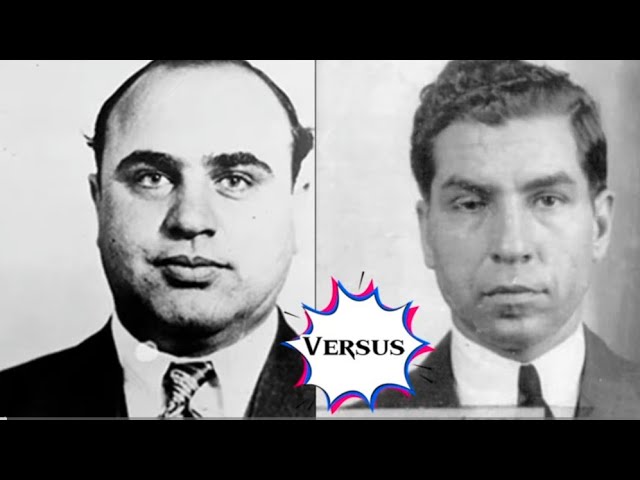
Unlike most mob bosses who avoided attention, Capone embraced fame by appearing at ball games, posing for cameras, and donating to local charities, which earned him the nickname “the modern-day Robin Hood. ”
Behind the public persona, Capone relied on brutality to eliminate rivals. His legacy includes transforming scattered street gangs into sophisticated criminal enterprises that controlled speakeasies, brothels, and bootlegging operations. The 1929 St.
Valentine’s Day Massacre, in which seven rival gang members were executed in broad daylight, remains one of the most infamous mob hits in American history. Capone’s downfall came through an unexpected legal route: tax evasion. In 1931, he was convicted and sentenced to 11 years in prison, including time at Alcatraz. His imprisonment marked the federal government’s growing ability to combat organized crime, yet his influence persisted.
His model of combining violence, bribery, and financial skill continued to shape the Mafia and inspired countless films, books, and television shows about gangsters. Meanwhile, Luciano, born in Sicily and raised in New York, saw the flaws in the old “Mustache Pete” approach to running the mob. Instead of constant fighting over small territories, he envisioned a national crime syndicate in which families cooperated. In 1931, he put this plan into motion by arranging the assassination of his own boss, Joe “the Boss” Masseria, clearing his path to control New York’s underworld.
Luciano’s most lasting contribution was establishing the Commission in 1931. This governing body brought together the most powerful Mafia families in the United States to resolve disputes, divide territories, and set rules designed to prevent unnecessary bloodshed. By promoting cooperation over violence, Luciano reduced the frequency of gang wars that had attracted unwanted law-enforcement attention. He also abolished the “boss of bosses” model, which placed one leader over all families.
Under the Commission, families operated with equal status and independence while remaining accountable to the larger organization. Luciano expanded Mafia operations beyond traditional extortion and gambling into narcotics trafficking, labor racketeering, and prostitution, and he pushed the mob into legitimate industries like construction, trucking, and labor unions. Luciano’s life has been immortalized in books, movies, and television shows. He is often portrayed as a criminal mastermind and inspired characters such as Vito Corleone from The Godfather and Nucky Thompson from Boardwalk Empire.
He is remembered as the father of modern organized crime in America because his model outlasted his own lifetime and is still visible in how criminal enterprises are organized and portrayed today. The two men differed sharply in style. Capone relied on fear and violence, while Luciano used strategy, diplomacy, and negotiation. Capone embraced celebrity status, while Luciano preferred secrecy.
Capone symbolized the gangster image of the Roaring Twenties, whereas Luciano built the lasting Mafia infrastructure that persisted long after his imprisonment. Capone fell because of tax evasion, while Luciano was exiled after being convicted of running prostitution rings, but his power endured. On popularity, Capone wins clearly. He was a celebrity plastered on newspapers across the country, dressing in flashy suits, throwing lavish parties, and cultivating journalists.
His face and name were known to the general public, even among those who feared him. Luciano remained in the shadows, believing power was most effective when unseen. The FBI knew him, but to most people he appeared to be just another businessman in a nice suit. On lasting impact, the edge goes to Luciano.
Capone’s reign in Chicago lasted less than seven years, and his power crumbled after the government convicted him for tax evasion. His impact on pop culture is legendary, but Luciano’s creation of the Commission is considered one of the most important events in Mafia history. The Five Families continued operating for decades under the system he designed. Luciano did not simply lead a gang; he revolutionized organized crime and turned it into a national enterprise.
On fear, the comparison is more complicated. Capone was feared for his overt violence. When people heard his name, they knew someone was getting killed, and the St. Valentine’s Day Massacre cemented that reputation.
He wanted everyone to know he ruled Chicago and did not care how many bodies it took to prove it. Luciano inspired fear of a different kind. He did not need to kill personally; he could make one phone call and make someone disappear. Capone ruled with brute force, while Luciano ruled through calculated power, alliances, informants, and layers of protection.
In the end, the comparison comes down to the type of legacy each man left. Capone was the star who burned brightly for a short time, while Luciano was the mastermind operating behind the curtain. Luciano’s blueprint for the Mafia became the gold standard, and his influence remains visible in Mafia history today, giving him the edge in the broader historical picture.