Allied occupation forces in southern Germany and Austria faced a sustained, shadowy insurgency in the months and years after Nazi Germany’s unconditional surrender on May 8, 1945, as renegade SS units and underground Nazi cells refused to lay down their arms and waged a scattered but deadly campaign against the victorious Allies.
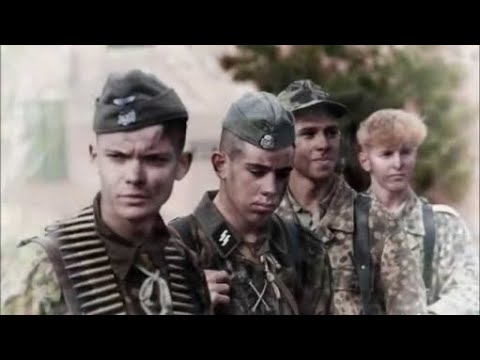
Newly compiled accounts of those attacks reveal that the surrender of the Wehrmacht did not end the bloodshed in Central Europe. While the vast majority of German soldiers complied with the capitulation, two distinct holdout factions continued to resist: the so-called Werwolf movement, composed largely of older Hitler Youth members hastily trained and armed in the war’s final weeks, and a far more dangerous element — renegade Waffen-SS and SS personnel who fled into the Bavarian and Austrian Alps rather than surrender.
According to U. S. Army records, approximately 380 incidents were documented in the American occupation zone of southern Germany, western Austria and the South Tyrol region of northern Italy between May 9, 1945, and December 31, 1948.
Those attacks killed 48 American soldiers and wounded 189 others, a toll that underscores the persistent threat posed by diehard Nazi fighters long after the war in Europe was declared over.
The motives driving these holdouts were varied and deeply rooted. Many SS men feared execution or mistreatment at the hands of Allied forces, particularly those with credible reasons to avoid capture, such as involvement in Nazi war crimes. Others harbored a visceral hatred of the occupying armies and simply could not accept the reality of Germany’s defeat.
A smaller number clung to the broader Werwolf campaign, a planned national resistance movement intended to harass Allied occupiers from within.
The American military quickly learned that these were not isolated acts of desperation. Reports described well-armed groups equipped with automatic weapons, living in mountain huts or encamped in dense forests. Investigators concluded that they were receiving supplies from sympathetic local civilians, a network of quiet support that allowed the insurgents to evade capture for months.

The violence began almost immediately. On May 10, 1945, just two days after the official surrender, an American patrol in the Pürschling corridor of Austria came under fire from mutinous SS soldiers. The following day, two American soldiers were shot dead, their bodies left in a mountain meadow near Schierke in the Harz Mountains of Saxony-Anhalt.
American forces responded with immediate reprisals against local villagers, a pattern of collective punishment that would repeat itself in the weeks to come.
In mid-May 1945, SS or Werwolf operatives planted a time bomb in the basement of an American military residence in Colle Isarco, South Tyrol. The blast wounded 22 American soldiers and burned out a battalion command center, demonstrating the insurgents’ continued access to explosives and their willingness to strike at the heart of occupation infrastructure.
Back in the Harz Mountains, an American soldier was shot while picking flowers in a meadow during a rest break, a seemingly random act of violence that highlighted the unpredictable danger facing troops in supposedly secured territory. In the small Bavarian village of Trauchgau, an American anti-aircraft unit came under sniper fire from German assailants. Only a heavy American response drove the attackers off, allowing them to escape into the surrounding countryside.
The next day in Grafenau, Bavaria, an American truck convoy was ambushed. The security detail returned fire, killing one of the attackers. A few days later, the U.
 S. Army reported the capture of a 17-year-old SS member after he opened fire on American troops. He was subsequently tried by an American military court and sentenced to death, a stark reminder of the harsh justice meted out to those who continued the fight.
One of the largest single engagements occurred on May 25, 1945, in Sailern, Bavaria. Polish displaced persons and local civilians tipped off American authorities to the presence of a group of 21 heavily armed SS renegades in the area. The SS fighters launched an attack on the American occupation forces.
No Americans were wounded, but one SS member was injured and captured while the rest fled into the mountains, melting back into the rugged terrain they knew well.
On June 1, 1945, American troops checking German civilian identities at a checkpoint in Maxhütte-Haidhof, Bavaria, came under fire from an SS member. In the exchange that followed, the SS soldier was wounded and taken prisoner, another small but telling episode in what had become a grinding low-intensity conflict.
American authorities continued to receive sporadic reports of SS personnel operating in the Bavarian mountains throughout the summer. On July 21, 1945, a bridge in Unken, near Salzburg, Austria, was partially destroyed by an explosive charge planted by SS troops believed to be hiding in the surrounding hills. That attack is considered the last incident directly attributed to organized renegade SS units.

Yet the violence did not end there. For years afterward, violent incidents continued as fanatical individuals and secret Nazi groups resisted the American occupation. The threat was compounded by the presence of displaced persons gangs — refugees from Nazi persecution who turned to banditry and attacked both German civilians and American troops, adding another layer of instability to a region already awash in weapons and bitter resentments.
SS personnel in particular continued to appear in American reports as the orchestrators of violent attacks against U. S. soldiers, their reputation for discipline and ideological fervor making them a persistent concern for occupation commanders.
The combination of military training, access to weapons and a willingness to die rather than submit made them a far more formidable adversary than the largely ineffective Werwolf movement, which managed only a handful of attacks in the months after the surrender.
For the organized SS groups in the mountains, the end came not with a decisive battle but with a slow fade into history. Most were never captured. They dispersed in the months and years following the war, dissolving into the civilian population, while a small number undoubtedly left the region to start new lives elsewhere.
Their disappearance left behind a troubling legacy: a reminder that for some, the war did not end in May 1945, and that the peace in occupied Germany was won not in a single moment of surrender but through years of quiet, dangerous vigilance.
The story of these renegade SS fighters remains a largely forgotten chapter of the postwar period, overshadowed by the larger narrative of Germany’s defeat and reconstruction. Yet the 380 documented incidents and the 48 American lives lost in the American occupation zone stand as a sobering testament to the fact that the Nazi regime’s most committed adherents did not simply vanish when the guns fell silent. They fought on, in the shadows of the Alps, for years after the world believed the fighting was over.