The letters were still in the shoebox when Douglas MacArthur died in April 1964, and that single fact dismantles everything the official record claimed about the five-star general’s carefully engineered life.
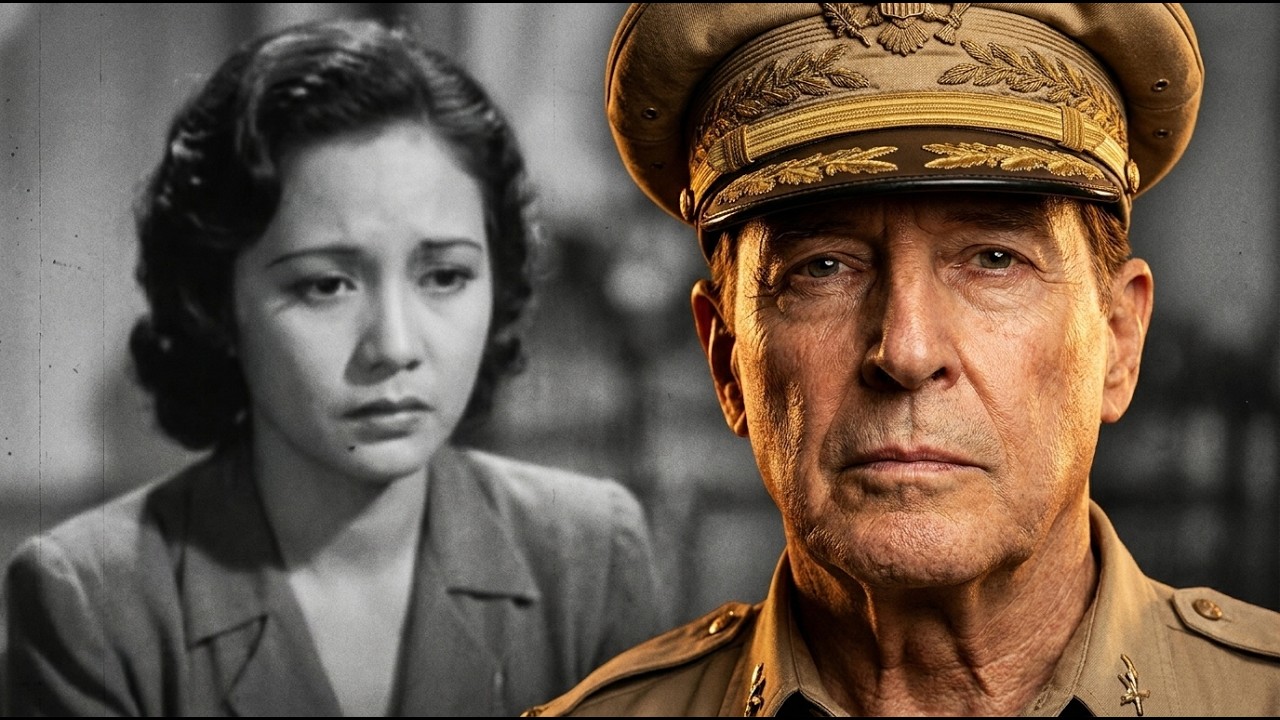
Isabel Rosario Cooper, the Filipina actress he kept hidden in a Washington hotel suite for four years, had been dead for four years by the time MacArthur was interred at his memorial in Norfolk, Virginia. She was 54 years old when she ended her own life in a small Los Angeles room in 1960, still in possession of the intimate correspondence he had paid $15,000 to destroy.
The payment, made in 1934 when MacArthur was Army Chief of Staff, was intended to purchase permanent silence. It bought thirty years. The archive kept the rest.
MacArthur met Cooper in Manila in 1930, when he was 50 and she was 34. He was recently divorced and serving in a senior military capacity that gave him sweeping social authority in the Philippine capital. She was a mixed-heritage actress known professionally as Dimples, with a local entertainment career and a photographic record that confirms her beauty was exceptional.
When MacArthur returned to Washington to assume the role of Army Chief of Staff, he arranged for Cooper to travel with him. He did not bring her as a public companion. He installed her in a suite at the Chastleton Hotel, a residential establishment whose clientele required the kind of discretion that made commercial sense.
For four years, Cooper lived in that suite. She was in one of the most socially active cities in America during the New Deal years, surrounded by dinners, receptions, and the ceremonial machinery of government. She was invisible within it.
She was not on MacArthur’s arm at official functions. She was not introduced to his colleagues. She was not part of the social architecture of his public life in any form that would have registered in the newspapers or social columns.
She was a secret maintained in a hotel room, housed, supported, and concealed simultaneously.
MacArthur visited. He paid her expenses. He wrote letters, the intimate and unguarded kind of correspondence that powerful men write when they are sufficiently confident in the privacy of an arrangement.
The arrangement collapsed in 1934 through the legal machinery of journalist Drew Pearson, who had obtained enough information about Cooper to use it as leverage in a defamation case MacArthur had filed against him. The precise details of how Pearson obtained his information matter less than what MacArthur did the moment the information became a potential courtroom exhibit.
He sent his aide, Major T. J. Davis, to make the problem disappear.
The instrument of disappearance was a bank draft for $15,000 and a set of conditions attached to it. Leave Washington. Do not contact the General.
Do not speak to journalists. Do not exist in any part of his life going forward.
In 1934 currency, that sum represented approximately $300,000 in contemporary terms. It was a serious financial instrument deployed for a specific operational purpose: the permanent removal of Isabel Cooper from MacArthur’s institutional risk profile.
The Army’s intelligence apparatus calculated that distance would solve the remainder of the problem. Hollywood was 3,000 miles from Washington and an entirely different universe in terms of social geography. If Cooper relocated to Los Angeles and pursued the acting career she had spoken of wanting, she would be absorbed into an industry that generated its own scandals at sufficient volume to drown out any single woman’s private history.
The assessment was comfortable. As long as she stayed in California and stayed quiet, the MacArthur legend was architecturally sound.
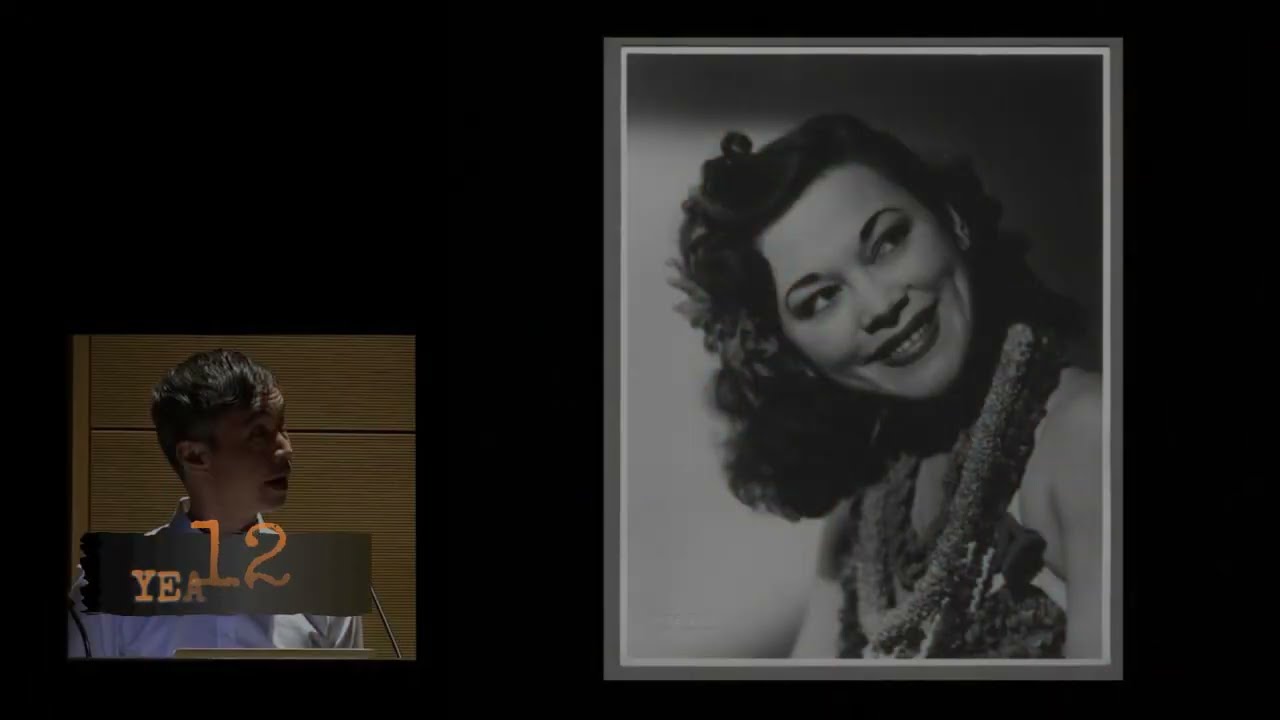
She took the money. She left Washington. She gave back most of the letters that Davis was instructed to collect.
She did not give back all of them.
Los Angeles in the mid-1930s had developed an extremely efficient metabolism for processing the ambitions of people who arrived from elsewhere believing that talent and beauty were sufficient credentials. Cooper arrived with both. She also arrived with a history she could not discuss, a patron she could not name, and a financial cushion that the economics of establishing a life in a new city consumed faster than theory suggested.
She worked under the professional name Chubing, a Filipino term of endearment she adopted as a stage identity that was distinctive without being explanatory. She attended auditions. She made industry contacts.
She appeared in film productions in roles that credits listed at the level of granularity reserved for performers whose names were not yet assets worth advertising.
The work was real. The career was not arriving.
The specific cruelty of Cooper’s Hollywood years was not poverty in isolation, though the poverty was real and documented in the accounts of people who knew her during that period. It was poverty in the company of ubiquity.
Douglas MacArthur was not an obscure figure receding into private life during the years she was building her acting career. He was present constantly in the newsreels that played before the films she was trying to appear in. He was in the newspapers.
He was on the radio.
When Japan invaded the Philippines in 1941, the country where she came from and the place where MacArthur had found her, he became the central figure of the Pacific War. His face was on the cover of every major American magazine. His voice was in every broadcast.
She sat in Los Angeles and watched him liberate the country he had taken her from.
The psychological arithmetic of that specific experience, watching the man who had paid you to disappear become the hero of the war being fought in your homeland while you lived in a studio apartment trying to get your name into a film credit, does not resolve into a clean narrative. It accumulates. It becomes a specific kind of weight that the clinical literature would describe as a prolonged psychological toll and that the people who knew Cooper during those years described in simpler language.
She was haunted.
She kept the letters. That detail tells you the most about the interior accounting she was maintaining through all of it. The letters were evidence of a relationship she could not discuss publicly without destroying what remained of her own social position.
They were not commercially valuable in any way she could access without the kind of disclosure the $15,000 had been specifically paid to prevent.

They were not comforting to read, presumably, given the circumstances of their termination. And yet she kept them. In a shoebox.
Under the bed, through every apartment, every relocation, every year that the gap between where she was and where the general was grew wider.
They were the one thing she had that the money hadn’t bought back.
She was the woman at a makeup mirror in a Hollywood dressing room applying the cosmetics of a career the industry was not going to provide, rehearsing lines for an audition that the casting office had already made its decision about before she walked through the door.
The general was on the deck of the USS Missouri in Tokyo Bay in September 1945, accepting the formal surrender of the Japanese Empire in front of the assembled cameras of every news organization in the world. The crushed officer’s cap. The corncob pipe.
The carefully composed image of a man who had built himself into a monument and was now receiving the documentation of that construction.
Major Davis was somewhere in a Washington office during the 1930s, processing the paperwork of an arrangement his professional role required him to execute without personal commentary. The payment records filed and then unfiled and then absent from the archive in the way that certain documents become absent when the people responsible for them understand what their continued existence represents.
The shoebox under the bed in the studio apartment held thirty years of correspondence that had survived everything except the woman who was keeping it.
These four images exist simultaneously in the same story. They do not reconcile into a single moral. They sit beside each other in the historical record the way that the actual consequences of powerful men’s private decisions tend to sit, visible only when you look at the full frame rather than the official cropped version.
Isabel Cooper made a final private decision in 1960. In a small room in Los Angeles, she chose to conclude her own story on her own terms. The clinical record of the circumstances is what the legal and medical documents from that period contain.
The historical record adds the context the clinical record does not provide.
She was 54 years old. She had spent 26 years trying to build a life from the materials that $15,000 and a forced departure from Washington had left her, and the general whose letters she had kept through all of it was still alive, still celebrated, still the unassailable icon that the official record described him as.
She died four years before he did.
MacArthur died in April 1964 at Walter Reed Army Medical Center at 84 years old, attended by the full ceremonial machinery of a state whose highest military honors he had spent a lifetime accumulating. He received a state funeral. He was interred at the MacArthur Memorial in Norfolk, Virginia, in a building constructed to house his papers and perpetuate his legacy in the permanent institutional form he had spent his career engineering.
He died believing the archive had been dissolved by a bank draft thirty years earlier. He believed that was the end, the way powerful men are frequently wrong about the permanence of the arrangements they make with people they have decided are without leverage.
The letters surfaced after his death. The specific pathway through which Cooper’s correspondence with MacArthur entered the historical record is documented in the research notes of the biographers and historians who examined the period in the years following his death. The letters had survived her.
They had been found among her effects. And they had eventually reached the researchers who were building the documentary foundation for a reassessment of the MacArthur legend that his own institutional mythology had made necessary by its very completeness.

The letters were intimate in the way that private correspondence between two people in a sustained relationship is intimate. They were also, for the purposes of historical biography, precise evidence of a private life that the official record had not acknowledged existed. They documented the relationship with a specificity that the payment of $15,000 had been intended to make unavailable to the historical record permanently.
The payment had bought thirty years. It had not bought the archive.
The biographies that incorporated the Cooper correspondence into their assessment of MacArthur produced a portrait of the general that the earlier authorized accounts had not contained. Not a destroyed portrait. MacArthur’s operational record in World War II and his administration of occupied Japan were sufficiently significant that no private correspondence was going to reduce him to a footnote.
But a complicated one. A portrait of a man whose public construction of himself as a figure of Roman virtue had required the active management and occasional financial suppression of the reality that existed behind the construction.
The specific cost of that management had been borne entirely by one person.
Isabel Cooper had arrived in Washington, D. C. at 34 years old with a career and a future that the four years in the Chastleton Hotel effectively consumed.
She had been paid to disappear and she had largely succeeded in the sense that the public record of her life during the years when MacArthur was at his most celebrated contains almost nothing.
She had watched from the distance of 3,000 miles and several tax brackets the liberation of her homeland by the man who had removed her from it. She had kept his letters when keeping them served no practical purpose that the circumstances of her life could access. And she had reached her final decision four years before the man who had made that calculation about her future found out whether his own calculations about legacy were going to hold.
They did not fully hold. The archive does not work that way.
The general paid $15,000 for her silence. He spent the next thirty years building a monument on the premise that the silence was permanent. He died in 1964 believing the foundation was sound.
He didn’t know that the shoebox was still there. That the letters were still legible. That the archives always keep what the powerful men pay to have removed.
The monument still stands in Norfolk. The correspondence is in the historical record. Both of those things are true simultaneously, and the gap between them is the precise measurement of what $15,000 actually purchased.
Not silence. Thirty years of it. And then the truth at the standard rate that suppressed truths tend to charge for their eventual appearance.