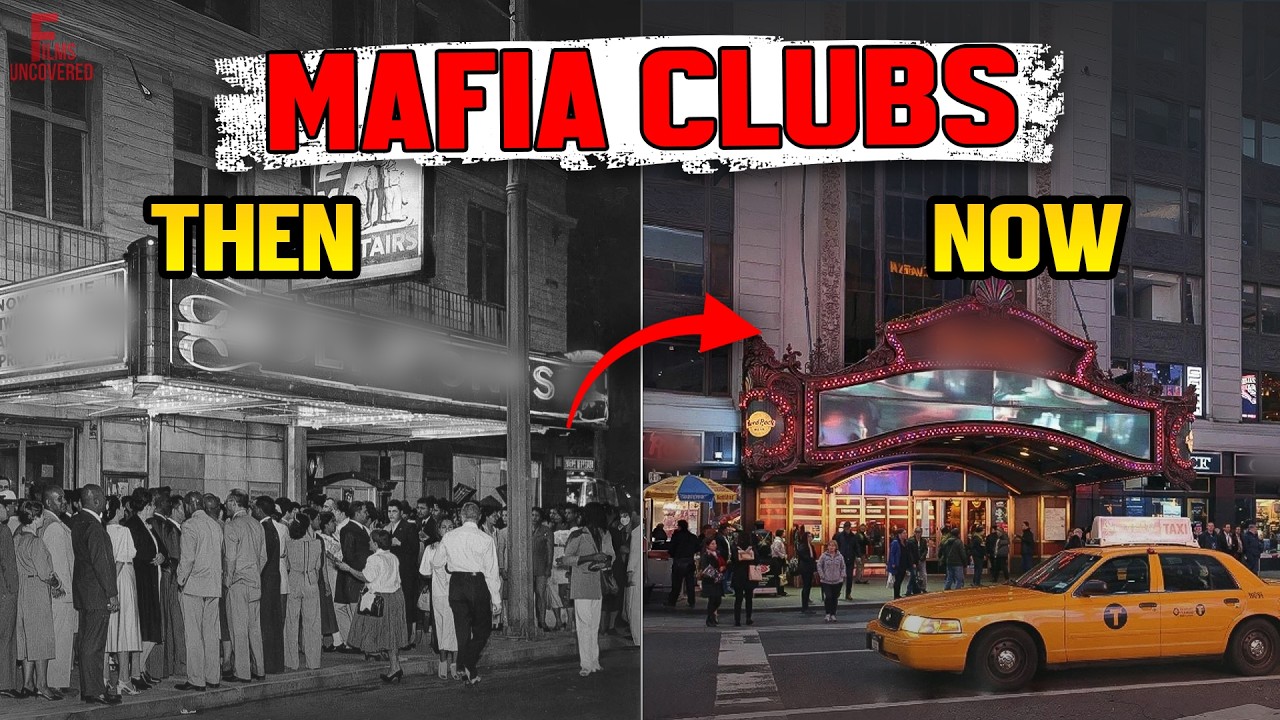
Harlem, New York, 1923. A brick building stands at the corner of 142nd Street and Lenox Avenue. The ground floor houses the Douglas Theater. Above it sits a nightclub called Club Deluxe.
The owner is Jack Johnson, the first black heavyweight boxing champion of the world. Johnson won the title in 1908, and white America never forgave him for it. He married white women, drove fast cars, and refused to apologize for existing.
Club Deluxe struggles. Johnson lacks the capital to compete with the larger nightclubs downtown. He needs investors. He finds one.
Owney Madden walks into Club Deluxe in late 1923. Madden stands 5'7" tall, born in Leeds, England, in 1891 and raised in Hell's Kitchen, Manhattan. By age 17 he led the Gopher gang. By 23 he had killed at least five men. In 1915 he was convicted of manslaughter after shooting a rival, and he served eight years at Sing Sing. He walked out in 1923.
Madden does not invest in Club Deluxe. He takes it. Johnson signs over the club under terms that are not documented. What is known is that Madden renames it the Cotton Club and installs Joseph "Little Frenchie" DeMange as manager. DeMange is Madden's enforcer. The club reopens under new management in the fall of 1923.
Madden's business model is simple. He brews beer in a warehouse on 10th Avenue and sells it to speakeasies across Manhattan. The Cotton Club becomes both a distribution point and a showcase. Madden's beer is served exclusively.
The club operates seven nights a week. Doors open at 11:00 p.m. Shows start at midnight and 2 a.m.
The Cotton Club enforces a strict whites-only admission policy. Black patrons are turned away at the door. Exceptions are made only for celebrities like Bill "Bojangles" Robinson or Langston Hughes, and only if they are guests of white patrons. Black performers enter through the back. They perform. They leave. They do not sit in the audience.
Madden hires black talent exclusively. He does not do this out of progressive ideals. He does it because white audiences in 1923 want to see black performers.
The club's decor reinforces plantation aesthetics. Designer Joseph Urban, who worked for Florenz Ziegfeld, designs the interior. The walls are painted with murals of cotton fields. The waiters wear red tuxedos. The chorus girls are light-skinned. Madden and DeMange enforce a paper bag test. If a woman's skin is darker than a brown paper bag, she does not perform.
The Cotton Club's first band leader is Andy Preer, who leads the Cotton Club Syncopators. Preer dies suddenly in 1927. Madden needs a replacement.
Edward Kennedy Ellington is born in Washington, D.C., on April 29, 1899. His friends call him Duke. He starts playing piano as a child. By 1923 he is leading a small band in New York, playing at the Hollywood Club on West 49th Street, later renamed the Kentucky Club. His band is tight. His arrangements are original. Word spreads.
In December 1927, Duke Ellington and his orchestra are hired to replace Preer. Ellington is 28 years old. The Cotton Club residency changes everything.
The club seats approximately 400 people. Tables are packed close. The stage sits at the far end. A dance floor stretches in front. The club's nightly radio broadcasts air on WHN and later NBC. The broadcasts reach millions. Ellington's music goes national.
Ellington composes nightly. His band includes trumpeter Bubber Miley, trombonist Joe "Tricky Sam" Nanton, clarinetist Barney Bigard, and saxophonist Harry Carney. Miley and Nanton pioneer the growl style, muted brass that mimics the human voice. Ellington writes around their sounds. He composes "Black and Tan Fantasy," "Mood Indigo," and "Creole Love Call" during his Cotton Club years.
The shows follow a strict format. Two performances nightly. Each runs approximately 90 minutes. The revues change seasonally. Titles include "Blackbirds of 1928," "Hot Chocolates," and "Jig a Minute." The shows feature chorus lines, comedy sketches, and production numbers. Every revue includes a jungle number, a racially coded performance designed to evoke primitive Africa for white audiences. Ellington writes the music. He does not write the concepts.
Madden runs the club like a military operation. No fights, no loud drunks, no unpaid tabs. Madden employs armed men at the door. They carry Thompson submachine guns and violin cases. If trouble starts, it ends quickly.
Patrons include movie stars, politicians, and rival gangsters. Charlie Chaplin visits. Mae West visits. Mayor Jimmy Walker visits regularly. Mobster Dutch Schultz sits at the bar. No one causes problems at Madden's club.
The stock market crashes on October 29, 1929. The Great Depression begins. Harlem nightlife does not collapse immediately, but money tightens. The Cotton Club survives. Madden's beer operation keeps it afloat. Ellington's broadcasts keep the crowds coming. The revues get bigger, more extravagant. Madden invests in spectacle.
Prohibition ends on December 5, 1933. The repeal of the 18th Amendment eliminates Madden's monopoly on illegal alcohol. Every restaurant and club can now serve beer and liquor legally. Madden's advantage disappears. The Cotton Club's edge vanishes overnight.
Ellington leaves the Cotton Club in 1931. He spent four years there. He is now a national star. He tours the country. His absence creates a gap. Madden needs another headliner.
Cabell Calloway III is born in Rochester, New York, on December 25, 1907. He grows up in Baltimore. He starts singing in clubs as a teenager. By 1930 he is fronting the Missourians, a jazz orchestra. He renames the band Cab Calloway and his Orchestra. They play the Savoy Ballroom. Madden hears about him.
Cab Calloway takes the Cotton Club stage in 1931. He is 23 years old, tall, and energetic. He wears white tails and wields a baton like a weapon. His signature song is "Minnie the Moocher." The lyrics reference cocaine and opium. The chorus is a call-and-response scat routine. "Hi-de-hi-de-ho." Audiences shout it back.
Calloway's performances are physical. He dances. He slides across the stage. He spins. His orchestra plays hot jazz, fast tempos, syncopated rhythms, blaring brass.
Calloway's residency lasts from 1931 to 1934. He records prolifically. His songs include "Reefer Man," "Kicking the Gong Around," and "The Lady with the Fan." The drug references are thinly veiled. The songs are hits.
The Cotton Club's revenues grow more extravagant under Calloway's tenure. Madden hires choreographer Clarence Robinson. Robinson designs production numbers featuring acrobats, tap dancers, and elaborate costumes. The chorus line expands. The shows run longer. The club's reputation grows.
The club's roster includes other major acts. Fletcher Henderson and his orchestra perform regularly. Henderson is a trained chemist and an innovative arranger. His work influences swing music.
Ethel Waters performed at the Cotton Club in the early 1930s. She sings "Stormy Weather" in the 1933 revue of the same name. The song becomes a standard. Waters is one of the few performers allowed to sit in the audience after her set, a rare exception to the club's segregation rules.

The club's chorus line produces future stars. Lena Horne joins the Cotton Club chorus in 1933 at age 16. She is light-skinned enough to pass the paper bag test. She sings occasionally. She dances. She watches. By 1935 she is performing solo.
The Dandridge sisters, Vivian, Etta, and Dorothy, perform at the Cotton Club in the mid-1930s. Dorothy Dandridge later becomes a film star.
The Nicholas Brothers, Fayard and Harold, perform acrobatic tap routines that defy physics. They leap over each other. They land in splits. They smile the entire time. Their routine to Calloway's "Jumpin' Jive" is filmed in 1943 for the movie "Stormy Weather." The performance is four minutes long. The brothers tap down a staircase, leap over each other repeatedly, and land in full splits without using their hands. They do not rehearse it. They do it in one take. Fred Astaire later calls it the greatest dance number ever filmed.
The Cotton Club moves in February 1936. Rising crime in Harlem and increased competition force Madden's hand. The Savoy Ballroom allows integrated audiences. Small's Paradise and Connie's Inn compete for bookings. The original Cotton Club at 142nd Street and Lenox Avenue closes.
Madden reopens the Cotton Club on Broadway at 48th Street in the heart of the theater district. The new location is larger. It seats approximately 700 patrons. The stage is bigger. The decor replicates the original cotton-field murals, log cabin entrance, and plantation aesthetics. The segregation policy continues.
The Broadway Cotton Club opens with a revue starring Bill "Bojangles" Robinson and Calloway. The shows follow the same format: two performances nightly, production numbers, jungle-themed sequences. The new location attracts a different crowd, more tourists, fewer regulars. The intimacy of the Harlem club is gone.
Madden's control begins to weaken. He is arrested multiple times in the 1930s on various charges. None stick. He maintains his interests through proxies. DeMange continues managing the club, but Madden's attention shifts. He owns stakes in boxing matches, nightclubs downtown, and a dog track in Arkansas. The Cotton Club is no longer his priority.
The Broadway Cotton Club struggles financially. Operating costs are higher. Competition increases. The novelty of the Cotton Club wears off. The club books major acts, Jimmy Lunceford and his orchestra, Teddy Hill, Willie Bryant. But attendance drops. Madden invests less. The revues become cheaper. The talent pool thins.
The final Cotton Club Revue opens in June 1940. The headliners are the Dandridge Sisters and comedian Dusty Fletcher. The show runs through the summer. Attendance is weak.
On June 10, 1940, the Cotton Club closes its doors permanently. No announcement, no final performance celebration. The club simply stops operating.
Madden leaves New York in 1935. He moves to Hot Springs, Arkansas, a spa town with a thriving illegal gambling scene. He owns the Hotel Arkansas. He runs casinos. He lives quietly. He dies in Hot Springs on April 24, 1965, at age 73. He is never convicted of another crime after his 1915 manslaughter sentence.
DeMange remains in New York. He is arrested multiple times for assault and racketeering. He dies in 1975.
The original Cotton Club building at 142nd Street and Lenox Avenue was demolished in 1989. A housing project stands there now.
The Cotton Club's legacy is complicated. The club launched careers. Duke Ellington becomes one of the most important composers in American music. His Cotton Club years establish his sound. "Mood Indigo," "Sophisticated Lady," and "Solitude," compositions that define jazz, are rooted in his Cotton Club period. He tours internationally. He composes for film and theater. He receives the Presidential Medal of Freedom in 1969. He dies in 1974.

Cab Calloway remains a headliner for decades. He appears in films, Broadway shows, and television. His scat singing influences vocalists across genres. His white tails and zoot suits define jazz-era fashion. He performs into his 80s. He dies in 1994 at age 86.
Lena Horne becomes a film star and civil rights activist. She refuses to perform in segregated venues after leaving the Cotton Club. She testifies before Congress. She marches with Dr. Martin Luther King Jr. She dies in 2010 at age 92.
The Nicholas Brothers tour the world. They perform in London, Paris, and Moscow. They never achieve mainstream American stardom. Despite their talent, Hollywood casts them in segregated film sequences that can be edited out for southern theaters. They perform until the 1990s. Fayard dies in 2006. Harold dies in 2000.
The Cotton Club's impact on jazz is undeniable. The club's radio broadcasts introduce millions of Americans to jazz music. The weekly shows on WHN and NBC air live from the Cotton Club stage. Listeners across the country hear Ellington's orchestra, Calloway's scat singing, and Fletcher Henderson's arrangements. The broadcasts transform jazz from a regional sound into a national phenomenon.
The club's revues influence American entertainment. The production numbers combining jazz orchestras, tap dancers, acrobats, and costumes establish a template for stage shows and television variety programs. Choreographer Clarence Robinson's work at the Cotton Club influences later Broadway productions. The format of the Cotton Club revue, a mix of music, comedy, and dance, becomes standard in American entertainment.
But the Cotton Club is built on segregation and mob control. The club's whites-only admission policy is not unique to the Cotton Club. Segregation is legal in New York in the 1920s and 1930s. Hotels, restaurants, and theaters routinely bar black patrons. The Cotton Club's policy reflects the era's systemic racism.
What makes the Cotton Club distinct is the hypocrisy. Black talent performing exclusively for white audiences who travel to Harlem to consume black culture while excluding black people from the room. The club's plantation decor reinforces racial hierarchies. Joseph Urban's cotton-field murals, the log cabin entrance, and the light-skinned-only chorus line are deliberate choices. The jungle numbers in the revues depict African Americans as exotic, primitive, and sexually available. These representations are not accidental. They are designed to titillate white audiences while reinforcing stereotypes.
Madden's ownership adds another layer. The Cotton Club is not black-owned. It is owned by a white gangster who controls the distribution of illegal alcohol. Madden profits from black talent while denying black audiences access. The club's success enriches Madden, not the Harlem community. The performers are paid. Ellington and Calloway earn well, but the profits flow to Madden and his associates.
The end of Prohibition removes Madden's advantage. When the 18th Amendment is repealed, Madden loses his monopoly. Other clubs can serve alcohol legally. The Cotton Club's competitive edge disappears. The move to Broadway in 1936 is a reaction to this shift. Madden tries to rebrand the club for a downtown audience. It does not work. The Broadway Cotton Club lacks the authenticity, however problematic, of the Harlem original.
The club's closure in 1940 is quiet. No public announcement, no final show. The doors simply close. The building is repurposed. The Cotton Club's physical presence vanishes.
What remains is the music. The recordings made at the Cotton Club survive. Duke Ellington's 1930 performance of "Old Man Blues" in the film "Check and Double Check" captures his sound at the height of his Cotton Club residency. The growling trumpets, the tight arrangements, the swing rhythm, all rooted in his Cotton Club years.
Cab Calloway's 1934 short film "Hi-De-Ho" showcases his performance style. The energy, the scat singing, the physical movement, all honed at the Cotton Club.
The Nicholas Brothers' 1943 performance in "Stormy Weather" is the culmination of skills developed during their Cotton Club appearances.
The Cotton Club story is one of exploitation and opportunity. The club exploits black performers and reinforces segregation. It also provides a platform for black artists to reach national audiences. Ellington, Calloway, Horne, and the Nicholas Brothers use the Cotton Club as a springboard. They transcend the club's limitations. They build careers that outlast the venue.
The Cotton Club closes in 1940. The music endures. "Mood Indigo" still plays. "Minnie the Moocher" still swings. The Nicholas Brothers' routine still astonishes. The Cotton Club is gone. The talent it showcased remains.
By 1940, the Cotton Club is history. But the sound it created, hot jazz, tight arrangements, explosive performances, defines American music for decades. The club's segregation is indefensible. The mob ownership is corrupt. The performers transcend both. The doors closed. The music did not.