Louis Matthew Strauss was born on October 26, 1904, in San Francisco, California. He was the son of Lithuanian immigrants. The nickname that would follow him through the underworld, Russian Louie, came later.
His family had no connection to Russia. Lithuania had been under Russian control for generations, and people from the region were often labeled Russian, whether it was accurate or not.
Strauss grew up around the busy docks and crowded streets of the San Francisco Bay Area. From an early age, he showed a willingness to take risks if there was money involved.
Police records show his first arrest came when he was 11 years old, charged with burglary. It was the beginning of a long record that would follow him for the rest of his life.
By his teenage years, Strauss was already moving in circles connected to illegal liquor and street gambling. At 16, he fell in with a small crew that included Tony Cornero Stralla, a bootlegger who would later become a major gambling figure, and Jerry Ferry, another young hustler from the Bay Area.
The group made money by stealing cases of illegal alcohol and reselling them to restaurants and other bootleggers during the Prohibition years. Strauss stood out from the start.
He was described as tall, thin, and confident, with a wave of black hair and a habit of pushing his way into situations that promised money. He was not considered the leader of the group, but he was persistent and ambitious.
Friends began calling him the Russian, a nickname tied to his Eastern European background. His arrests continued to pile up. Police reports linked him to robbery, theft from docks, and violent disputes with other bootleggers.
In one case, he was charged with shooting a rival bootlegger, although the injured man later refused to press charges, and Strauss avoided serious punishment. By the time Strauss reached adulthood, he had already built the two things that would define the rest of his life.
He had a reputation for risk-taking inside illegal gambling circles, and a growing criminal record that stretched across California. Those connections would soon pull him toward a new opportunity that was opening in the Nevada desert. Las Vegas.
During the 1920s, the United States was deep in the years of Prohibition, and for men willing to break the law, alcohol became one of the most profitable commodities in the country. In San Francisco, the waterfront and the neighborhoods around Fisherman's Wharf turned into a hub for smuggling, stolen shipments, and black market liquor deals.
Louis Matthew Strauss was still a young man, but he had already found his place in that environment. Strauss worked alongside a small group of associates that included Tony Cornero Stralla and Jerry Ferry.
Their operation was straightforward. They stole cases of illegal liquor and resold them to restaurants and other bootleggers who needed supplies. In a city filled with speakeasies and underground bars, there was always a buyer.
The money came fast, and the risks were part of the business. Strauss quickly developed a reputation for pushing himself into deals whether people wanted him involved or not.
Around the restaurants near the waterfront, he often forced his way into partnerships, demanding a cut of the profits in exchange for protection or access to liquor supplies. Some people found him difficult. Others saw opportunity in working with someone who understood the underworld.
His criminal record continued to grow. Police connected him to theft from the docks, robbery, and violent disputes with other bootleggers. In one incident, Strauss was charged with shooting a rival bootlegger, although the case collapsed when the victim refused to cooperate with authorities.
The pattern was becoming clear. Strauss operated aggressively, pushed boundaries, and often walked away from trouble before the legal system could catch up with him.
By the early 1930s, the bootlegging world that had made men like Strauss money was beginning to collapse. Prohibition was coming to an end, and the criminal economy that depended on illegal alcohol was changing.
For many organized crime figures, the next opportunity was already appearing in the distance. It was not in San Francisco. It was in gambling, and the new frontier for gambling was opening in Nevada.
By 1933, the United States repealed Prohibition. The illegal liquor trade that had supported countless bootleggers across the country began to collapse almost overnight. For men like Louis Matthew Strauss, it meant finding a new way to make money in the underworld.
Gambling quickly became the next frontier. Strauss moved through different gambling circles along the California coast, spending time in Los Angeles, where illegal casinos were operating behind closed doors.
During this period, he worked for a gambling operator known as Farmer Page, gaining experience in the mechanics of underground gaming operations. These establishments ran outside the law, attracting gamblers, hustlers, and professional cheats who knew how to manipulate cards and dice.
It was in these gambling rooms that Strauss met two men who would soon become important partners. One was Charles H. Howe, also known as Charlie Hall, a card dealer with experience running games such as Faro, a once-popular card game that had a reputation for being easily manipulated by both dealers and players. The other was Billy Burns, a gambler who understood how to turn a crooked game into fast winnings.
The three men recognized an opportunity forming outside California. In 1931, the state of Nevada legalized most forms of gambling, opening the door for small casinos to appear in a desert railroad town called Las Vegas.
At the time, the city was still small, but thousands of workers were arriving to build Hoover Dam, bringing paychecks and a demand for entertainment. For professional gamblers and confidence men, Las Vegas looked like a place where a carefully planned scheme could pay off.
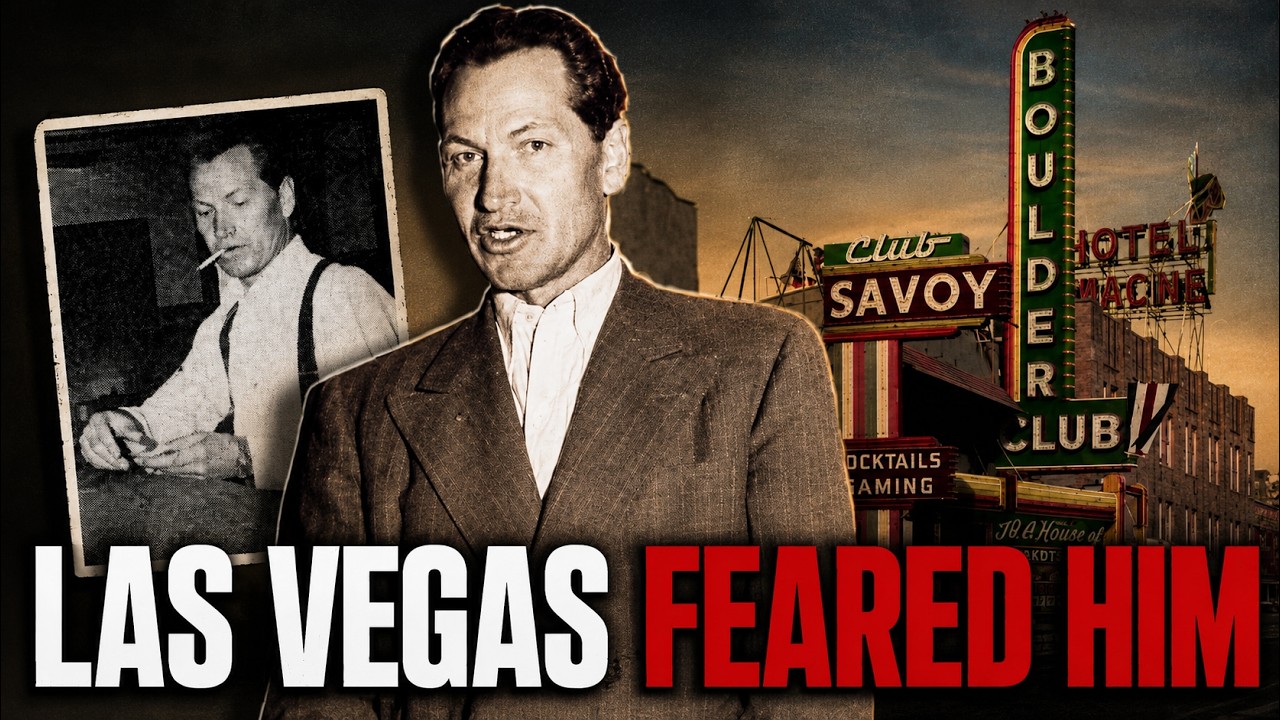
By the fall of 1934, Strauss and his new partners decided to see it for themselves. They packed up and headed for the Nevada desert, carrying with them a plan that revolved around a single casino on Fremont Street, the Northern Club.
At the time, the city was still small. Gambling had only recently been legalized in 1931, and the entire casino industry in town consisted of five clubs on Fremont Street: the Apache Casino, the Big Four Club, the Boulder Club, the Las Vegas Club, and the Northern Club.
Strauss and his partners spent time studying each operation before choosing their target. They settled on the Northern Club, owned by Dave Stearns and Elmer Sorba. The casino had several card tables, slot machines, and roulette and craps games. It was also preparing to open the city's first race book, which meant it was expecting increased business.
To Strauss and his crew, it looked like the right place for a quick score. The plan relied on placing their own man behind the table.
On the morning of October 4, 1934, Howe approached Stearns and Sorba with an offer. He proposed running a Faro game, bringing his own experience as the dealer and offering to split the profits with the club. Both sides agreed to put up $1,000 each to bankroll the game.
The arrangement sounded legitimate enough, and the casino owners accepted the proposal. Once the game opened, the second part of the plan moved into place.
Billy Burns walked into the club and sat down as a player at Howe's table. Within minutes, he began winning. Hand after hand, the money piled up. In just three hands of Faro, Burns had taken $3,200 from the table.
The sudden streak immediately raised suspicions inside the casino. Stearns had a lookout watching the game, and the reports came back quickly. Something was wrong.
Stearns rushed to the table and ordered the game shut down before more money disappeared. Instead of paying the full winnings, the owners took Burns aside and tried to contain the situation. They gave him $800 and told him the rest would be settled later.
Burns agreed to return the following day to collect the remaining balance. By the time he came back, the owners had started digging into who they were dealing with. The names Burns, Howe, and Strauss were now circulating around town, and the casino operators believed they had been caught in a carefully planned gambling fraud.
The dispute over the money quickly turned into something bigger, and it would soon spill out of the casino and into Las Vegas City Hall.
By October 8, 1934, the dispute had moved into public view at a meeting of the Las Vegas City Commission. Billy Burns appeared before the city leaders and accused the casino of refusing to pay legitimate gambling winnings. He demanded that the city revoke the Northern Club's gambling license.
The accusation immediately turned the meeting into a spectacle. Burns claimed the club had failed to pay the $3,200 he had won at the Faro table. The casino owners pushed back hard.
Dave Stearns and Elmer Sorba argued that Burns and his partners had staged a fraud designed to take money from the house. Witnesses spoke on both sides. Voices rose in the chamber. What had started as a routine city meeting turned into a shouting match. Some accounts describe the scene as close to a fist fight.
At one point, Sorba identified another man in the room as part of the scheme. He pointed to Louis Matthew Strauss, calling him Russian Louie. Strauss immediately objected and rushed toward the podium.
He told the commissioners his name was Louis Strauss, not Russian Louie, and denied being part of any conspiracy. The tension in the room forced city officials to call in help. Las Vegas Police Chief Clint Boggs arrived with officers to keep order while the arguments continued.
Burns threatened to take the dispute before a criminal grand jury if the casino did not pay what he believed he was owed. Stearns fired back, telling him to do whatever he thought necessary. Mayor Ernie Cragin eventually brought the meeting back under control.
The commission decided the matter required further review and scheduled a show cause hearing to determine whether the Northern Club should lose its gambling license. Behind the scenes, neither side wanted the dispute to grow into a criminal investigation.
Attorneys stepped in to find a quiet solution. Leo McNamee represented the casino owners, while Artemis Ham represented Strauss and Burns. Before the next hearing could begin, the lawyers reached a private agreement. Money changed hands and both sides asked the city to close the matter. The commission accepted the request and declared the dispute settled.
When the dust settled, Strauss and his partners had not gained much from their plan. They had originally tried to collect $3,200. Then they pushed for $2,000. In the end, the settlement came to $1,500. After covering their expenses, the three men left Las Vegas with only a few hundred dollars in profit, and a clear message from the casino owners: they were not welcome back.
After the confrontation in Las Vegas in October 1934, Louis Matthew Strauss returned to Northern California. The scam at the Northern Club had produced little money and had drawn unwanted attention. Strauss went back to the environment he knew best, the network of underground gambling rooms that operated throughout the Bay Area.
One of the places he worked was the Clover Club in Palo Alto, an illegal casino run by Frank "Dingo" Mendoza. Strauss dealt card games there, including blackjack, which was commonly referred to as 21. Police eventually raided the operation. Strauss was arrested and later sentenced to 60 days in jail and fined $250 for dealing the game.
After serving his sentence, Strauss stayed in the gambling and nightclub business. For about a year, he managed the Casa Mañana nightclub along El Camino Real, just outside Palo Alto. The club catered to customers who were looking for alcohol, entertainment, and the occasional illegal game.
Strauss continued moving through the same underworld circles. He later worked at the Menlo Club, where he associated with another gambling figure, Elmer "Bones" Remer. The work kept him connected to card games, betting operations, and the kind of people who move between legal nightlife and illegal gambling.
By the end of the decade, Strauss had built a reputation as a man who could operate inside gambling rooms, manage players, and navigate disputes that often followed large amounts of cash. The connections he maintained in these years would eventually lead him back into larger operations tied to organized crime.

And by 1939, one of those connections would pull him into a risky job involving a floating casino sitting just off the California coast, the SS Rex.
By 1939, Louis Matthew Strauss had returned fully to the world of professional gambling and criminal schemes. His connections stretched across California's gambling scene, and one of the most unusual opportunities of the era was sitting just off the coast of Santa Monica. It was a gambling ship called the SS Rex.
The ship belonged to Tony Cornero, the same bootlegging figure Strauss had known years earlier during the Prohibition era. Cornero operated the vessel 3 miles offshore, beyond the legal jurisdiction of California authorities. Inside the ship were roulette wheels, card tables, and dice games that attracted gamblers from Los Angeles who were willing to take a boat ride out to sea to place their bets.
The operation generated large amounts of money, and that money drew attention from powerful figures in organized crime. According to accounts connected to Strauss, Bugsy Siegel and Mickey Cohen began pressuring Cornero for a share of the ship's profits. Somewhere in that conflict, Strauss was pulled into the picture.
Strauss later claimed that he was recruited through contacts connected to Siegel and Cohen to rob the SS Rex gambling ship. Details about the operation remain unclear, but Strauss said the plan worked and that he walked away with a large amount of cash from the floating casino.
There are few verifiable records describing the robbery itself, and most of the story comes from Strauss's own account. What is clear is that by the end of the 1930s, Strauss was operating inside the same gambling circles that included some of the most powerful organized crime figures on the West Coast.
The money from the alleged robbery did not change his lifestyle for long. Strauss continued drifting between gambling operations in California, Nevada, and Lake Tahoe, always looking for the next opportunity. By the mid-1940s, that opportunity arrived in the form of a partnership at a casino in Lake Tahoe. A partnership that would end in gunfire.
By the mid-1940s, Louis Matthew Strauss had become a familiar figure in gambling operations across California, Nevada, and Lake Tahoe. He worked in several casinos during this period, including the Cal-Neva Lodge on the Nevada-California border and the Green Shack in Las Vegas. The jobs kept him close to high-stakes gamblers and partners who were willing to take risks if the money looked good.
In the summer of 1947, Strauss secured a more significant opportunity. He became part of a partnership running the Tahoe Village Casino at Lake Tahoe. The ownership group included Abe "The Trigger" Chapman, George "The Professor" Kozloff, and Sam Hauser. Another key partner was Harry Sherwood, a large and well-known former boxer from San Francisco who had moved into the restaurant and gambling business.
The casino did strong business that summer. Tourists crowded the Lake Tahoe resorts, and the gambling tables were busy. Despite the steady flow of money, trouble began building behind the scenes. Employees had not been paid, suppliers were waiting for checks, and the county government was also expecting payments. Questions started circulating about where the casino's cash had gone.
On September 13, 1947, the tension reached a breaking point. Strauss and Sherwood went into an office inside the casino to review the books while the other partners waited nearby at the bar. A short time later, a single gunshot echoed through the building.
Strauss walked back into the bar area. Inside the office, Harry Sherwood was on the floor with a gunshot wound that had entered through his arm and lodged near his spine. The situation quickly turned into a police investigation.
Strauss left the building and drove away, taking his 18-year-old girlfriend with him and packing his belongings into a vehicle attached to his motorhome. Authorities captured him about 10 miles away.
During questioning, Strauss claimed the shooting happened during a fight over missing casino money. He said Sherwood had taken around $80,000 from the casino reserves, and when confronted, Sherwood struck him. Strauss said he pulled out his .38 caliber revolver and fired in self-defense.
Sherwood was taken to the hospital but died from the wound on October 3, 1947. Despite the death, the legal case did not move forward as a murder prosecution. Witnesses from the partnership supported Strauss's claim that the shooting happened during a confrontation, and Justice of the Peace D. W. McCleary ruled there was no reason to file charges, accepting the explanation of self-defense.
Strauss walked away from the case without a conviction, but the shooting followed him. It added another entry to the reputation he carried through gambling circles, a reputation for disputes that ended in violence, and for problems that rarely ended in court.
The year 1947 marked a turning point in the gambling world of the American West. In June of that year, Benjamin "Bugsy" Siegel was murdered at a home in Beverly Hills, California, ending the career of one of the most visible figures tied to the Las Vegas casino industry. In the months that followed, the power structure around Nevada gambling began to shift.
Louis Matthew Strauss soon returned to Las Vegas, moving once again into the world of casino hustles and high-stakes gambling schemes. During this period, Strauss became involved in another casino operation that followed a familiar pattern.
At the Club Savoy in Las Vegas, a craps game was targeted using loaded dice. Strauss worked alongside Allen Smiley, a gambler who had recently been sitting next to Bugsy Siegel when Siegel was shot in Beverly Hills, and another associate named Jack Durant. The plan centered on slipping altered dice into the game being run by Bob "The Fixer" Smith.
The scheme worked, at least for a while. The crew managed to win around $67,000 from the game. When the casino realized how much money had disappeared, it refused to pay the full amount. In the end, the club handed over only $20,000, and the loaded dice that had made the winnings possible disappeared before anyone could produce them as evidence. Strauss once again walked away without facing criminal charges.
Publicly, however, Strauss was building a very different image. In Las Vegas, he presented himself as a legitimate businessman. He owned and operated the Fairway Apartment Complex located behind the Desert Inn Hotel Casino, and his property was described in the local press as one of the more modern residential buildings in the city.
An entertainment columnist in the Las Vegas Review-Journal even described Strauss as a popular man about town. Not everyone in the city saw him that way. Another columnist wrote that Strauss was little more than an errand boy for powerful wire-pullers operating behind the scenes of the gambling industry.
Both images existed at the same time. On the surface, he looked like a successful property owner living comfortably in Las Vegas. Behind the scenes, he remained connected to gamblers, hustlers, and organized crime figures who moved large amounts of money through the casinos of Nevada and California. Those connections would soon become dangerous.
By the early 1950s, Strauss was once again in financial trouble. And the men he owed money to were not known for patience.
By the early 1950s, Louis Matthew Strauss was living well in Las Vegas, at least on the surface. He owned the Fairway Apartment Complex behind the Desert Inn and moved comfortably through the city's gambling and nightlife circles.

But Strauss had a reputation that followed him everywhere he went. He liked high-stakes poker games. He liked taking risks. And he often needed large amounts of cash to keep his lifestyle going.
Money problems began building again. Strauss spent much of his time around poker tables, sometimes winning large sums, sometimes losing heavily. One private game in particular became the subject of rumors in Las Vegas gambling circles.
Two different versions circulated. In one version, Strauss won big but was caught cheating. In another, he simply lost heavily and walked away owing money. The exact outcome of the game was never clearly established. But the result was the same. Strauss needed cash.
At the same time, older financial disputes were resurfacing. One issue traced back to the Tahoe Village Casino problems years earlier, where tens of thousands of dollars had disappeared from the operation's accounts. Another involved gambling credit extended through Las Vegas casinos connected to organized crime figures.
Those debts placed Strauss in the orbit of powerful men from the Chicago Outfit, including Tony Accardo, one of the organization's leading bosses. In Las Vegas, Outfit interests were often handled by Marshall "Johnny" Keyfano, a Chicago mob enforcer who spent time in the city managing gambling interests and collecting money when necessary.
Strauss also owed money tied to gambling markers taken at the Flamingo Hotel, which had connections to Chicago investors after the death of Bugsy Siegel. At one point, he paid back $12,000 of a gambling marker, but additional money was still being demanded. Some of the pressure came from claims that Strauss should be responsible for $30,000 connected to missing funds from earlier casino operations.
Despite the pressure, Strauss continued playing poker. In one game, he reportedly won $75,000 using sharp card play that some players suspected might have involved cheating. What he did not do was settle the larger debts that certain people expected him to pay.
For Strauss, that decision may have been the final mistake. Because by 1953, the men connected to the Chicago Outfit were ready to have a very direct conversation with him. And one of the men who would make that call was Marshall Keyfano.
On the morning of April 16, 1953, Louis Matthew Strauss received a phone call that would become the last confirmed contact of his life. The call came from Marshall "Johnny" Keyfano, a Chicago mobster connected to the Chicago Outfit, who spent time in Las Vegas handling gambling interests and financial disputes.
Strauss had been struggling with money problems, and Keyfano suggested there was a way to resolve them quickly. According to the conversation, the situation could be handled within 24 hours. Strauss agreed to go along.
Strauss began packing for a short trip. His wife, Naomi, noticed the sudden preparation and asked where he was going. Strauss told her he was heading to the El Mirador Hotel in Palm Springs, California, and that the trip would be brief. He reassured her that he would be gone only overnight and would return the next day.
When she asked who he was traveling with, Strauss replied that even if he told her the names, she probably would not recognize them. Later that afternoon, Strauss dressed for the trip. According to his wife, he wore a rust-colored gabardine suit with rust-colored suede shoes and packed a blue-gray suit to wear the following day. It was meant to be a quick business trip.
Around 5:30 p.m., Strauss walked to a parking lot near his residence at 209 North 15th Street in Las Vegas. Waiting for him was a dark green Cadillac convertible belonging to Jimmy "The Weasel" Fratianno, a mob associate originally from Cleveland who had built a reputation in California organized crime circles.
Also present was Felix "Milwaukee Phil" Alderisio, another member of the Chicago Outfit who had recently replaced Keyfano on the trip. The plan had originally been for Keyfano to travel with them. But shortly before departure, he backed out and sent Alderisio instead.
Fratianno suggested that Alderisio take the wheel while he rested in the backseat. Strauss climbed into the front passenger seat. Before leaving town, the group made a brief and unexplained stop at the Desert Inn.
After that, the Cadillac headed south out of Las Vegas onto US Highway 91, the main road leading toward Palm Springs and Southern California. Strauss believed he was heading toward a meeting that would solve his financial problems. He did not know that the trip itself was the setup.
The Cadillac convertible carrying Louis Matthew Strauss left Las Vegas in the early evening of April 16, 1953, heading south toward Palm Springs, California. In the car were Jimmy "The Weasel" Fratianno, Felix "Milwaukee Phil" Alderisio, and Strauss himself.
It was supposed to be a short trip to settle a financial problem. Strauss believed he would be back the next day. He never returned.
According to later accounts, somewhere along that route, the trip came to an end for Strauss. Within a few hours of leaving Las Vegas, the man known as Russian Louie was dead. The details of exactly where and how it happened have never been confirmed.
His body was never recovered, and no official murder case was ever successfully built around the disappearance. Stories about what happened began circulating almost immediately in gambling and organized crime circles.
Some believed Strauss had been killed because he cheated in a poker game involving the wrong people. Others said the problem was unpaid debts connected to casino money. Another rumor suggested he had tried to run a scam involving casino operator Benny Binion, although Binion himself denied any involvement. None of those explanations were ever proven.
What investigators did know was that Strauss had been seen leaving Las Vegas with two men connected to the Chicago Outfit, and that he disappeared somewhere between Nevada and Southern California. The man who arranged the meeting, Marshall Keyfano, remained in Las Vegas that evening.
The case slowly faded into mystery. Strauss's body never surfaced in the desert, the mountains, or the water. Las Vegas detectives suspected the killing had been carefully arranged, and that the people responsible had made sure there would be no evidence left behind.
Jack Barlow, who served as chief of detectives for the Las Vegas Police Department, once offered a prediction about the case. He believed that one day, somewhere in the desert or at the bottom of a river, someone might discover human remains that would finally explain what happened to Russian Louie Strauss.
That discovery never came. Strauss vanished into the same world he had spent his life navigating, a world built on gambling, deception, and quiet settlements. And in Las Vegas, the story turned into a dark joke that circulated for years.
When someone asked when a gambling debt would finally be paid, the answer was simple. It would be paid the day Russian Louie came back.