Lester Joseph Gillis was born on December 6, 1908, in Chicago, the son of Flemish Belgian immigrants. Most of the world never learned that name. By the time anyone outside Chicago cared who he was, he was already going by something else: Babyface Nelson.
The nickname sounds almost gentle, almost harmless. That mismatch is exactly the point. The FBI did not hand out the label. His own crew did, mocking his short frame and his smooth, boyish face, a face that made him look like he belonged anywhere except behind a Thompson submachine gun. The men who worked with him called him Jimmy. The men who hunted him called him something else entirely once they understood what he was capable of.
He was already in trouble with a gun by the age of 12, after accidentally shooting a playmate in the jaw. By his twenties, he was running with Chicago's underworld, robbing homes and banks, and eventually crossing paths with the most famous outlaw in America, John Dillinger.
For a while, Nelson rode in Dillinger's shadow. History remembers Dillinger as the smiling face of the public enemy era. Nelson never got that kind of treatment, and for good reason.
According to the FBI's own records, Lester Gillis killed more of their agents than any other criminal in the bureau's history. Three men gunned down across two separate encounters, both already documented in detail by federal investigators. Dillinger got the headlines. Nelson got the body count.
By late 1934, with Dillinger dead and the rest of that crew scattered or buried, Nelson was no longer riding behind anyone. He was the FBI's top priority, the man J. Edgar Hoover's bureau wanted more than any other man alive.
What follows is not the story of his rise. It is the story of his end: the final months, the final hours, and the final brutal afternoon outside Chicago that decided how this one would finish for him and for the federal agents sent to bring him in.
History split its attention unevenly between Dillinger and Nelson. Dillinger got the legend treatment, the wooden gun escape, the theater ambush, the folk hero gloss that Hollywood loved. Nelson got almost none of that, and that is accurate, because there was nothing romantic about him.
Three agents is not an abstract number. That is three funerals, three families, three names on a plaque that still stands in Illinois today. The real story of Babyface Nelson is not about how famous he was. It is about how little fame had to do with how dangerous he actually was.
On April 20, 1934, a group of tired, restless men decided they needed a few days away from the road. That decision turned into one of the worst nights in the early history of the FBI.
The men were John Dillinger and what was left of his gang. There was Homer Van Meter, a wiry career criminal who had been robbing banks alongside Dillinger for months. There was Tommy Carroll, a former boxer turned wheelman. There was John Hamilton, nicknamed Red, one of the older and steadier members of the crew. And there was Lester Gillis, traveling with his wife Helen.
They picked a destination that felt safe precisely because it felt forgotten. Little Bohemia Lodge sat on a quiet lake in Manitowish Waters, Wisconsin, far enough from any city to feel invisible. The owner, Emil Wanatka, knew some of these men by name before he understood who they actually were.
That recognition came slowly over a card game, when Wanatka caught a glimpse of a pistol tucked under Dillinger's coat. By the time he understood what was sitting at his table, it was already too late to do anything quiet about it. His wife eventually passed word to a friend named Henry Voss, and Voss got the tip to the bureau early on April 22.
What happened next is where this story turns from a manhunt into a disaster. Melvin Purvis, the agent in charge of the Chicago field office, was under enormous pressure to bring in Dillinger. That pressure pushed him into a decision that would follow him for the rest of his career.
He flew agents in from Chicago and rushed the raid with almost no planning, no coordination with local police, and no real sense of who else might be on that property. The gang was due to leave soon. Purvis wanted them caught before that happened. What he got instead was chaos.
The lodge ran a popular Sunday dinner special, and that night roughly 75 customers had been eating there, completely unconnected to the gangsters down the hall. As the last of those customers were leaving, a car pulled out of the driveway carrying three of them: John Hoffman, John Morris, and a young man named Eugene Bois.
Their car radio was loud enough that they never heard the agents outside ordering them to stop. The agents opened fire on a vehicle full of regular dinner guests. Bois was killed instantly. Hoffman and Morris were wounded. None of them had anything to do with Dillinger's gang.
The FBI's first shots of the entire raid hit innocent people. And the noise from that gunfire is exactly what warned the real targets inside that something had gone wrong.
Dillinger, Van Meter, Hamilton, and Carroll slipped out through the unguarded back of the lodge and vanished into the woods, eventually commandeering a car a mile away. They were gone clean. No shots fired at them directly. No real pursuit. The most wanted man in America walked out the back door of a building the FBI had supposedly surrounded.
Nelson took a different path, literally and otherwise. He had been staying in a cabin next to the main lodge, and when the shooting started, he did not run from it. He went straight at it, trading fire with Purvis's men before pulling back inside and slipping out the rear in the opposite direction from the others.
Ninety minutes later, alone in the woods a mile from the lodge, he forced his way into a farmhouse and took a couple named the Langs hostage, ordering them to drive him out of the area. He was not satisfied with how fast their car was moving, so he had them pull over at a brightly lit house.
That house belonged to a switchboard operator named Alvin Koerner, a man who already knew something was happening nearby and had been making calls to warn the surrounding lodges. Nelson took the Koerner home as his new base, and within minutes the lodge owner Wanatka himself showed up there with his brother-in-law George LaPorte and an employee, completely unaware that Nelson was inside. Nelson took all three of them prisoner as well.
This is where the night turned fatal for someone wearing a federal badge. As Nelson prepared to leave with Wanatka driving him at gunpoint, another car pulled up outside. It carried two special agents, W. Carter Baum and Jay Newman, along with a local constable named Carl Christensen.
Nelson asked who they were. The moment they identified themselves as federal agents, he opened fire with a fully automatic pistol, a weapon he had specially converted by an underworld gunsmith months earlier. Christensen and Newman were both hit and survived. Baum was shot three times in the neck and died almost immediately.
Nelson later told an associate that Baum had a clear shot at him and never took it. Investigators later found why. Baum's safety catch was still on.
Nelson stole the agent's car and drove until it got stuck in mud a few miles away. He spent the next several days hiding with a Chippewa family in a remote cabin before finally slipping out in another stolen vehicle. Helen and two other women connected to the gang had been captured back at the lodge, interrogated, charged with harboring fugitives, and eventually released on parole.
By the time the smoke cleared at Little Bohemia, the scoreboard read like this: one federal agent dead, one innocent bystander dead, four more people wounded, two of them agents and two of them civilians who had simply come for dinner. And every member of the gang they came to catch had escaped without a scratch.
Public criticism landed hard on Hoover and Purvis, with calls for resignations and a petition demanding Purvis be removed from the case entirely. But there was one outcome from that bloody night that nobody fully understood yet. The death of Agent Baum had just turned Lester Gillis, the kid with the baby face who used to ride in Dillinger's shadow, into a name the entire bureau would now chase on its own terms.
The disaster at Little Bohemia was preventable. Purvis had a real lead, and instead of bringing in local law enforcement or waiting even one more hour for proper backup, he rushed it because the pressure to catch Dillinger had become bigger than good judgment. That decision got an innocent man killed before a single gang member was even confronted.
Little Bohemia did not just fail to catch Dillinger's gang. It built Babyface Nelson into something he had not fully been yet: a man with federal blood directly on his hands. From this point forward, the bureau was not just chasing a bank robber anymore. They were chasing the man who killed one of their own.
The morning after the disaster, the survivors were already running for their lives, and one of them would not make it much further. Dillinger, Van Meter, and Hamilton tried to push their way through a police roadblock near Hastings, Minnesota. Officers opened fire as the car sped past, and a ricocheting bullet caught John Hamilton in the back.
The wound was serious enough that Hamilton could not be taken to a hospital without exposing the entire gang, so they kept him hidden instead. He died sometime around April 30 or May 1, and Dillinger and the others buried him in secret. Nelson, who had separated from the group during the raid, rejoined them by this point in Aurora, Illinois, just in time to take part in covering up the death of a man he had been riding with for weeks.
No funeral, no name on a stone. A man who had robbed banks across the Midwest just disappeared into an unmarked grave because his own crew could not risk being seen.
The gang kept shrinking from there. On June 7, Tommy Carroll, the wheelman who had escaped Little Bohemia clean and uneventfully, was killed in Waterloo, Iowa, while trying to dodge arrest. Carroll and his girlfriend, Jean Crompton, had grown close to Nelson and Helen over the previous months, and his death hit them harder than the loss of most others in the group.
The Nelsons disappeared into hiding around the Chicago area for several weeks after that, moving between tourist camps and occasionally slipping away to see family when they could manage it without being followed. Pressure on the bureau kept climbing.
On June 23, Attorney General Homer Cummings put a public reward on Nelson's head, a clear sign that he was no longer being treated as a secondary player in someone else's gang. Four days later, on June 27, the gang lost another piece of its support structure when a former errand runner named Pat Riley, who had helped move money and supplies for the crew since the early days, was arrested in St. Paul.
Then came South Bend. On the morning of June 30, 1934, Nelson, Dillinger, and Homer Van Meter robbed the Merchants National Bank in South Bend, Indiana. There is long-standing debate about a fourth participant, with several witnesses identifying the man as Pretty Boy Floyd, a notorious bank robber from Oklahoma who had built his own reputation independently of Dillinger's crew. That identification has never been confirmed beyond doubt.
What is not in doubt is how violent that morning became. A police officer named Howard Wagner had been directing traffic outside the bank when the robbery started. He drew his weapon and was shot dead by Van Meter before he could fire a single round.
Inside the chaos that followed, Nelson traded gunfire with a local jeweler named Harry Berg, who managed to hit Nelson square in the chest. Nelson did not go down. He was wearing a bulletproof vest, and the round never reached him.
At one point, a teenage boy named Joseph Pawlowski actually tackled Nelson in the street, an act of pure nerve against an armed killer, before Nelson or Van Meter knocked him out with a blow from a gun.
When Dillinger and the unconfirmed fourth man came out of the bank with roughly $28,000, they dragged hostages out with them, including the bank's own president, using them as shields against the patrolmen waiting outside. The officers fired anyway. Two of the hostages were wounded in that exchange.
South Bend turned out to be the last confirmed robbery for every man who walked away from it. The gang's run was ending one violent stop at a time.
In July, with the heat in the Midwest becoming unbearable, Nelson and Helen fled west to California, traveling with a man who would stay by Nelson's side for the rest of his life. His name was John Paul Chase, a quiet, unremarkable-looking man who had spent years working in liquor smuggling operations around the San Francisco Bay before Nelson pulled him into something far more dangerous.
Chase was not flashy and he was not a planner. He was loyal. And in this story, loyalty to Lester Gillis was rarely a survivable trait.
When the group returned to Chicago later that month, they held a reunion at one of their usual meeting spots. Two Illinois State Troopers, Fred McAllister and Gilbert Cross, happened to interrupt the gathering. Nelson opened fire on their vehicle with his converted machine pistol, wounding both men. Cross was badly hurt but survived, and so did McAllister.
There was no robbery happening, no getaway in progress, nothing forcing Nelson's hand. Two officers walked into the wrong parking lot and nearly died for it. That is not a man protecting an escape route. That is a man pulling the trigger because he could.
On July 22, 1934, the entire landscape of the manhunt changed. John Dillinger was ambushed and killed by FBI agents outside the Biograph Theater in Lincoln Park, Chicago, the most famous single moment of the entire public enemy era.
The very next day, the bureau announced its new top target, Pretty Boy Floyd, stepping into the void Dillinger left behind. Floyd did not hold that position long. On October 22, agents including Melvin Purvis caught up with him in a shootout, and Floyd was killed.
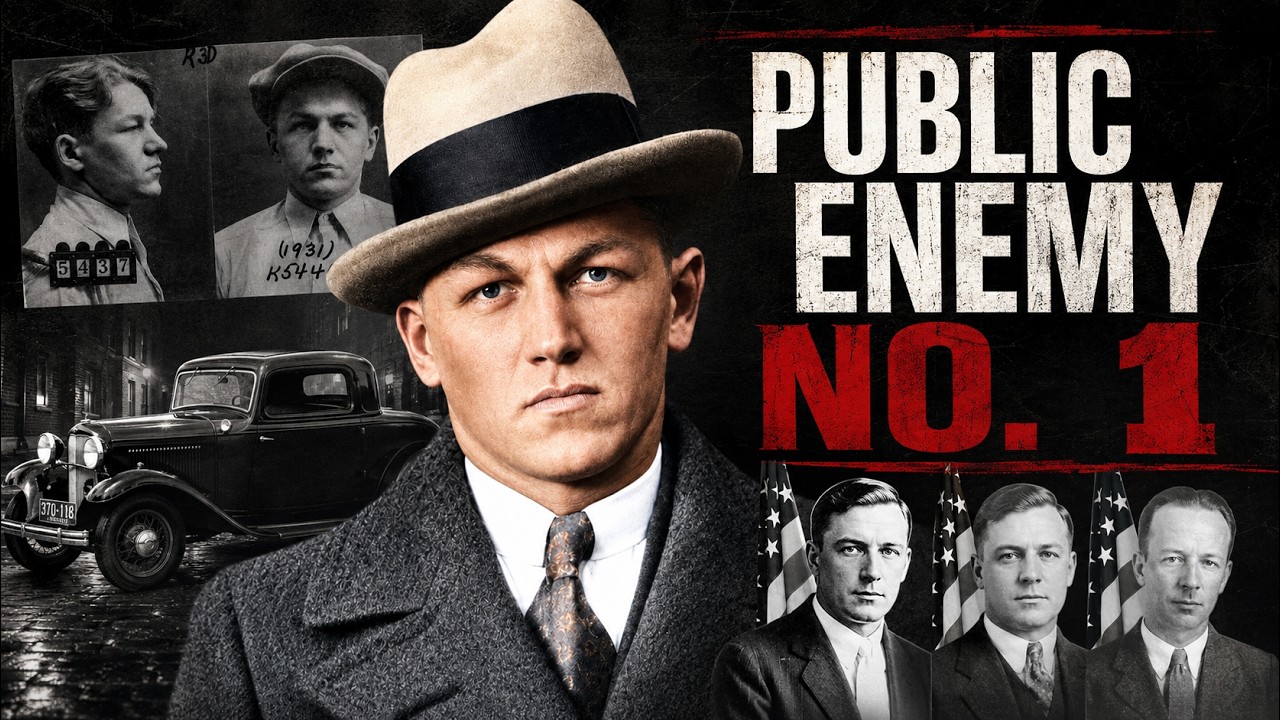
That left one name standing from the entire circle of major outlaws the bureau had been chasing for over a year. With Dillinger gone and Floyd gone, J. Edgar Hoover made it official. Lester Gillis, the kid they used to call Baby Face, was now public enemy number one in the United States of America.
He did not seize that title through ambition. He inherited it the way a man inherits a debt, by simply outliving everyone who owed it first.
Much of Nelson's rise to the top of that list had nothing to do with skill and everything to do with attrition. Hamilton died from a stray ricochet. Carroll died running from arrest. Dillinger walked into an ambush outside a movie theater. Floyd went down fighting Purvis's men in October. Nelson simply kept making it out of rooms other men did not survive, and the bureau eventually ran out of bigger names to chase.
By the time the dust from Dillinger's death had settled, the gang Nelson once rode with was almost gone. On August 23, 1934, Homer Van Meter, the wiry bank robber who had been with this crew from the early days in Minnesota, was ambushed and killed by police in St. Paul.
With Van Meter gone, Nelson was now the sole survivor of the group newspapers had called the second Dillinger gang. Every man who had once stood beside him in a bank lobby or a getaway car was dead.
For a man like Nelson, that meant the list of people who could vouch for him, hide him, or fight beside him was shrinking to almost nobody, while the list of federal agents looking for him only grew.

What followed was a strange, restless stretch of months where Nelson, Helen, and John Paul Chase seemed to be everywhere and nowhere at once. They drifted west through Sacramento and San Francisco, then east again to Reno and Las Vegas, staying in auto camps along the way, the kind of cheap roadside lodging where nobody asked many questions and nobody remembered faces for long.
One of those stops, Wally's Hot Springs outside Genoa, Nevada, became something close to a base for them starting around the first of October. They were not running toward anything specific. They were running because stopping for too long had become its own kind of danger.
During one of these long stretches on the road that same summer, Nelson and Chase were pulled over for speeding in a small town. They paid a $5 fine at the local police station and were sent on their way. Nobody searched the car. Sitting in that vehicle were machine guns, rifles, and enough ammunition to fight a small war.
Two of the most wanted men in America walked into a police station, paid a parking-ticket-sized fine, and walked back out again. The entire weight of the federal government was hunting these two men, and a local officer let them go over a traffic stop without so much as glancing in the back seat.
By early November, the drifting brought them back to Chicago, the city Nelson had grown up in and the one place he kept returning to no matter how far he ran.
What happened during the final weeks of his life is largely a blank page. There are no detailed accounts of where he stayed, who he saw, or how he spent most of those days. For a man who had spent over a decade generating headlines, that silence is its own kind of strange.
While Nelson moved in those shadows, the bureau was doing something smarter than chasing rumors. Agents had been tracking a pattern in his past behavior, and that pattern pointed toward a specific building.
The Lake Como Inn in Lake Geneva, Wisconsin, had served as one of Nelson's hideouts earlier that year. Investigators reasoned that with winter coming and his options narrowing, he might return to a place he already knew, a place that had once felt safe. By the end of November, federal agents had quietly begun watching the inn, waiting to see if their read on him was right.
They had no idea how soon they were about to find out. The bureau deserves real credit for the Lake Como decision, because that was not luck. That was investigators studying a man's habits and betting correctly that desperation would push him back toward something familiar. Most fugitives get caught chasing new opportunities. Nelson was about to get caught returning to an old one.
November 27, 1934, started as confirmation, not surprise. The bureau's read on Nelson had been right. Sometime that morning, agents staking out the Lake Como Inn in Lake Geneva, Wisconsin, actually came face to face with the people they had been waiting weeks for.
Nelson, Helen, and John Paul Chase pulled up near the inn, and for one brief moment, hunters and hunted were close enough to see each other clearly. Nobody fired a shot. Nelson recognized what he was looking at fast enough to turn the car around and get moving before the agents could react. The bureau had its location confirmed and its targets gone, all in the same instant.
That near miss set the entire rest of the day in motion. Agents on the scene got a description of the car, a black Ford V8, along with its license plate number, 639-578, and pushed that information out to every available agent in the area. Within the hour, federal cars were spreading across the highways south of Lake Geneva, watching for a vehicle that had just slipped through their fingers once already.
Nelson, Helen, and Chase headed south toward Chicago on US Highway 12, the road now known as US 14. Nelson had always made a habit of watching for federal agents on the road, scanning every car that passed. That habit paid off again near the village of Fox River Grove, Illinois.
He spotted a sedan coming the opposite direction, driven by agents Thomas McDade and William Ryan, who were heading toward Lake Geneva to back up the team at the inn. Both sides recognized each other in the same moment.
What followed looked almost absurd from the outside. Both cars made U-turn after U-turn on a public highway, each trying to get the advantage on the other, until Nelson finally settled into pursuit behind the agents' slower sedan.
Once Nelson's Ford closed the gap, Chase opened fire from the passenger seat with an automatic rifle. McDade and Ryan returned fire as they sped up, eventually pulling into a field ahead and taking up position, braced for Nelson and Chase to come around again. They never did. Nelson had backed off the chase.
What none of the four men in either car realized yet was that one of Ryan's shots had already done real damage, punching through a pump on Nelson's Ford. The car was dying. Nelson just did not know it yet. A four-minute shootout on a public highway, and the detail that decides everything is a stray shot nobody even noticed land.
Word of the encounter reached Inspector Samuel P. Cowley, the FBI agent overseeing the entire Nelson manhunt out of the Chicago office. Cowley grabbed Special Agent Herman "Ed" Hollis, a man who had already been credited as one of the agents involved in killing Dillinger outside the Biograph the previous July. The two of them set out in a Hudson more powerful than the sedan McDade and Ryan had been driving.
As Nelson's Ford started losing power on the highway, Cowley and Hollis came up behind him and began closing the distance. Nelson did not have many options left. With his car failing, he swerved off Northwest Highway at the entrance to North Side Park in Barrington, Illinois, and came to a stop.
Hollis and Cowley, moving faster, overshot Nelson's car by more than 100 feet before they could bring their own vehicle to a stop at an angle. That gap in distance would matter in the next few minutes more than anyone could have guessed.
Nelson told Helen to take cover in a nearby ditch. Then he and Chase opened fire on the federal car before either agent had fully made it out from behind their own vehicle. Cowley and Hollis returned fire from cover, Cowley armed with a Thompson submachine gun, Hollis with a shotgun. More than a dozen bystanders ended up witnessing what followed.
A single round from Cowley's weapon struck Nelson in the lower abdomen. He did not go down. He leaned against the running board of his disabled Ford, wordlessly traded weapons with Chase when his own gun jammed, and picked up either a Winchester rifle or a Colt Monitor automatic in its place.
Then, despite a wound that should have ended the fight right there, Nelson walked out from behind cover and advanced directly toward the two agents while firing. A man shot through the stomach got up, switched guns, and walked toward gunfire instead of away from it.
Two of Nelson's rounds hit Cowley directly. Buckshot from Hollis's shotgun caught Nelson in the legs and knocked him down, but he got back to his feet. Hollis, possibly already wounded by this point, pulled back toward a utility pole for better cover. As he drew his service pistol to fire again, Nelson shot him in the head at close range. Hollis died almost instantly.
Nelson staggered past his body, paused over him for a moment, then limped toward the agents' Hudson. With both agents down, Nelson and Chase moved fast. They transferred their weapons and supplies from the dying Ford into the Hudson, and Nelson, badly wounded, was helped into the car by Chase. Helen came out of the ditch where she had been hiding and climbed in as Chase pulled away from the scene, driving the very car that belonged to the men they had just shot.
By the time it ended, the gun battle near North Side Park had lasted only four or five minutes. In that short stretch of time, one federal agent lay dead, another was dying, and the man the entire bureau had spent the better part of a year hunting was carrying a wound that would prove fatal within hours.
Nelson had been shot a total of nine times, including the single round to his abdomen that would ultimately kill him, along with eight pieces of buckshot in his legs. Some newspapers later reported the number as high as 17, a figure that traces back to imprecise wording in a memo released by J. Edgar Hoover himself. The more carefully documented count puts it at nine.

Four or five minutes. That is all it took to end the longest manhunt in the history of the bureau at that point, and to leave three people dying or dead before the sun went down that night.
The real story of Barrington is how little margin existed on either side. Ryan fired a shot that punctured a pump and never even knew it landed. Hollis and Cowley overshot Nelson's car by 100 feet because they were moving faster. That single detail, pure physics, nothing tactical, ended up shaping exactly how that final gunfight unfolded.
Nelson's decision to step out from behind cover after already taking a fatal wound to the stomach stands out. That is not bravery and it is not strategy. That is a man whose instinct, even while dying, was to keep moving toward the fight rather than away from it. And that instinct is exactly what let him kill Hollis in those final seconds.
Cowley and Hollis did everything right tactically. They returned fire fast. They held position. And they still lost, because Nelson's willingness to absorb damage and keep firing simply outlasted what most armed men are capable of.
Hollis died on that pavement. Cowley would die the next morning. And the man who killed them both was already bleeding out in the backseat of the car he had just stolen from his own victims. Nobody walked away from Barrington.
Nelson had less than an hour left to live when Chase pointed the stolen Hudson toward Wilmette. The wound to his abdomen was already doing what wounds like that do. Chase drove while Nelson gave directions from the back seat, guiding them toward a safe house on Walnut Street, a place they had used before. According to Helen, Nelson told her plainly, "I'm done for."
He died in bed inside that house with his wife beside him at roughly 7:35 that evening. The man who had spent over a decade outrunning consequences finally ran out of road in a quiet house in a Chicago suburb, surrounded by the same two people who had been with him through most of the chaos that got him there.
His body did not stay hidden for long. A Chicago Telephone Company employee named Carl Fier was out working on the lines the next day when he spotted something on the ground near St. Paul's Lutheran Cemetery in Skokie. He called it in. FBI agent Walter Walsh responded and found Nelson's body lying in a ditch, wrapped in a blanket with a Native American pattern.
Helen later explained that detail herself. She had covered him with it because, in her words, he always hated being cold. It is a strange thing to learn about a man who killed three federal agents during his lifetime, that somewhere underneath all of it, his wife still thought to keep him warm on his way out.
The two agents who fought him at Barrington did not get nearly as much time. Hollis had been declared dead almost immediately, his head wound too severe to survive. Cowley held on longer. He was taken to a separate hospital, where he managed to speak briefly with Melvin Purvis before going into surgery. He did not make it through the night. Cowley died in the early hours of November 28, roughly six hours after Nelson himself.
Three men entered that confrontation outside North Side Park. None of them walked away from it.
What happened to Helen next is one of the stranger footnotes in this entire case. Newspapers picked up on the aggressive wording of an order attributed to J. Edgar Hoover, reportedly instructing agents to find the woman and give her no quarter. Whether that phrase meant exactly what it sounded like or was simply blunt bureau language is still debated, but at the time it was widely reported as something close to a death order against Nelson's own widow.
Helen spent several days wandering the streets of Chicago as a fugitive, described in the press as the country's first female public enemy. She surrendered on Thanksgiving Day because she had already been paroled once after her arrest at Little Bohemia. This new violation sent her to serve one year and one day at a federal women's reformatory in Milan, Michigan. She lived a long life after that sentence ended, dying decades later in 1987.
Chase's road to capture took a little longer, and it is almost comically ordinary by comparison. After helping dispose of Nelson's body, he drifted back into the kind of small anonymous work that had defined most of his life before Nelson pulled him into something bigger.
He responded to a want ad looking for drivers to deliver cars to Seattle and had to get photographed for a chauffeur's license in the process. Because his only prior arrest had been for drunkenness years earlier, no wanted posters with his face or fingerprints had ever circulated. For a few weeks, the most wanted accomplice in America walked into a police station and posed for a license photo without anyone blinking.
That changed once federal agents started quietly reaching out to his old employers and associates around the San Francisco Bay area, asking to be notified if he turned up. On December 27, Chase made the mistake of trying to borrow money from former co-workers at a fish hatchery in Mount Shasta, California, a place he had worked years before. Word reached the local police chief, Al Roberts, almost immediately, and Chase was taken into custody on the spot.
He was transferred to Chicago by the end of that month and became the first person ever tried under a newly applicable federal law making it a crime to murder a special agent of the FBI in the line of duty. His trial began on March 18, 1935. One week later, a jury convicted him of murdering Inspector Cowley.
He was sent to Alcatraz before the month was out and stayed there for nearly two decades before being transferred to Leavenworth in 1954. A separate indictment charging him with Hollis's murder was still sitting unresolved after 20 years. In 1955, a federal judge finally dismissed it on the grounds that the delay had violated Chase's right to a speedy trial.
That ruling opened the door to parole, though it took another decade and several denials before Chase finally walked out of Leavenworth in October 1966. He spent his remaining years working quietly as a custodian in California. He died of cancer in Palo Alto on October 5, 1973, the last surviving figure from a story that had buried almost everyone else involved decades earlier.
Nelson and Helen are buried together at St. Joseph Cemetery in River Grove, Illinois. There is no statue, no marked legacy beyond a grave plot, and a small plaque back in Barrington that lists the names of the three agents he killed across his career: Baum, Hollis, and Cowley. A quiet reminder of exactly what this manhunt actually cost.
There was nothing clean about how this ended. No surrender, no courtroom verdict for Nelson himself, no dramatic capture. Just a four-minute gunfight outside a public park, three men bleeding out within hours of each other, and a widow wrapping her husband's body in a blanket because old habits do not disappear even after everything else has fallen apart.
Despite how the era gets remembered in movies and folklore, Nelson did not go down in some dramatic last stand worth admiring. He bled out in a borrowed bed after killing two more men who had families waiting for them at home. Within six hours, all three of the people at the center of that final gunfight were dead or dying.
The FBI's strategy around Lake Como deserves real credit, because betting on a man's habits instead of chasing fresh leads is exactly the kind of patient work that actually closes manhunts. And it worked here.
Hoover's wording in that order targeting Helen is harder to settle on. Calling for no quarter against a woman who spent most of the gunfight hiding in a ditch feels like an institution chasing headlines as much as justice, and it says something uncomfortable about how personal this manhunt had become by the end.
Chase's 20-year wait for a second trial that never happened also tells you something about how messy real justice can get, even when the original conviction was solid.
The real cost of this entire chase was not measured in the money Nelson stole over the years. It was measured in agents who never went home to their families, in a young man named Eugene Bois who died at Little Bohemia for no reason connected to any crime, and in a widow who spent the rest of her life carrying the weight of everything her husband chose to become.
Nobody walks away from a story like this clean. And Babyface Nelson's ending proves that better than almost any other case from that entire era.