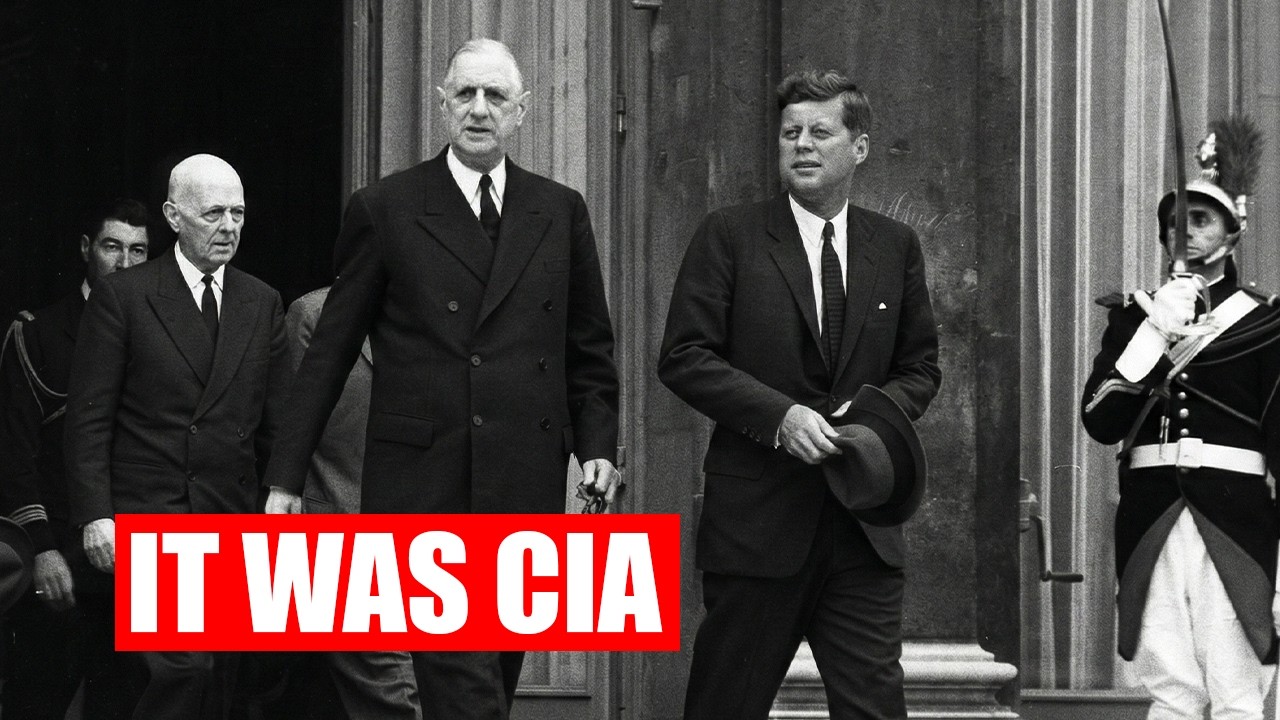
On November 25, 1963, at the Élysée Palace in Paris, President Charles de Gaulle had just returned from John F. Kennedy's funeral in Washington. His information minister, Alain Peyrefitte, asked the question everyone was waiting to hear answered: what did he think about what had happened to Kennedy?
De Gaulle's reply was immediate, cold, and firm. What happened to Kennedy, he said, was what nearly happened to him. It was the same story as his own. They had gotten him with the help of the security forces, and they killed him savagely.
Peyrefitte pressed further, asking whether he believed Oswald was a front. De Gaulle did not hesitate. Everything, he said, led him to believe that.
While America mourned and the Warren Commission prepared to conclude that Lee Harvey Oswald acted alone, the president of France, one of America's closest allies, had reached a very different conclusion. Kennedy, in de Gaulle's view, was killed by his own security forces, in a CIA-backed coup.
To understand why de Gaulle immediately recognized the assassination as an inside job, and why his analysis remains one of the most damning assessments of Dallas, one has to look at what he had already lived through. De Gaulle was not guessing. He knew, because the CIA had tried to kill him first.
Charles de Gaulle survived 31 assassination attempts between 1944 and 1966. These were not metaphorical attacks. They were real bullets, real bombs, and real plots organized by French military officers, intelligence agents, and paramilitary groups who believed de Gaulle was betraying France.
The reason was Algeria. De Gaulle wanted to end France's brutal colonial war there and promised Algerian independence. The French army and right-wing extremists were enraged, and they formed the Secret Army Organization, or OAS, a paramilitary terrorist group made up of French intelligence officers, military commanders, and colonists.
The OAS carried out bombings, assassinations, and coup planning. It received support from French intelligence and elements of the French army, and according to strong evidence, from the American CIA as well.
The most dangerous attempt came on August 22, 1962, in Petit-Clamart, a Paris suburb. De Gaulle's motorcade was ambushed by OAS gunmen led by Jean Bastien-Thiry, an Air Force lieutenant colonel. More than 150 bullets were fired from machine guns.
De Gaulle's Citroën DS was heavily damaged by the gunfire. Two tires blew out and the windows shattered. By a miracle, neither de Gaulle nor his wife was hurt. De Gaulle survived, but the message was clear: even the president of France was not safe from rogue security forces.
On April 21, 1961, while the world focused on the Bay of Pigs disaster in Cuba, another coup was unfolding in France. Four French generals—Maurice Challe, André Zeller, Raoul Salan, and Edmond Jouhaud—seized power in Algiers. They planned to march on Paris to overthrow de Gaulle and preserve French Algeria.
Evidence suggests that CIA director Allen Dulles encouraged the plot. According to French intelligence sources and documents later declassified, Dulles had been meeting with French right-wing elements for months. He wanted de Gaulle removed.
The reason was that de Gaulle opposed the American Cold War strategy. He wanted an independent French nuclear deterrent. He criticized NATO. He was negotiating with the Soviets. In short, de Gaulle would not obey Washington. So Washington, or at least elements inside the CIA, tried to remove him.
When John F. Kennedy learned of the coup, he was furious. According to multiple accounts, Kennedy told the French ambassador that he supported de Gaulle fully. But Kennedy then added something troubling: the CIA was such a huge and poorly supervised machine that even the most far-fetched maneuvers could be real.
In translation, that meant: I do not fully control my own intelligence agency. De Gaulle never forgot it. Kennedy had admitted that the CIA operated independently, defied presidential authority, and engineered coups without White House approval. And in April 1961, it had targeted the president of France.
So when Charles de Gaulle heard that John F. Kennedy had been shot in Dallas by a supposedly lone communist in a city full of security forces, he knew immediately what had happened, because he had lived it.
In his conversation with Peyrefitte, de Gaulle laid out the pattern. They had managed to capture this communist who was not a communist but was at the same time. He had modest intelligence and was a fanatical extremist, exactly the man they needed, the ideal person to blame: Oswald, the scapegoat.
It was just as the killers of de Gaulle had always found scapegoats—extremists, fanatics, people with radical political leanings who could be blamed. The man fled because he perhaps became suspicious. They wanted him killed immediately before he fell into the hands of the judiciary.

Oswald fled the book depository, was arrested in a theater, and everyone expected him to be killed before being questioned. At first, it did not happen. Unfortunately, things likely did not go as planned, but a trial, as you know, is a horrible thing. People will talk, and they will reveal a lot.
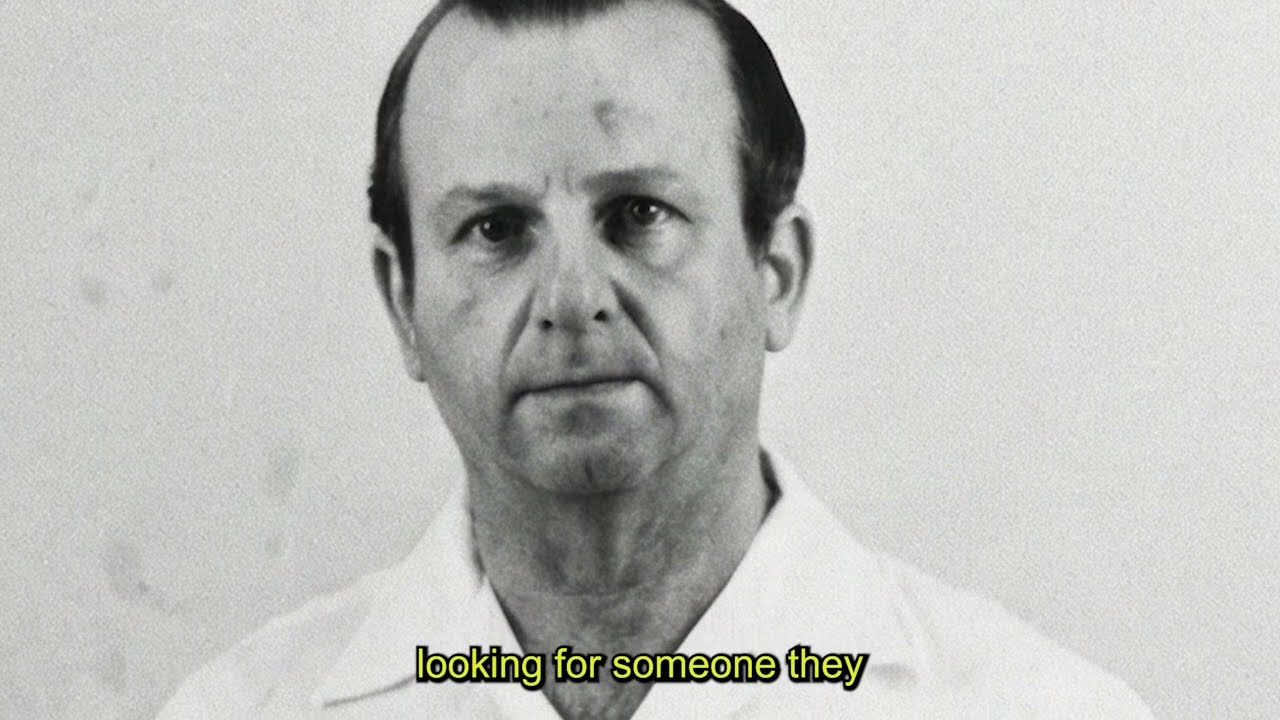
So they sent Jack Ruby, the cover-up man, two days later, live on air. The problem was solved. Then the security forces looked for a man they controlled completely, someone who could not refuse their offer, and this man sacrificed himself to kill the fake killer, ostensibly to defend Kennedy's memory.
Ruby's explanation that he killed Oswald to spare Jackie Kennedy the shock of a trial was absurd to de Gaulle. He had seen the same pattern in France. Killers silenced by other killers, and trails that led nowhere.
De Gaulle accurately predicted America's reaction. Once they succeeded in eliminating the alleged killer, they would declare that the judicial system no longer needed to worry, and that no further public action was needed after the death of the real perpetrator. The assassination of an innocent man was better than the outbreak of civil war. Injustice was lesser than chaos.
Then comes the cover-up. America is in danger of unrest. But you will see. They will all abide by a code of silence. They will close ranks. They will do everything they can to smother any scandal. They will cover these shameful acts with a blanket of shame.
All so they do not lose face before the whole world, so they do not risk igniting strife in the United States, so they preserve the Union and avoid a new civil war, so they do not ask themselves any questions. They do not want to know. They do not want to find out. They will not allow themselves to discover the truth.
De Gaulle understood the logic perfectly because he had done the same thing in France after the attempts on his life. A quick trial for the conspirators, execution of the ringleaders, closure of the investigation, and moving on. National security, national unity, and the survival of the nation all required silence.
On November 25, 1963, in Washington, D.C., Charles de Gaulle attended Kennedy's funeral alongside world leaders. He walked in the procession behind Kennedy's coffin, but de Gaulle was terrified—not from grief, but from assassination.
According to accounts from his bodyguards, de Gaulle believed the same forces that killed Kennedy might target foreign leaders at the funeral, eliminating multiple threats at once, blaming the communists, and igniting World War III. De Gaulle's guards were on maximum alert.
He insisted on minimal visibility for his motorcade. He wanted to leave Washington as soon as the ceremony ended. Why such obsession? Because de Gaulle knew that if they could kill an American president, they could kill anyone.
Was de Gaulle right? Did the CIA kill Kennedy? De Gaulle offered no conclusive proof, but his analysis was based on pattern recognition. He had survived 31 assassination attempts. He knew how security services worked. He knew how coups were engineered. He knew how a scapegoat was chosen and how people were silenced.
And everything in Dallas matched the model. The scapegoat: Oswald's profile—a former Marine, a Soviet defector, a communist sympathizer—was ideal for blame. Too ideal. The location: Dallas, Texas, a stronghold of Southern right-wing extremism where local police could be controlled. The security failure: publishing the motorcade route, leaving book depository windows open, violating Secret Service protocols.
The silencing: Ruby killing Oswald on live television, preventing a trial and preventing testimony. The investigation: the Warren Commission, which included establishment figures—Chief Justice Earl Warren and former CIA director Allen Dulles, whom Kennedy had fired after the Bay of Pigs, the same Dulles who had conspired against de Gaulle.
The conclusion: Oswald acted alone, no conspiracy, case closed, let us move on. De Gaulle had seen all of this before in France, against himself.
French newspapers questioned the official narrative from the start. Le Monde published articles casting doubt on the lone gunman theory. French intellectuals openly discussed the conspiracy theory. And French intelligence, the SDECE, conducted its own investigation.
They concluded that Kennedy was killed by a faction of American intelligence, hardline military figures from the CIA, and right-wing extremists opposed to peace initiatives. Why? Because they had lived the experience themselves. They had seen CIA involvement in the 1961 coup. They had watched intelligence services operate beyond oversight. They had seen Allen Dulles up close.
Alain Peyrefitte published de Gaulle's comments in 2002, long after both men had died. His memoir, "C'était de Gaulle," became a bestseller in France, but it was never translated into English, never published in America, and remained unknown in the United States for decades.
When David Talbot quoted from it in his 2015 book "The Devil's Chessboard," Americans finally learned that the French president believed Kennedy was killed by the CIA—not the Soviets, not Castro, not the Mafia. The CIA.
De Gaulle's assessment carries weight because he survived 31 assassination attempts by security forces. He knew Allen Dulles personally. He knew the CIA had conspired against him. He understood how coups were engineered. He recognized the pattern immediately.
Was Charles de Gaulle right? We may never know the answer with certainty. But suppose de Gaulle had no reason to lie in a private conversation with his information minister. His analysis was based on direct experience surviving similar attacks. He accurately predicted America's reaction, and he was right.
French intelligence independently reached the same conclusion. And the CIA has not released all files related to the Kennedy assassination, more than 60 years later. If the official narrative is correct, and if Oswald really acted alone, why did America's closest ally immediately conclude it was a coup? Why did the man who survived more assassination attempts than any modern leader recognize the pattern at once? And why, 60 years on, are Americans still barred from seeing all the evidence?