The victory at El Alamein gave Bernard Montgomery something more than a battlefield triumph. It gave him an unshakable conviction about his own military judgment, a conviction that would shape his dealings with Dwight Eisenhower for the rest of the war.
On October 23, 1942, more than 1,000 artillery guns opened fire across the Egyptian desert. Field Marshal Erwin Rommel's tank divisions began an irreversible collapse. It was Britain's first decisive land victory in three years of brutal conflict.
To understand what Montgomery said to Eisenhower afterward, it is necessary to understand what El Alamein created inside the man who won it.
In the autumn of 1942, British military confidence had fallen to its lowest point since Dunkirk. The fall of Singapore, the humiliation of the Channel Dash, and Rommel's relentless advance to the Egyptian border had taken a heavy toll. Prime Minister Winston Churchill faced two votes of no confidence in a single year.
Montgomery arrived on August 13, 1942, and declared immediately that the era of retreat was over. He made the declaration with the absolute certainty of a man who had decided the outcome before examining the map.
He canceled withdrawal orders and restructured training programs. He required every officer to understand the new operational doctrine completely before any offensive action was attempted. His soldiers responded with a loyalty that became both his greatest tactical asset and his most dangerous personal reinforcement.
The German commander waiting for him had spent two years perfecting armored warfare that consistently outmaneuvered larger Allied forces. Rommel's 15th and 21st Panzer divisions were the most experienced tank formations in North Africa.
Rommel's method relied on rapid flanking attacks, concentrated armor, and exploitation of British command confusion. Churchill had even praised Rommel as a great general in the House of Commons, a remark that embarrassed the officers responsible for stopping him.
Montgomery studied Rommel's methods and drew a precise conclusion. The Desert Fox won battles by exploiting confusion. Remove the confusion and his greatest weapon disappeared.
The answer was methodical preparation on a scale the desert campaign had never seen. Montgomery spent six weeks training, reorganizing, and stockpiling to a level of material superiority that Rommel's overstretched supply chain could not match. He refused every political pressure to attack before he was ready.
At 2200 hours on October 23, 1942, over 1,000 artillery pieces opened fire simultaneously. Rommel was not even in Africa when the barrage began. He was in Berlin receiving medical treatment.
The officer commanding in his absence, General Georg Stumme, suffered a fatal heart attack during the bombardment. Panzer Army Africa was suddenly without both its commander and his deputy within the opening hours of the battle.
Rommel flew back immediately, but the operational system Montgomery had constructed denied him the freedom of movement his entire method depended on. The battle became a grinding war of attrition, and attrition favored the side with superior supply.
By November 4, 1942, thirteen days after the opening barrage, Axis forces had lost between 41,800 and 73,000 men killed, wounded, or captured. Approximately 500 tanks were destroyed or seized, and more than 254 artillery pieces were abandoned in the desert.
The Eighth Army lost approximately 13,560 men and between 332 and 500 tanks. The asymmetry of those losses was not accidental. It was the direct product of Montgomery's system of attrition, designed to destroy not just Rommel's formations but his capacity to continue fighting.
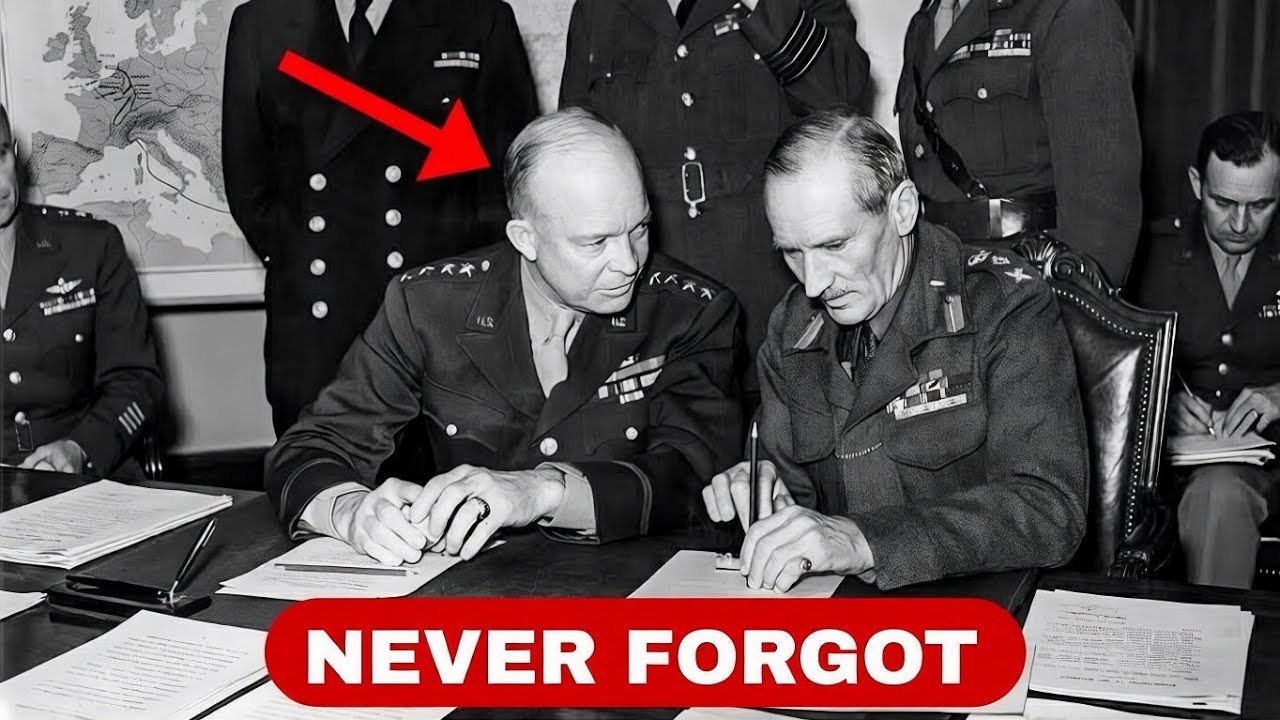
Churchill received the news with unconcealed relief. Church bells rang across England for the first time since 1940. The press celebrated Montgomery as the general who had ended the era of British defeat.
He did not simply win a battle. He became absolutely certain that El Alamein had proven something definitive, not just about tactics, but about himself.
The popular account presents the battle as a total annihilation, a destruction so complete that Rommel had no genuine choice but to flee. The archival record dismantles this with specific evidence.
Historian Correlli Barnett, drawing on Eighth Army unit war diaries and Ultra intelligence summaries, documented that Montgomery failed to take advantage of astonishing intelligence that removed all guesswork from generalship.
General Bernard Freyberg warned his corps commander on the evening of November 3 that Rommel would slip away if they were not careful. He was precisely correct. The pursuit that followed was what military historian Alexander McKee described as no pursuit at all, merely a follow-up.
Rommel's shattered army withdrew 2,000 miles to Tunisia and continued resistance until May 1943. If the pursuit was so cautious that Rommel's forces survived to resist for six more months, what exactly justified the authority Montgomery believed El Alamein had earned him over the entire Allied command in Europe?
Eisenhower was not yet in Montgomery's direct chain of command in November 1942. He was in Algiers commanding Operation Torch, the Allied invasion of French North Africa launched November 8.
But reports reaching him from British officers consistently described a commander of extraordinary operational skill wrapped inside a personality that treated every superior as a subordinate requiring instruction. The professional portrait was uniform: brilliant, difficult, and growing more certain of his indispensability with every passing week.
Eisenhower filed those assessments and said little. He would need them through Tunisia and then Sicily in 1943, when the two men worked within the same Allied command structure for the first time.
The surface remained professional, but in Sicily Montgomery's deliberate advance along the eastern coastal route limited the American operational role. It drew sustained criticism from Generals Omar Bradley and George Patton, who regarded it as both tactically conservative and politically designed to reserve the most prominent objectives for British forces.
Montgomery had by this point developed a settled private verdict on Eisenhower that he shared freely with the Chief of the Imperial General Staff, Sir Alan Brooke. The verdict was not complimentary.
His private statement, shared with Brooke, repeated to British officers, and eventually circulating through the wider Allied command, was expressed in four words that contained the entire foundation of what he would demand for the rest of the war in Europe. Nice chap. No general.
It was not spoken in the heat of frustration. It was stated as a settled professional fact, delivered with the absolute certainty of the only Allied general who had defeated Rommel in open battle.
The communications between Montgomery and Eisenhower did not begin as a direct confrontation. In the months following El Alamein, Montgomery was formally subordinate to Eisenhower's overall Allied command, and his messages maintained the vocabulary of professional cooperation.
But officers at Allied headquarters in Algiers understood immediately that Montgomery's version of cooperation was entirely conditional. It meant he would work within the structure as long as the structure reached the conclusions he had already determined to be correct.

By spring 1944, with the Normandy invasion approaching, Montgomery returned to Britain to command all Allied ground forces for Operation Overlord under Eisenhower's supreme command. His strategic briefings at St. Paul's School in April and May 1944 were, by every historical account, masterpieces of operational clarity.
His recommendation to expand the initial landing force and assault area was adopted by Eisenhower. Historians widely credit that expansion as essential to D-Day success. In these critical weeks, what Montgomery said to Eisenhower was constructive, precise, and operationally indispensable.
That version of the relationship would not survive the summer. The fracture opened during the Normandy campaign when Montgomery's British and Canadian forces became locked in a prolonged struggle around Caen.
RAF Air Marshals Tedder and Coningham openly demanded his removal. American generals watching Patton's Third Army sweep through France after the Saint-Lô breakout grew publicly impatient.
Montgomery's private response to that pressure was documented in his letters to Brooke. He described Eisenhower as apt to get very excited and talk wildly. He added that Eisenhower's ignorance as to how to run a war was absolute and complete, and that the supreme commander had all the popular cries but nothing else.
Montgomery was not venting in a private diary. He was delivering a considered professional judgment to the Chief of the Imperial General Staff, the most senior officer in the British Army, about the man who held supreme command over every Allied force in the European theater.
In September 1944, the formal command structure changed in the manner that confirmed every grievance Montgomery had been developing since El Alamein. Eisenhower assumed direct operational control of all Allied ground forces, formally removing Montgomery from his position as overall ground commander.
Churchill promoted him to field marshal by way of compensation, the highest rank in the British Army. Montgomery understood the gesture precisely. He was now the highest ranked officer in the British military, assigned to serve under an American general he privately regarded as militarily unqualified.
On September 4, 1944, Montgomery sent Eisenhower a nine-paragraph strategic memorandum that represented the most consequential thing he had communicated to the supreme commander since the beginning of their relationship.
The opening was characteristically direct. We have now reached a stage where one really powerful and full-blooded thrust toward Berlin is likely to get there and thus end the German war. He continued that if the Allies attempted a compromise solution and split maintenance resources so that neither thrust was full-blooded, they would prolong the war.
The memorandum was structured to leave Eisenhower with a single apparent choice: accept a strategy or accept responsibility for extending the conflict.
The strategy Montgomery proposed carried implications that extended far beyond operational planning. A single full-blooded thrust required all available Allied supplies directed northward to his 21st Army Group. It required halting Patton's Third Army entirely. It required nine US divisions from the First Army placed under British operational direction.
It also required, in Montgomery's carefully constructed language, a single ground commander with authority over the entire operation. Every officer in the Allied command understood who Montgomery had designated for that role. He was not merely proposing a military strategy. He was deploying the authority of El Alamein as leverage to command the European war.
Consider the alternate reality that would have followed had Eisenhower agreed. Every senior American combat commander, Bradley, Patton, Hodges, would have been placed under British operational direction or sidelined entirely.
The coalition had fractured on the front line, it would have fractured in the command rooms immediately and permanently. Eisenhower understood this with a clarity that Montgomery's battlefield genius, for all its brilliance, appears never to have extended to.
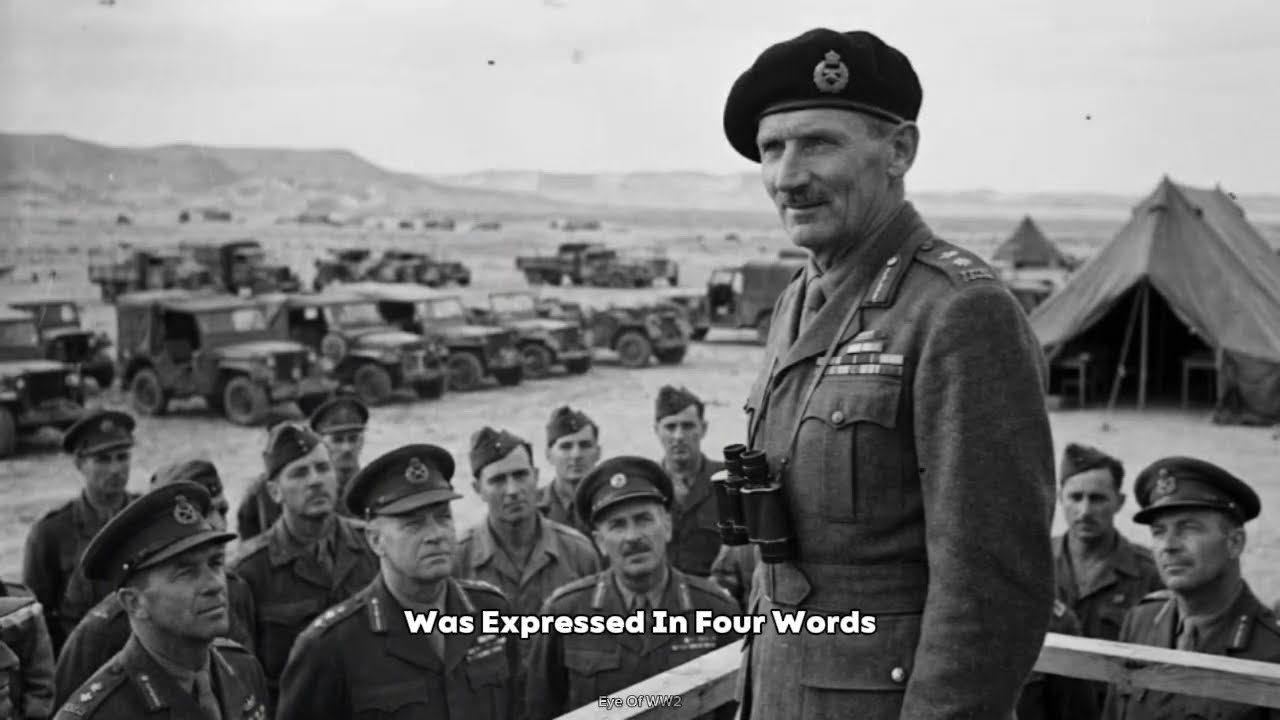
The face-to-face confrontation came on September 10, 1944, at Brussels Airport, where Eisenhower flew to meet Montgomery, unable to move freely due to an injured knee. Multiple postwar accounts describe the meeting as tense and acrimonious, with neither principal recalling it in identical terms.
When Eisenhower explained that the political realities of coalition command made a total transfer of operational authority to a British commander impossible, Montgomery replied that victories win wars, and that if people were given victory they would not care who won it.
Eisenhower answered with equal directness that the American public would never stand for it, and that public opinion wins wars. Two men, two positions, neither moved.
What followed the Brussels meeting reveals the full complexity of Montgomery's words and their ultimate effect. His arguments for a concentrated northern strategy were partially accepted. Eisenhower gave the northern thrust priority on supplies, directed several American divisions to support the plan, and authorized Operation Market Garden, the large-scale airborne assault into the Netherlands designed to bridge the Rhine at Arnhem and outflank Germany's defensive line.
This was the closest Montgomery came to receiving what he had demanded since El Alamein. Market Garden launched on September 17, 1944. The bridge at Arnhem could not be held.
Market Garden's failure closed one argument and opened another. The port of Antwerp remained blocked to Allied shipping because Montgomery had not moved rapidly enough to clear the Scheldt Estuary after the city's capture, a logistical failure that SHAEF planners calculated had restricted the entire northern advance to far fewer divisions than any viable thrust toward Germany required.
The US Army's own historical analysis concluded that Eisenhower's decision to maintain a broad front strategy had been based in large measure on logistic factors, factors partly created by the same commander who had insisted most forcefully that the strategy should be different.
December 1944 brought the Battle of the Bulge and with it the final major episode in what Montgomery said to Eisenhower. When the German counteroffensive split the Allied front, Eisenhower transferred command of US First Army and Ninth Army on the northern shoulder to Montgomery, the correct tactical decision.
Montgomery stabilized the northern line with genuine composure and operational skill. Then on January 7, 1945, he held a press conference that described his personal role in terms that placed British command intervention at the center of American military difficulty before an international press that broadcast every word.
What Montgomery said at that press conference was the fullest public expression of the conviction he had carried since El Alamein: that his arrival had been decisive, that American command difficulties had required British judgment to resolve, and that the most important operational assessments of the war belonged with him.
Bradley was furious. Patton threatened to resign. Eisenhower drafted a message to the Combined Chiefs of Staff stating plainly that the coalition could not continue if Montgomery remained in his position, the only ultimatum of that nature Eisenhower issued during the entire European campaign. Churchill addressed Parliament directly, acknowledging American sacrifice in the Ardennes without ambiguity.
In Montgomery's settled conviction, El Alamein had proven that he possessed a quality of military judgment that elevated him above every other Allied commander, including his supreme commander. What he said to Eisenhower after El Alamein was the consistent and escalating expression of that conviction.
It appeared in letters to Brooke dismissing Eisenhower as militarily ignorant, in the September memorandum demanding concentrated command, at Brussels Airport insisting that coalition politics were irrelevant to military necessity, and at a press conference that placed British generalship at the center of an American battle.
The mythology of total triumph over Rommel, a triumph the archival record reveals was decisive but incomplete, became the permanent foundation for demands that came closer to fracturing the Allied coalition than any German strategic initiative in the same period.
Eisenhower's private verdict on Montgomery, offered quietly after the war, was final and definitive. He's just a little man. He's just as little inside as he is outside.
And yet he kept Montgomery in command through the final campaign in Europe. On May 4, 1945, at Luneburg Heath in northern Germany, Montgomery accepted the unconditional surrender of German forces in northern Germany, Denmark, and the Netherlands. He subsequently served as the first deputy supreme Allied commander of NATO under Eisenhower's peacetime command, the identical structural relationship replayed in peace.
What Montgomery said to Eisenhower after El Alamein could not ultimately break the coalition it came so close to fracturing. That endurance, more than any desert victory, is the achievement that belongs entirely to Eisenhower.
Montgomery believed that winning a decisive battle like El Alamein gave a commander the authority to demand whatever strategy he believed was correct, regardless of coalition politics or his superior's judgment. Eisenhower believed that holding the alliance together was the highest strategic responsibility any commander could fulfill.