In 1987, a crew in Queens, New York, was pulling in $200,000 a day. Then their leader went to prison. Most crews fall apart when the boss goes down. This one got more dangerous.
The man who stepped up was not a businessman or a negotiator. He was the type to walk into a room and take everything in it. Colombian men connected to cartels, backed by organizations in Medellin and Bogota, were operating on those same streets. Most American crews would never dream of touching them.
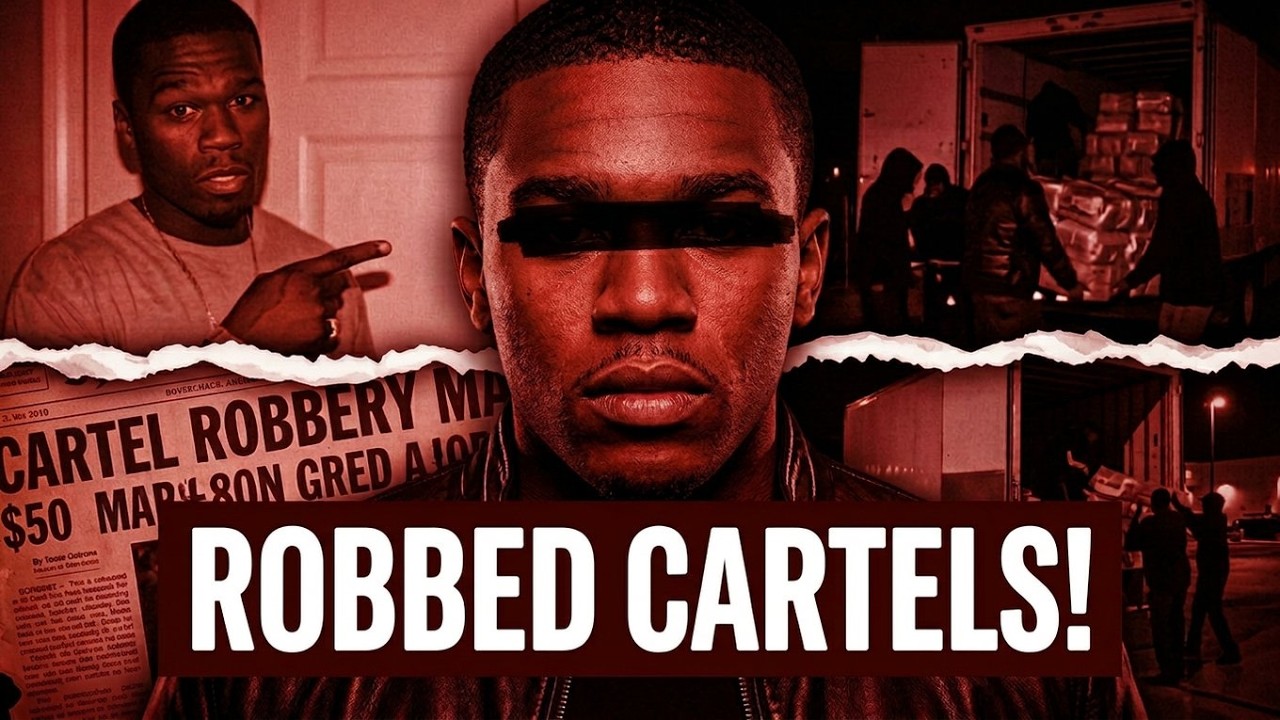
This man robbed them at least four times. The district attorney would later use the word “slaughtered” to describe what happened to those men. Their bodies were never identified. No retaliation came from the cartels.
Because even they understood what they were dealing with. Local detectives later testified that when this man was finally taken off the streets, the murder rate in his neighborhood dropped by 30 percent. 50 Cent, who survived being shot nine times and built a career on being the toughest man in hip-hop, said this man was the only person he was ever truly afraid of. His name was Gerald Miller.
The streets called him Prince. Prince grew up in the Baisley Park Houses in South Jamaica, Queens, in the 1970s. He was the nephew of Kenneth “Supreme” McGriff, though the two were only two years apart and grew up like brothers. They joined the Five Percenters, a movement that believed five percent of the population were natural leaders.
In Baisley Park, that philosophy landed like a blueprint for the streets. By the early 1980s, they built a crew they named the Supreme Team. Supreme had the mind for business. Prince had the mind for war.
By 1987, the Supreme Team was pulling in $200,000 a day from one housing project. They used the Five Percenter Supreme alphabet as coded language on intercepted calls. Armed lookouts with two-way radios sat on rooftops. Members wore matching red jackets with “Supreme” printed on the back.
They drove expensive cars and waved stacks of cash. They were not hiding. They were announcing. They operated alongside some of the most dangerous men New York had ever produced.
Lorenzo “Fat Cat” Nichols ran one of the biggest operations in Queens. His enforcer, Howard “Pappy” Mason, ordered the murder of rookie NYPD officer Edward Byrne in 1988. In the middle of all of that, the Supreme Team stood above the rest. Supreme negotiated.
Prince eliminated. Even Fat Cat chose to work with the Supreme Team rather than against them. He supplied them with powder cocaine and sought Prince’s help tracking down enemies. Irv Gotti, who later built Murder Inc.
, grew up watching the Supreme Team and idolized Supreme. The Notorious B. I. G.
referenced them on “Mo Money Mo Problems. ” Nas directed a Showtime documentary about them years later. Then, in 1987, the feds caught Supreme. He pleaded guilty to a continuing criminal enterprise charge and received 12 years.
Prince took over. The operation became more violent. In 1987 alone, Prince and the jailed Supreme ordered at least eight murders. Prince went to prison briefly on state charges during this period.
He beat those cases and came back. When he was released in the spring of 1989, he rebuilt the Supreme Team from the ground up. He built an organization with layers of management. He also turned two New York State parole officers into his personal intelligence network.
One parole officer, Einer McGriff, falsified records and fed the team information from government files, including addresses and names of cooperating witnesses. Another, a secretary named Ronnie Younger, gave Prince classified parole records. When Fat Cat Nichols needed to find two brothers who had robbed his organization, Prince used his parole spies to pull their home addresses from state records. One brother was shot at his address in the Bronx.
The other was shot and killed near his mother’s address. Prince turned the government’s own files into a weapon. In the summer of 1989, Prince and his crew went after cartel-connected Colombians moving product through Queens. They took their product and made them disappear.
Four men in total. The government could only identify two, men known as Fernando and George. The other two were never identified. Never found.
No retaliation came from the cartels. They decided the cost of responding was too high. A man named Gus Rivera, who connected the Supreme Team to the Colombian supply chain, became a liability. He was shot in a Baisley Park courtyard and survived.
The crew tracked him to a motel in South Jamaica. He did not survive the second time. The state of New York charged Prince with the Colombian murders. A jury acquitted him.
He was charged with shooting a rival dealer in broad daylight. Every witness recanted. A jury acquitted him. Case after case, he beat them all.
Local detectives testified that after Prince was arrested in 1990, murders in the area dropped by more than 30 percent. The state finally gave up and handed him to the federal government. Before 50 Cent was famous, Curtis Jackson was a kid from South Jamaica, Queens, selling product on the same corners where the Supreme Team did business. In 2000, 50 Cent released a track called “Ghetto Quran” on his mixtape “Guess Who’s Back.
” It was supposed to be a tribute. He named real names. The lyrics said: “See Nas feared Prince and respected Preme… See Preme was the businessman and Prince was the killer.
”
On the streets, this was called dry snitching. The most dangerous names in Queens were now narrated on a track law enforcement could hear. Supreme was furious. The last thing he needed was a young rapper spelling out his criminal history in verse.
On May 24, 2000, 50 Cent was sitting in a car outside his grandmother’s house when someone opened fire. Nine shots. He was hit in the hand, the arm, the hip, both legs, the chest, and the face. A round went through his cheek.
He survived. Federal investigators believed the shooting was connected to Kenneth McGriff. IRS agent Francis Mace wrote in a sealed affidavit that law enforcement believed the shooting was retaliation for lyrics that detailed the Supreme Team’s history. After that, 50 Cent was blacklisted.
No label would sign him. No studio would book him. The word went out across New York that working with him meant crossing the Supreme Team. On October 30, 2002, Jam Master Jay of Run-DMC was shot and killed in his Queens recording studio.
Jay had been mentoring 50 Cent. Federal investigators looked into a connection between Jay’s death and the Supreme Team’s blacklist, though his murder was ultimately linked to an unrelated deal gone wrong. Then Eminem and Dr. Dre heard 50’s mixtapes.
They signed him to a joint deal. In 2003, “Get Rich or Die Tryin'” sold 872,000 copies in its first week. 50 Cent became the biggest rapper on the planet. In January 2003, the feds raided Murder Inc.
, the label Irv Gotti had built with Supreme’s backing. The investigation into whether the label was laundering Supreme’s money effectively killed its momentum. Irv Gotti and his brother were acquitted, but Murder Inc. never recovered.
The feds brought RICO charges against Prince. Every murder, every deal, every robbery wrapped into one indictment. The trial lasted two months with 80 witnesses. Prince was convicted.
Judge Raymond J. Dearie sentenced him to seven concurrent life sentences plus 20 years. But the judge said something unexpected. He told Prince that with his intelligence, he could find some way to discourage others from following in his footsteps.
Prince spent 32 years in federal prisons, including USP Allenwood, USP Leavenworth, USP Beaumont, and USP Big Sandy. Something changed inside those walls. The most feared man in Queens became a peacemaker. Bureau of Prison staff wrote letters on his behalf.
One officer said that when there was a problem with an inmate, he would ask Miller to handle it. Miller talked inmates down. He stopped fights on the yard before they escalated. In 2024, under the First Step Act, Prince’s legal team filed for resentencing.
The government fought it hard, pointing to the bodies and the violence. Judge Nicholas G. Garaufis reviewed 32 years of prison records, the letters, and the transformation. On September 20, 2024, he granted the motion.
Gerald “Prince” Miller walked out of federal prison a free man. He went back to Queens, not to the corners, but to the community. He founded the Supreme Team mentoring kids, steering them away from the life he lived. He wrote to the court: “Thank you, Your Honor, for sentencing me in a way that helped me find meaning and purpose in my life.
”
50 Cent got shot nine times and turned it into a career. Prince Miller got seven life sentences and turned it into a second chance. Supreme McGriff is still locked up, serving life without parole. The businessman is still in federal custody.
Prince, the killer, the enforcer, the man 50 Cent said everyone feared, is the one who walked out.