When tempers flared in the old West, the fastest draw often decided the argument. Some men built entire reputations on that speed, carving their names into history with bullets and blood. From lawmen who pursued justice to outlaws who embraced chaos, these gunfighters left an unmistakable mark on the American frontier. John King Fisher was born near Dallas, Texas, in October 1853, at a time when ranch families constantly faced threats from bandits.
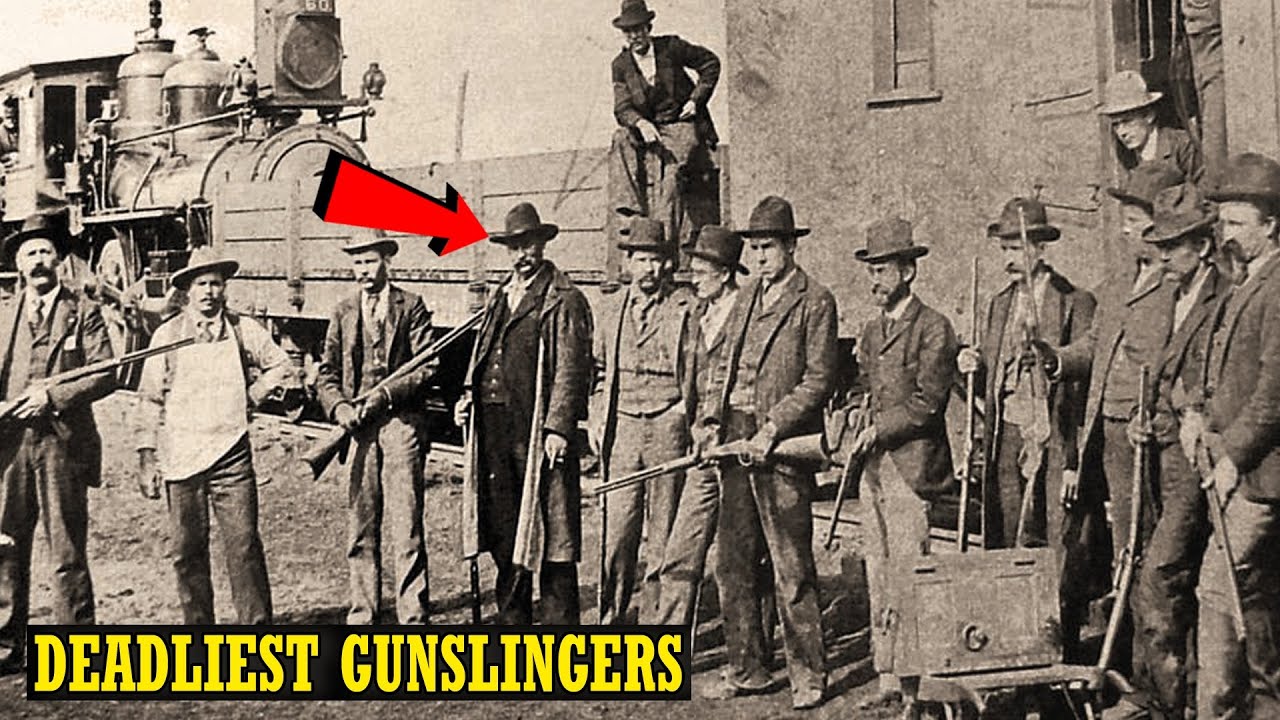
His own first brush with the law came at 18, when he was arrested for horse theft and served two years in prison. After his release, he focused on breaking and training horses, and by his early twenties he was assisting Texas ranchers in defending their land against increasingly frequent raids. Fisher built a reputation for his ability to draw a gun with remarkable speed, earning respect from both allies and rivals. In 1878, a heated disagreement with four Mexican cowboys escalated, and accounts suggest Fisher instinctively used a branding iron to defend himself before one of the cowboys reportedly drew a pistol.
Fisher’s quick response solidified his fearsome reputation. Tragedy struck in March 1884, when Fisher found himself in another confrontation, this time in the company of his friend Ben Thompson. The dispute turned fatal, leaving both Fisher and Thompson dead and several others injured. Fisher himself had claimed to have killed 37 men over the course of his life, a testament to the perilous path he walked.
Bass Reeves was born into slavery in Crawford County, Arkansas, in 1848. As a young boy he was relocated to Texas with his owner, but the details of his life during the Civil War remain largely unclear, with some historians suggesting he escaped to freedom after a confrontation with his enslaver. Following the war, Reeves took a remarkable step, becoming one of the first African American U. S.
Marshals in the post-war period. Reeves was known for his unshakable commitment to justice, and over his career he made more than 3,000 arrests across the West. His integrity was so strong that he reportedly once arrested his own son on a serious criminal charge, placing duty to the law above personal ties. Reeves served until his retirement in 1907, then worked as a police officer in Muskogee, Oklahoma.
Many believe his career may have helped inspire the fictional character of the Lone Ranger. Jesse Woodson James was born in September 1847 in western Missouri, a region deeply divided by the Civil War. Along with his older brother Frank, he joined pro-Confederate guerrilla fighters known as bushwhackers, serving under commanders like William Quantrill and Bloody Bill Anderson. The group was involved in brutal skirmishes, including the Centralia Massacre of 1864.
After the war ended, Jesse and Frank formed the James-Younger Gang with members of the Younger family, operating throughout the Midwest and robbing banks, trains, and stagecoaches. Jesse was often romanticized as a Robin Hood-like figure, but historical records suggest he killed at least 17 people. His life came to a sudden end in 1882, when fellow gang member Robert Ford shot him from behind while Jesse was adjusting a picture on his wall. Jim Miller was an infamous outlaw and gunfighter born in Van Buren, Arkansas, in October 1861, who reportedly killed 12 men in gunfights.
In July 1884, a dispute with his brother-in-law turned fatal, and Miller was charged with the crime, though he avoided a prison sentence on a legal technicality. He later served as a lawman in Texas and spent time with the Texas Rangers, but he eventually transitioned into working as a professional assassin. In 1909, Miller accepted a contract that finally led to his downfall. Unlike previous jobs, this one left witnesses, and Miller was captured.
Fearing he would escape justice again, a group of locals stormed the jail on April 19, 1909. Before his hanging, Miller asked that his diamond ring be returned to his wife and that he be allowed to wear his signature black hat. He reportedly shouted “let her rip” before stepping off the box himself. Tom Horn was born in 1860 and gained a reputation as a skilled gunman during the Lincoln County War in New Mexico, where he worked as an enforcer for cattleman John Chisum.
His abilities caught the attention of the Pinkerton National Detective Agency, and he worked as a detective for them, though his methods were often controversial. Horn was known for pushing legal boundaries, making him both respected and feared. The event that defined Horn’s legacy was his conviction for the murder of Willie Nickell, a 14-year-old boy. He was executed for the crime.
Many later questioned the verdict, suggesting there was insufficient evidence and that Horn may have been framed due to his work for powerful cattle and mining interests. To this day, his story remains one of the most debated in Western lore. Wyatt Earp was born on March 19, 1848, and became one of the most iconic figures of the American West. He served as a lawman and gambler in Dodge City, Deadwood, and Tombstone, and his involvement in the gunfight at the O.
K. Corral in 1881 cemented his place in history. While Wyatt is often seen as the central figure of that confrontation, his brother Virgil Earp, who served as Deputy U. S.
Marshal and Tombstone City Marshal, played a significant role that is often overshadowed. Earp was involved in the deaths of between eight and 30 individuals during his career, reflecting the violent reality of the era. He died in Hollywood in January 1929 at age 80 after developing prostate cancer. His death came just a few years after Horace Bell, another frontier figure, passed away in 1918, marking the end of an era for many of the West’s most notable characters.
Wild Bill Hickok was born James Butler Hickok on May 27, 1837, in Homer, Illinois. Over the course of his life, he worked as a soldier, scout, lawman, cattle rustler, gambler, and even a showman. Historical accounts attribute more than 100 kills to him as a gunfighter. One of his most famous feats was shooting a rival named Davis Tutt from a distance of 75 yards.
Hickok’s life ended abruptly in the summer of 1876, when he was shot in the back of the head by Jack McCall during a poker game. At the moment of his death, Hickok held a pair of black aces and a pair of black eights, a hand that has since been known as the “dead man’s hand. ” He was buried in Deadwood, South Dakota. Billy the Kid, born in New York City, was perhaps the most famous outlaw of the Old West, despite being associated almost entirely with New Mexico.
He became involved in the Lincoln County Cattle War and was captured by Sheriff Pat Garrett in December 1880. After being found guilty of murder and sentenced to hang, he escaped from jail on April 28, 1881, killing two deputies in the process. Garrett tracked him down and shot him in the back in a dramatic ambush. While folklore claims Billy killed 21 men, historians generally agree the true number was closer to 10.
Some theories even suggest he escaped death and assumed a new identity as Brushy Bill Roberts, who died in Texas in 1950, a claim explored in the film Young Guns. Annie Oakley took a different path. Born in Greenville, Ohio, in August 1860, she was celebrated not for killing people but for her extraordinary marksmanship, which arguably made her the finest shooter of the 19th century. By age 8, she was hunting game to support her family and even helped pay off the mortgage on her home with the income she earned selling what she shot.
At age 15, she won a shooting competition against renowned marksman Frank Butler. The two married that same year and remained together until their deaths just three weeks apart. Her skill gained her international fame, and she performed in shows across the world. She was honored by Native American leader Sitting Bull, who adopted her and gave her the name Watanya Cicilla, meaning “Little Sure Shot.
”
In 1898, with tensions building toward the Spanish-American War, Oakley wrote to President William McKinley, offering to supply “a company of 50 lady sharpshooters” if war broke out. While the offer was not taken up, it demonstrated her dedication to serving her country in a time of need. Her skill made her one of the greatest marksmen of her era. John Wesley Hardin was born in Texas on May 26, 1853, and became known as one of the most skilled gunfighters of his time.
He claimed to have killed at least 21 men between 1868 and 1877. He was known for deep anti-Black sentiments and a strong disdain for Union soldiers, and his first killing occurred at age 15, when he killed an ex-slave he claimed was attacking him. Over the years, Hardin reportedly killed at least eight Union soldiers and four Black policemen. After a series of crimes, he was captured in Pensacola, Florida, and extradited back to Texas.
In September 1877, he was sentenced to 25 years in prison. He was pardoned in 1894, but his freedom lasted barely a year. In 1895, a former rival shot him in the back of the head as he stood on the porch of the Acme Saloon in El Paso, Texas. These figures shaped the violent and vibrant tapestry of frontier life.
Whether they were feared outlaws or celebrated lawmen, their stories remain a testament to the untamed spirit of the West, where skill with a gun could create a legend or end one in an instant.