On the night of August 3, 1962, a nondescript sedan parked on a residential street in Brentwood, Los Angeles, three blocks from Fifth Helena Drive. Inside, a reel-to-reel recording device turned slowly. The men operating it were not police, and they were not FBI.
They worked for a private surveillance firm with documented ties to both the CIA and the office of Jimmy Hoffa. Their employer, wiretap specialist Fred Otash, had Monroe's telephone lines monitored for weeks. What they recorded over the next several hours would never appear in any official investigation, coroner's report, or congressional hearing.
Marilyn Monroe would be dead in less than 24 hours.
The official version of her death is familiar. Probable suicide. Acute barbiturate poisoning. A fragile woman undone by fame, romance, and instability, who swallowed too many pills and did not wake up. The Los Angeles coroner closed the case within days.
The press followed the coroner. The story was filed under tragedy, and the country moved on.
Here is what was never filed anywhere. Monroe spent the final two weeks of her life telling people she was going to hold a press conference. She had kept a personal diary, a small red notebook she carried with her constantly.
According to multiple witnesses who saw it, the notebook contained notes she had made from conversations with John Kennedy and Robert Kennedy. Not personal notes. Operational notes. Names, dates, and the broad outlines of CIA programs she had heard described during private meetings at Lawford's beach house in Santa Monica.
By the summer of 1962, at least three separate intelligence-connected surveillance operations had her home under electronic monitoring. By August 3, her phone was being recorded by the FBI, by Otash's private team, and by a third party whose identity has never been officially established.
Monroe was not a tragedy waiting to happen. She was a national security problem that had run out of time.
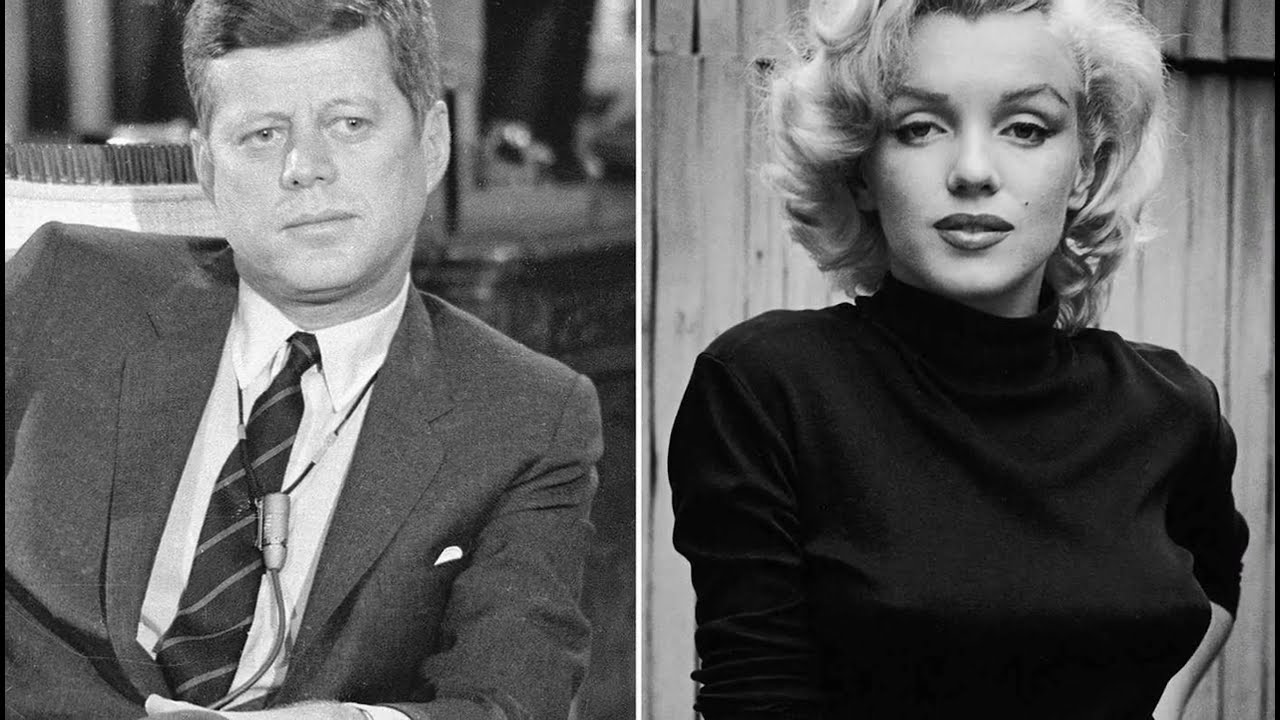
By the spring of 1962, Monroe had been physically present at a series of private gatherings at Lawford's beach house where Robert Kennedy spoke with relative openness about matters he would never have discussed in a formal government setting. Kennedy historian Richard Mahoney, in his 2011 biography Sons and Brothers, documents that RFK used the Lawford residence as an informal meeting point precisely because it sat outside normal security protocols.
No Secret Service detail. No official arrival or departure. No note taker. What was discussed at those meetings, Mahoney writes, included Cuba, specifically the ongoing CIA and organized crime plots to assassinate Fidel Castro, plots that survived the Bay of Pigs disaster and continued under the Kennedy Justice Department's direct supervision.
RFK was not a passive recipient of these briefings. According to CIA officer Sam Halpern's 1997 testimony before the Assassination Records Board, he was actively involved in overseeing what the agency called executive action, the operational program for foreign leader elimination.
Monroe heard things at Lawford's house that no civilian was supposed to hear. She wrote some of them down.
The notebook, described by Monroe's personal masseur Ralph Roberts and Lawford's ex-wife Patricia as a small red diary with a cloth cover, was last seen in Monroe's possession on the afternoon of August 4, 1962. It was not among her personal effects cataloged by the Los Angeles County Coroner's Office. It was not listed in any LAPD inventory of her home. It was not mentioned in any official document connected to her death.
It was gone, and its disappearance was not reported for years.
That disappearance was documented for the first time in any serious investigative context in Anthony Summers' book Goddess: The Secret Lives of Marilyn Monroe, based on interviews with over 650 sources conducted between 1982 and 1984. Summers spoke with multiple witnesses who confirmed the diary's existence and its contents.
Not one of those witnesses was ever interviewed by LAPD. Not one was called before the 1982 Los Angeles District Attorney's review of Monroe's death, a review itself that was terminated before its investigators finished their work.
Fourteen months before Monroe's death, on April 17, 1961, approximately 1,400 Cuban exiles trained and equipped by the CIA landed on the southern coast of Cuba at Playa Girón. The operation had been planned under the Eisenhower administration and inherited by Kennedy.
What the CIA did not tell Kennedy, or what Kennedy understood too late, was that the operation's entire success depended on American air cover that Kennedy had not authorized and would not authorize when the moment came. Without that cover, the invasion collapsed in 72 hours. More than 100 men were killed, over 1,000 were captured.
The CIA's most ambitious covert operation in the Western Hemisphere had failed publicly, humiliatingly, and in a manner that handed Fidel Castro the greatest propaganda victory of his career.
Kennedy's response was direct. He told his aides he wanted to splinter the CIA into a thousand pieces and scatter it to the winds. He fired CIA Director Allen Dulles. He fired Deputy Director Charles Cabell. He fired Richard Bissell, the architect of the Cuban operation.
He then signed National Security Action Memorandum 55, which formally transferred covert paramilitary authority from the CIA to the Joint Chiefs of Staff, a structural demotion that the CIA senior officers understood as an existential threat to the agency's independence.
Inside Langley, the Bay of Pigs did not produce grief. It produced contempt. And in certain quarters, among the officers who had built the Cuban program, who had recruited the exile fighters, who had watched their operation die on a beach while the president withheld the air cover, it produced something darker than contempt. It produced a willingness to use what they had.
What they had by the summer of 1962 was Marilyn Monroe.
The surveillance apparatus that surrounded Monroe in her final months was not a single operation. It was overlapping.
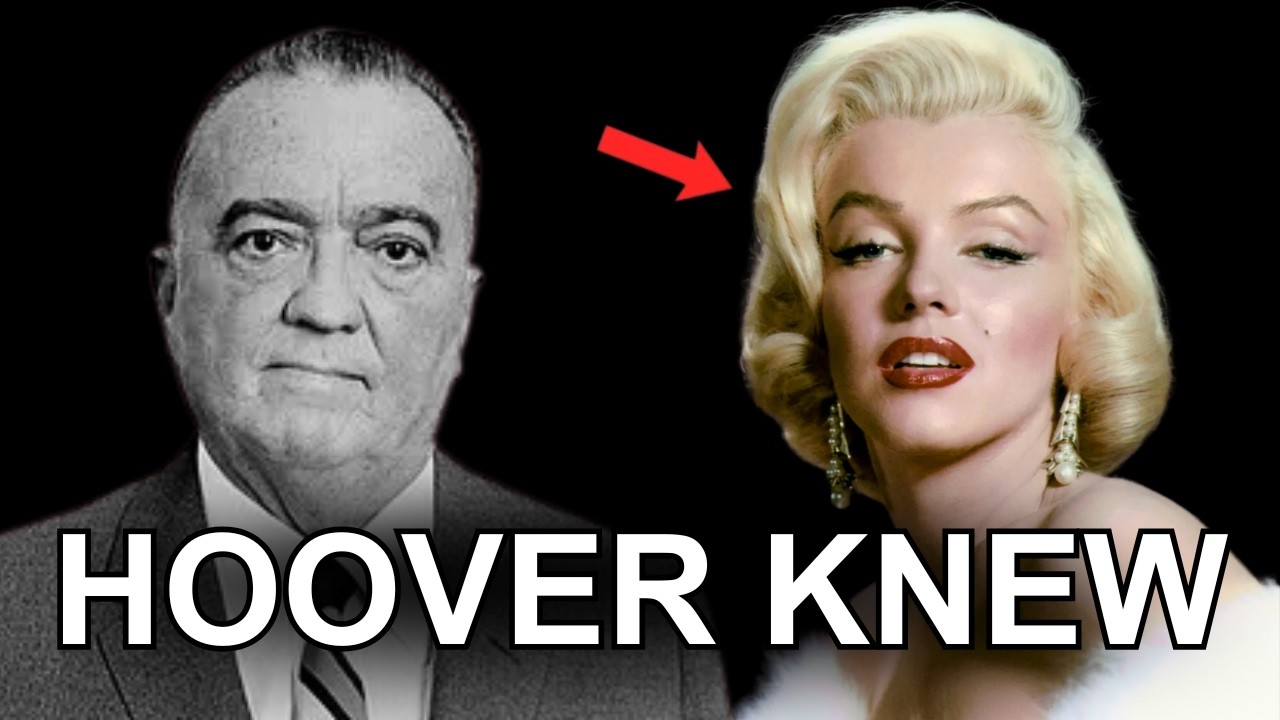
The FBI had been building a file on Monroe since at least 1955, when her marriage to playwright Arthur Miller, a man with documented left-wing associations, brought her to J. Edgar Hoover's attention. FBI file 105-40018, portions of which were released under FOIA requests in the 1970s and 1980s, contains references to Monroe's associations with individuals flagged in FBI counterintelligence programs.
By 1962, Hoover had documented Monroe's relationship with both Kennedy brothers. He used that documentation the way he used all sensitive information, as leverage, not as law enforcement, as currency.
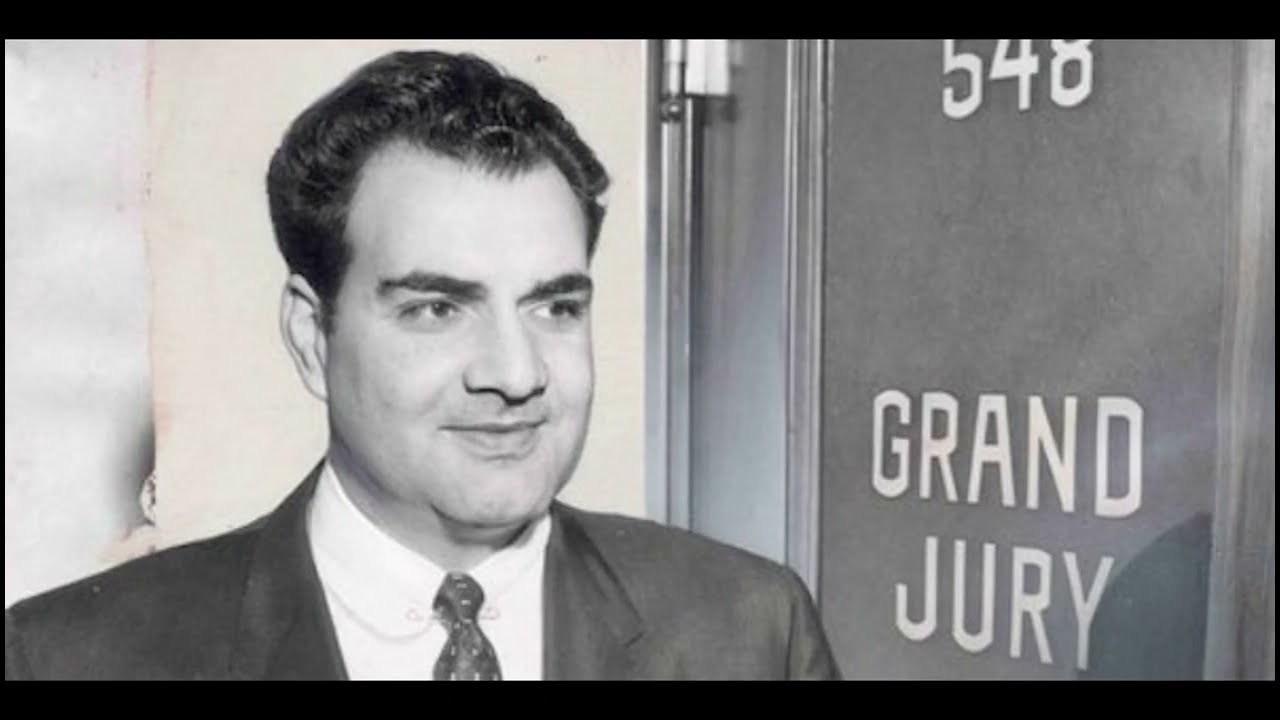
The second surveillance layer was operated by Fred Otash, a former LAPD officer turned private investigator who worked extensively for Confidential Magazine and, by the early 1960s, had developed a client relationship with Teamsters president Jimmy Hoffa. Hoffa's obsession with destroying Robert Kennedy, the man prosecuting him for corruption, had led him to commission the most comprehensive private surveillance of any Kennedy associate then underway.
Bernard Spindel, the wiretap technician Hoffa employed, was among the most technically sophisticated electronic surveillance experts in the country. Spindel placed listening devices in Monroe's home on Fifth Helena Drive and at Lawford's beach house on Pacific Coast Highway.
What those devices captured during the summer of 1962 is described in Otash's personal notes, excerpts of which were published in the 2003 book by Matthew Smith, Victim: The Secret Tapes of Marilyn Monroe. Otash states that his equipment recorded conversations between Monroe and Robert Kennedy in which Monroe expressed distress, not romantic distress, but fear.
She had heard things she was not supposed to hear. She had written things down, and she was, according to Otash's contemporaneous notes, telling people she intended to make those things public.
On August 3, 1962, one day before Marilyn Monroe died, a document was generated inside the CIA that described her as a national security concern. The document, referenced in CIA records researcher Milo Speriglio's 1986 investigation and later cited in the 2012 documentary film Marilyn Monroe: The Final Days, identifies Monroe by name and references her stated intention to hold a press conference at which she would discuss, in Speriglio's description of the document, matters of the highest national sensitivity related to the Caribbean and to unnamed members of the executive branch.
The document is dated August 3, 1962. Monroe died August 4 to 5, 1962. That document has never been fully declassified. The CIA has neither confirmed nor denied its existence in response to formal FOIA requests.
What is confirmed is this: the CIA maintained active files on Marilyn Monroe, portions of which remain classified as of the most recent review cycle, and the agency's official reading room contains, at minimum, four documents referencing Monroe by name, none of which relate to her celebrity status or her films.
Four documents about a film actress, all of them classified.
The established timeline, reconstructed from LAPD records and the coroner's report, places Monroe's death sometime between 8:00 p.m. and 3:30 a.m. That six-and-a-half-hour window is not a range of uncertainty. It is a documented gap in the record.
Eunice Murray, Monroe's housekeeper, gave three separate accounts of that evening across three separate interviews spanning 20 years, each one materially different from the last. In her first account to LAPD on August 5, 1962, Murray said she noticed Monroe's light on at midnight and knocked on her door.
In a 1985 BBC interview, Murray said she had noticed something was wrong much earlier, around midnight, she clarified, but then stated for the first time publicly that Robert Kennedy had been at the house that afternoon. In a 1985 interview with Anthony Summers for the Goddess research, Murray confirmed Kennedy's presence more directly.
What no one in authority chose to document was who else came to the house that evening.
James Hall, an ambulance attendant who responded to a call from Monroe's address that night before the official emergency call was logged, a call that exists in the records of Shafer Ambulance Service but not in LAPD's timeline, gave testimony in a 1992 affidavit stating that when he arrived, Monroe was alive but unresponsive, and that a man he identified as a physician administered an injection directly to her heart in his presence.
Hall's affidavit was submitted to the Los Angeles County District Attorney's Office in 1982 during the review of Monroe's death. The DA's investigator, Frank Harnack, found Hall's account credible. The review was terminated before any action was taken on it.
Monroe's death was attributed to acute barbiturate poisoning, specifically an overdose of Nembutal and chloral hydrate. The official finding was that she swallowed a large quantity of pills. There is a physiological problem with that finding that Dr. Thomas Noguchi, the deputy medical examiner who performed the autopsy, noted in his own records, and that has never satisfactorily resolved.
Monroe's stomach contents at autopsy showed no pill residue. None. An oral overdose of the magnitude described in the coroner's report would leave visible residue in the stomach and staining in the upper gastrointestinal tract. Noguchi noted the absence of both. He noted it in his autopsy report.
He then submitted a recommendation that a full toxicological panel be conducted on the tissue samples. Those tissue samples were destroyed before the secondary panel could be completed. The destruction was documented. The reason given was routine laboratory disposal.
It was not routine. The samples were destroyed within days of Monroe's death, before any independent analysis could be conducted and before the case had been formally closed.
Noguchi later wrote about this case in his 1983 memoir, Coroner. He described it as one of the most irregularly handled forensic cases of his career. He stopped short of naming a cause other than the official finding, but he documented every anomaly. He left the record there for anyone who wanted to read it.
A coroner who documents his own doubts, who preserves them in a memoir published 20 years later, who doesn't say what he knows, who says enough that anyone looking carefully can see the shape of what he couldn't say.
There is a version of this story in which a single actor, the CIA or Hoffa or a rogue intelligence faction, made a decision and executed it. That version is wrong, not because the evidence contradicts it, but because it misunderstands how institutional power actually operates.
The CIA had motive. Bay of Pigs humiliation, Kennedy's structural dismantling of covert authority, and the very specific danger that a public figure with operational knowledge of the Castro assassination plots was threatening to speak.
The Hoffa surveillance apparatus had operational capability. Active wiretaps, a proven ability to infiltrate Kennedy's personal circle, and a financial and political interest in destroying Robert Kennedy by any means available.
The Los Angeles political establishment, the LAPD, the coroner's office, the district attorney, had institutional incentives to accept the official narrative, because the alternative required them to investigate a sitting attorney general for involvement in the death of the most famous woman in America.
None of these actors needed to coordinate explicitly. Each had independent and sufficient reason to do what they did. The CIA needed Monroe silent. Hoffa needed Robert Kennedy destroyed or compromised. The LAPD needed the case closed. The press needed the story to be grief, not crime, because grief is a story with an ending, and crime is a story with a trial.
Collectively, without a meeting, without a single authorizing document, they produced the same outcome: silence. It is not a conspiracy in the Hollywood sense, not one mastermind, not one phone call. It is something more durable and more dangerous. It is institutional convergence.
Separate actors with separate motives producing the same result. A woman who knew too much, dead before she could speak. A diary that contained the knowledge, gone before it could be read. A toxicology sample that could have answered the physiological questions, destroyed before it could be tested.
Think about what that convergence required from each actor. Very little. The CIA needed someone to make a phone call and not ask questions. Otash needed to erase a tape. The coroner's office needed a laboratory technician to follow a disposal protocol early. The LAPD needed a watch commander to write a report that didn't ask where the ambulance call came from.
Each individual act was small. Each individual actor could tell themselves they were doing something minor. Collectively, they were architecture.
The cover-up did not require a conspiracy. It required institutions behaving exactly as institutions behave when the truth is more dangerous than the silence.
Monroe was not the last. Sam Giancana, the Chicago mob boss who had been a primary CIA asset in the Castro assassination plots and who had personal knowledge of the CIA-mafia connection that Monroe had heard described, was shot dead in his Oak Park, Illinois home on June 19, 1975, the night before he was scheduled to testify before the Church Committee, the Senate's investigation of CIA assassination plots. Single shot wounds to the head, fired at close range, in a home with a security system and no signs of forced entry.
Johnny Roselli, Giancana's partner in the CIA-mafia plots and a man who had spoken to investigators about the Kennedy-era operations, was found in an oil drum floating in Miami's Dumfoundling Bay on August 9, 1976. He had been strangled and his legs had been sawed off. He had been scheduled to testify before the Church Committee a second time.
Bernard Spindel, the wiretap technician who had recorded the conversations at Monroe's home and at Lawford's beach house and who had told associates he possessed tapes that would, in his words, destroy Robert Kennedy, died on January 8, 1971, in a New York jail cell while awaiting trial on wiretapping charges. He was 53.
His personal archive of tapes and documents was seized by New York law enforcement in a 1966 raid conducted, according to Spindel's attorney, at the specific request of Robert Kennedy's Justice Department. Those tapes were never returned. Their current location is not publicly known.
Not accident. Not coincidence. Pattern. The men who held operational knowledge of what the CIA was doing in Cuba and what Marilyn Monroe had heard died before they could speak to anyone with authority to act on what they knew. Each death was individual. Each was on its face explicable. Collectively, they describe a sustained effort to ensure that a specific category of knowledge never reached a formal record.
By the time the House Select Committee on Assassinations conducted its work in the late 1970s, Monroe's case was outside its formal mandate. She was not a political assassination. She was a suicide. The frame had held.
The press had built the frame in August 1962 and reinforced it for 15 years, and by 1978 it was structural, load-bearing. Removing it would have required acknowledging that the same institutional machinery that had managed the assassination had been operating 14 months earlier on a smaller and more personal target, as a rehearsal or as a warning.
That is exactly what Matthew Smith argues in Victim, published in 2003. Smith's thesis, drawn from the Otash notes, from the Spindel history, and from CIA documents obtained through FOIA requests, is that Monroe's death was designed not simply to silence her, but to create leverage.
A dead Monroe with Robert Kennedy's presence documented on the night of her death was not just a contained liability. It was a weapon. It was the kind of information that keeps an attorney general cooperative. It was the kind of information that ends a presidential campaign before it starts.
Robert Kennedy never spoke publicly about Marilyn Monroe's death. Not in 1962, not in 1963 after Dallas, not in 1968 when he ran for president on a platform that included the implicit promise of reopening his brother's assassination.
He buried his knowledge under grief, then under ambition, then under the six bullets fired in the kitchen of the Ambassador Hotel in Los Angeles on June 5, 1968. He never said what he knew about the night of August 4, 1962. He never said what he knew about the diary. He never said what he knew about the calls that were made and not made, the ambulance that arrived before the police were called, the tissue samples that were disposed of before they could be tested.
He left no sealed tapes. He left no letters to foreign prime ministers. He left no 14-minute gaps in an archived recording that archivists would one day flag in a technical review. He left nothing.
What remains is distributed. A partially declassified FBI file referencing Monroe's foreign contacts. A CIA reading room with four documents bearing her name and no public justification for their classification. An ambulance service record from August 4, 1962, that does not appear in the LAPD's official timeline.
An autopsy report with documented anomalies, written by a deputy coroner who published those anomalies in a memoir 20 years later and then waited, in the language of institutions, for someone to read it carefully. A diary that was present on the afternoon of August 4 and absent from every inventory taken afterward. A red notebook with a cloth cover, last seen in the possession of a woman who had told people she intended to speak.
No single document proves what happened in that house on Fifth Helena Drive. Collectively, they describe a woman who had access to operational secrets the most powerful intelligence apparatus in American history had reason to contain, and who died the night before she intended to make them public, in a manner that the forensic record cannot fully explain, in a case that was closed before it was investigated by institutions that each had sufficient reason to want it closed.
The most important thing Marilyn Monroe ever possessed was not her image, not her voice, and not the relationships that made her famous. It was a small red notebook containing things she had heard from men who should never have said them in her presence.
Men who, when they realized what she had written and what she intended to do with it, faced a calculation, the same cold institutional calculation that powerful men make when the truth becomes a threat.
She did not get to make her press conference. She did not get to read her notes aloud into any record. She did not get to say into any tape recorder or before any committee what she knew about Cuba, about the CIA, about the plots that had been discussed in the beach house while the ocean came in and the men around her forgot for a moment that she was listening.
The diary is gone. The tissue samples are gone. The ambulance record sits in a timeline that no official investigation has ever fully reconciled. What remains is the shape of the vault, the outline of the thing that was removed, the gap in the record where the evidence should be.
A gap so precisely shaped that it describes, in its absence, exactly what it was built to contain. She just never got to leave the key.