On the morning of November 8, 1927, Joe E. Lewis was asleep in his room at the Commonwealth Hotel in Chicago when three firm knocks came at the door. Still half dreaming, he shuffled over in his robe and opened it without thinking. He had been warned for weeks that this day was coming, but the smooth opening of his new club had convinced him the threats were bluster. He was wrong.
Three men pushed into the room. One grabbed Lewis by the shoulders while the other two drew revolvers and beat him across the skull with the butts of a .45 and a .38. The blows fractured nine pieces of bone inward against his brain. Then a third man produced a hunting knife and carved a line from Lewis's left ear down under his throat, slicing through the parotid gland, severing facial nerves, and cutting open Stensen's duct. He took a piece of Lewis's tongue.
Blood soaked the hotel carpet. Lewis made gurgling sounds and collapsed. His attackers left him for dead in his own room. The entire assault took less than two minutes.
This was not a robbery or a random act of violence. Joe E. Lewis was the most popular entertainer in Chicago, a singer and comedian who packed nightclubs six nights a week and made audiences forget they were living through Prohibition. His crime was simple: he quit the wrong jazz club. He walked away from a venue controlled by Al Capone's Chicago Outfit, a place called the Green Mill, and the men who ran it decided to make an example of him that every performer in the city would remember for the rest of their lives.
The Green Mill still stands today at 4802 North Broadway. Visitors can still sit in Capone's booth and see the trapdoor behind the bar. But the story of how that club became the headquarters for the mob's control of Chicago entertainment goes back more than a century.
It did not start as a mob joint. In the late 1800s, the corner of Lawrence Avenue and Broadway sat between two cemeteries, Graceland on one side and St. Boniface on the other. Around 1898, a man named Charles E. Morse, known to everyone as Pop Morse, opened a roadhouse there. It was a simple saloon with a beer garden, serving families who had just buried someone and gravediggers who wanted to wash the dirt off their hands.
The neighborhood changed fast. In 1901, the elevated train reached Uptown, opening the quiet stretch to the entire city. In 1910, a real estate man named Tom Chamales negotiated a 15-year lease on the property and began renovating. By 1914, he had demolished the original building and replaced it with a two-story entertainment palace called The Green Mill Gardens.
The name was a nod to Paris's Moulin Rouge, the famous Red Mill cabaret. Chamales wanted the same glamour but deliberately chose green instead of red to avoid association with a nearby red-light district. The venue was massive, with a sunken garden, a dance floor, a restaurant, a music hall, and a rooftop windmill visible from blocks away.
Then a film studio called Essanay opened just blocks away on Argyle Street. Essanay was one of the biggest silent film studios in America, and Charlie Chaplin himself worked there in 1915. Suddenly the Green Mill was the place where movie stars drank after work. Chaplin visited. So did Al Jolson, Sophie Tucker, and Eddie Cantor. The Green Mill Gardens became the beating heart of Chicago's entertainment scene, and Chamales became a very wealthy man. He once turned down $1 million for the property in the early 1920s.
To understand why the mob wanted in, you have to understand what Uptown looked like in the 1920s. Within a half block of Lawrence and Broadway sat the Aragon Ballroom, the Riviera Theatre, the massive Uptown Theatre, and the Green Mill. Advertisements called Uptown a city unto itself. On any given night, thousands of people flooded these venues, and the money flowing through that intersection was staggering.
When Prohibition arrived in 1920, the money multiplied beyond anything anyone had imagined. Every nightclub became a potential goldmine. If you could serve illegal alcohol, you could charge whatever you wanted. Patrons did not come just for the music; they came for the whiskey. The jazz and the booze became inseparable, and the men who controlled the booze controlled everything.
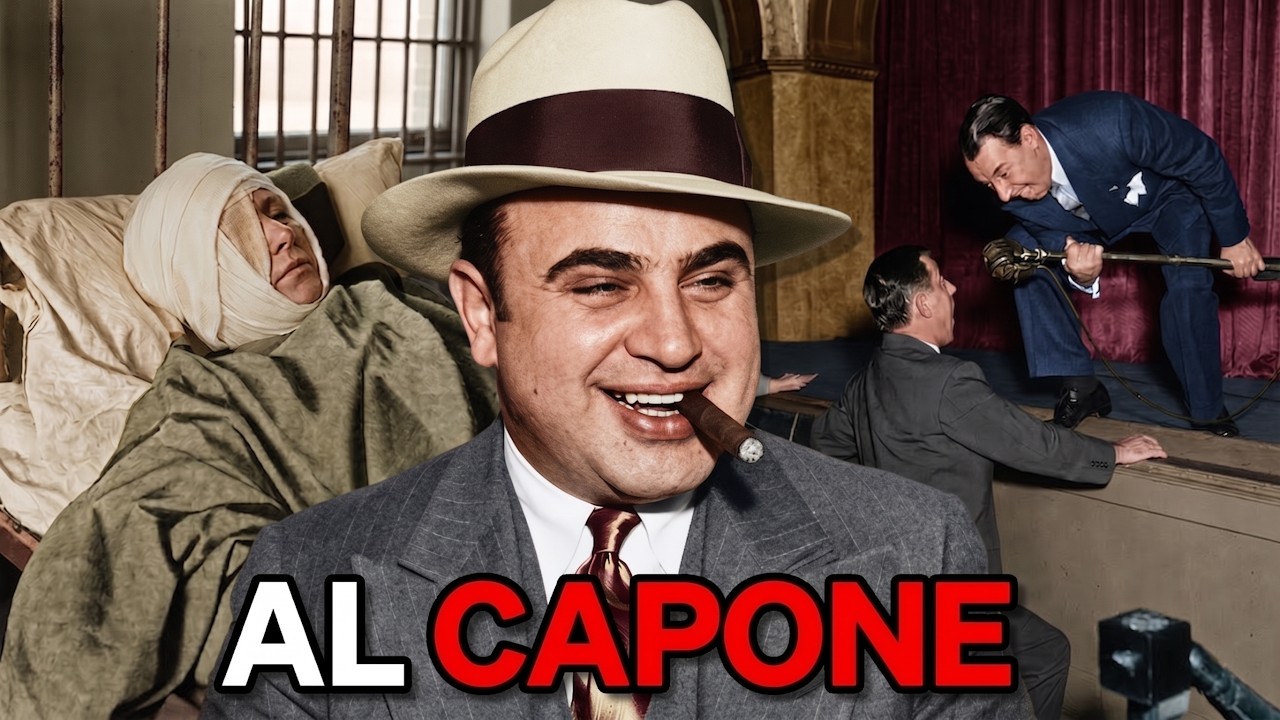
By the mid-1920s, Al Capone's Chicago Outfit was pulling in an estimated $60 million a year from bootlegging alone, with some estimates as high as $100 million. He controlled thousands of speakeasies across the city and had 700 men on his payroll. His operation had delivery truck drivers, sales people, distribution networks, and a chain of venues that served as both entertainment halls and money laundering fronts.
Capone understood something most gangsters missed. Entertainment was not a side hustle; it was the business. Control the clubs and you control the nightlife. Control the nightlife and you control the cash. Control the cash and you control the city. But he could not run every club personally, so he needed managers and enforcers who could charm customers and terrify staff in equal measure. For the Green Mill, that man was Jack McGurn.
McGurn's real name was Vincenzo Antonio Gibaldi, born July 2, 1902, in Licata, Sicily. He came through Ellis Island as a child with his mother and brother, landed in Chicago, and grew up in the Italian neighborhoods on the South Side. As a teenager he was an aspiring boxer with quick hands, which is where the name McGurn came from. He fought under that name because a Sicilian name would not draw the right crowds in the ring.
On January 8, 1923, McGurn's stepfather, Angelo DeMori, was murdered. The Genna gang, which ran Chicago's Little Italy at the time, had been shaking down every business and resident for protection money. DeMori either refused to pay or could not afford it, and they killed him for it. McGurn was barely 20 years old, and what he did next caught Capone's attention.
Over the course of eight days in February 1926, McGurn hunted down and killed the three men responsible for his stepfather's murder, one by one. It was methodical, quiet, with no witnesses and no mistakes. By April of that year, Capone had recruited him into the Outfit. Within months, McGurn became Capone's top triggerman and personal bodyguard. He was a flashy dresser, always well-groomed, always in shape from his boxing days, and he walked into rooms like he owned them.
Around 1926, the venue changed hands and reopened as the new Green Mill Cafe. McGurn became a part owner. Some historians debate whether he had formal ownership papers or simply controlled the place through intimidation, but the result was the same. The Green Mill was Outfit territory. Capone's liquor flowed through the bar, Capone's men sat in the booths, and performers worked under one simple rule: you do not leave until we say you leave.
The famous Capone booth is still in the Green Mill today, a curved booth against one wall west of the short end of the bar. Capone chose it not for comfort but because from that exact position he could see both the main entrance and the side entrance at once. If someone walked in he did not want to see, he would know immediately. And if he needed to disappear, there was a trapdoor behind the bar.
That trapdoor led to a network of tunnels running under the entire block. The tunnels were originally built to transport coal to the furnaces in the basements of buildings along Broadway, with iron rails so workers could push coal carts from one building to the next. During Prohibition, they found a second purpose. Cases of bootleg whiskey could be stored where no cop would think to look. Card games could be run. And most importantly, people could escape.
The tunnel network connected the Green Mill to the Aragon Ballroom, the Bridgeview Bank Building, and several other structures on the block. When police raided the Green Mill during Prohibition, Capone and his men would slip through the trapdoor, disappear into the tunnels, and pop out on Broadway or Lawrence Avenue like nothing happened. The cops would find empty glasses, still-warm chairs, and no one to arrest.
But the mob's control of entertainment was not just about selling booze. It was about owning the talent, and that is where the story of Joe E. Lewis becomes the most important cautionary tale in the history of organized crime and show business.
Joe E. Lewis was born Joseph Klein on Manhattan's Lower East Side in 1902. His father, a Russian Jewish immigrant who worked as a cork maker, died when Joe was 12. By his mid-teens, Lewis was performing in burlesque shows, scraping together a career doing comedy songs and patter. He ended up stranded in Chicago around 1925 when his comedy duo broke up.
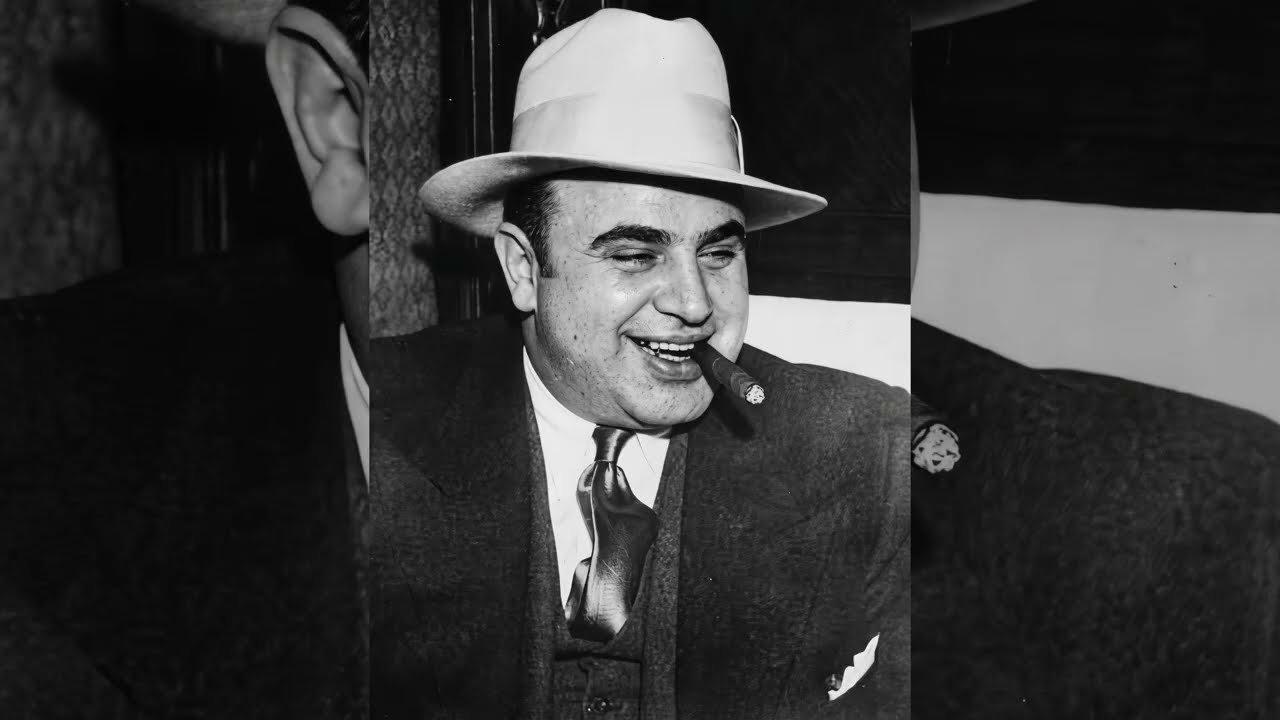
A producer named Roy Mack hired him to sing at a club called The Midnight Frolics, and Lewis slowly built a reputation. He had a face, as one writer described it, like a young smiling Buddha. People liked him, and he had charisma that disarmed the toughest crowds. By November 1926, Lewis was the master of ceremonies at the new Green Mill Cafe, packing the house six nights a week. He was making $650 a week.
Then a competing club called the new Rendezvous Cafe offered him $1,000 a week plus a percentage of the cover charges, nearly double his Green Mill salary. Lewis told McGurn he was leaving and would not renew his contract. McGurn's response was calm and direct: if you leave, you will never live to open at the Rendezvous.
Lewis did not take it seriously. He told McGurn he could easily find a replacement, but McGurn would not let it go. He caught up with Lewis again days later and told him the Green Mill was a morgue without him. Lewis grew nervous, started looking over his shoulder, and even hired a bodyguard for a while. But his opening night at the Rendezvous went smoothly, with no incident and no threats carried out. Lewis relaxed and began to believe McGurn had been bluffing.
On November 8, 1927, three men came to his door at the Commonwealth Hotel. When it was over, Lewis somehow crawled out of his room and into the hallway. A chambermaid found him first and actually thought it was a joke, because Lewis was known for his pranks. Then she saw the blood. Lewis collapsed by the elevator and was rushed to Columbus Hospital by ambulance.
He spent seven hours on the operating table under the hands of Dr. Daniel A. Orth. The damage was catastrophic: a fractured skull with nine pieces of bone pressing against the brain's speech center, a lacerated tongue, an injured larynx, severed facial nerves, and a right arm so badly cut he could not move it. Lewis lost his voice and his memory. Doctors were not sure he would survive the night, let alone ever speak again.
While Lewis lay in the hospital, the Rendezvous Cafe posted updates of his condition on its front window for the public to read. And Al Capone himself reportedly offered to pay all of Lewis's medical bills. The boss of the organization that ordered the attack offered to pick up the tab for the damage. That was not generosity; it was ownership. Capone was sending a message that he controlled who got hurt and who got healed, and that everything in the city ran through him.
Lewis spent months in recovery. A Catholic priest helped him relearn how to speak word by word. Plastic surgeons reconstructed his face, and the scars from the knife stayed with him for the rest of his life. When Lewis finally recovered enough to ask about the men who attacked him, the accounts vary. He reportedly scribbled the name Danny Cohen, who managed the Green Mill, on a piece of paper for police, and indicated a man named Tony R as the one who wielded the knife. But Lewis never formally identified McGurn, and no one was ever arrested for the crime.
Some historians believe the attackers were themselves killed shortly afterward. The book The Joker Is Wild, which later inspired the 1957 Frank Sinatra film of the same name, claims the three assailants were found dead within days, though this has never been verified by police records. What is verified is the effect the attack had on Chicago's entertainment world.
Every performer in the city got the message. You do not leave a mob-controlled club. You do not break a contract with the Outfit. You play where they tell you to play, when they tell you to play, and you smile while doing it. For years after the Lewis attack, performers in Chicago signed exclusive contracts with mob-controlled venues and never questioned the terms. The Outfit controlled the Green Mill and the Aragon Ballroom, and had their hands in dozens of clubs, cabarets, and speakeasies across the city. Entertainment was not a luxury; it was a racket, and the performers were the product.
But the same violence that built this empire eventually consumed the men who ran it. After the Lewis attack, McGurn continued to rise in the Capone organization and became one of the most feared men in Chicago. Many historians believe he was the architect of the most infamous mob hit in American history: the St. Valentine's Day Massacre on February 14, 1929, when seven members of the rival Bugs Moran gang were lined up against a wall in a garage on North Clark Street and gunned down by men dressed as police officers.
Chicago police suspected McGurn immediately but could not prove it. McGurn had an alibi. His girlfriend, Louise Rolfe, whom the press nicknamed The Blonde Alibi, swore she was with him all day. McGurn beat the charge by marrying Rolfe, which prevented her from being compelled to testify against him. But the massacre was the beginning of his end. The heat it brought on the Outfit was enormous, and federal investigators intensified their pursuit of Capone.
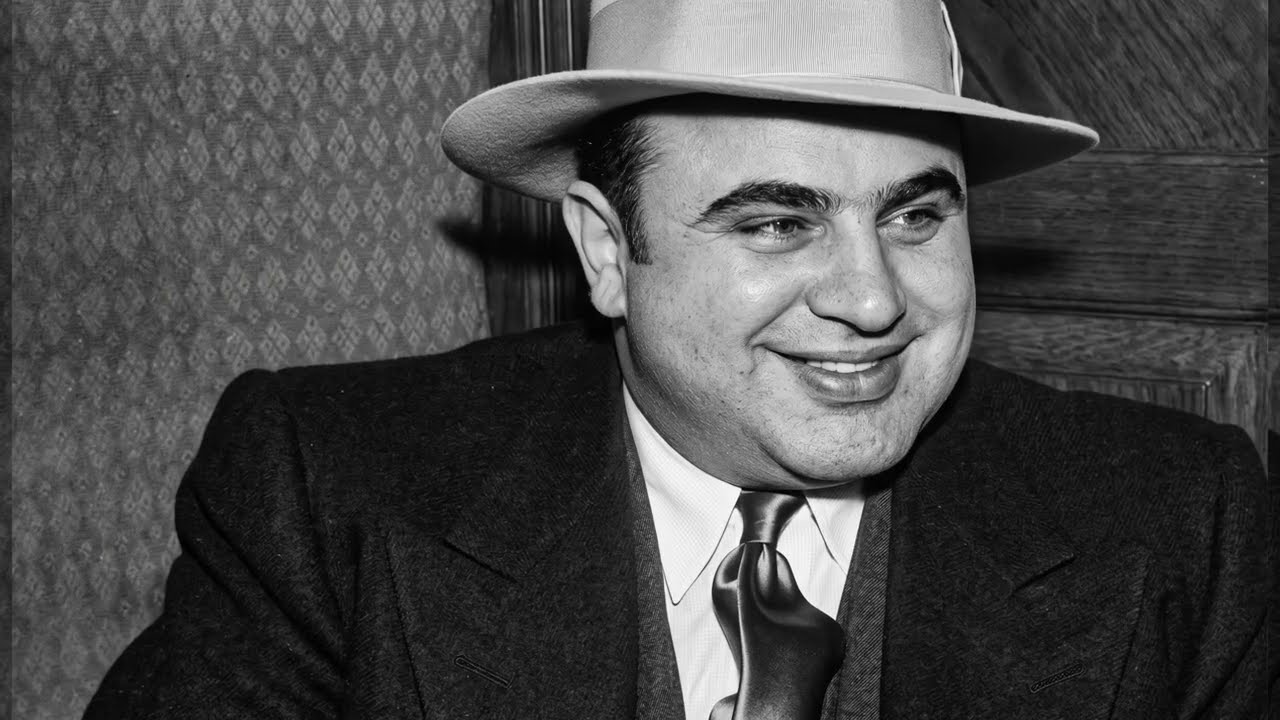
McGurn, the flashy dresser, the braggart, the alcoholic who knew too much about too many things, became a liability. By the early 1930s he was being squeezed out. Capone went to prison for tax evasion in 1931, and the Outfit reorganized without McGurn. He was broke and cast aside. The man who had once controlled the hottest jazz club in Chicago and terrified every entertainer in the city was reduced to hanging around bowling alleys.
On February 15, 1936, exactly one day after the seventh anniversary of the St. Valentine's Day Massacre, McGurn was at the Avenue Recreation Bowling Alley at 805 North Milwaukee Avenue with two men he thought were friends. They were not. A third man entered the alley and shouted for everyone to freeze, warning that anyone who moved would die. Then the gunfire started. Three bullets hit McGurn in the head and back, and he crumpled to the floor. He was 33 years old.
His killers left a comic Valentine near his body with a poem that read, "You lost your dough and handsome houses, but things could be worse, you know. At least you haven't lost your trousers." Seven years after the massacre he allegedly masterminded, killed on Valentine's Day weekend with a Valentine as a calling card. Nobody was ever charged with McGurn's murder. His brother Anthony was killed two weeks later, on March 2. The Outfit was cleaning house.
In 1933, a fire gutted the Green Mill building. When it reopened in 1935, it was a smaller venue called the Green Mill Tavern, operating from the 1921 edition that still stands today at 4802 North Broadway. The glory days of the massive Green Mill Gardens, with its rooftop windmill and sunken gardens, were over, but the music never stopped.
In 1940, the Batsis brothers purchased the club. Stars like Billie Holiday and Louis Armstrong graced the stage, and the jazz was world-class. The drinks were legal now, but the mob shadow never fully lifted. By the 1960s, Uptown had changed. The neighborhood that once called itself a city unto itself had declined. Crime was up, and the fancy theaters were struggling.
A man named Steve Brend, who had worked at the Green Mill since 1938, bought the club in 1960 and held on through the rough years. The Green Mill became what locals called a dive, filled with day drinkers and old-timers who remembered the glory days. Then in 1986, a man named Dave Jemilo walked in and saw something worth saving.
Jemilo bought the club from Brend and started restoring it. The place was falling apart. He refinished the wooden bar, reupholstered the booths, repaired the original picture frames and light fixtures, and put in a bigger stage and a dance floor. He brought jazz back, real jazz, charging $1 a night five nights a week and $2 on Saturdays. People came. Old-timers who visited after the restoration said it looked just like it did in the '40s and '50s, which was by design. Jemilo understood that the Green Mill's power was not in renovation but in preservation.
The Capone booth is still there. The trapdoor behind the bar is still there. The tunnels still run beneath the building, though access is now restricted. In 1986, Jemilo also helped launch the Uptown Poetry Slam, a Sunday night tradition that transformed spoken word poetry in America. The Green Mill became cool again, not because of the mob history, but because of the music.
That is the real story of the Green Mill. It is a story about what happens when organized crime decides that art is just another commodity to be controlled. Capone and McGurn did not care about jazz, comedy, or the creative spirit that made those stages come alive. They cared about money and power, and they were willing to carve a man's face open to protect both.
Joe E. Lewis eventually recovered. He could not sing the way he used to, so he pivoted. He became one of the most successful stand-up comedians of the 1940s, '50s, and '60s. He played Las Vegas regularly, drank heavily, and gambled constantly. He became friends with Frank Sinatra, who eventually starred in The Joker Is Wild, the 1957 film based on Lewis's life. Lewis died in 1971 from a stroke at the age of 69, carrying the scars from that hunting knife for every one of those years.
Tom Chamales, the man who built the Green Mill Gardens into a palace, watched it shrink piece by piece. Balaban and Katz bought part of the land for $400,000 to build the Uptown Theater in 1923. Walgreens leased a corner for a drugstore. By the time the property sold in 1939 for $210,000, the original Green Mill Gardens was a fraction of what it had been.
Al Capone went to prison in 1931 for tax evasion. He served time at Alcatraz, where syphilis slowly destroyed his mind. He was released in 1939 and spent his final years at his estate in Palm Island, Florida, a shell of the man who once controlled $60 million a year in bootlegging revenue. He died on January 25, 1947, at the age of 48.
The Green Mill survived all of them. It survived the mob, the fire, the decline of Uptown, and decades of neglect. It has been serving drinks and hosting music for over a century. Today it attracts tourists from around the world who come to sit in Capone's booth and imagine what it felt like when the most dangerous men in America drank whiskey five feet from a trapdoor that could make them vanish in seconds.
But the Green Mill is still a working jazz club. Real musicians play there every single night. The music, that raw, beautiful, complicated sound that first made the Green Mill famous, has outlasted every gangster who ever tried to control it. The mob thought they owned jazz. They thought they owned the performers, the stages, and the applause. But you cannot own music. You can threaten it. You can slash its throat. You can take its voice for a while, but it always comes back. It came back through Joe E. Lewis, who learned to speak again one word at a time. It comes back every night at 4802 North Broadway, in a room that still carries bullet holes in its history and a trapdoor behind the bar.