On 1 October 1913, inside the family chapel at Knole, a young woman in a white wedding dress married the son of a diplomat in front of just 26 guests. The ceremony was deliberately small for a house of such scale. The bride was 21 years old.
Her name was Vita Sackville-West. The house she was leaving had belonged to her family since the reign of James I. It contained around 400 rooms, a deer park, and a collection of furnishings so rare that scholars still travel from around the world to study them.
The public saw a dynasty built on stone, title, and unbroken continuity. What the public did not see was the ancient legal clause that would sever the family's most devoted inheritor from the house she was born to love.
To understand what that wedding day cost her, it is necessary to go back to the house itself, to the family that built its name inside those walls, and to the girl who grew up believing that belonging to Knole and belonging to herself were the same thing.
There are families in England whose names function less as surnames than as addresses. The Sackville-Wests were one of them. To say the name was to invoke Knole.
The house had been an archbishop's residence, then a royal one, and then, from the early 17th century, a Sackville possession. It was purchased in 1603 by Thomas Sackville, 1st Earl of Dorset, and maintained across the generations as both a family seat and a material argument for the family's own importance.
Knole was not simply where the Sackville-Wests lived. It was the evidence that they mattered. By the Edwardian period, the estate functioned as one of England's great show houses, a place where lineage was performed in tapestry and silver and long galleries hung with ancestral portraits.
What the public did not see was how completely the house shaped the inner lives of the people who grew up inside it. To be a child at Knole was to absorb, before you could articulate it, a particular understanding of who you were.
Victoria Sackville-West, Lady Sackville as she became, married Lionel Edward Sackville-West, who would inherit Knole in 1908 as the 3rd Baron Sackville. Victoria was not a woman who left things to chance. She understood status as something to be constructed, stage-managed, and protected.
After Lionel's succession, she installed the telephone, electricity, central heating, and hot running water at Knole. The technologies of modern comfort fitted inside a house built for feudal display. She chose her daughter's clothes, managed her daughter's image, and supervised the formal portrait by Philip de László that would present Vita to the world as a proper Edwardian marriage prospect.
Lionel was quieter, less flamboyant than either the house or his wife. He loved Knole. He maintained it. He presided over it with the steady, understated authority of a man who had inherited not just property but obligation.
Their daughter was born at Knole on 9 March 1892. Her name was Victoria Mary Sackville-West, though the world would know her as Vita. She was their only child.
Vita did not simply live at Knole. She performed it. As a girl, she delighted in showing visitors around the house, guiding them through the showrooms with the proprietary confidence of someone who believed, with the uncomplicated conviction of childhood, that this place was hers.
She knew the rooms. She knew the portraits. She knew the weight of each corridor and the particular quality of light in each gallery. Before she was the writer mourning Knole, she was already one of its interpreters, a child narrating her own inheritance to strangers who had paid to see it.
But inheritance, in the legal architecture of English primogeniture, did not work the way Vita's childhood attachment assumed it would. Knole and the barony would pass to the nearest male heir. Vita was female.
She was the person most shaped by the house, most knowledgeable about it, most emotionally fused with it, and she was the one person in her immediate family who could never, under the existing law, own it. That contradiction was the organizing fact of her inner life, present long before she had the language to name it.
She was reminded constantly to remember her illustrious name. She was trained into the posture and presentation of an Edwardian lady, painted, dressed, displayed, and speculated about in the press as a potential bride for wealthy, appropriate men.
All the while, in diaries and in private, Vita was already living another life entirely. She had fallen in love with women, first with Rosamund Grosvenor, then with Violet Keppel. These attachments were not incidental, and they were not youthful experiments to be folded away once the right suitor appeared.
The conflict was never simply marry or not marry. It was which self could survive inside this system. The self that loved women, that wrote with increasing seriousness, that felt the pull of artistic and emotional freedom, or the self that loved Knole, that understood lineage, and that wanted to belong to the old world even as she strained against its rules.
Harold Nicolson entered her life as a possible answer to an impossible question. Born in Tehran in 1886, the son of a diplomat, Harold had joined the diplomatic service in 1909 and moved through the world with the easy cosmopolitanism of a man raised inside institutions.
He was clever, sociable, and genuinely fond of Vita. He was also, like Vita, drawn to his own sex. What they recognized in each other was a temperamental compatibility that could survive the things a conventional marriage could not.
Harold was not the wealthiest suitor. He was not the most dynastically useful. Vita's parents, particularly Victoria, were unimpressed by his modest income compared with the fortunes of more obviously suitable aristocrats. But Vita chose him.
Viewed from a distance, that choice looks less like romantic surrender than a lucid act of selection. Harold was the man she could build a life with. He could not solve the legal fact of Knole, but he could offer a partnership elastic enough to accommodate who she actually was.
They married on 1 October 1913 in the family chapel at Knole. The photographs from that day show a young woman in white standing inside one of the grandest houses in England, surrounded by the corridors and galleries and portraits she had been interpreting to visitors since childhood.
It looks like the beginning of a life. It was also, and Vita knew it, the formal beginning of her separation from the house. Marriage meant leaving. The daughter who had shown strangers through the showrooms would now be a visitor herself.
For a time, the machinery of life appeared to work. Harold's diplomatic career gave structure. Vita bore two sons, Benedict, born in 1914, and Nigel, born in 1917. She wrote, she gardened, and she moved between London, diplomatic postings, and Knole itself, where she could still return as a daughter, if no longer as a future owner.
The early years of the marriage were not unhappy. They were complicated. Both Vita and Harold pursued relationships outside the marriage with full mutual knowledge, but the marriage itself held and would hold for the rest of their lives.
The arrangement they reached was not fashionable by Edwardian standards, and it was not a secret kept in shame. It was a structure built with care and honesty that allowed two people whose desires did not conform to a single template to remain genuinely close.
By every account, they loved each other. They simply loved other people as well, and they chose not to let that destroy what they had built together.
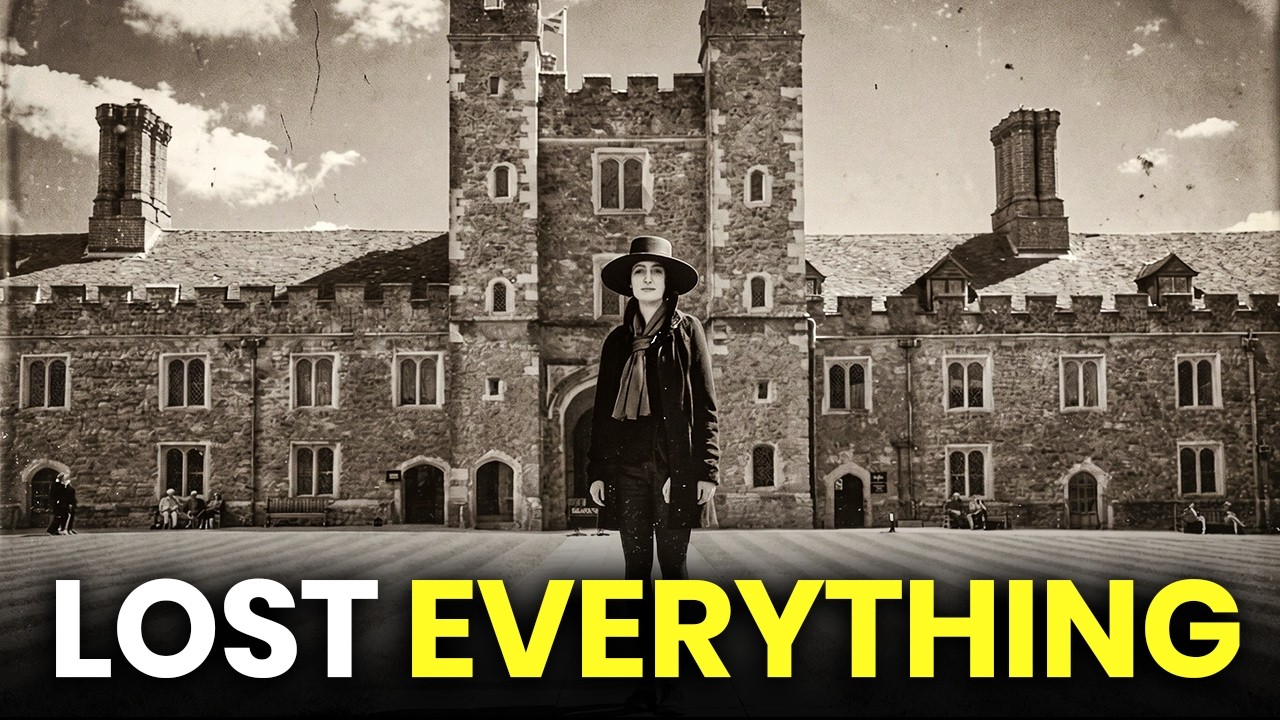
Meanwhile, at Knole, Lionel and Victoria presided over a house that was both family home and public theater. To look at Knole in the years before and after the First World War was to see a version of England that appeared immovable. Stone, tapestry, silver, title, land.
But that immovability was itself an illusion. Death duties were rising. The cost of maintaining great houses was climbing. The social order that had produced families like the Sackville-Wests was under pressure from taxation, from changing attitudes to inherited wealth, and from the slow erosion of deference that the war had accelerated.
Vita, for her part, was converting the house into language. She wrote about Knole directly and indirectly, threading it through her novels and her sense of self with an intensity that went beyond nostalgia.
Her novel The Edwardians, set in a great country house transparently modeled on Knole, drew on her childhood there. Her long poem The Land won the Hawthornden Prize in 1927, a significant literary honor that confirmed her as a serious writer, not merely an aristocrat who dabbled.
Even before the estate's final transformation, Vita was already doing something remarkable. She was repossessing Knole in the only currency available to her. The house kept refusing her in law. She kept reclaiming it in prose.
Virginia Woolf entered Vita's life in the early 1920s, and the connection between them became one of the most celebrated literary relationships of the century. They were lovers, though the word barely captures the texture of what passed between them.
Intellectual fascination, emotional need, creative provocation, class curiosity, physical intimacy, and a mutual recognition that each had found in the other a mind worth the full effort of engagement. Virginia was not aristocratic. She was not landed. But she understood, with the penetrating clarity of a great novelist, what Knole meant to Vita and what losing it would do.
By the mid-1920s, the family's public image remained intact. Lionel was still alive. Victoria was still stage-managing the household. Vita was writing, gardening, loving, parenting, and returning to Knole as often as she could.
But Vita knew what visitors did not. She knew that Lionel's health was failing. She knew that when he died, the title and the house would pass not to her, but to her uncle Charles, the nearest male heir, a man whose claim was legal rather than emotional.
She had always known this. She had known it as a girl showing visitors through the galleries. She had known it on her wedding day. For 35 years, that knowledge had been bearable because it was theoretical. Her father was alive.
Then, on 28 January 1928, Lionel Sackville-West, third Baron Sackville, died at Knole. He was 60 years old, and the theoretical became permanent.
The title passed immediately to Charles. The house passed with it. Vita's exclusion, the exclusion she had spent her entire life anticipating, dreading, and trying to outrun through writing and love and sheer force of attachment, was now a completed legal fact.
There was no appeal. There was no exception. There was no mechanism by which a daughter, however gifted, however devoted, however intimately bound to the house and its history, could claim what the law had assigned to a male relative.
What followed Lionel's death was not a single grief, but several, layered one inside the other. For Charles Sackville-West, now the fourth Baron Sackville, the succession was administrative before it was personal. He was not a villain. He was simply the nearest male relative, and the law operated with the same indifference to emotion that it had operated with for centuries.
For Victoria, Lionel's death carried a double displacement. She had lost a husband, and she had lost her position as the modernizing mistress of Knole. Victoria was 73 years old at the time of Lionel's death. She would live until 1936, but Knole, as she had known it, was finished for her.
For Harold, the task was not mourning a house he had never expected to possess, but steadying the person he loved most. His role now was to help construct the life that would have to exist without it, or more precisely, alongside the permanent ache of its absence.
For Vita, the loss was not a wound that could be dressed and healed. It was a condition. The National Trust, which would later become the custodian of both Knole and her own garden at Sissinghurst, describes her inability to inherit as a constant source of distress.
There is a particular kind of cruelty in a system that does not require malice to inflict damage. No one decided to hurt Vita. No one conspired to take Knole from her. The law simply did not recognize her claim.
The absence of a villain made the injury harder to metabolize, not easier. There was no one to blame. There was only a rule, ancient and immovable, and a woman on the wrong side of it.
But something extraordinary happened in the months surrounding Lionel's death. Virginia Woolf had been watching Vita's relationship with Knole for years. The pride, the anguish, the way Vita spoke about the house as though it were a living thing that had chosen her and been taken away.
In 1928, the same year Lionel died and the succession locked Vita out for good, Virginia published Orlando. The novel is a fantasy. Its protagonist lives for centuries, changes sex, and moves through English history with a fluidity that no actual life could replicate.
But the fantasy is built on deeply specific foundations. Orlando was inspired by Vita, by her ancestors, and by the house she could not inherit. Woolf dedicated the book to Vita and filled it with details drawn from Knole's history.
In Orlando, the protagonist gets to keep the ancestral house. The character who is transparently modeled on Vita is granted in fiction the inheritance that the law denied Vita in life. That is one of the most extraordinary acts of literary restitution in the English language.
Virginia looked at the woman she loved, saw the wound that the inheritance system had inflicted, and wrote a novel in which the wound was healed. Not by changing the law, not by overturning tradition, but by imagining a world flexible enough to let a person like Vita possess what a person like Vita deserved.
Whether Orlando actually consoled Vita or merely gave beautiful shape to something that could not be consoled is a question that remains open. Art does not always heal. Sometimes it only preserves the injury in a form that outlasts the person who suffered it.
By the end of 1928, Vita Sackville-West occupied a paradox that would define the rest of her life. She had lost Knole in fact and received it back in fiction. She was more visible, more culturally magnetic, and more publicly celebrated than she had ever been.
And none of it changed the legal reality. Knole belonged to Charles. The rooms Vita had shown to visitors as a child were now rooms she entered as a guest.
In early 1930, Vita and Harold bought Sissinghurst Castle in Kent. The word castle was generous. What they purchased was a 16th century ruin, a fragmentary Elizabethan manor surrounded by dereliction, filled with rubbish, and barely inhabitable.
The place had no running water and no electricity. It had been a prisoner of war camp during the Napoleonic Wars and had never fully recovered from the indignity. A reasonable person would have walked away. Vita saw it and fell in love at first sight.

Vita did not fall in love with a finished house. She fell in love with a possibility, with a ruin that could be rescued, shaped, planted, and made into something that belonged to her in a way Knole never could.
Sissinghurst was not inherited. It was chosen. It was not gifted by law or passed through bloodline. It was bought with money, cleared by hand, and built through years of collaborative work between a woman who understood abundance and a man who understood form.
Harold designed the garden structure, its axes, its enclosures, its formal bones. Vita filled it with planting so lush, so layered, so unruly within the geometry that visitors who came later often assumed the whole thing was her work alone. It was not. Sissinghurst was a marriage made visible in soil and stone.
The garden opened to paying visitors in the late 1930s. The admission was a shilling, dropped into a tobacco tin. There was no National Trust involvement, no institutional machinery, no heritage branding, just a garden that two people had made from nothing.
But Sissinghurst, for all its beauty, was still a replacement. Vita knew it. She never stopped writing about Knole. She never stopped visiting when she could. She never stopped feeling the loss as a present tense condition rather than a past tense event.
Meanwhile, at Knole, the other branch of the story was unfolding with its own particular ironies. Charles Sackville-West had a son, Edward, known as Eddy, and Eddy was on paper everything the system wanted: male, legitimate, next in line to inherit the house and the barony.
He was also a man of considerable cultural sophistication. He wrote about music. He published a novel. He moved in Bloomsbury-adjacent circles and worked in the gatehouse tower at Knole, where he welcomed literary visitors with the ease of someone comfortable in artistic company.
And he did not love Knole. Eddy Sackville-West, the man who could inherit the house, referred to it as "that big place in Kent." He did not feel toward Knole anything like the fierce, almost physical attachment that Vita carried.
He was the heir, and he was indifferent. She was the non-heir, and she was consumed. The system of primogeniture does not concern itself with love. It concerns itself with sex and bloodline and legal precedent. The person who wanted the house most was excluded. The person who wanted it least was welcomed.
As the 1930s turned into the 1940s, the logic of the old world continued to erode. The Second World War strained every great estate in England. Death duties, already punishing, would become more so.
The cost of heating 400 rooms, of maintaining Tudor rooflines and Stuart furnishings and deer parks and staff, was climbing beyond what private fortunes could sustain. Across the country, families like the Sackville-Wests were facing a version of the same question. Could the house survive? And if so, in whose hands?
For Knole, the answer came in 1946. Charles Sackville-West gifted the house to the National Trust. The family retained private apartments under a long lease, along with parkland interests, the deer herd, and some contents.
But the grand public rooms, the showrooms Vita had once guided visitors through as a child, were now national property, maintained by an institution rather than a family, open to the public not as a favor extended by aristocratic generosity, but as a right secured by institutional ownership.
Vita was 54 years old. She had already been excluded from ownership for 18 years. Now the house itself had been excluded from private ownership altogether. In 1956, Charles passed the barony and whatever remained of the family's formal connection to Knole to his nephew Lionel, continuing the male line as the law required.
Through all of this, through the loss of Knole, through the building of Sissinghurst, through the war and the taxation and the slow institutional absorption of the great estates, Vita and Harold's marriage endured. It endured not because it was conventional, but because it was honest.
Both continued to have relationships outside the marriage. Both knew about the others' attachments. The arrangement was not a scandal suppressed; it was a structure maintained. They wrote to each other constantly. They planned the garden together. They disagreed about politics.
Harold served briefly as a member of Parliament with results that satisfied neither of them. And they agreed about the things that mattered most: the life they were building, the work they were doing, and the fact that whatever else they loved, they also loved each other.
By the late 1950s, Vita Sackville-West was in her mid-60s and the shape of her life had settled into something that looked, from the outside, like resolution. Sissinghurst was extraordinary, one of the most celebrated gardens in England, visited by thousands.
Her literary reputation was secure, if no longer at its peak. Her marriage to Harold was intact, warm, and by now almost 50 years old. She had her tower at Sissinghurst, where she wrote, her gardens, where she worked, and her sons, who had grown into their own lives.
Benedict had become an art historian. Nigel had become a writer, a publisher, and briefly a politician, a man who would later do more than anyone to shape the public memory of his parents' unconventional life.
And still, Knole was there. Twenty miles away, 400 rooms, the deer still grazing in the park, the Stuart furnishings still sitting in their cases, the long galleries still hung with the portraits of the family she had been born into and barred from inheriting.
She still visited. She still felt the weight of the place settle on her each time she walked through the door, not as an owner, not as an heir, but as a guest in the house that had trained her since childhood to believe she belonged.
What Vita carried into her final years was not bitterness, exactly, though bitterness would have been understandable. It was something closer to an unresolved chord, a note that had been struck in childhood and had never been allowed to resolve.
She described her relationship with Knole late in life as a kind of voluntary exile, comparing the house to a beautiful woman who had never wholly belonged to her. This was not a woman mourning a piece of real estate. This was a woman mourning a version of herself.
By the winter of 1961, Vita's health was failing. She was 69 years old. She was still at Sissinghurst, still in her tower, still surrounded by the garden she and Harold had made from ruin and obstinacy and love.
On 2 June 1962, at Sissinghurst Castle, Vita Sackville-West died. She was 70 years old. She died in the place she had made, not the place she had been made for.
Sissinghurst was beautiful. Sissinghurst was hers. But Sissinghurst was not Knole. It had never been Knole. And Vita, who understood the difference better than anyone alive, had carried that knowledge to her death like a stone in her pocket, smooth from handling, impossible to put down.
Harold was at Sissinghurst when she died. He was 75 years old, and the woman he had shared a life with for nearly half a century was gone.
Their marriage had been described in many ways by many people, most of whom had not been inside it. It had been called unconventional, which it was. It had been called open, which it was. It had been called by people who did not approve a sham, which it was not.

What it had been, by every surviving account, was a genuine partnership between two people who loved each other and who had chosen, deliberately and with full mutual knowledge, to accommodate the parts of themselves that did not fit inside a conventional frame.
Harold Nicolson lived for six more years. He remained at Sissinghurst, increasingly frail, increasingly quiet, the public career long behind him, and the private world narrowing to the house, the garden, and the company of his sons and their families.
Harold died at Sissinghurst on 1 May 1968. He was 81 years old. He was buried beside Vita in the church at Sissinghurst, not at Knole, not in the Sackville family vaults, but in the soil of the place they had chosen and made together.
That burial is quietly significant. It places them in death exactly where they had placed themselves in life, not inside the ancestral inheritance that the law had denied them, but inside the substitute kingdom they had built from rubble and obstinacy and love.
What happened next belongs to their younger son. Born in 1917, Nigel Nicolson had grown up inside the unusual architecture of his parents' marriage. He had watched his mother orbit Knole from a distance for his entire life.
After her death, he began doing something that only a writer's child, with a writer's instincts, could have done. He turned the private life into a public record.
In 1973, Nigel published Portrait of a Marriage, a book that combined his own biographical narrative with extracts from Vita's private autobiography, a document she had written in 1920 describing her passionate affair with Violet Keppel and the crisis it had caused in her marriage to Harold.
The book was a sensation. It was also, depending on your perspective, an act of extraordinary courage or an act of extraordinary exposure. Nigel made public what his parents had kept carefully managed during their lifetimes.
He did it, by his own account, because he believed the truth about his parents' marriage was more admirable than the conventional version, and because he believed that honesty, even posthumous honesty, was a form of respect.
Portrait of a Marriage fixed Vita and Harold in public memory as figures defined not merely by their writing or their garden, but by the radical structure of their private life. It made them modern.
Nigel did something else years later that was quieter, but in its way equally significant. He gave the original manuscript of Orlando to the National Trust to be kept at Knole.
Virginia Woolf's novel, the book written to give Vita an imaginative inheritance the law refused, was returned in physical form to the house Vita could never own. The manuscript now sits at Knole not as a literary relic, but as a symbolic correction.
Nigel himself inherited Sissinghurst after Vita's death in 1962. In 1967, he transferred it to the National Trust. The garden and its buildings passed into public stewardship, just as Knole had done two decades earlier.
So the story does not end with one house leaving private hands. It ends with both. The ancestral seat that was denied and the substitute kingdom that was built became part of the same national heritage system.
Nigel Nicolson lived until 2004. He was 87 years old when he died. He was the last person alive who had known both Vita and Harold from the inside, who had watched the garden grow from ruin, and who had understood what Knole's absence meant in the daily texture of his mother's life.
The cultural afterlife of the Sackville-Wests is unusually rich, and it centers on Orlando. Woolf's novel has never gone out of print. It remains one of the most widely read works of 20th century English fiction.
It is a book that is taught in universities, adapted for stage, and understood by successive generations as a founding text of gender fluidity, of imaginative freedom, and of the idea that identity is not fixed by the body you are born into or the laws that govern your inheritance.
That it was written as a love letter to a specific woman about a specific house in response to a specific legal injustice is sometimes lost in the broader cultural reception. But the specificity is the point.
The most significant screen adaptation came in 1992 when Sally Potter directed a film of Orlando starring Tilda Swinton in the title role. The film is an adaptation of Woolf's novel, an imaginative work inspired by Vita's life rather than a dramatization of it.
The National Trust has continued to deepen the connection between the manuscript and the house. A digitized version of Woolf's original Orlando manuscript is now accessible through their collection.
The Trust's own interpretation of Knole explicitly centers Vita's story, her love for the house, her exclusion from inheriting it, and the literary afterlife that grew from that exclusion. Knole is no longer presented as simply a Tudor palace with Stuart furnishings. It is presented as a place shaped by absence.
Knole still stands in its deer park near Sevenoaks, Kent. With around 400 rooms, the showrooms are open to the public under National Trust management, and the private apartments are still occupied by the Sackville-West family under the long lease arrangement established in 1946.
The family still lives there. The deer still graze. The Stuart collection, the silver furniture, the tapestries, and the state beds still sit in rooms that have held them for centuries. Visitors still walk through on a set route much as they have done for generations.
Sissinghurst, 20 miles to the south, is also in National Trust care. The garden Vita and Harold created remains one of the most visited in England. The white garden, the rose garden, the lime walk, and the tower where Vita wrote are all maintained with a fidelity to the original planting vision.
Robert Sackville-West, the seventh Baron Sackville, lives at Knole today, maintaining the private apartments and the family's association with a house that has been in Sackville hands for over four centuries. The barony has passed, as it has always passed, through the male line.
The law that excluded Vita has not been retrospectively corrected. It has simply been outlived by the things she built in its shadow.
The story of the Sackville-Wests is not finally about whether Vita found another life after Knole. She did. She found Sissinghurst and Harold and Virginia and the garden and the books and a version of existence that was in many ways richer and more self-determined than anything the old inheritance could have offered.
The story is about something harder to resolve than that. It is about the cost of raising a child inside a house she is taught to love as destiny, giving her the language and the temperament and the knowledge to feel that the house is an extension of herself, and then telling her, because of a rule older than anyone alive, that she cannot keep it.
Knole survives. Sissinghurst survives. Orlando survives. The dynasty survives, too, though in altered form, not as unbroken private possession, but as public heritage, as gardens and manuscripts and rooms open to strangers, all of it haunted still by the woman who knew the house most intimately and was never allowed to call it her own.