Fritz Todt was not a general or a soldier, but without him Hitler's armies might never have moved. He was an engineer who turned ideology into infrastructure, building autobahns, bunkers, and a vast organization that spanned all of Europe.
His projects became the backbone of Hitler's war machine and the engine of forced labor that sustained it. By the time his plane exploded in 1942, Todt had shaped the Nazi empire more than most who fought for it.
Todt was born on September 4, 1891, in Pforzheim, a small industrial city in southwest Germany. His father owned a modest factory, and the young Todt showed an early fascination with machines and design.
After completing secondary school, he studied engineering at the Technical University of Karlsruhe and later in Munich. By the time World War I erupted in 1914, Todt was 23 and eager to serve.
He joined the Imperial German Army, first as an infantryman and later as an aerial observer, a dangerous role that earned him the Iron Cross for bravery. Germany's defeat sent Todt back to civilian life with a resolve to rebuild rather than fight.
After earning his doctorate, he joined the construction firm Sager and Woerner, designing tunnels and mountain roads. Amid the economic chaos of the 1920s, he saw an opportunity in modernization.
Bridges rose, roads lengthened, and Todt earned a reputation for technical mastery and sharp administration, an engineer who could make order out of ruin. Politically, Todt aligned early with the National Socialist movement.
He joined the Nazi Party in January 1922, long before Hitler's rise to power. Within the party, he was valued not as an orator or ideologue but as a problem solver.
He joined the SS in 1931, rising to the rank of Standartenführer under Heinrich Himmler. Todt moved comfortably within the growing Nazi bureaucracy, positioning himself as the regime's future technocrat.
In 1932, Todt earned his doctorate at the Technical University of Munich with a thesis titled Sources of Defects in the Construction of Tarmac and Asphalt Road Surfaces. His meticulous research into road durability impressed both academic circles and the engineering firms rebuilding Germany's infrastructure.
When the Nazis came to power in 1933, his technical reputation and early party membership made him a natural choice for appointment as General Inspector for German Roadways. In that position, Todt oversaw the construction of the Reichsautobahn, a vast network of highways that became one of Nazi Germany's most visible symbols of progress.
The autobahns were propaganda as much as engineering, sleek concrete roads that promised a modern, united Germany. Todt managed thousands of engineers, workers, and bureaucrats, earning a reputation for efficiency and loyalty.
Todt's influence expanded rapidly. As both the Nazi Party's chief technical officer and General Commissioner for the Construction Industry, he now oversaw nearly every major project in the Reich, ensuring that ideology and architecture worked in unison.
Behind his pragmatic manner, Todt remained a committed Nazi who viewed technology as a tool of national destiny. By the late 1930s, Todt was more than an engineer. He was an empire builder.
The highways had made him famous, but his ambitions were shifting toward fortifications and defense. His next creation would leave a far darker mark on history: the Organisation Todt.
By 1938, Fritz Todt had become one of the most powerful engineers in Europe. But Todt saw a new challenge looming. As Europe moved toward war, the Reich needed more than roads. It needed fortifications, supply lines, and a coordinated construction force that could mobilize at military speed.
That same year, Todt founded Organisation Todt, a state-run engineering group that unified private firms, state agencies, and paramilitary labor services under one command. Officially, OT was a technical organization. In reality, it became an industrial army.
Engineers, architects, contractors, and laborers were all subordinated to Todt's rigid command structure. He insisted on centralized control and absolute loyalty.
OT's first major assignment was the West Wall, better known outside Germany as the Siegfried Line. This massive defensive barrier stretched along the western border with France, consisting of thousands of bunkers, tank traps, and concrete fortifications.
Construction began in 1938 using both professional laborers and members of the Reich Labor Service, which provided semi-military work crews. Todt's organization coordinated over half a million men, deploying them with the precision of a general commanding an army.
The pace was relentless. By the outbreak of war in September 1939, the West Wall spanned more than 630 kilometers and included over 18,000 bunkers and pillboxes. Its propaganda value was immense.
The line symbolized Germany's readiness for war and the regime's capacity for total organization. Yet its military value was debated even then. Many historians now argue that the West Wall was more psychological than strategic, an illusion of strength built to impress Hitler and deter enemies rather than to withstand invasion.
Even so, Todt often clashed with Hermann Göring's economic empire under the Four-Year Plan, a struggle over who would command Germany's resources. Todt's insistence on professional autonomy, his belief that engineering should lead politics rather than follow it, earned him both respect and enemies.
Organisation Todt continued to expand through 1939, taking on road projects, power plants, and fortifications in newly annexed territories such as Austria and the Sudetenland. Its efficiency made it indispensable. When war came, the Wehrmacht could rely on OT to pave its way, literally.

When the war erupted in September 1939, Fritz Todt's empire of engineers became essential to the German war effort. The Wehrmacht advanced swiftly through Poland, and Todt's Organisation Todt followed closely behind, rebuilding bridges, repairing railways, and transforming conquered land into usable military infrastructure.
His efficiency impressed Hitler. On March 17, 1940, Todt was rewarded with an even higher title: Reich Minister for Armaments and Munitions. In this new position, he controlled not only construction but also the entire coordination of industrial production for the armed forces.
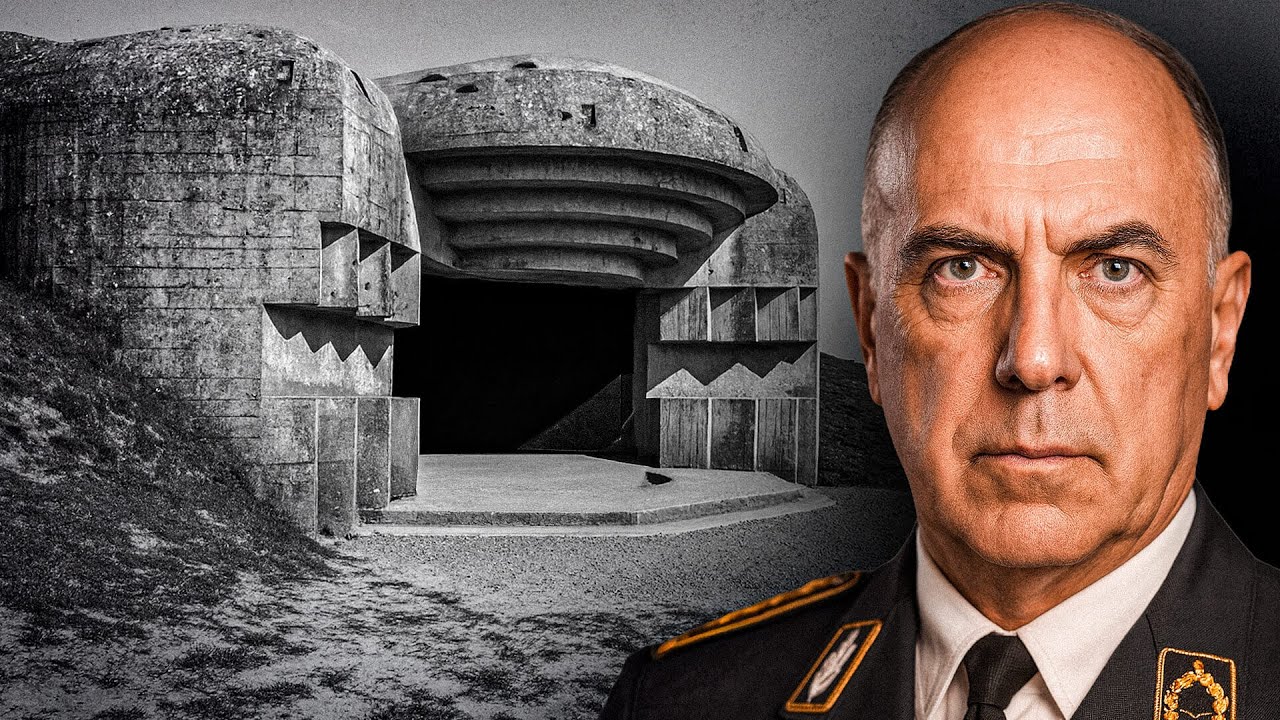
Todt's reach now extended across occupied Europe. After France's defeat in June 1940, he directed the construction of vast coastal fortifications along the Atlantic that would later become known as the Atlantic Wall.
OT engineers built U-boat pens at Lorient and Saint-Nazaire, submarine bases protected by concrete roofs up to seven meters thick. They also constructed airfields, supply depots, and repair facilities to sustain the Luftwaffe and Kriegsmarine.
Each project demonstrated Todt's mastery of logistics and his willingness to harness massive human resources at any cost. That cost grew sharply after 1941 with the invasion of the Soviet Union in June.
OT expanded into Eastern Europe. There Todt's engineers faced harsh conditions and overwhelming demand for roads, airstrips, and fortifications to keep the German advance supplied. Projects like Transit Road 4, the Durchgangsstrasse Vier, a major east-west highway through occupied Ukraine, consumed tens of thousands of laborers.
Many were prisoners of war, civilians, or concentration camp inmates. Under Organisation Todt, forced labor became systematized. Historians estimate that by 1944, more than 1.3 million people worked for OT, including hundreds of thousands of foreign laborers compelled to serve.
Working conditions were brutal: long hours, minimal food, and little medical care. Todt's organization blurred the line between military necessity and exploitation. Although Todt himself occasionally expressed concern about inefficiency and morale, he never challenged the use of coerced labor. His focus remained on output.
Inside the hierarchy, Todt's position was both powerful and precarious. He was hemmed in by political rivals, from Göring's economic bureaucracy to Bormann's grip on Hitler's inner circle. Todt's preference for practical engineering solutions often conflicted with ideological grandstanding.
Several contemporaries later claimed that by 1941 he had grown disillusioned with the war's direction. He reportedly warned Hitler that victory in the east was impossible without ending the conflict or restructuring production.
Still, Todt continued to deliver results. By late 1941, Organisation Todt had become the logistical backbone of the German war machine. Its projects spanned from the Arctic Circle to North Africa, each directed from Todt's meticulously organized Berlin headquarters.
He had achieved what few others in the regime managed: total control over resources without formal political office beyond his ministries. Yet his growing influence also made him a target.

As the Eastern Front bogged down and losses mounted, Todt's warnings about overextension reached Hitler himself. Their relationship, once built on mutual respect, had begun to strain. What happened next would end Todt's career and his life in a single fiery moment.
In early February 1942, Fritz Todt arrived at Hitler's Eastern Front headquarters, the Wolf's Lair in East Prussia. The war in the Soviet Union was faltering, and tensions inside Hitler's circle were high.
On February 7, Todt presented his latest report on armaments and logistics. According to witnesses, he bluntly told Hitler that the war could not be won militarily and that Germany's resources were already overstretched. Hitler reportedly dismissed his warnings.
Later that night, the two men dined together, but the atmosphere was strained. The next morning, February 8, 1942, Todt prepared to return to Berlin aboard his personal aircraft, a Heinkel He 111.
At around 8:35 a.m., the plane took off from the Rastenburg airfield. Seconds later, it exploded in midair and crashed near the runway, killing Todt and all aboard. Albert Speer, who had been invited to join the flight, changed his mind at the last moment, a decision that likely saved his life.
Hitler reacted swiftly. Within hours, he appointed Speer as Todt's successor as Reich Minister for Armaments and Munitions and head of Organisation Todt. The official explanation blamed a technical malfunction in the aircraft's fuel system.
From the beginning, rumors circulated that the explosion had been no accident. Some contemporaries suggested assassination, perhaps by Hitler himself, angered by Todt's criticism, or by rivals like Bormann or Göring, eager to consolidate power. Others pointed to fuel contamination or maintenance failure. No conclusive evidence has ever emerged, and historians remain divided.
What is certain is that Todt's death marked a turning point in the Nazi war economy. Under Speer, Organisation Todt became even larger and more integrated into Germany's war apparatus.
Forced labor expanded dramatically, feeding projects such as the V-weapon launch sites in northern France, the underground armament factories in Mittelbau-Dora, and vast networks of air raid shelters and bunkers across the Reich. The efficiency and brutality of these later efforts owed much to the system Todt had created.
After 1942, Todt's name faded from public view, overshadowed by Speer's later prominence at Nuremberg. Organisation Todt itself was declared a criminal organization for its role in the exploitation of forced laborers, though few of its leaders were prosecuted.
The moral responsibility of its founder remains a subject of debate. Some biographers portray Todt as a technocrat, an engineer who saw himself as apolitical, devoted to progress and order. Others argue that his work enabled the Nazi regime to wage aggressive war and institutionalize coercion on an industrial scale.
In death, Todt remained what he was in life: an enigma. Efficient, brilliant, and loyal, yet complicit in the machinery of oppression. His autobahns still cross modern Germany, silent reminders of how progress can serve power. For historians, his legacy poses a single question: can technology ever be neutral under tyranny?