In the early 1960s, Tommy Kirk was one of the most bankable young stars in Hollywood, delivering massive box office returns for Walt Disney as the embodiment of the wholesome American boy. But behind the studio’s carefully polished image, a far more complicated reality was unfolding—one that would ultimately lead to his abrupt and brutal dismissal. Disney executives had long monitored Kirk’s personal life, and in 1964 they exposed his homosexuality. Exploiting the strict social intolerance of the era, the corporation moved quickly to sever ties with the 22-year-old actor.
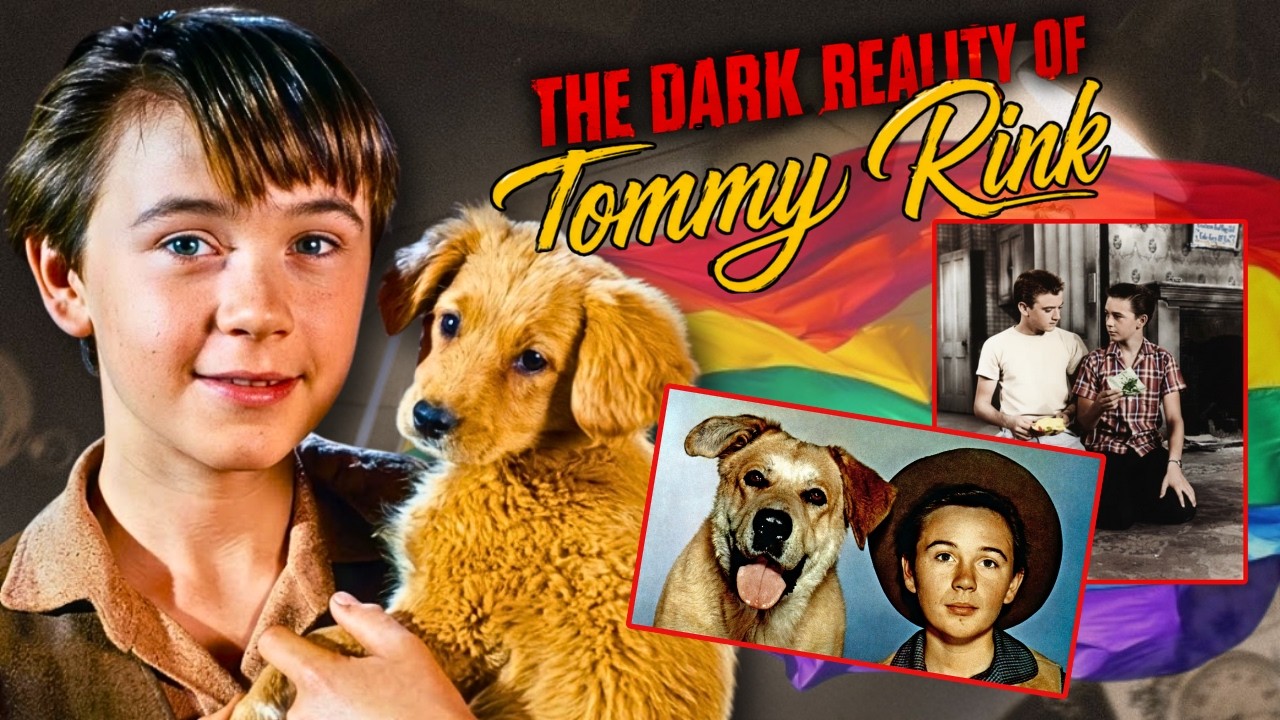
He was locked out of the studios, his name was scrubbed from promotional campaigns, and he was cast into professional exile—a fall that pushed him into decades of substance abuse. Thomas Lee Kirk was born on December 10, 1941, in Louisville, Kentucky, just three days after the attack on Pearl Harbor. Raised in a struggling working-class household alongside three brothers, his family eventually moved to Los Angeles County in search of stability and better job prospects. The relocation was never about chasing fame—it was a pragmatic decision for survival.
Kirk’s entry into acting was entirely accidental. His older brother, Joe, was the one with ambitions of performing, and Tommy was brought along to an audition at the Pasadena Playhouse simply because he needed supervision. While Joe performed with earnest determination, the casting directors noticed Tommy’s natural presence. Joe did not get the part.
Tommy did. The role at the Playhouse paid nothing and offered only a few lines, but it gave Kirk invaluable exposure. A talent agent from the Gertz Agency spotted him during a performance and immediately signed him. The timing was perfect.
Television was exploding in popularity, creating an insatiable demand for young actors. Kirk made his television debut in 1955 on an episode of TV Reader’s Digest. He quickly impressed industry professionals with his reliability and natural on-camera presence. It wasn’t long before the most powerful name in family entertainment came calling.
Walt Disney was expanding his empire into live-action television, and the Mickey Mouse Club had become a cultural phenomenon. Disney executives needed actors to carry serialized dramatic segments based on the Hardy Boys mysteries, and Kirk was cast as Joe Hardy alongside Tim Considine. The serial premiered in 1956 and became an unprecedented ratings success, cementing Kirk’s value to the studio. Disney executives recognized something rare in Kirk.
He could access genuine emotional depth on command—he could cry on cue with startling authenticity. This ability earned him the lead role in the 1957 frontier drama Old Yeller. The film’s devastating climax, in which Kirk’s character is forced to shoot his beloved dog, emotionally scarred an entire generation of viewers. It became a shared cultural milestone, referenced in later pop culture touchstones like the film Stripes and the sitcom Friends.
Old Yeller was the fifth highest-grossing film of 1957, and Kirk’s success made Walt Disney very happy. Kirk later recalled meeting Disney at a Beverly Hills hotel, where the studio head pointed to him and called him his “good luck piece. ” For the young actor, it was the ultimate validation. But the warm relationship was built on strictly transactional terms.
When Disney canceled a planned Oz adaptation in the late 1950s, executives revealed they did not trust television actors like Kirk to anchor a major theatrical release. The studio shelved the project, and Kirk absorbed the subtle demotion. He soon proved them wrong. In 1959, Kirk starred in The Shaggy Dog, a supernatural comedy that launched an entirely new genre for Disney.
The film featured Fred MacMurray in a supporting role, and the marketing heavily promoted MacMurray’s name. But audiences responded to Kirk. The film became the number two box office hit of the year, generating massive profits for the studio. By 1960, Kirk was at the absolute peak of his commercial power.
But a physical transformation was underway. Puberty was making him thin, bony, and gangly—qualities that threatened his carefully cultivated boy-next-door image. Ironically, that exact look was suddenly an asset for the studio’s upcoming adaptation of Swiss Family Robinson, which called for a teenage son who looked like he had survived a shipwreck. Filming on the island of Tobago was physically demanding, but Kirk faced a deeper psychological strain.
He experienced severe homesickness—not for his biological family, but for the nightlife of Los Angeles. By this time, a massive disconnect had formed between the wholesome characters he played and his actual life off camera. He was a wealthy young celebrity quietly exploring an underground social scene. Kirk had come to terms with a fundamental truth about himself: he was gay.
In the early 1960s, this was a heavily guarded secret. The entertainment industry operated under strict morality clauses, and for an actor whose entire brand was built on clean-cut family values, being openly gay was a career death sentence. He sensed that some of his co-stars had figured it out. Jane Wyman, who played his mother in the 1962 film Bon Voyage, treated him with exceptional coldness throughout production.
Kirk was certain her hostility stemmed from her disapproval of his sexuality. He also began to suspect that executives at Disney had caught on. His survival strategy was simple: he had to remain immensely profitable. As long as his films made millions, he hoped the studio would look the other way.
In 1962, Disney engaged in a classic public relations maneuver to reinforce Kirk’s wholesome image. They sent him to Europe to film Escapade in Florence and paired him with Annette Funicello, the studio’s premier female teen star. Entertainment columnists immediately suggested the two were romantically involved. The story was completely fabricated, but it achieved its goal of neutralizing rumors about Kirk’s personal life.
Disney then decided to capitalize on the success of Old Yeller with a sequel. Savage Sam reunited Kirk with his on-screen brother, Kevin Corcoran, but the production was plagued by a derivative script and an absence of the emotional depth that had made the original a cultural touchstone. The film was a critical and commercial failure. It became Kirk’s first major strike.
The breaking point came in 1964, far from any movie set. While working on The Misadventures of Merlin Jones with Funicello, Kirk was involved in a serious incident at a public swimming pool in Burbank. He was caught in a compromising situation involving a legally protected individual. When the individual’s mother discovered what had happened, she delivered the information directly to Walt Disney Studios.
The reaction was immediate and ruthless. People who had worked with Kirk for years suddenly became cold and distant. The final decision came from Walt Disney himself. To protect his company’s wholesome image, Disney personally ended Kirk’s contract.
The studio’s subsequent business maneuvers were unexpectedly harsh. The Misadventures of Merlin Jones had not yet been released, and despite being a low-budget project stitched together from television episodes, it became an extraordinarily lucrative box office success. Disney, famously opposed to sequels, wanted another one. They rented Kirk back on a freelance basis to star in The Monkey’s Uncle, which also became a box office bonanza.
But once filming wrapped, the door was permanently closed. Disney did not issue a public press release about Kirk’s termination. In the 1960s, studios preferred to let actors fade quietly away. But within the industry, the truth was widely known.
Kirk turned to American International Pictures, an independent studio known for producing low-budget, highly profitable films aimed at the teenage market. He reunited with Funicello for Pajama Party and quickly signed on for a string of beach and bikini films. The dynamic was similar to Disney, but with smaller budgets and fewer clothes. Avoiding trouble, however, was no longer possible.
In December 1964, Kirk attended a Christmas party in Los Angeles. Local police arrived, and during their investigation they discovered Kirk was in possession of marijuana. A subsequent search of his vehicle found barbiturates. The arrest made the local papers.
Kirk’s legal team managed to have the marijuana charges dropped and argued that the barbiturates were legally prescribed. From a legal standpoint, he avoided prison. But the headlines had already done their damage. Before the arrest, Kirk had three major film projects lined up.
Following the arrest, producers systematically fired him from all three: Wild Bikini, Beach Ball, and, most tragically, The Sons of Katie Elder. That last film was a high-profile Western starring John Wayne—exactly the type of serious adult role Kirk needed to legitimize himself as a dramatic actor. The executives refused to risk their investment on an actor embroiled in a drug scandal. The door to mainstream Hollywood slammed shut.
With major studios refusing to return his calls, Kirk was forced to take whatever work he could find. His management operated with a short-term, opportunistic mindset, sending him to sets with terrible scripts and no artistic merit as long as producers cut a check. Throughout the late 1960s, he appeared in cheap science fiction and monster movies, completely detached from the quality productions that had defined his early career. By the early 1970s, the landscape of American cinema had shifted radically, and Kirk’s clean-cut brand was out of fashion.
In desperation, he accepted a role in Blood of Ghastly Horror, a micro-budget horror film directed by Al Adamson. The production was chaotic, amateurish, and—critically—non-union. When the Screen Actors Guild discovered Kirk had crossed union lines, his standing within the mainstream entertainment community was further marginalized. The professional isolation triggered a severe psychological decline.
Kirk’s drug habit escalated into a life-threatening dependency. On one harrowing occasion, he came dangerously close to a fatal overdose. By 1973, his telephone had stopped ringing with film offers. The former superstar was forced to take a job as a waiter in Los Angeles.
He also worked as a chauffeur—the boy who had once been chauffeured around the Disney lot now driving a limousine for clients who had no idea he had anchored the fifth highest-grossing film in America. Despite his circumstances, Kirk enrolled in acting classes at the Lee Strasberg Theatre and Film Institute, studying method acting in preparation for opportunities that were not coming. He had hit rock bottom. When a person loses everything they have tried to protect, the fear of exposure often evaporates.
In 1993, Kirk sat for a comprehensive retrospective interview with journalist Kevin J. Schlereth for Film Facts magazine. For the first time, he explicitly and publicly discussed his identity as a gay man and the devastating impact it had on his trajectory at Disney. The industry reacted with total silence.
The publication of the interview served as the final severing of his relationship with the Hollywood machine. Recognizing the finality of the situation, Kirk left Los Angeles and transitioned into musical theater, settling into regional productions of classic musicals like Hello, Dolly! and Little Mary Sunshine. He was a working actor again, earning a living on his own terms.
As the home video market exploded in the 1980s, film offers slowly came back—but they bore no resemblance to his youthful work. Kirk found himself in the basement of independent cinema, appearing in grim exploitation films like Streets of Death and obscure micro-budget productions like Billy Frankenstein and The Education of a Vampire. In 1990, he publicly announced he was out of money. But he did not seek sympathy.
Instead, he opened his own small business, Tommy Kirk’s Carpet and Upholstery, in the San Fernando Valley. He cleaned floors and furniture for ordinary citizens, many of whom had no idea that the man treating their carpets was once Walt Disney’s golden boy. Kirk told reporters he was not bitter about his exile. He harbored no ill will toward the executives who had discarded him, and he did not regret the trajectory of his life.
In 2006, the Walt Disney Company officially recognized Kirk’s contributions by inducting him as a Disney Legend. He stood on stage alongside former co-stars Tim Considine and Kevin Corcoran. Kirk was entirely gracious. He said he wanted fans to remember the quality of the films he helped build, specifically pointing to Swiss Family Robinson and Old Yeller as the ultimate representations of his career.
Thomas Lee Kirk passed away in Las Vegas on September 28, 2021, at the age of 79. He maintained lifelong bonds with former co-stars like Kevin Corcoran and Beverly Washburn. He survived immense professional loss, found quiet dignity in ordinary labor, and secured his legacy as a foundational pillar of American family cinema.