On July 4, 1973, inside the Guards Chapel at Wellington Barracks, a cavalry officer in full dress uniform stood at the altar waiting for a bride whom half of fashionable London was discussing in whispers. The organ sounded, the aristocracy took their seats, and summer light flooded one of the grandest upper-class weddings Britain had seen that year. Andrew Parker Bowles married Camilla Shand that afternoon, and both families beamed with joy.
Almost no one in that church expected their blessed union to end up splashed across every front page in the country. Some 5,000 miles away, aboard a Royal Navy frigate, a young naval officer read the same news in a bundle of British newspapers that reached him weeks late. There is no need to name him now. Prince Charles had been involved with Camilla for only a few months before sailing for the Caribbean, and by the time he returned, she was wearing another man's ring.
The wedding at the Guards Chapel carried doubts even before the couple signed the register. Weddings like that usually vanish into the society pages and stay there. This one refused to. Over the next two decades, the marriage that began that July day collapsed in front of the entire nation, its details exposed through phone taps, tell-all books, and a televised royal confession, until the divorce arrived as the least surprising development in a long-running scandal.
To understand why, set aside the tabloid narrative and follow the quieter trail left by the documents. Move forward five decades. In May 2023, inside Westminster Abbey, Camilla knelt beside King Charles III and rose from the cushion as Queen Consort of the United Kingdom. Cameras focused on the crown, the anointing, and centuries of ritual piled on ritual. Somewhere in that ceremony, or at least in the long story that followed it, lingered the memory of the man who married her first and then left her.
At the heart of this story lies a strange paradox the tabloids never grasped. Andrew Parker Bowles divorced the woman who would one day be crowned Queen, and he completed the divorce years before anyone seriously imagined such a crown was in the offing. Seen that way, he looks either heartbroken or foolish. Neither label survives scrutiny of the divorce papers.
Calling her Queen Camilla today is accurate and correct. Calling her Queen Camilla in 1995 is more like time travel. Throughout the marriage and divorce examined here, she was known by a far humbler name: Camilla Parker Bowles, wife of a cavalry officer and mother of two, a name London gossip circles had traded for years. The crown came later.
The divorce comes first, and the popular explanation for it collapses the moment the dates are lined up. Most people asked why the marriage fell apart reach for the obvious answer. She loved Prince Charles, the story goes. Once that relationship became public, the humiliated husband walked out in anger, loudly, dramatically, and usually in the wrong. The affair with Charles continued through most of the marriage without ending it, which means the affair alone explains almost nothing about the specific timing of 1995.
Andrew Parker Bowles was born in December 1939 into a wealthy Catholic family, the kind whose roots are measured in centuries rather than decades. His mother, Waterford, came from old aristocratic stock, and Catholicism ran through the whole family at a time when that faith still carried quiet social penalties for anyone close to the throne. He trained at Sandhurst. In 1960, the Army commissioned him into the Royal Horse Guards, beginning a 34-year military career that eventually put him in command of the regiment that escorts the monarch on state occasions.
Camilla Shand arrived in July 1947, daughter of Major Bruce Shand, a decorated war hero turned wine merchant, and Rosalind Cubitt, whose family held an esteemed place in English society. She grew up in the Sussex countryside among horses and hunting, raised in the confidence of the rural gentry. No one prepared her for royal life; they prepared her for the life she chose herself: a happy marriage in her own world, weekends in the country, dogs at her side, and a respected cavalry officer for a husband.
Camilla also inherited an irresistible legacy. Her great-grandmother, Alice Keppel, was the mistress of King Edward VII during the last twelve years of his reign, a role she performed so discreetly that the royal court tolerated her almost openly. History, it turns out, rhymes beautifully. The great-granddaughter would one day occupy roughly the same position as her great-grandmother, mistress of a future king. The great-granddaughter eventually succeeded where her great-grandmother did not, and married the man openly.
To understand how a complicated marriage like this lasted so long, imagine the world that produced it. English upper-class society in the 1970s was governed by rules older than any of its members. Rules that prized discretion over fidelity and appearances above almost everything. The husband kept his affairs quiet; the wife kept her composure. Divorce in that world carried a stigma of failure that lasted far longer than any personal betrayal.
Within those rules, an arrangement like the Parker Bowles marriage looked less like a scandal and more like a familiar settlement. Old families had tolerated open marriages for generations, provided no one made a scene or embarrassed the family publicly. Andrew and Camilla slid smoothly into that tradition. They produced heirs, kept an elegant country house, attended the right weddings, and conducted their romantic lives outside the marriage with the discretion the system required.
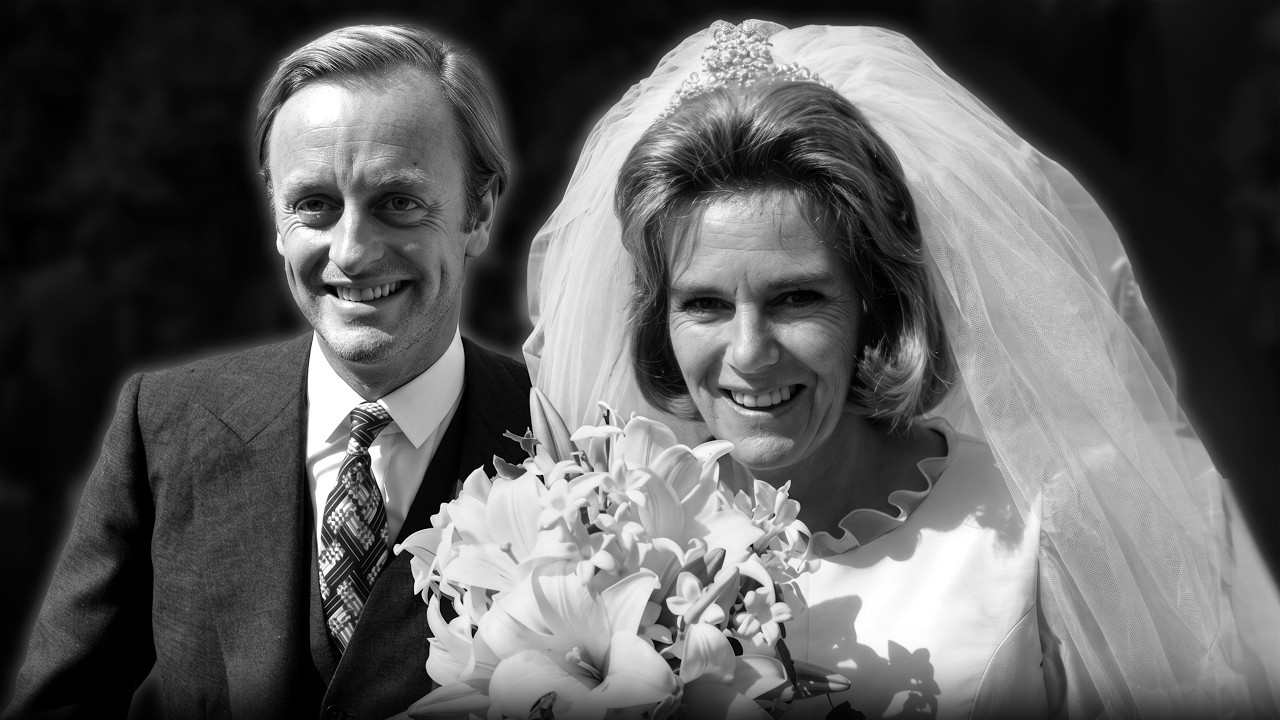
For twenty years, the system worked exactly as designed, until a tape recorder and a scandal-hungry tabloid press decided the old rules no longer applied. This system also explains why the divorce came late rather than early. A couple living under the so-called Parker Bowles arrangement in, say, the 1950s might have stayed legally married until death, affairs and all, simply because the social cost of divorce outweighed the private cost of infidelity.
By the 1990s, those calculations had changed. The press grew hungrier. Respect for the aristocracy shrank, and the old promise that discretion would protect a marriage from public ruin stopped holding true. Andrew and Camilla collided with an eighteenth-century arrangement and a late twentieth-century media machine, and the machine won.
Set aside the royal drama for a moment and look at Andrew Parker Bowles from his own perspective, because the tabloids reduced him to a cuckold and missed a far more interesting man. He rose through the Royal Horse Guards to command the regiment that escorts the monarch in parades, a post demanding protocol, courage, and almost theatrical calm. His record earned genuine admiration. He served in Northern Ireland during the height of the Troubles, and the Army later entrusted him with veterinary services and the preparation of horses, the branch responsible for keeping the royal mounts fit for the parade ground.
Colleagues remember him as a charming officer with steady nerves, a horseman's confidence, and skill at handling difficult situations. That confidence did not come from nowhere. Andrew grew up expecting to command any room and charm everyone in it, moving through Britain's finest houses as if he owned them. The same confidence that carried him through a distinguished military career also let him handle his complicated marriage with a calm most men could not manage.
A lesser man might have crumbled under the humiliation the press later heaped on him. Andrew, by contrast, kept his elegance, his good manners, and a sense of humor that seemed unbreakable, which becomes clear when people insist that wounded pride alone drove him to a lawyer.
Their story began in the late 1960s. Sources differ on the exact year, but most settle on 1965 or 1966. Andrew's younger brother, Simon, made the introduction, and the two young aristocrats slid into an on-and-off romance that often ended abruptly. Military uniform meant long tours and longer absences. He also enjoyed other women's company, a habit he saw no urgent reason to abandon. His romance with Camilla kept stalling like a car with a moody engine.
The phrase "on again, off again" barely captures how turbulent it was. Andrew would vanish after a posting, reappear months later, turn on the charm to draw Camilla back, then drift toward someone else, the cycle repeating like a bad habit. Camilla, who was neither shy nor retiring, did not sit waiting in silence through all of it.
Both eventually entered marriage as grown adults who knew exactly what kind of man and woman they were marrying, which matters enormously when trying to explain why neither panicked over the other's relationships two decades later. None of this stopped either of them from living a full romantic life elsewhere.
Around 1970, a brief and warm romance developed between Andrew and Princess Anne, the Queen's only daughter, which the press noticed at Royal Ascot and documented with great interest. That relationship had clear limits. Andrew was Catholic, and at the time the constitutional rules surrounding the royal line made marriage to a Protestant princess nearly impossible. So whatever warmth existed between them never had a real chance of reaching the altar.
The Princess Anne story deserves a closer look because it reveals how close Andrew was to the royal family long before Camilla. Around 1970, the handsome Catholic officer and the Queen's daughter appeared together often enough that the newspapers took note. Marriage, however, had no chance. The rules of royal succession treated Andrew's Catholicism as an obstacle, an inheritance from centuries of religious politics that still determined who could marry into the royal family. The romance faded into the friendly footnote it remains today.
Andrew ignored the matter and returned to Camilla. Meanwhile, Camilla found her own prince. On March 15, 1973, readers of The Times found the engagement of Andrew Parker Bowles and Camilla Shand printed in black and white. To the outside world, the step looked natural for an intermittent love affair that had lasted nearly a decade, while half of London secretly wagered on whether the wedding would ever happen.
Behind that announcement lies one of the most tantalizing theories in this story. According to biographer Sally Bedell Smith, the parents Bruce Shand and Derek Parker Bowles arranged the announcement themselves and placed it in the paper to force Andrew to accept the marriage proposal he kept postponing. The prevailing logic was that once an engagement was published, no man of Andrew's class could back out without scandal.

Whether the parents truly engineered it remains unconfirmed, falling into the category of royal stories everyone repeats and no one can fully document. The timing, though, suits a man who needed a strong push toward marriage. The image of two parents conspiring over the breakfast table to trap a hesitant bachelor is almost too perfect, and historians treat it with the caution it deserves. Andrew had, after all, been circling Camilla for years without committing. So the idea that he needed a push carries a certain logic. Bruce Shand wanted his daughter settled, while Derek Parker Bowles wanted his son to stop wavering. Whether the two men actually planted the announcement or the story became legend through repetition, no surviving document confirms it, placing it in the graveyard of royal tales that seem true but prove nothing.
Family life proceeded according to the expected script, at least on the surface. Camilla gave birth to a son, Tom, in December 1974 and a daughter, Laura, in January 1978, and the family settled into a rural aristocratic lifestyle. Horses, dogs, house parties, and an officer steadily rising through the cavalry ranks. From the outside, life looked like a portrait of upper-class contentment.
On the inside, both spouses quietly pursued relationships with other people. Andrew never abandoned his fondness for women. His longest relationship was with Rosemary Pitman, born Rosemary Dickinson, then married to a fellow officer, and that relationship lasted far longer than his marriage to Camilla. Camilla, for her part, resumed her physical relationship with Prince Charles. His marriage to Diana Spencer in 1981 did not cool their earlier connection.
Later, Charles allowed his biographer Jonathan Dimbleby to record that his marriage to Diana had irreparably broken down around 1986, the same period when his relationship with Camilla resumed in earnest. So the Parker Bowles household rested on an understanding that royal biographers love to describe but cannot prove conclusively. The polite term used today is "open marriage."
The theory holds that both partners overlooked each other's relationships because neither intended to destroy a comfortable arrangement over something as inconvenient as fidelity. There is no signed agreement, no recorded confession laying it out. Historians infer the open marriage from the fact that a couple conducting such public relationships stayed legally married for more than 20 years without any public objection, which counts as strong circumstantial evidence and weak documentary proof.
The children grew up in a home that looked entirely normal from the outside. Tom and Laura rode ponies, attended good schools, and enjoyed the comfort of stability that a family with land and influence provides. Whatever arrangements their parents made in private never cost the two children a roof over their heads or a birthday. That simplicity matters in the end, because a marriage maintained partly for the sake of young children loses that particular glue once the children grow up and leave. This describes precisely where the Parker Bowles family stood by the mid-1990s.
Any honest account has to factor in a third party. Prince Charles was a constant presence. Charles moved in and out of Camilla's life intermittently from 1971 onward, and his 1981 marriage to Diana Spencer did nothing to sever the tie. By the mid-1980s, according to the account Charles later endorsed, his marriage to Diana had broken down completely. Around the same period, his relationship with Camilla resumed with fresh intensity.
Here lies the detail that dismantles the simplest theory of the divorce. If Camilla's love for Charles alone was enough to end her marriage, why did that marriage hold through all those years, year after year, through the 1980s and 1990s, when everyone at the heart of the situation knew Andrew, Camilla, and Charles alike? The secret arrangement rested on everyone knowing without it being published, and for more than a decade that silence held the marriage together rather than tearing it apart. In other words, the affair was part of the marriage's strange equilibrium, not the bomb that finally blew it up.
Diana deserves a careful word here, because media coverage of the era often reduced her to a narrative device. She suffered through a marriage haunted by another woman, and she spoke about that pain with a candor that changed how Britain viewed its royal family. Her suffering had value, and it should be treated as fact rather than as a scene. Even so, her marriage and the Parker Bowles marriage ran on separate tracks, and the collapse of one did not automatically trigger divorce in the other.
For nearly two decades, the situation persisted because the outside world knew next to nothing about it. That silence broke in June 1992, when journalist Andrew Morton published Diana: Her True Story and named Camilla explicitly as the mistress at the center of the royal marriages' collapse. Overnight, a private name became a public scandal. The Parker Bowles children opened newspapers and read about their mother's emotional life in language no family wants to see in headlines.
Then came the tape. On January 13, 1993, an Australian magazine called New Idea published the full transcript of a telephone call between Charles and Camilla secretly recorded in 1989. Within hours, British tabloids reprinted every word. The press called it "Camillagate." The recording captured the lovers in a moment so intimate and embarrassing that it stripped everyone connected to it, including Andrew and the children, of the last shred of privacy.
In the early 1990s, the British tabloids had a historic royal story and treated it with extreme ruthlessness. Fleet Street rarely found material as fertile as a scandal, and every new revelation about Charles, Diana, and Camilla sold millions of copies. In the middle of that media storm stood the Parker Bowles family, ordinary people with no crown to hide behind and no press office to manage the fallout. Andrew commanded soldiers while his wife dominated headlines. The gap between those two facts widened to a point no proud officer could ignore.

Yet, as the divorce timeline shows, comfort and legal necessity move on separate tracks. Remember the children caught in the scandal. Tom and Laura Parker Bowles, teenagers in 1993, opened newspapers to find the most intimate details of their parents' private lives on the front pages, devoured by a mocking nation. No child accepts that. Whatever private understanding their parents reached years earlier, the public phase of the scandal inflicted serious damage on a family that had never sought the spotlight. That damage partly explains why the divorce eventually felt less like an explosion and more like exhausted surrender.
If the tape shattered the family's privacy, the television broadcast shattered what remained of the pretense. In June 1994, Prince Charles sat down with Jonathan Dimbleby for a documentary watched by millions and admitted on camera to committing adultery. He wrapped the admission in careful language, conceding that he had been unfaithful only after his marriage had reached what he described as an irreparably broken point, after both parties had tried their best. The British public heard a prince confess to an affair with a married woman. That woman was named Parker Bowles.
For Andrew, the broadcast brought a fresh humiliation. Here the first popular theory of the divorce finds its footing. Many biographers claim that Charles's televised confession wounded Andrew's military pride so deeply that it drove him straight to file for divorce, unable to command the Household Cavalry while the entire country watched a prince confess to sleeping with his wife. The argument sounds reasonable, yet it rests on remarkably little.
Andrew never issued any statement linking the broadcast to his decision to file, and the divorce announcement that followed described a marriage worn down over years, not one destroyed in a single night on television. The humiliation theory persists because it satisfies something in us: a wronged soldier, an arrogant prince, public accountability, a divorce filed in righteous anger. It feels like justice. Reality rarely moves that smoothly.
By all accounts from the period, Andrew handled the scandal with a soldier's coolness, not blazing rage. The legal record shows no sudden rush to a law office in the weeks after the broadcast. If the confession were the real reason for the divorce, the paperwork might not have arrived on time.
So how did the marriage actually end? Not with a courtroom fight, and not with an angry statement to cameras after Dimbleby. On January 10, 1995, the couple's lawyers issued a terse, almost boring statement about divorce proceedings, and its wording summarized the whole story. The statement acknowledged that throughout the marriage both parties had pursued quite separate interests, and that in recent years they had, in the lawyers' words, lived entirely separate lives. Nothing about a scandal, nothing about Charles, nothing about tapes or televised confessions, just two people admitting, as simply as possible, that they had long since stopped sharing a life.
The legal process then moved with unglamorous speed. The judge issued a decree nisi on January 19, 1995, followed by a decree absolute on March 3, 1995, ending a marriage of nearly 22 years. The following year, 1996, Andrew married Rosemary Pitman, the woman he had loved through most of his marriage to Camilla. He did not drift into painful isolation; he walked straight into the arms of a partner he had wanted for years, which says something about what actually drove him to file those papers.
Consider the wording of the January 1995 statement once more. Because lawyers choose words with extreme care, they described a couple who each had their own interests throughout the marriage and had lived apart in recent years. They used language portraying the separation as gradual, mutual, and long-standing. The statement never mentioned infidelity, scandal, or a breaking point. Lawyers may soften phrasing to spare a client further embarrassment, but the explicit claim of years spent living apart matches every detail of the timeline, from the separation around 1993 to the quick remarriage that followed.
Now compare the three explanations. The first theory blames the Dimbleby broadcast of June 1994. The second blames the Camillagate tape of January 1993, arguing that the public destruction of aristocratic privacy made the marriage socially impossible. Both share one weakness: they confuse a loud public event with a private legal case, and they ignore the spouses' own admission that they had lived apart before the cameras and the tapes arrived.
Test what each theory can actually prove. The first two rely almost entirely on timing, on the fact that a scandal occurred and a divorce followed, which any first-year logic student recognizes as the oldest trap in the field. The rooster crows before dawn, yet no one credits the rooster for the sunrise. The third theory, by contrast, points to documents: a joint statement describing years of separation, a decree absolute in March 1995, and a remarriage in 1996 to a woman Andrew had loved throughout his marriage.
Documents beat intuition. His second marriage in 1996 settles the debate better than any biographer's speculation. A man destroyed by public humiliation, freshly and bitterly divorced, does not usually rush to the altar with a long-term partner within a year. A man who ended a marriage quietly, one that had effectively ended with nothing but paperwork remaining, does exactly that. For him, the divorce closed a chapter that had finished long before, rather than opening a fresh wound.
Andrew married Rosemary Pitman because he had wanted to for years, and the divorce removed the last legal obstacle in his way. The scandal made noise around that decision without being its center. A strange paradox sits at the heart of the whole story. The British public wanted a rupture. They wanted a cuckolded cavalry officer hurling his wedding ring across the room the moment the prince confessed on television. A clean narrative of scandal and revenge worthy of a drama series.
What the records show instead resembles two exhausted spouses completing paperwork after their children had left home. Andrew Parker Bowles did not lose Camilla to Prince Charles in 1995. He lost her, if the word fits, in the early 1970s, when a naval posting and a decade-long on-and-off romance settled her fate and determined which prince captured her attention. The 1995 divorce was the closing of a page both had stopped reading years earlier.
The scandal accelerated events and made plenty of noise, but the real driver was far less dramatic. Two grown children, two long relationships outside the marriage, and a union that had quietly ended before any lawyer drafted a formal statement. Here lies the final and most important paradox of this story. The public immersed itself in the drama of a royal marriage collapsing and never noticed that the real separation had happened quietly years before, far from the camera lenses.
Andrew Parker Bowles lost his marriage the way most marriages end, slowly and privately, long before the official announcement. The scandal lit the fuse of the separation, the official papers revealed the truth, and the two accounts rarely match. So the next time a documentary tells you that a single scandal destroyed the marriage of Andrew and Camilla Parker Bowles, check the dates before you believe it. The crown came decades later. The heartbreak, if anyone felt it, belonged to a young man aboard a Royal Navy frigate in 1973, not to a cavalry commander in 1995.