Charles Barkley spent more than two decades telling the world exactly what he thought, even when it was uncomfortable. The Hall of Fame forward who declared he was not a role model, who admitted his mistakes on national television, and who built a broadcasting career on brutal honesty also carried a secret he did not hide so much as reframe: he lost roughly $30 million gambling in Las Vegas. The money was not stolen. It was not lost to a bad investment or embezzled by an advisor.
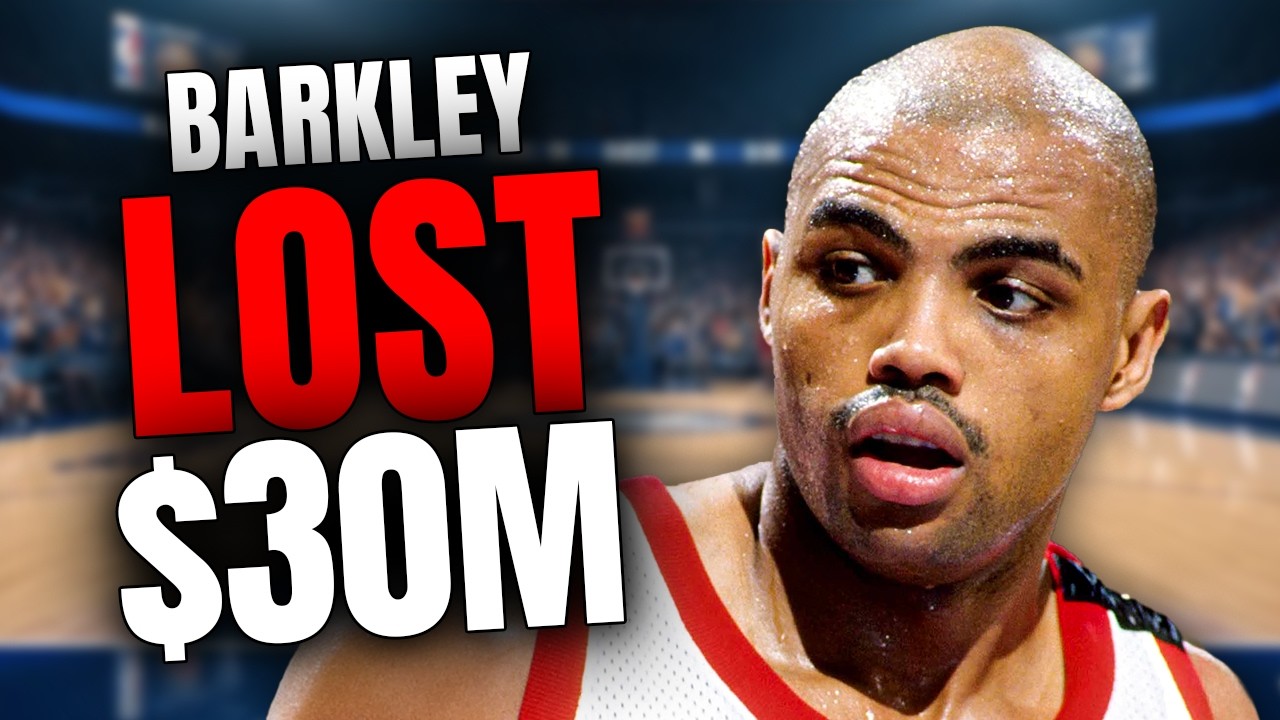
Barkley handed it over himself, one bet at a time, over the course of about two decades, mostly playing baccarat at high-stakes tables in some of the most famous casinos on the Strip. Barkley grew up in Leeds, Alabama, a small town outside Birmingham, where his mother worked multiple jobs and his grandmother raised him. Money was scarce. He later said the world owed him nothing, and that he planned to take what he wanted anyway.
Standing around 6-foot-6, he played power forward against taller opponents and overpowered them with force and relentlessness. He played at Auburn University before the Philadelphia 76ers drafted him fifth overall in 1984. Over 16 NBA seasons, he earned 11 All-Star selections, won the MVP award in 1993, and took home an Olympic gold medal with the Dream Team in Barcelona in 1992. He reached the Hall of Fame without ever winning a championship.
His 1993 Nike commercial, in which he said directly to the camera, “I am not a role model,” sparked a national debate about the responsibilities of athletes. That honesty became his defining public trait. It also followed him into casinos, where it helped him rationalize losses by simply acknowledging them out loud. In Las Vegas, casinos courted Barkley aggressively.
He had dedicated hosts at properties that included the Mirage, Caesars Palace, and the Wynn. These hosts are not concierge staff. Their job is to identify high-value gamblers, build long-term relationships, and make sure those players choose their casino when they want to play. Barkley played with markers, which function as lines of credit extended by the casino.
He would sign a document, receive chips, and have roughly 30 days to repay the amount. In Nevada, an unpaid marker is treated under the same bad-check statute as a bounced check. Nonpayment can be prosecuted as a felony by the Clark County District Attorney’s Office, the same office that prosecutes violent crimes. Barkley’s game of choice was baccarat, a game with no real skill component.
Players bet on the player or the banker, and the hand closest to nine wins. The house edge is small, barely over one percent, but applied to enormous wagers over hundreds of hours, it grinds steadily in the casino’s favor. Barkley has acknowledged he understood the math. He has said the attraction was not the possibility of winning, but the action and adrenaline of a large hand on the table.
His losses eventually became public. In 2006, at the height of his success on TNT’s “Inside the NBA,” Barkley admitted on air that he had lost $30 million gambling. He checked into a program to address gambling addiction that same year, though he later said the program helped only temporarily. That same period brought a serious legal confrontation.
When Barkley did not pay certain markers on time, Caesars Palace did not send a collector. The casino filed a complaint, and the machinery of Nevada’s criminal justice system moved toward him. Lawyers became involved. The matter was resolved quietly through a settlement, the terms of which were never disclosed publicly.
The episode illustrated how the modern casino industry collects debt. The collector is not an enforcer but a legal system that has placed the state’s prosecutorial power behind unpaid gambling credit. Barkley has said publicly, more than once, that he could afford the losses, and that the money never threatened his family’s security. He has also said he still gambles, though with smaller bets and different limits.
When asked whether he would ever stop completely, he gave a two-word answer: “Probably not. ”
Barkley’s family lived inside the story rather than watching it from the outside. His daughter Christiana has spoken about admiring her father’s honesty and willingness to be imperfect in public. His wife Maureen, whom he married in 1989, has spoken rarely and carefully about the gambling.
The casinos, for their part, never wanted Barkley to lose everything. A man who loses everything stops coming back. The ideal customer, in the industry’s logic, is someone who can afford to lose indefinitely. Barkley has said the losses never genuinely threatened his family’s security, and that may be true.
It may also be the most revealing thing he has ever said, because it placed him precisely where the casinos wanted him. He has estimated his total career earnings across basketball, endorsements, and broadcasting at around $200 million. The roughly $30 million he lost, by his own admission, was a substantial portion of that. The wider effect of celebrity gambling was not lost on the industry.
When Barkley told the world he had lost $30 million and kept returning, casinos understood that his presence encouraged ordinary gamblers. If a wealthy, famous, intelligent man could not walk away, then the average player at a modest table was not weak for staying. Barkley has spent his career earning roughly $200 million and losing about $30 million of it to casinos. He has been open about the addiction, has worked to manage it, and has never fully walked away.
He remains one of the most recognizable voices in American sports, still speaking with the same brutal clarity he always has. The line between the fan who cheered for him in Philadelphia or bought his jersey on a Saturday afternoon and the chips sliding across the baccarat felt is crooked but real. Barkley stood in the middle of that line for two decades. He grew up with nothing in Leeds, Alabama, built himself into one of the most famous athletes in American history, and then sat down at tables where the house has something no player can match: time.
The casino opens every morning, closes only when the law requires, and opens again the next day. It will be there long after every player who ever bet against it is gone. Barkley knew exactly what was happening, and he went back anyway.