When it comes to the American Mafia, few names from Philadelphia carry as much weight as Nicodemo “Little Nicky” Scarfo and Joseph “Skinny Joey” Merlino. Both men rose to the top of the Philadelphia crime family, but they ruled in starkly different ways—one through raw terror, the other through charm and media savvy. Scarfo, born in Brooklyn in 1929, took control of the Philadelphia mob in 1981 following the murder of his predecessor, Philip “Chicken Man” Testa. His rise marked the beginning of one of the bloodiest eras in the city’s organized crime history.
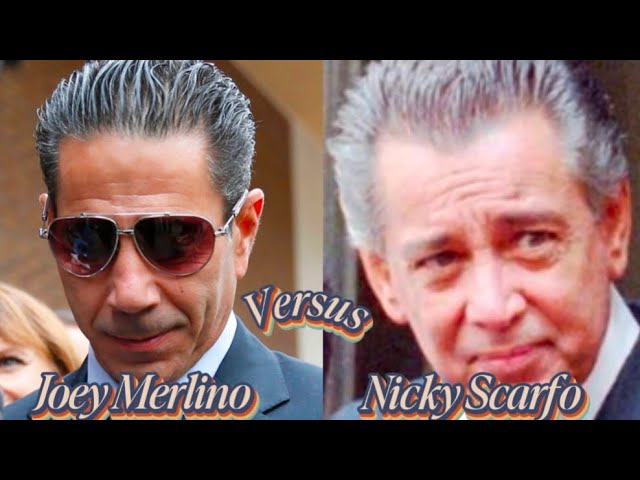
His leadership was defined by extreme violence and paranoia. Scarfo imposed a “street tax” on drug dealers, bookmakers, and loan sharks operating in his territory, and those who refused to pay were often killed. Under his rule, the family became deeply involved in methamphetamine trafficking, controlling the supply of P2P, a key ingredient in meth production. Scarfo’s ruthlessness extended to his own ranks.
He ordered the murder of Salvatore Testa, one of his top men, and was known to turn on friends and allies at the slightest suspicion of betrayal. It is estimated that he ordered more than a dozen murders during his reign, including the killing of Greek mob boss Chelsais Bouras, which cemented his dominance over the region. His violent methods attracted significant law enforcement attention. In 1988, Scarfo and several associates were convicted of racketeering, murder, and other charges.
He was sentenced to 55 years in federal prison, later adjusted to life without parole. He died behind bars on January 13, 2017, leaving behind a legacy defined by fear and bloodshed. Merlino, born in Philadelphia on March 13, 1962, grew up inside the Mafia. His father, Salvatore “Chucky” Merlino, served as underboss under Scarfo, embedding the younger Merlino in the criminal world from an early age.
In the early 1990s, Merlino led a faction that challenged the leadership of then-boss John Stanfa, sparking a violent mob war. After Stanfa’s arrest and conviction in 1994, Merlino took control of the Philadelphia crime family. Unlike Scarfo, Merlino embraced the spotlight. He earned the nickname “John Gotti of Passyunk Avenue” for his flamboyant lifestyle and frequent media appearances.
He hosted charitable events, including Thanksgiving turkey giveaways and Christmas parties for the homeless, which earned him a degree of public goodwill. But behind the public persona, Merlino’s tenure was marked by the same illegal enterprises that defined his predecessors: gambling, loan sharking, extortion, and drug trafficking. His time as boss also saw numerous attempts on his life, reflecting the volatile nature of Philadelphia’s underworld. In 1999, Merlino was indicted on multiple charges, including racketeering.
He was convicted in 2001 and sentenced to 14 years in federal prison. After his release in 2011, he relocated to Boca Raton, Florida, where he opened an Italian restaurant called Merlino’s. Despite claiming he had retired from organized crime, law enforcement continued to monitor him. In 2018, he was sentenced to two years in prison for illegal gambling.
He has since been released and remains a free man, despite repeated attempts by authorities to build new cases against him. The two bosses present a striking contrast in leadership styles. Scarfo ruled through absolute terror, believing fear was the only effective form of power. His paranoia dictated his decision-making, and that paranoia ultimately contributed to his downfall as informants emerged from within his inner circle.
Merlino, by contrast, ruled with finesse. He relied on charisma and personal connections rather than constant displays of violence. While Scarfo’s men reportedly despised him, Merlino’s crew remained loyal, a testament to his ability to inspire trust rather than fear. Public perception also divided the two men.
Scarfo was feared but never loved, seen as a tyrant whose reputation as a killer overshadowed any respect from the public. Merlino, on the other hand, was viewed as a celebrity gangster who played the media as skillfully as he played the streets. When measuring fear, Scarfo wins without question. His obsession with loyalty led him to kill friends, allies, and even family members suspected of betrayal.
No one was safe from his wrath. But when measuring influence, popularity, and longevity, Merlino takes the crown. He kept the Philadelphia Mafia afloat under intense FBI pressure and managed to walk out of prison and live a legitimate life, at least on paper. Scarfo ruled like a dictator.
Merlino ruled like a king of the people. In the end, that distinction may explain why Merlino remains a free man while Scarfo died in a federal prison cell.