A fishing boat pulled into a Virginia Beach marina in May 1986, carrying two men back from a day on the water. One was a retired FBI agent named Pat O’Donnell. The other, who introduced himself as Brian O’Neill, was a quiet neighbor who claimed to be a retired tech entrepreneur. As they docked, federal agents moved in and handcuffed O’Neill on the pier.
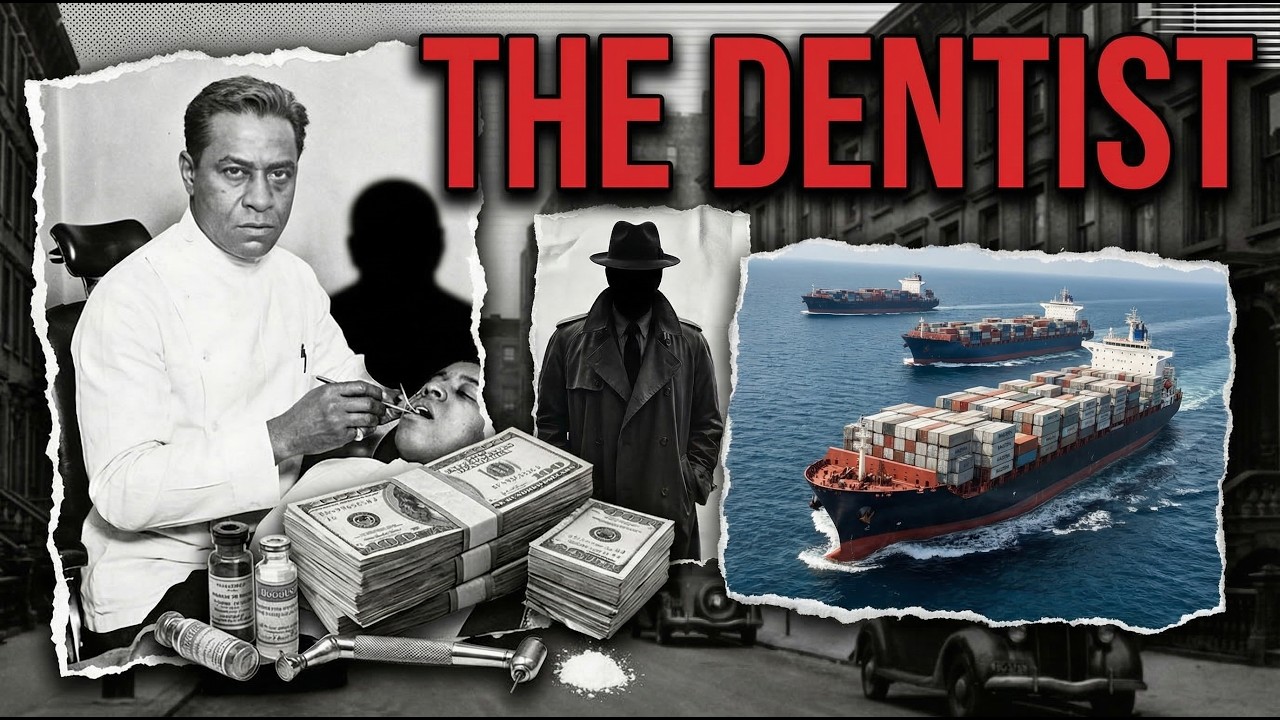
His fishing buddy, standing a few feet away, had no idea who he truly was. The man known as Brian O’Neill was actually Dr. Larry Lavin, an Ivy League-educated dentist from Philadelphia who had built one of the largest drug operations the East Coast had ever seen. Classified among the FBI’s ten most wanted fugitives, he had spent 18 months living under a false identity in an exclusive waterfront community.
The retired FBI agent he fished with every weekend had been unknowingly socializing with the man investigators had been hunting for over a year. Born in Haverhill, Massachusetts in the early 1970s, Larry Lavin grew up watching his father maintain an image of wealth he could not afford. The lesson stuck with the youngest son: work hard, but more importantly, play the angles. Larry hustled from a young age, and at 15, when his Catholic school shut down, he signed up for the competitive exam to attend Phillips Exeter Academy, one of America’s most elite boarding schools.
He arrived at Exeter with a heavy accent and braces so uncomfortable he could barely pronounce his own name. But within months, the working-class kid was not just fitting in. He was dealing drugs. His roommate later told investigators that Larry received nearly daily calls from contacts in Boston, always with the same message: “Tell Larry to call his mother.
” It was code, a signal to meet a connection. Exeter eventually expelled him, not for dealing, but for using. Larry talked his way into the University of Pennsylvania. It was the mid-1970s, and the campus was saturated with drugs.
He joined a fraternity and within one semester became the biggest dealer on campus. He started moving weed and Quaaludes, but switched to a more profitable, easier-to-hide product. As Larry would later put it himself: “Why carry an elephant on your back when you can carry an elephant in your pocket? ”
By 1980, at age 25 and still in dental school, his operation was grossing $5 million a month.
He built the network like a CEO builds a company, recruiting from his fraternity, promoting reliable people, and insulating himself from the street level. He hired a courier who drove 1,200 miles round trip from Philadelphia to Miami, mixing product into a cup of Sprite to stay awake on the drive. After graduating in 1981, Larry opened a dental practice and bought a house on the Main Line, the most exclusive suburb corridor in the Philadelphia area. His neighbors saw a young dentist with a nice family.
They had no idea they were living next to the man the media would soon call “Dr. Snow. ” The FBI later named his organization the Yuppie Conspiracy, a reference to the network of dentists, lawyers, stockbrokers, accountants, and other professionals who moved product through 14 states, the District of Columbia, and Canada. At its peak, the operation handled between 110 and 175 pounds of product per month, with an annual income of $60 million.
Larry spent like a man who believed he would never be caught. Between 1979 and 1982 alone, he paid cash for gold and silver bars, multiple properties, a BMW, and a seat on the Philadelphia Stock Exchange. In 1980, Larry returned from his honeymoon to discover that his money manager, a schemer named Mark Stewart, had used his cash to buy the Philadelphia Arena for $100,000. Stewart then expanded the operation, convincing Larry to buy a professional basketball team, the Lancaster Red Roses, moving them to Philadelphia and renaming them the Philadelphia Kings.
A kingpin owning a basketball team, with a former 76ers star as coach, seemed almost inconceivable. The team was terrible and the crowds were thin. Stewart, trying to salvage the venture, hired someone to torch the arena for insurance money. The first attempt only burned the roof.
The second succeeded. The insurance company never paid, and the fire drew the attention of the FBI to Stewart’s finances. Here, the story takes an unexpected turn. Stewart had also been handling finances for WMOT Records, a small Philadelphia label with one major hit: a funk song called “Double Dutch Bus” by Frankie Smith, released in 1981.
Instead of managing the money, Stewart diverted $1,440,000 of the label’s funds into his money laundering operation, the same one that cleaned Larry’s cash. The label was forced into bankruptcy, and investigators followed the financial trail of the missing money. That thread pulled the whole operation apart. Larry himself would later say, “Who would have thought that a multi-million dollar business would fold because of a song called Double Dutch Bus?
”
Federal agents began investigating Larry through the Stewart case. When FBI special agent Chuck Reed served tax-related paperwork at Larry’s dental office, he expected to rattle a suburban dentist. Instead, he found a man who was unnervingly calm, answering every question without flinching. But the evidence was piling up: the cash purchases, the real estate, the gold bars, the stock exchange seat, and cooperating witnesses from inside the network.
In 1984, the indictment came down. Eighty-three co-conspirators were named. Larry faced 40 counts, including distribution, conspiracy, and tax evasion. Free on $150,000 bail, with a pregnant wife and a toddler, he had a choice to make: face a federal courtroom and a potential life sentence, or run.
Larry ran. He drove south with his wife Marcia, leaving behind everything, the house, the practice, the BMW, the stock exchange seat. They landed in Virginia Beach, where Larry became Brian O’Neill, a retired computer entrepreneur. They moved into Middle Plantation, an exclusive waterfront development.
And then Larry did the one thing that would define the rest of the story. He made friends with his neighbors, especially one friendly, semi-retired guy named Pat O’Donnell, who loved fishing. They went out on Pat’s 25-foot sport fishing boat together, weekends on the water, beers on the dock. Pat was a retired FBI agent, one of hundreds living in the Virginia Beach area.
He had no idea the man on his boat was one of the most wanted fugitives in the country. Larry later described the insane impulse to blurt it out, imagining saying, “I am Larry Lavin, the Yuppie Conspiracy Guy, the mastermind,” and imagining the look on Pat’s face. For 18 months, it worked. But the FBI never stopped looking.
They tapped the phones of everyone in Larry’s old life, waiting. In 1986, they got what they needed. Marcia missed her mother and disobeyed Larry’s explicit instructions by sending a letter, carefully routed through intermediaries. In it, she mentioned a detail: a birthday party venue.
FBI analysts worked that detail, narrowing the family’s likely location to Virginia Beach. They sent Larry’s photograph to every active and retired FBI agent in the region. One of those photographs landed in the hands of a retired agent who lived in Middle Plantation, a man who went fishing every weekend with his neighbor. Pat O’Donnell recognized Brian O’Neill.
On May 15, 1986, Larry stepped off the boat onto the pier and was handcuffed. Across town, agents arrested Marcia, charging her with harboring a fugitive. Their two children were taken into custody. Larry made no attempt to change his appearance.
He had simply become someone else and believed it would last forever. He pleaded guilty to conspiracy, distribution, and tax evasion, and was sentenced to 42 years under the federal kingpin statute. He served 18 years before his release in the early 2000s. His wife divorced him.
All his assets were seized. The 83 people who went down with him included dentists, lawyers, stockbrokers, an airline pilot, and college friends who had started as casual users. Mark Stewart also went down. Frankie Smith received a $100,000 settlement from a record company, not the full royalties he was owed.
The Yuppie Conspiracy was a different kind of criminal organization. There were no shootouts, no murders, no bodies in trunks. It was a network of educated, privileged professionals who moved product the way a Fortune 500 company moves merchandise, through planning, delegation, and layers of insulation that kept the man at the top clean. For six years, Larry Lavin moved over 2,000 pounds of product through 14 states, and nobody in his suburban neighborhood, at his dental practice, or on his fishing trips ever suspected a thing.
Not even the FBI agent who handed him a beer every Saturday morning. Today, the Philadelphia Arena site is just an empty lot, and the story of how a kid with braces from a mill town was brought down by a funk song remains one of the most unlikely tales in American criminal history.