Lavrentiy Beria was one of the most powerful and feared men in the Soviet Union. Joseph Stalin himself compared him to Heinrich Himmler, the architect of the Nazi SS. Beria served as Stalin's chief of secret police and became the longest-lasting and most influential of the Soviet leader's security chiefs.
Beria came from humble beginnings. His mother was deeply religious, and his father was a landowner. He allegedly joined the Bolsheviks in March 1917, and by 1920 he was working in Azerbaijan.
In late 1920, the Red Army captured Baku, where Beria was staying. He was imprisoned but managed to escape execution because there was not enough time to arrange his death. He later built a career in state security, and by 1922 he had become deputy head of the Georgian branch of the OGPU, an intelligence service.
In 1924, Beria was involved in suppressing a nationalist uprising in Georgia. Around 10,000 people were executed because of his actions, helping to build his reputation as a man not to be crossed.
He became a close ally of Stalin and helped him rise to power. He was also involved in destroying Turkish and Iranian intelligence networks and spies in the Caucasus.
In 1931, Beria was appointed first secretary of the Communist Party of Georgia and became a member of the Central Committee of the Communist Party of the Soviet Union. Three years later, he began attacking other members and ordering executions to gain Stalin's favor.
Beria caught Stalin's attention after faking a conspiracy. He told Stalin that he had personally stopped an assassination attempt on him, and from that point on he became highly trusted. He ran a number of Stalin's purges, executing a huge number of people.
Beria was extremely loyal to Stalin and was willing to crush anyone who was not loyal to him or to the cause of communism. He is mostly remembered, however, as the head of the NKVD.
He initially became a deputy in the NKVD in August 1938 and later became its head. Nikolai Yezhov had first been chosen to lead the Soviet secret police, but it was claimed that Beria himself strangled Yezhov. Beria then purged the NKVD, ensuring that those in positions of power were loyal to him rather than to Yezhov.
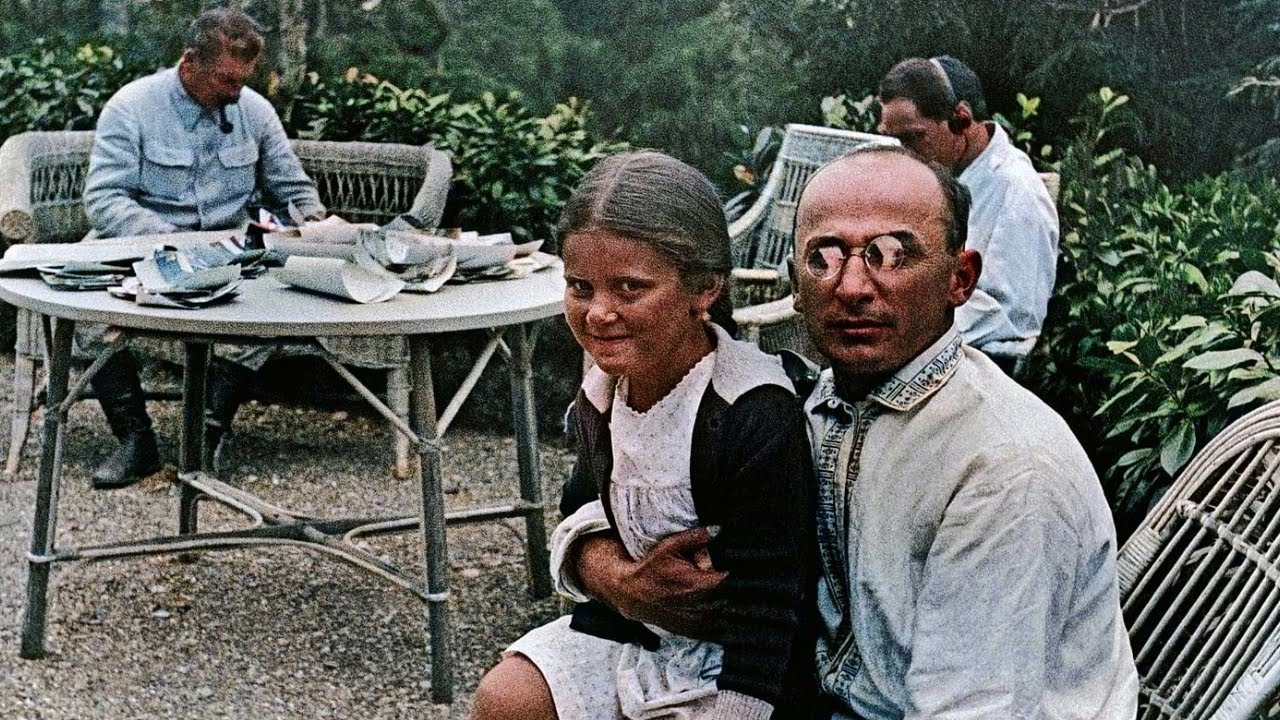
In the 1930s, Beria was responsible for a number of purges. Thousands of politicians, writers, scientists, and even peasants were sent to prison to be tortured or sent straight to be executed. It was said that in those days everyone lived in fear, expecting a fatal knock on the door in the middle of the night.
Beria instilled a reign of terror on the people of the Soviet Union and sought to mercilessly crush any dissenters. For decades he had been involved in murders and killings, and he was the main force behind the creation and expansion of a huge network of forced labor camps known as the gulags.
More than 500 camps were set up, and they saw horrific treatment and punishment. Many sent to the gulags were killed by the conditions. A former prisoner said the gulags existed before Beria, but he was the one who built them on a mass scale and industrialized them. Human life had no value for him.
Stalin knew what a brutal man Beria was. In a conference with President Roosevelt, he referred to Beria as "my Himmler," comparing him to the man who oversaw the Holocaust, the SS, and the mass murder of millions during the Second World War.
As World War II hit the Soviet Union, Beria was an integral part of Stalin's policies and treatment of his own people. An agreement known as the Molotov-Ribbentrop Pact between the Soviets and Nazi Germany stated that Poland would be carved up between the two nations after it was invaded.
Stalin sent his forces in from the east to take Poland after Hitler sent his in from the west. The Red Army was ruthless and brutal, and the remaining Polish army was rounded up and sent to camps.
One event Beria would be remembered for in infamy was the Katyn massacre. This was a series of executions by the Soviet Union in which 22,000 members of the Polish military, as well as civilians such as doctors and priests, were executed en masse.
Beria proposed to Stalin that all captive members of the Polish officer corps should be killed, and Stalin approved it. It was Beria who sanctioned the act, a huge criminal act that was only discovered when the mass graves were located. The NKVD arranged a cover-up of the massacre, but Beria continued his reign of terror.
In 1941, he arranged a huge purge of the Red Army. Around 500 of his own NKVD agents and operatives were executed, along with 30,000 members of the Red Army. Executing your own soldiers at this time was not a clever move for the Soviet Union, as the Nazis would break their non-aggression pact and invade during Operation Barbarossa, which saw huge initial losses for the Red Army.

Officers talked about the purges and came up with a euphemism for them: "having a coffee with Beria." He was known as Stalin's most wicked henchman. He actively took part in mass murders, but was also known for committing rape on the streets of Moscow, prowling in his car looking for women to assault. He was a terrible and brutal man, and many of his true crimes remain classified in Soviet archives.
Within the military, Beria became a marshal of the Soviet Union, the highest rank. He was also involved in overseeing Soviet attempts to build an atomic bomb, forcing workers from the gulags to work in uranium mines.
After the war, however, Stalin's downfall brought Beria's own downfall closer. Stalin was approaching 70, and a struggle for power emerged over who would succeed him. Beria resigned as NKVD chief in January 1946 but remained in control as deputy prime minister.
With Stalin's death, everything changed. In March 1953, Stalin died from a cerebral hemorrhage, and some pointed the finger at Beria, accusing him of poisoning the former leader. Beria was allegedly mocking Stalin as he lay dying.
When Stalin died, a deadly race for the top job began. Beria seemed to be in a strong position. For years he had been chief of the NKVD, keeping tabs on his rivals and creating a dossier of dirt on them, which meant he could manipulate any of the men.
Beria sought an agreement with an old ally, Georgy Malenkov, and became powerful as the man in control of the Ministry of State Security and Internal Affairs. This placed him in control of the secret and normal police and gave him a small private army.
He began to talk about easing Stalin's policies. Many feared Beria as much as they had feared Stalin and believed he would make a power play. But Beria's own downfall was orchestrated by Nikita Khrushchev, the secretary of the party central committee.
Khrushchev quietly and discreetly secured the support of other powerful figures in the government, including Malenkov and other army generals. He organized a meeting and launched an attack on Beria. Beria, taken aback, was confused by what was happening.
Khrushchev accused him of being in league with the British, of being paid off by British intelligence services, and said he was no true communist. A motion was put forward to dismiss Beria from his position, and he soon realized what was happening.
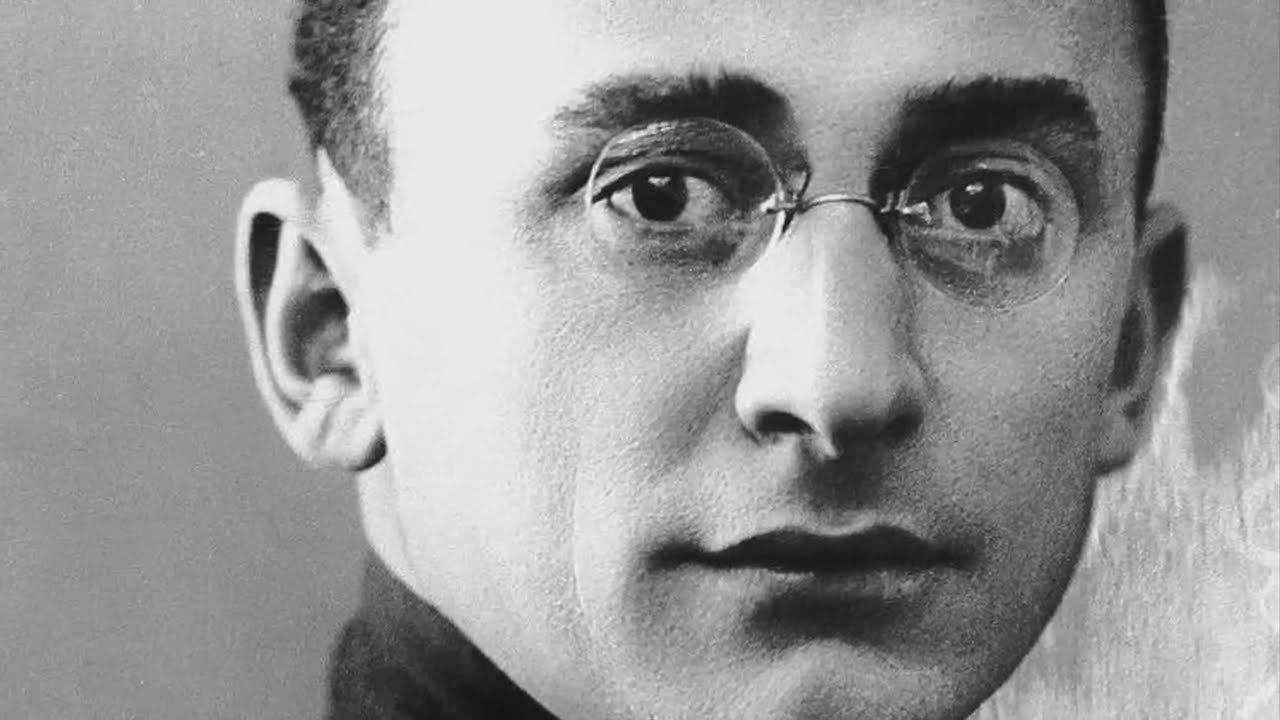
From behind his desk, Malenkov, his former ally, turned against him and pressed a button below his desk. This was the signal for Georgy Zhukov to order a group of armed soldiers into the room to seize and arrest Beria.
Beria's men were guarding the Kremlin at the time, and he was held in a small cell there until nightfall. He was then smuggled out in the boot of a car and taken to a Moscow guard house, and then to the bunker of the Moscow military district's headquarters.
He was tried by a special session of the Supreme Court of the Soviet Union on December 23, 1953. He had no defense counsel and no right to appeal, and it was obvious what would happen.
He was accused of treason, allegedly trying to negotiate peace with Hitler during World War II. He was also accused of terrorism over the purge of the army in 1941 and of counter-revolutionary actions during the Russian Civil War.
Along with six other defendants, Beria was tried and sentenced to death. The six others were dragged out of the courtroom and shot straight away, but Beria was not. He was separated from the others and was struck, kicking and screaming.
He knew his death was coming. Surrounded by other Soviet officials, the man compared to Himmler, the man with the blood of thousands on his hands, was screaming and crying in his final moments. He collapsed on his knees in tears, begging for mercy and begging to be spared.
He was then shot through the head by Pavel Batitsky, who had been selected to perform the execution. He was cremated afterward. Some believed it was a body double who stood trial, and that Beria had been executed months before he was supposedly shot dead on December 23, 1953, at the age of 54.
Lavrentiy Beria was a brutal and savage man who met his end begging for his life while a gun was pointed at his head. He was known as a horrific chief of the NKVD and the man who carried out Stalin's purges with brutality.
After his death, more rumors emerged about his life. It was claimed he was also a serial killer, known for abducting girls off the street, abusing them, and murdering them. Some were allegedly buried in his wife's rose garden.
It was said he had a torture chamber in the basement of his home in Moscow and that there was probably an underground passage leading to burial sites of these young women. Allegedly, this was even known by the United States.
Beria was executed following power plays by other politicians in the wake of Stalin's death. He should have seen what was coming. In a different world, he could easily have been the man who succeeded Stalin at the top of the Soviet Union.
His brutal ways and leadership over the NKVD could have secured him the top job, but things were not to be for the evil and brutal man Stalin referred to as "my Himmler."