Anissa Jones, the actress who charmed America as Buffy on the sitcom Family Affair, was found dead on August 28, 1976, inside a beach house in Oceanside, California. She was 18 years old. The San Diego County Coroner’s Office ruled her death an accidental overdose from a lethal combination of drugs, including the powerful barbiturate Seconal, PCP, methaqualone, and cocaine. Jones was born in Indiana and raised in California.
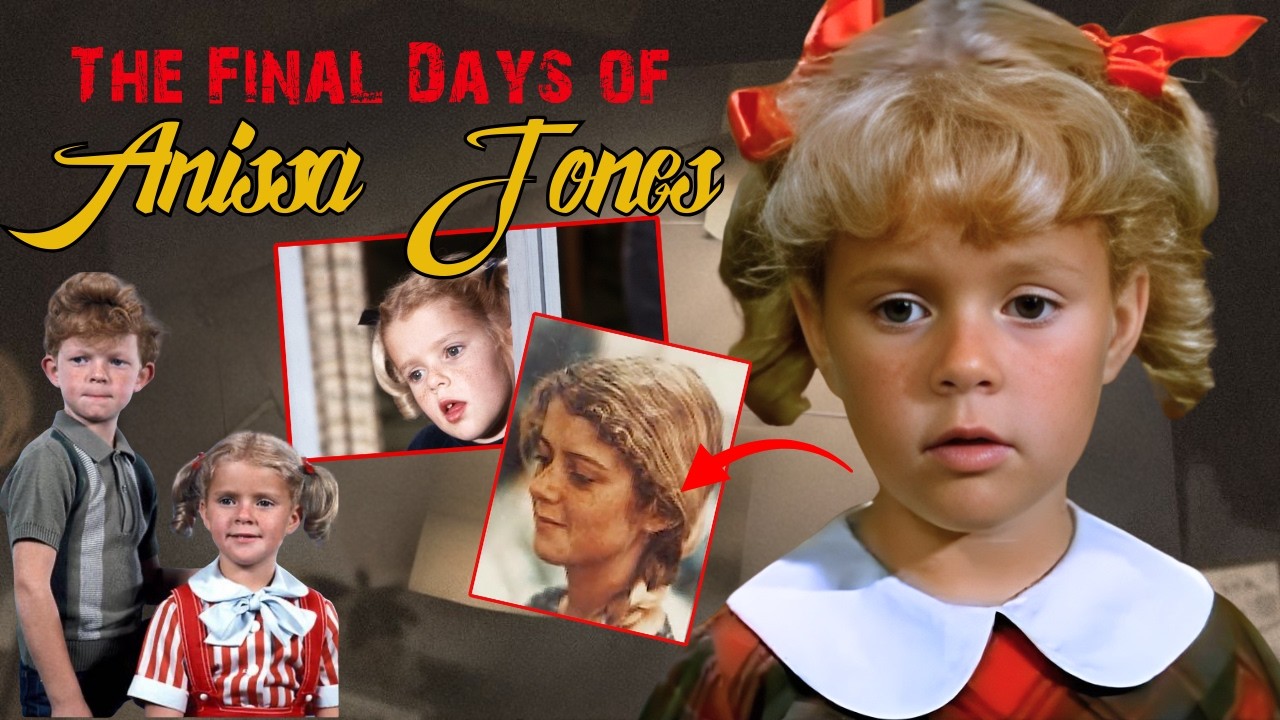
She was discovered at age eight after appearing in a few commercial spots for breakfast cereal. When she auditioned, she impressed executives with a natural, profound melancholy that seemed to contradict her youthful appearance. Off-camera, she was introverted and often read or drew quietly. She told people she wanted to become a veterinarian, not an actress.
When Family Affair premiered, the reaction was immediate and intense. Jones became a cultural phenomenon, with Mattel producing millions of Buffy dolls featuring her likeness, complete with pigtails, freckles, and a missing front tooth, clutching a miniature rag doll named Mrs. Beasley. By age 10, she was earning thousands of dollars per week, making her the primary breadwinner for her family.
She was the central asset of a multimillion-dollar enterprise housed in the body of a child. The pressures of the production were visible early on. In 1969, Jones broke her leg in a playground accident. Instead of halting production, the show’s writers wrote the injury into the script.
The message to the child was clear: her pain was secondary to the production schedule. Jones’ home life created additional strain. Her parents divorced in 1965 as her fame was rising, leading to a custody battle over Anissa and her younger brother Paul. Anissa lived primarily with her mother, Mary Paula Jones, who was domineering and deeply invested in her daughter’s career.
As Anissa entered adolescence, the conflict between mother and daughter escalated. Anissa ran away from home and began shoplifting. Her mother reported her to the police, resulting in Anissa being arrested and placed in juvenile hall for months. During this turmoil, Anissa relied on her father, John Jones, as a source of stability.
He died of heart failure in 1973, a loss that was catastrophic for her. Following his death, she began skipping school and experimenting with marijuana and pills. After Family Affair was canceled in 1971, Jones attempted to transition into more adult roles. She auditioned for The Exorcist, but studio executives rejected her, arguing that the public could not accept seeing Buffy in such a dark role.
The part went to Linda Blair. She was also considered for a role in Taxi Driver, but that went to Jodie Foster. A 1969 appearance in the Elvis Presley film The Trouble with Girls demonstrated her ability to play a character with a sharper edge, but the industry continued to see her only as a brand to be protected, not a talent to be nurtured. By 1975, Jones was working behind the counter at a Winchell’s Donut Shop in Playa del Rey.
Customers frequently recognized her and asked if she was the girl from Family Affair. She would deny it, saying she just looked like her. The pity in their voices was unbearable, and she eventually quit. On March 11, 1976, her 18th birthday, the legal protections of the Coogan Law expired.
She gained full access to a trust fund containing nearly $180,000, the inflation-adjusted equivalent of a million dollars in spending power. She moved out of her mother’s house, rented an apartment in Playa del Rey, and bought a new Ford Pinto and an expensive car for her brother Paul. The money attracted a circle of drifters and small-time dealers who sensed her vulnerability. She financed parties and bought companionship, becoming deeply involved in the harder drug culture of the 1970s, including Quaaludes, reds, and PCP.
On the night of August 28, 1976, Jones attended a house party in Oceanside. Witnesses described her as consuming alcohol, pills, and reportedly cocaine. Late in the night, she told the group she was exhausted and retreated into a spare bedroom. Witnesses later claimed they checked on her in the early morning hours but assumed she was sleeping off the high.
Around 11:00 a. m. the next morning, another guest found her body. She had been dead for hours.
The toxicology report revealed traces of cocaine, PCP, methaqualone, and Seconal. The coroner also found a container of unidentified blue fluid near the body and traces of blue dye in her stomach, suggesting she had dissolved sedatives into a liquid cocktail designed to slam the drugs into her bloodstream instantly. In the days following her death, a photographer from the National Enquirer was granted access to the autopsy room, allegedly after money changed hands at the San Diego County Coroner’s Office. The tabloid published a photograph of her naked body on the autopsy table on its front page.
The police investigation focused on Dr. Don Moschos, a physician who had been writing prescriptions for Jones with alarming frequency. He was charged with manslaughter, but died four months later, reportedly from acute liver disease and cancer, before the trial concluded. The case was closed unresolved.
Her brother, Paul Jones, spiraled into drug addiction following her death. He died of a drug overdose in 1984 at age 24. Brian Keith, who played her Uncle Bill on Family Affair, took his own life in 1997, suffering from emphysema and struggling with the suicide of his own daughter. The press connected these deaths and called it a curse, though the underlying cause was untreated trauma and the pressures of fame.
Jones’s body was cremated, and her ashes were scattered into the Pacific Ocean off the coast of California. Her on-screen twin brother, Johnny Whitaker, survived a similar spiral into alcohol and drug abuse. He eventually entered recovery and became a certified addiction counselor, founding a nonprofit to help Spanish-speaking addicts. He has spoken about the experience with survivor’s guilt, noting that the cast were kids first, then products, then nothing.
Jones’s death also exposed flaws in the 1976 version of the Coogan Law, which treated the 18th birthday as a switch that gave a young person full unrestricted access to a fortune without financial counseling or psychological evaluation. Her case became a study in legal reform, contributing to modern trust arrangements that use tiered distribution ages and financial guardians. Her mother, Mary Paula Jones, survived both of her children and was left alone with the legacy of the family tragedy. Decades later, Jones’s story has been echoed in the experiences of contemporary child stars who have described similar dynamics of domineering parents, financial dependence, and the crisis of puberty in the public eye.
Her death has been cited as an early warning about the commodification of children in entertainment, a pattern that continues in the era of social media influencers.