Few books of the 20th century had as large an impact as "The Diary of Anne Frank." The bestselling autobiography is a true-life chronicle of the two years Anne and her family spent hiding from the Nazis during World War II.
Yet the diary has seen its share of controversies over the years, from copyright intrigue to hidden passages never meant to make it past the editing stage.
During the Holocaust, Otto Frank survived imprisonment in a concentration camp. Tragically, his wife Edith perished at Auschwitz, and his two daughters, Anne and Margot, died of typhus in Bergen-Belsen.
After the war, Otto reconnected with Miep Gies, a friend who had secured food and clothing for the family while they were in hiding. She presented Otto with Anne's diary, which she had rescued from the annex just after the Franks were arrested.
Otto was initially conflicted about making Anne's private writing public. Others encouraged him to move forward, since the entries were a powerful and important recollection of life during World War II. With that in mind, Otto decided to edit the diary.
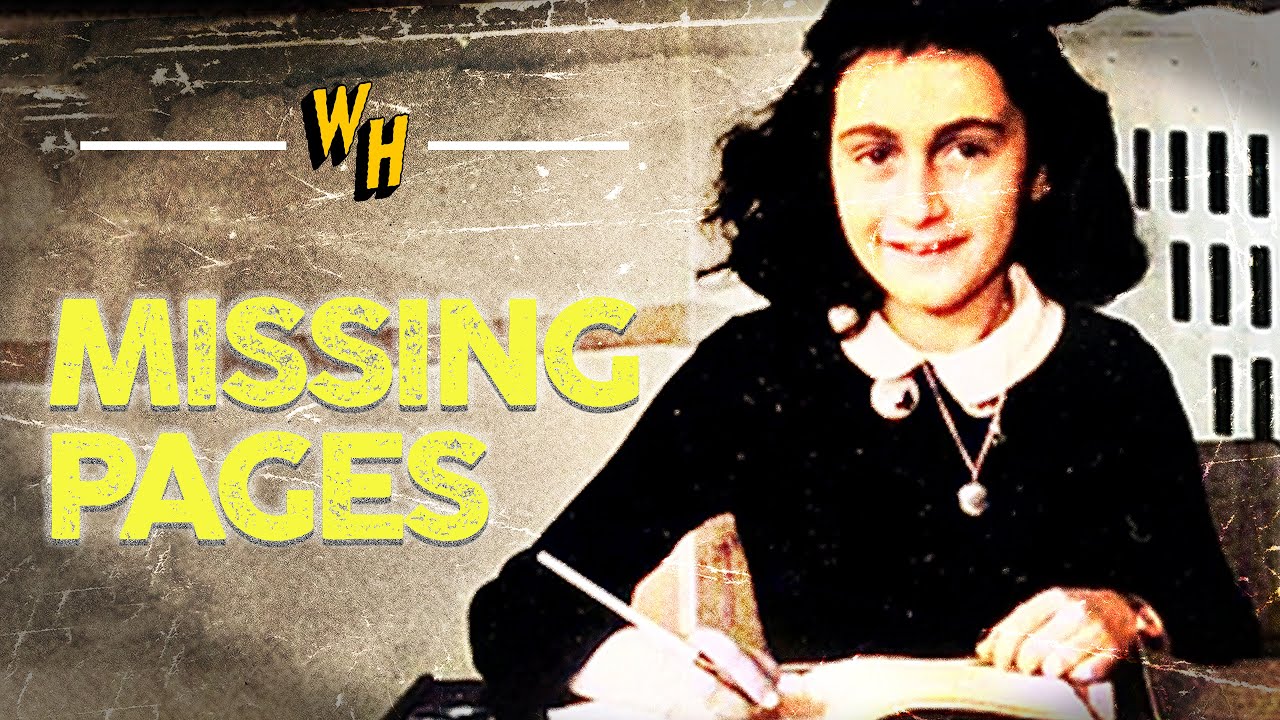
In 1942, Anne Frank was only 13 years old when her Jewish family was forced into hiding during the German occupation of the Netherlands. In a cramped attic space, she began writing in a red and green checkered journal given to her for her birthday.
She used the diary as a coping mechanism and continued filling additional books as she reached the last pages. Around this time, a radio broadcast urged citizens to keep written accounts of what was happening during the war.
Inspired by this, Anne decided to turn her diaries into a novel called "The Secret Annex." She managed to write 324 pages of the new book before the family was discovered by the Nazis and captured.
When Otto obtained the diaries after the war, he decided to fulfill Anne's wish of publishing her account. He cut out some mentions of sex, puberty, and anything else he felt could hurt the family's reputation.
This version was released in limited numbers in 1947, with several other additions following. The total number of versions eventually reached three: Anne's original diaries, her attempt at writing a novel, and the published book.
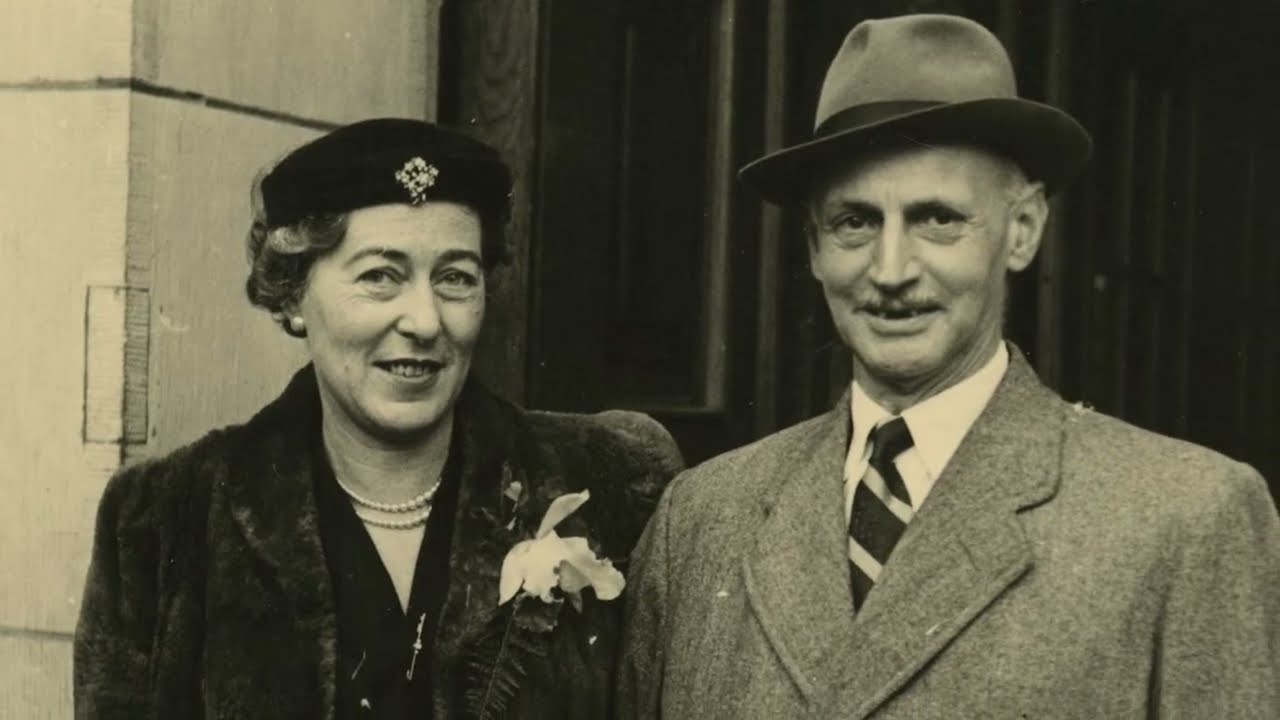
Cornelius Suijk, a director of the Anne Frank Foundation, was given five loose diary pages. He claimed they were given to him for safekeeping by Otto Frank before he died, and were likely omitted entries voicing anger at her parents.
Otto never intended for these pages to see the light of day, so he handed the papers to Austrian author Melissa Müller to assist with a biography she was writing about Anne Frank. These pages opened up a veritable Pandora's box of legal woes related to the diary.
Due to copyright laws, Müller would not be allowed to directly quote the diary. Even so, the additional pages caused an uproar between the Switzerland-based Anne Frank Fonds and the Netherlands State Institute for War Documentation.
The former owns the copyright of the published book, while the latter was given custody of the diary by Otto Frank himself. Suijk wanted to release a newly unabridged version of the diary, but the Fonds argued that would be illegal.
Suijk in turn accused the Fonds of profiting off Anne while not sharing the money with other important Anne Frank-adjacent organizations, including his own. But apparently, it was about the principle.
In Europe, works enter the public domain 70 years after the creator's death. That would have made Anne Frank's diary eligible for public domain in 2016.
However, some loopholes postponed that date significantly. Because Otto had made significant edits to the manuscript, he essentially created a new book and could be considered a co-author.
Otto passed away in 1980, which extended the copyright in Europe until 2050. The foundation's stated reason for extending the copyright is to ensure the book won't be commercially exploited, such as by making merchandise with tacky quotes.
Some critics believe the foundation is mainly interested in money. The limited availability of the book under copyright means some readers may never get to see it.
The renewed hold on the copyright also allows the foundation to regulate how others are allowed to use Anne's words, if they are allowed to at all. This raises concerns from historians and workers at the Anne Frank House in Amsterdam, who claim visitors honoring Anne's memory are doing so in restricted ways so they don't get sued for copyright infringement.
In fact, two stage plays about Anne Frank's life contain no direct quotes because of these restrictions.
While Otto Frank was in the editing process of Anne's diary, he left out multiple references to sex and female anatomy. He presumably deemed these passages too private.

These omitted entries gave a more humanized depiction of Anne as a teenage girl experiencing the familiar angst of adolescence in an unthinkable situation. After more than 60 years, the diary was published with all missing entries, but some weren't happy with the changes.
In 2010, a Virginia school district banned this new edition over complaints about its sexual content.
Otto also omitted Anne's editorializing about his marriage to Edith. According to Anne's entries, Otto's family prevented him from marrying his true love for financial reasons.
Edith was never Otto's first choice, and young Anne apparently took notice that her mother could never fill her father's heart, even as she admits to not knowing the whole story. Anne also admitted her own strained relationship with Edith, likening her to a stranger rather than her mother.
The often distant Edith would never really talk about herself, so Anne never got to know her in any great sense. As the days went on, Anne continued to note the waning kindness and tenderness of her mother and her own uncertainty that she could love such a person.
To save his reputation as well as that of his wife, Otto purposely left these sentiments out of the diary. To keep Anne's original notebooks in pristine condition, they are kept in storage and only allowed out every 10 years.
During a 2016 examination of the pages, researchers found two sections of Anne's original diary with brown paper pasted over them. Removing the brown paper would destroy the pages, so they had to wait until technological advances made reading under the paper possible.
That day finally came in 2018. Once examined, these pages were revealed to contain Anne's thoughts on sexual matters and prostitution, demonstrating her experimentation with language and development as a writer.
While we now know what the pages said, the reasons for Anne covering them may always remain a mystery. We can guess she probably didn't want anyone snooping.
A book as prominent and controversial as Anne Frank's diary is bound to come under attack. Over the decades since it was first published in 1947, critics have claimed the book was forged, arguing it seemed far too mature for a teenager to have written.
Others pointed out that some portions were written in ballpoint pen while others were in pencil. They even accused Otto Frank of creating the diary himself to make money, causing him to file many lawsuits during his lifetime, including some against Holocaust deniers.
In the 1960s, tests proved Anne's handwriting was genuine. The handwriting was reexamined 20 years later using forensic technology, with the same outcome.
All signs point to the handwriting being authentic, right down to the period-appropriate paper and ink used for the pages. As for the mature voice, that is simply how growing up works.
Readers can find wisdom and self-awareness near the end of the book that is not present in earlier pages, showing how Anne's writing style improved over the years.
Back in 1952, Anne Frank's diary could be found published in German, French, and Dutch. But if you spoke English, you were out of luck.
Several American publishers received the book, but for whatever reason, it was a hard pass from all of them. Publishing house Alfred A. Knopf called it "a dreary record of typical family bickering, petty annoyances and adolescent emotions."
After being turned down by 15 publishers, Anne's diary finally found a willing partner in Doubleday, thanks to employee Judith Jones. Jones had been moved to tears reading the diary and was unable to put it down.
As a result, the published edition of the diary now comes in 56 languages, boasting over 30 million copies printed.
For a long time, Anne's diary remained simply a book, but not for lack of trying. In the 1950s, American writer Meyer Levin reached out to Otto Frank and asked if he could turn Anne's story into a stage play.
Otto agreed, and a draft was written up shortly thereafter. Unfortunately, Levin's enthusiasm to adapt the book was not shared, as pretty much all the big Broadway producers rejected it.
After one failed lawsuit, Levin called it quits on the play. Otto gave the go-ahead again in 1955, this time to American non-Jewish writers Frances Goodrich and Albert Hackett.
Their stage play of Anne's diary ended up winning a Pulitzer Prize and a Tony, and the subsequent film adaptations received seven Oscar nominations and three wins. But Goodrich and Hackett's version was criticized for being a not-so-true story that The Guardian said delivers "the Anne that everyone wants to see, if not the girl who actually lived."
For that, you have to go to the source material.