When Archduke Franz Ferdinand and his wife Sophie were shot at point-blank range in Sarajevo on June 28, 1914, the gunfire did more than end two lives—it set in motion a chain of mobilizations and declarations of war that would consume Europe for four years. The assassin was Gavrilo Princip, a 19-year-old Bosnian Serb tied to a nationalist movement seeking a greater Serbia. Within weeks, the Austro-Hungarian Empire, backed by Germany, had launched a war it expected to be short and contained. Instead, the conflict drew in Russia, France, and Britain, and ultimately destroyed the very monarchy that had triggered it.
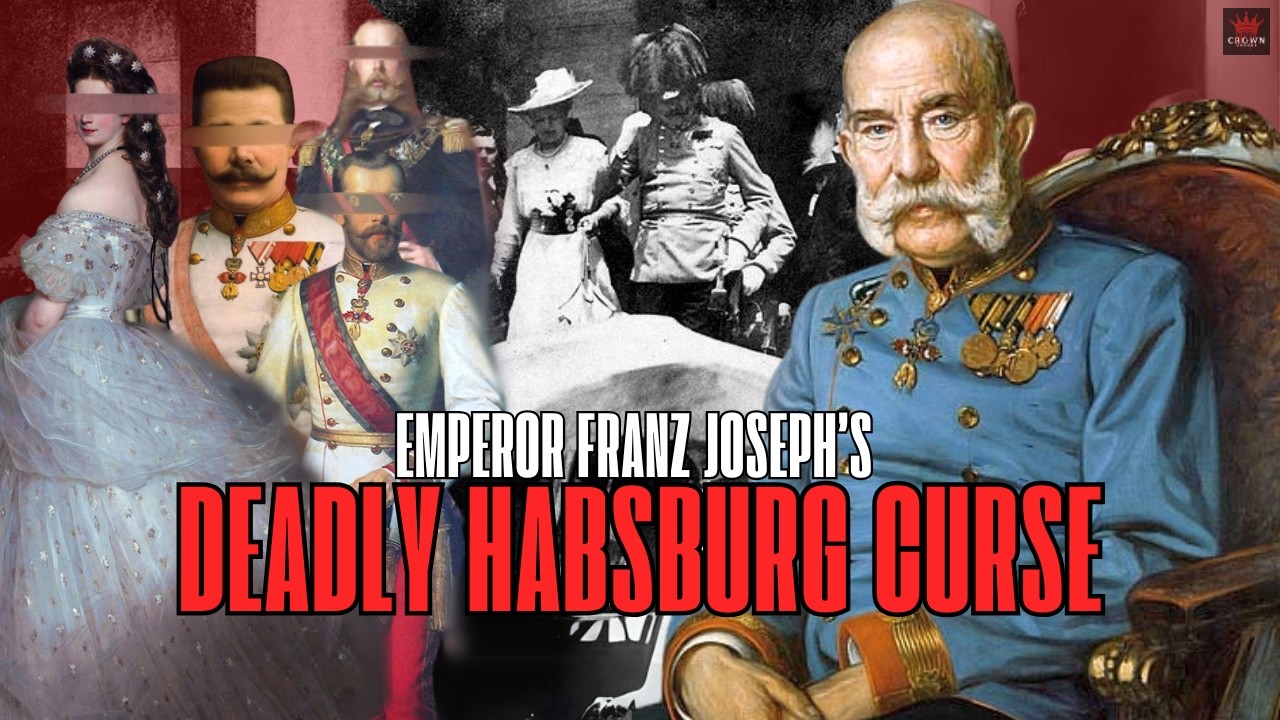
The man who signed off on the ultimatum that led to that war was Emperor Franz Joseph, who had ruled Austria-Hungary for nearly 70 years. Born in 1830, he became emperor at just 18, ascending the throne in 1848 after his uncle abdicated and his father renounced his claim. He married his first cousin, the Bavarian princess Elisabeth, known as Sisi, in 1854. The couple had four children, though only three—Gisela, Rudolf, and Marie Valerie—survived to adulthood.
Franz Joseph’s reign was already marked by significant setbacks before the war. Austria had been expelled from the German Confederation after its defeat in the Austro-Prussian War of 1866, ending any hope of uniting German-speaking peoples under the House of Habsburg. A year later, Hungary gained a titular role in the newly formed Austro-Hungarian Empire, a dual monarchy that created a military and diplomatic union between the two states. These humbling adjustments were a far cry from the 15th-century Habsburg motto: “Let others wage war, but you, happy Austria, marry.
”
Personal tragedy compounded political decline. In 1867, Franz Joseph’s brother, Maximilian I of Mexico, was executed by Mexican nationalists. In 1889, his only son and heir, Crown Prince Rudolf, died in a murder-suicide at his hunting lodge in Mayerling, shooting himself and his mistress, Baroness Mary Vetsera. In 1898, his wife, Empress Elisabeth, was assassinated in Switzerland by an Italian anarchist.
In 1896, his younger brother Archduke Karl Ludwig died of typhoid, leaving his eldest son, Franz Ferdinand, as the new heir to the throne. Franz Ferdinand’s path to the succession was complicated by his marriage. His wife, Sophie, was of lower noble rank, and Franz Joseph only consented to the morganatic union under the condition that their children could never ascend the Habsburg throne. The couple were nevertheless central figures in the drama that would unfold in the Balkans.
The roots of that drama stretched back decades. In 1878, the Congress of Berlin allowed Austria-Hungary to occupy Bosnia and Herzegovina, which remained nominally part of the Ottoman Empire. In 1908, while the Ottoman Empire was shaken by the Young Turk Revolution, Austria-Hungary formally annexed the territory. The Ottomans eventually recognized the annexation in February 1909, followed by Russia in March, and soon Serbia and Montenegro followed.
It was a bitter setback for Serbian nationalists and Bosnian Muslims, who had hoped for a different future for the region under the sultan. Serbian ambitions grew after the Balkan Wars of 1912–1913, when a coalition of Serbia, Greece, Montenegro, and Bulgaria defeated the Ottoman Empire, and Serbia acquired Macedonia and Kosovo. Bulgarian dissatisfaction with the territorial division led to a second Balkan War in 1913, which Bulgaria lost. These victories emboldened Serbian nationalists, including the clandestine group known as the Black Hand, which sought a greater Serbia and drew inspiration from the region’s successful resistance to Ottoman rule.
In 1913, the 84-year-old Franz Joseph ordered his heir to attend a military maneuver in Bosnia the following June. On June 28, 1914, Franz Ferdinand and Sophie were shot at nearly 11:00 a. m. by Gavrilo Princip, a member of Young Bosnia, one of the groups armed and organized by the Black Hand.
The couple never reached their planned destination—a museum opening in the Bosnian capital. When Franz Joseph heard the news at his summer residence, he briefly interrupted his holiday and returned to Vienna. However, most of the decision-making fell to the Austrian foreign minister, Count Leopold Berchtold, who was determined to deliver Serbia a fatal blow. With Germany’s categorical support, Austria-Hungary presented Serbia with a ten-point ultimatum on July 23, 1914.
The demands included full responsibility for the assassination, the removal of officials and publications promoting anti-Habsburg sentiment, and the admission of Austrian police to investigate the plot within Serbia. Serbia was given 48 hours to respond. Serbian King Peter I accepted nine of the ten points, but rejected the demand that Austrian police operate across his country, believing it threatened Serbia’s independence. Austria-Hungary broke off communication and declared war on Serbia on July 28, 1914.
Germany’s support had been based on the assumption that Austria-Hungary would launch an immediate attack and that a rapid war would leave the rest of Europe with no choice but to accept it. Germany believed Russia was unprepared for a protracted conflict and assumed monarchical solidarity would temper Russian support for the Serbs, especially after the murder of a Habsburg. That assumption collapsed when Russia moved to support Serbia, bringing its ally France into the conflict. Germany declared war on Russia on August 1 and on France two days later.
When Germany violated Belgian neutrality to advance toward France, Britain declared war as well. Within days, the localized conflict Austria-Hungary had anticipated became a brutal four-year war. Franz Joseph died of pneumonia at age 86 on November 21, 1916, halfway through a conflict he had helped set in motion. The empire he had held together would not survive the war.
In late 1918, the Austro-Hungarian Empire was formally dissolved, and its last emperor, Charles I, renounced his throne. The monarchy that had endured for centuries was gone.